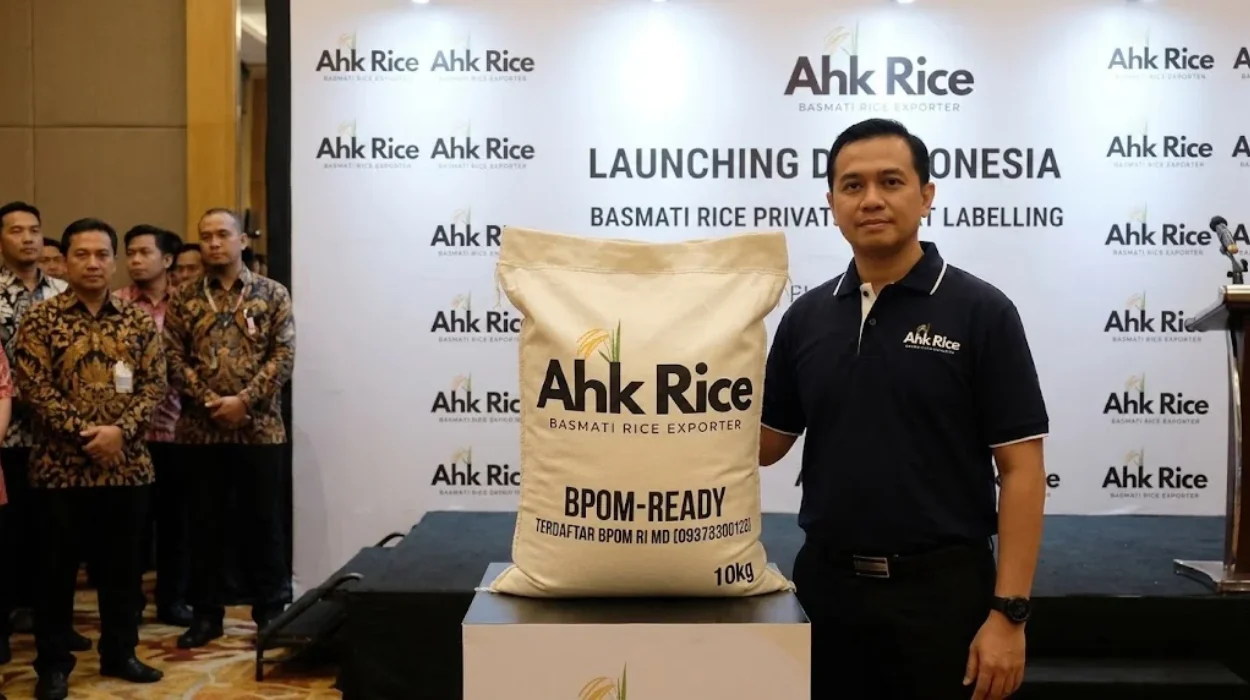
Launch a BPOM-Ready Basmati Rice Brand in Indonesia with AHK Rice Private Labelling
Launching packaged Basmati rice in Indonesia requires more than selecting a rice variety and printing a retail bag. Imported packaged food must align with Indonesian registration, labelling, documentation, packaging, and import requirements before commercial distribution. For importers building a new rice brand, the practical solution is to combine compliant product preparation with an experienced Pakistani exporter and private-label supply partner.
For background, first understand whether packaged Basmati rice needs BPOM registration in Indonesia before moving into supplier selection and registration planning. The decision becomes easier when the product specification, manufacturing documentation, packaging format, and importer responsibilities are defined before the first commercial shipment.
What is the best solution for launching a BPOM-ready Basmati rice brand?
The best solution is to establish the rice specification, private-label packaging, export documentation, product compliance file, and Indonesian importer registration pathway together, rather than treating BPOM registration as a separate task after manufacturing or shipment preparation begins.
A private-label program gives the Indonesian buyer control over brand identity while keeping rice production and export handling with an established supplier. AHK Rice can prepare Pakistani Basmati rice according to the agreed grade, packing format, shipment quantity, and commercial specification.
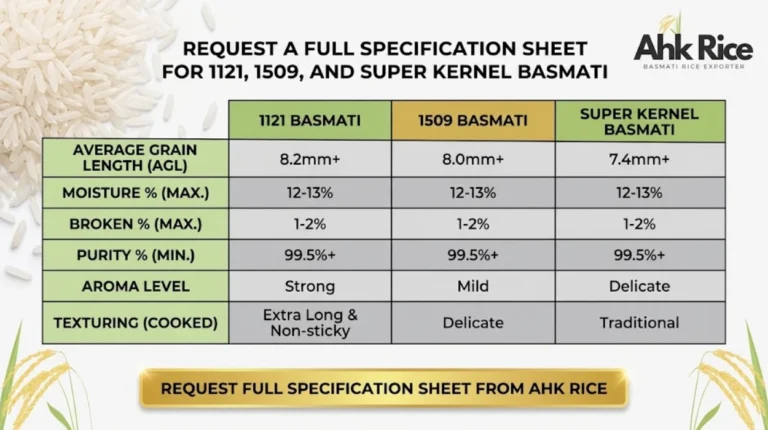
The product should be selected before artwork is finalized. Common commercial choices include 1121 Basmati, Super Kernel, and 1509 Basmati, with Steam, Golden Sella, Creamy Sella, or other processing specifications selected according to the target market.
This matters because the product description, ingredients information, net weight, origin information, manufacturer details, importer information, and other mandatory label elements need to correspond with the actual product and documentation.
The Indonesian importer remains central to the local registration and distribution process. A Pakistani exporter can provide the manufacturing and export-side documents, but the Indonesian regulatory pathway must be managed through the responsible local business entity and applicable Indonesian requirements.
For buyers comparing supplier options, the detailed BPOM ML registration process for imported packaged rice brands provides the next layer of decision-making information before commercial commitment.
Why choose AHK Rice for private-label Basmati rice?
AHK Rice provides an integrated private-label supply route covering Pakistani Basmati sourcing, processing, grading, custom packaging, export preparation, documentation, and shipment coordination, allowing Indonesian buyers to manage one defined supply workflow instead of multiple disconnected suppliers.
AHK Rice operates from Punjab, Pakistan, a major Basmati-producing region. Its private-label approach allows an Indonesian importer to define the product before production rather than purchasing generic export bags and adapting the product later.
A typical specification can define rice variety, grain length, broken percentage, moisture target, processing method, sorting standard, bag weight, packaging material, artwork, carton or pallet requirements, and shipment quantity.
For premium retail positioning, 1121 or Super Kernel can support a long-grain Basmati proposition based on aroma, grain appearance, and cooked presentation. For buyers prioritising commercial efficiency and high-volume foodservice distribution, 1509 can provide another specification route.
AHK Rice also supports the operational side of export preparation. The buyer can approve the commercial sample before proceeding with the larger order. The final specification should then be matched against the production and shipment documents so that the delivered product follows the approved commercial standard.
This approach reduces a common private-label problem: the brand owner approves one sample while the production order is handled using a different specification.
What results can be expected from a private-label program?
A properly planned private-label program gives an Indonesian importer a defined product specification, controlled packaging workflow, documented export shipment, approved pre-shipment sample, and repeatable supply model for future retail or foodservice orders.
The strongest outcome is consistency. A private-label brand needs the same product identity to continue across subsequent shipments. Grain specification, processing method, packaging weight, artwork, and quality requirements therefore need to be documented before the first container leaves Pakistan.
For example, an Indonesian distributor launching a 5 kg retail Basmati bag can first approve the rice sample, packaging artwork, technical specification, and commercial terms. After approval, production and packing can proceed against the agreed requirements.
A larger importer may instead select 10 kg or 25 kg formats for wholesalers, restaurants, catering businesses, or institutional buyers. The same supply framework can then be expanded into multiple SKUs.
The outcome is not simply a shipment of rice. It is a repeatable product supply system that supports brand growth.
AHK Rice can also prepare the export-side documentation required for the shipment. The exact document set depends on the product, destination, buyer structure, shipment terms, and Indonesian import requirements.
How does the sample-to-shipment process work?
The sample process should begin with the buyer’s product brief, continue through rice selection and commercial sample approval, and finish with production, packaging, document preparation, and shipment against the approved specification.
Step 1: Define the product.
The Indonesian buyer provides the intended brand positioning, rice variety, processing preference, packing size, estimated order quantity, and target customer.
Step 2: Select the specification.
AHK Rice matches the brief with an available Pakistani Basmati specification. Grain length, broken percentage, moisture, processing type, sorting, packing, and quality requirements are documented.
Step 3: Request a commercial sample.
The buyer receives a sample for physical inspection and cooking evaluation. Courier charges are normally paid by the buyer, while any applicable sampling, documentation, or phytosanitary-related costs depend on the shipment arrangement.
Step 4: Approve the sample.
The buyer evaluates aroma, grain appearance, cooking performance, elongation, texture, and overall suitability. Approval should be recorded before the commercial order proceeds.
Step 5: Finalise private-label packaging.
Artwork is prepared around the approved product and Indonesian market requirements. The buyer should verify local label and registration requirements before printing a large quantity of packaging.
Step 6: Confirm the commercial order.
Quantity, packing configuration, payment terms, Incoterm, destination, and production schedule are confirmed.
Step 7: Produce and pack.
AHK Rice processes, grades, sorts, and packs the rice according to the agreed specification.
Step 8: Prepare shipment documentation.
Export documents are prepared according to the confirmed shipment and destination requirements.
Step 9: Ship to Indonesia.
The finished private-label cargo moves from Pakistan to the agreed Indonesian port and is handled through the importer’s local clearance process.
The sample itself is therefore only the first quality-control checkpoint. The critical step is connecting sample approval with the exact commercial specification used for production.
How many shipping days should Indonesian buyers plan for?

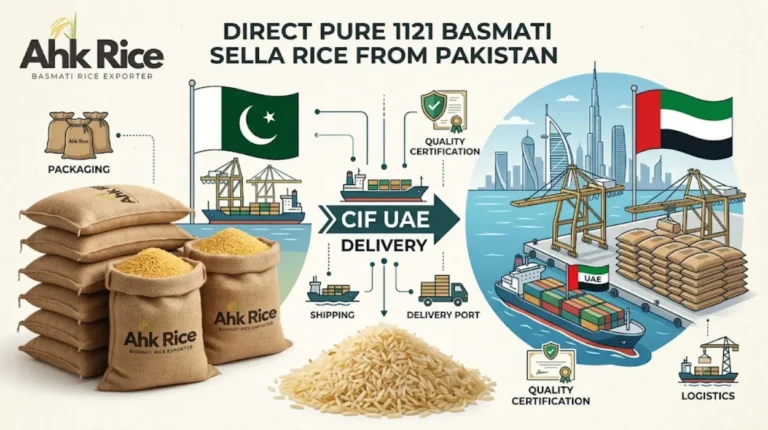
Indonesian importers should plan international freight as a separate stage from production, customs clearance, and local delivery, with actual transit depending on the Pakistani departure port, Indonesian destination, carrier schedule, transshipment, and seasonal congestion.
For a practical purchasing plan, buyers should avoid promising customers a fixed arrival date based only on estimated sea transit.
A shipment from Karachi to major Indonesian ports such as Jakarta or Surabaya commonly involves sea freight and may require transshipment depending on the selected carrier and sailing. A working commercial planning window can be around 25–40 days for ocean transit, while the complete door-to-warehouse timeline can be longer.
Jakarta-bound shipments can require approximately 25–40 days of ocean transit planning. Surabaya-bound cargo should be planned using a similar range, subject to the carrier and routing selected at booking.
Add production and packing time before departure. Add Indonesian customs, regulatory checks, port handling, and domestic transport after arrival.
For a first private-label order, a buyer should therefore build a buffer around the freight estimate rather than treating the vessel transit figure as the complete delivery time.
What affects the price of private-label Basmati rice?
Private-label pricing depends on rice variety and grade, processing method, grain specification, broken percentage, moisture, packaging material, bag size, artwork, order volume, freight, destination charges, payment terms, and selected Incoterm.
A 5 kg retail bag and a 25 kg foodservice bag do not carry the same packaging economics. Small retail packs generally require more packaging units per tonne and therefore more packaging and handling cost.
Rice grade also affects the commercial price. Premium long-grain specifications, tighter broken limits, stronger sorting requirements, and specific processing methods can increase the product cost.
Freight is another major variable. FOB Karachi and delivered-to-Indonesia pricing represent different commercial positions. The buyer should compare the complete landed-cost structure rather than selecting a supplier based only on the FOB rice price.
Order volume also influences the quotation. A full-container program normally provides a different cost structure from a small trial order because production, packing, documentation, and freight costs are distributed differently.
Packaging artwork, bags, labels, cartons, pallets, and special packing requirements should also be priced before production begins.
For this reason, AHK Rice should quote against the buyer’s actual specification rather than using one generic price for every Indonesian private-label project.
How should an Indonesian importer prepare the first order?
The importer should prepare the legal importing entity, product specification, brand artwork, registration plan, commercial sample approval, packaging requirements, order quantity, and shipping destination before authorising full production.
Start with the product. Decide whether the brand requires 1121, Super Kernel, or 1509 Basmati, and choose Steam, Golden Sella, or another appropriate processing format.
Next, establish the retail positioning. A premium supermarket brand may require smaller consumer packs and stronger presentation, while wholesale or restaurant distribution may favour larger bags and a different price structure.
Then prepare the compliance file. Product specifications, ingredient information, manufacturer details, packaging information, certificates, and supporting export documents should be organised before registration and shipment.
The importer should also confirm who is responsible for each regulatory step. Local Indonesian requirements must be checked with the responsible importer or qualified regulatory professional because registration, importation, labelling, and distribution obligations can depend on the product and business structure.
After the compliance route is clear, request the commercial sample. This prevents the buyer from committing to a private-label production run before confirming the actual rice.
Finally, confirm the commercial quotation, packaging, payment terms, Incoterm, shipment schedule, and destination.
How can an Indonesian buyer get started with AHK Rice?
Start by sending AHK Rice the required Basmati variety, processing type, packing size, estimated quantity, destination port, private-label requirements, and target market information so the supplier can structure the product and quotation around the actual Indonesian project.
A strong first brief does not need to be complicated. It should identify the intended product and commercial purpose.
For example, an Indonesian importer can request a 5 kg Super Kernel Basmati private-label pack for premium retail distribution, provide the expected first-container quantity, and specify the preferred destination port.
AHK Rice can then work through product selection, sample preparation, packaging requirements, quotation, production planning, and export documentation.
The buyer should treat the first shipment as the foundation for the next orders. Once the approved product specification and packaging configuration are established, repeat orders become easier to manage.
The decision is therefore straightforward: if the objective is to build an Indonesian Basmati rice brand rather than simply purchase generic rice, private labelling provides stronger control over product identity, packaging, and long-term supply planning.
AHK Rice is positioned to support that supply chain from Pakistani Basmati sourcing through export preparation and private-label packing. The Indonesian importer remains responsible for completing the applicable local regulatory and import requirements before commercial distribution.
To discuss your product specification, packaging format, quantity, and destination, request a private-label Basmati rice quotation from AHK Rice.
Frequently Asked Questions
Does imported packaged Basmati rice need BPOM registration in Indonesia?
Imported packaged food products can require Indonesian regulatory registration before commercial distribution. The exact pathway depends on the product and importing business structure. The importer should confirm current BPOM requirements before production and shipment.
Can AHK Rice provide private-label Basmati rice for Indonesia?
Yes, AHK Rice can structure Basmati rice supply for private-label projects.
Buyers can define the rice variety, processing method, pack size, and quantity.
Packaging artwork and commercial specifications can be coordinated before production.
The buyer can approve a commercial sample before the full order.
Export documentation is prepared according to the confirmed shipment requirements.
How long does shipping from Pakistan to Indonesia take?
Ocean transit planning can commonly fall around 25–40 days depending on routing.
Jakarta and Surabaya shipments can use different carrier and transshipment arrangements.
Port congestion and seasonal vessel schedules can change actual transit times.
Production, customs clearance, and domestic delivery require additional time.
Importers should therefore build a delivery buffer into launch planning.
What affects private-label Basmati rice pricing?
Rice variety, grade, grain length, broken percentage, and processing affect the product price.
Packaging size, material, artwork, and order quantity also influence total cost. Freight and destination charges vary according to shipment routing and Incoterm.
Can buyers approve a sample before placing a bulk order?
Yes, sample approval can be used as a quality-control stage before production. The buyer evaluates grain appearance, aroma, cooking performance, and overall suitability.
Courier and applicable sample-related charges are normally handled according to the agreed arrangement.