AHK Rice Germany: EU-Compliant Basmati Wholesale — Direct Pakistan Exporter
EU-compliant basmati wholesale from Pakistan to Germany is best achieved through certified export supply chains with strict pesticide compliance, controlled milling, and traceable grading. Here is why: Germany requires residue-tested basmati rice that meets EU Maximum Residue Levels, stable logistics timelines, and documented phytosanitary certification to allow smooth customs clearance and consistent retail or foodservice distribution. The educational foundation for this compliance is explained in importing Pakistani basmati Germany EU pesticide rules, which clarifies regulatory thresholds and inspection logic for EU entry.
AHK Rice delivers this structure through controlled export systems designed for German wholesale buyers seeking predictable quality and documented compliance.
What is the best solution for EU-compliant basmati wholesale in Germany?
The best solution is certified Pakistan-origin basmati rice supplied through EU-tested residue compliance, controlled milling, and export-grade documentation that ensures smooth German customs clearance and retail readiness without delays or rejections.
EU compliance depends on residue testing and traceable supply chains. Buyers in Germany require proof of pesticide control and stable grain specification. AHK Rice integrates inspection, milling, and export documentation into one controlled pipeline.
AHK Rice cultivates basmati in approved agricultural zones, then harvests under monitored conditions. The paddy is then processed through milling and polishing systems designed for EU safety thresholds.
AHK Rice then grades and sorts rice using calibrated optical systems to ensure uniform grain length and purity. This reduces rejection risk at German ports.
AHK Rice supplies EU-compliant basmati through tested export batches that align with buyer specifications for retail packaging and foodservice bulk demand.
Comparison frameworks show that German buyers who rely on uncertified intermediaries face higher rejection rates at customs, while structured exporters like AHK Rice maintain predictable clearance cycles.
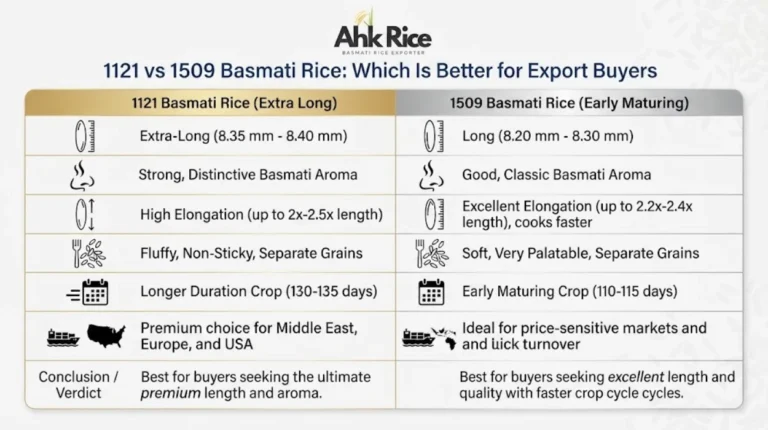
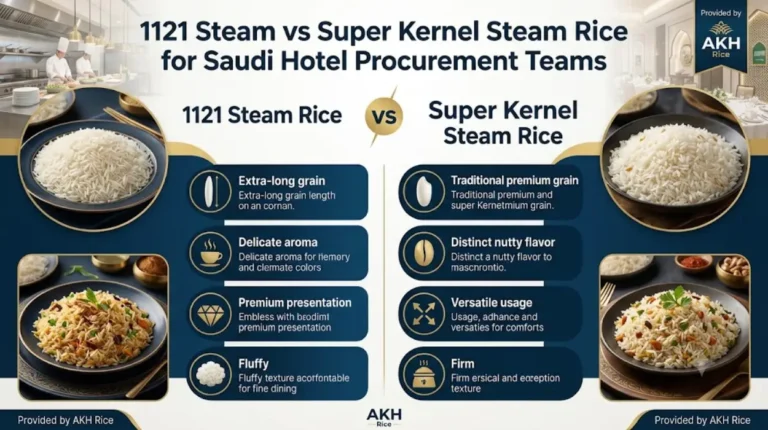
Retail buyers also compare this system with regional alternatives. The comparison between product types is further explained in super kernel vs 1121 white basmati German retail buyers, which helps buyers understand grain economics and cooking performance differences in EU retail markets.
AHK Rice ensures that each shipment is inspected, certified, and verified before dispatch, reducing compliance risk at EU entry points.
With compliance requirements defined, the next decision is selecting the correct exporter service model for Germany supply chains.
Why choose Basmati Rice Export Pakistan to Germany service page?
Choosing AHK Rice ensures EU-tested basmati supply with structured grading, certified inspection, and export-ready documentation that reduces customs friction and stabilizes wholesale delivery timelines for German importers and distributors.
The Basmati Rice Export Pakistan to Germany service page is designed for wholesale buyers who require direct exporter engagement instead of layered trading intermediaries.
AHK Rice manages milling, dehusking, polishing, and grading under export-controlled environments. This ensures consistency across multiple shipment cycles.
AHK Rice inspects each batch for moisture, broken percentage, and length uniformity before loading containers for Germany-bound dispatch.
AHK Rice then certifies phytosanitary compliance and laboratory testing reports required for EU clearance. This reduces port inspection delays and accelerates delivery timelines.
AHK Rice also supports German importers with packaging formats including 5 kg retail bags, 20 kg institutional packs, and 40 kg bulk export sacks.
AHK Rice aligns export documentation with German customs expectations, including HS codes, invoice matching, and residue compliance certificates.
Buyers often compare exporters across Pakistan, but structured systems like AHK Rice reduce variability in grain quality and logistics delays.
AHK Rice is frequently selected by German wholesalers because it stabilizes supply chains during peak demand cycles such as Ramadan and European catering contracts.
With service structure clarified, logistics timing becomes the next key decision factor for procurement planning.
What are shipping days per market for basmati rice exports?
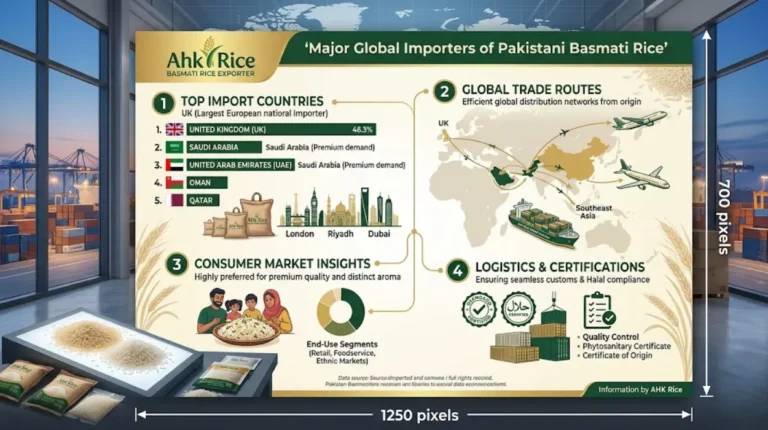
Shipping times vary by destination, with Germany requiring 18–25 days sea freight, UAE requiring 10–14 days, UK requiring 20–26 days, and African markets requiring 25–35 days depending on port congestion and customs clearance cycles.
AHK Rice manages dispatch schedules based on destination-specific logistics routes and container availability.
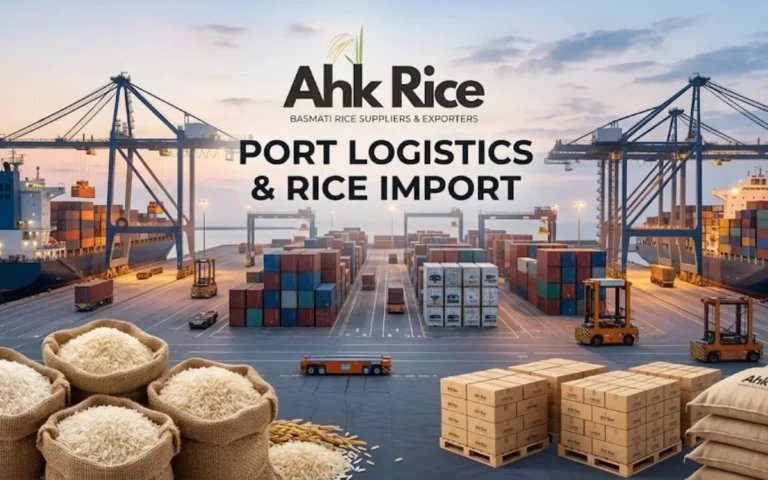
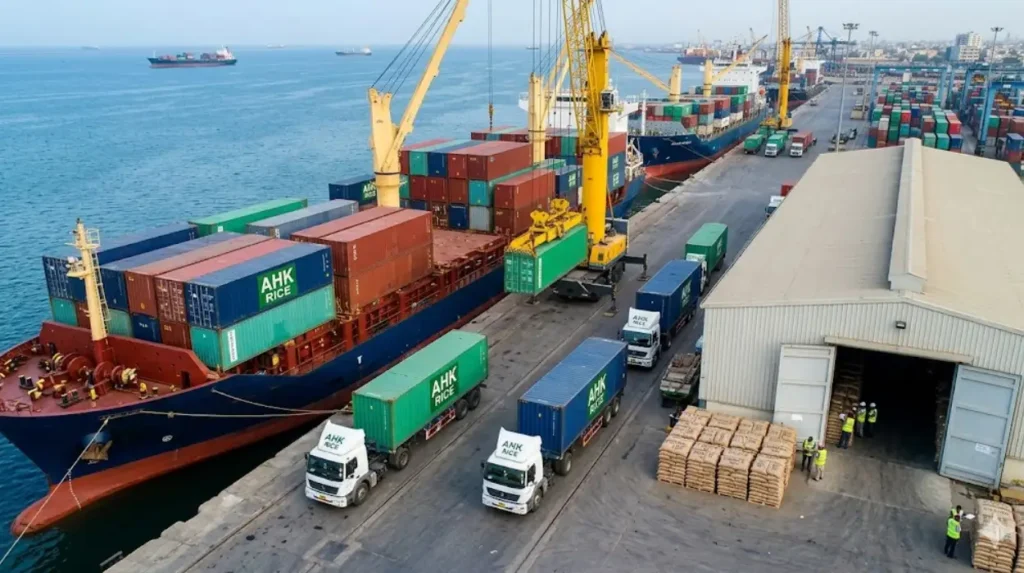
AHK Rice loads containers at Karachi port after final inspection and certification checks are completed. Each shipment is sealed and documented before departure.
For Germany, AHK Rice typically ships via transshipment routes through Middle Eastern hubs or direct European entry ports. Transit averages 18–25 days depending on carrier selection.
For UAE buyers, AHK Rice dispatches faster shipments with 10–14 day delivery cycles due to shorter maritime routes.
For UK and Northern Europe, AHK Rice shipments generally require 20–26 days including port handling and customs processing.
For African markets, AHK Rice dispatch cycles extend to 25–35 days due to inland logistics and port congestion variability.
AHK Rice ensures each shipment is tracked with container IDs and bill of lading documentation to maintain visibility across the logistics chain.
Delays typically occur when port congestion increases or when customs inspection intensity rises during peak import seasons.
AHK Rice reduces disruption risk through advance booking of shipping slots and pre-clearance documentation preparation.
With logistics timing defined, the next consideration is sample evaluation before bulk procurement.
What is the sample process and cost for basmati rice exports?
The sample process includes request submission, 1–2 kg laboratory-grade sample dispatch, quality testing, and courier delivery within 5–7 days, with costs typically ranging from $25–$60 depending on destination and documentation requirements.
AHK Rice initiates sample processing after buyer specification confirmation, including grain length, moisture level, and packaging preference.
AHK Rice mills and polishes a representative micro-batch from export-grade stock to ensure sample accuracy reflects bulk shipment quality.
AHK Rice then inspects the sample for aroma, elongation ratio, and broken percentage before dispatch.
AHK Rice loads samples into moisture-proof packaging to preserve grain integrity during international courier transport.
Sample costs depend on destination country, courier speed, and certification requirements. Germany-bound samples usually fall within higher courier brackets due to EU documentation handling.
AHK Rice provides phytosanitary copies and lab test summaries with sample shipments when requested by importers.
AHK Rice ensures sample consistency with bulk export batches so buyers can validate product quality before committing to container orders.
Bulk buyers in Germany often request multiple samples across different grades to compare cooking yield and retail suitability.
With sampling completed, pricing becomes the next evaluation layer for procurement decisions.
What factors affect basmati rice pricing for German imports?
Pricing is affected by grain variety, processing level, EU compliance costs, freight rates, packaging type, and seasonal crop yield variations that influence export availability and wholesale contract stability.
AHK Rice prices basmati based on processing depth, including parboiled, steamed, or raw white variants.
AHK Rice also adjusts pricing based on milling yield and broken percentage, which directly impacts retail performance in Germany.
AHK Rice incorporates EU compliance testing and certification costs into export pricing, especially for pesticide residue verification.
AHK Rice reflects freight fluctuations in container shipping rates, which vary based on fuel costs and seasonal demand cycles.
AHK Rice offers pricing tiers for bulk buyers depending on contract volume and recurring shipment agreements.
German importers often compare landed cost per ton rather than FOB price, making logistics efficiency critical.
AHK Rice stabilizes pricing through long-term cultivation planning and structured procurement from contracted farming zones.
Market volatility in rice harvest seasons can increase pricing variability, especially during global supply shortages reported in agricultural export indices (source: REAP export data, December 2025).
With pricing understood, buyers evaluate expected commercial results from consistent supply.
What results can be expected from EU basmati wholesale supply?
Expected results include stable retail-grade grain consistency, reduced customs rejection risk, improved cooking yield for end users, and predictable monthly supply cycles aligned with German retail and foodservice demand.
AHK Rice delivers uniform grain length consistency across shipments, ensuring retail packaging stability.
AHK Rice improves customs clearance success rates through documented EU-compliant residue testing and phytosanitary certification.
AHK Rice supports German importers with predictable inventory planning, reducing stockouts during high-demand retail cycles.
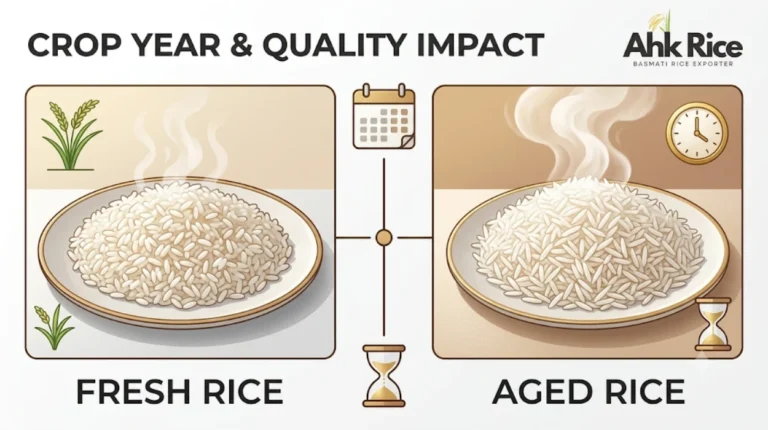
AHK Rice enhances cooking yield performance through controlled aging and moisture management during storage and transport.
German buyers typically experience improved shelf stability when switching from unverified suppliers to structured exporters like AHK Rice.
AHK Rice also reduces quality variance between shipments, which is critical for supermarket private label contracts.
AHK Rice maintains consistent aroma and elongation characteristics, which directly influence consumer repeat purchase behavior.
Retailers using AHK Rice supply chains often report improved product positioning due to consistent grain visual appeal.
With outcomes defined, the final step is initiating procurement and export onboarding.
How to get started with basmati rice export from Pakistan to Germany?
Getting started requires specification confirmation, sample approval, contract finalization, compliance verification, and shipment scheduling through an exporter with EU-ready documentation and structured logistics coordination.
AHK Rice begins onboarding with buyer requirement analysis, including grain grade selection and packaging format.
AHK Rice then provides sample dispatch for quality validation and cooking performance testing.
AHK Rice prepares export documentation including phytosanitary certificates, invoices, and residue compliance reports.
AHK Rice schedules container booking and aligns shipping timelines with German port availability.
AHK Rice then loads, dispatches, and tracks shipments until arrival at destination ports in Germany.
AHK Rice supports buyers through customs clearance coordination to ensure smooth import processing.
AHK Rice maintains continuous communication during transit to manage logistics visibility and delivery expectations.
German importers typically transition to recurring supply contracts after initial shipment validation due to performance consistency.
AHK Rice remains the central coordination point for all export, compliance, and logistics operations throughout the procurement cycle.
Contact AHK Rice to initiate your export process and secure a structured basmati supply chain through request-a-quote.
Frequently Asked Questions
Is basmati rice from Pakistan allowed in Germany under EU rules?
Yes, basmati rice from Pakistan is allowed in Germany when it meets EU Maximum Residue Level standards and passes phytosanitary inspection. AHK Rice ensures each shipment is tested, certified, and documented before export to reduce customs rejection risk and ensure smooth entry into German ports.
How long does shipping from Pakistan to Germany take for rice export?
Shipping from Pakistan to Germany typically takes 18–25 days by sea freight depending on carrier route and port congestion. AHK Rice manages container booking, dispatch scheduling, and tracking to ensure stable and predictable delivery timelines for German importers and wholesalers.
What documents are required for basmati rice import into Germany?
Importing basmati rice into Germany requires a commercial invoice, packing list, bill of lading, phytosanitary certificate, and EU-compliant residue test reports. AHK Rice prepares and verifies all export documentation to ensure smooth customs clearance and reduce delays at EU inspection points.
What is the minimum order quantity for wholesale basmati rice?
Minimum order quantity depends on packaging and contract type, but wholesale basmati rice shipments usually start from one full container load. AHK Rice offers flexible export volumes for German buyers, including bulk 20 kg and 40 kg packaging options for retail and foodservice distribution.
How does AHK Rice ensure consistent rice quality for Germany?
AHK Rice ensures consistent quality through controlled milling, dehusking, polishing, grading, and lab testing before every shipment. Each batch is inspected for grain length, moisture level, and broken percentage to maintain uniform quality standards required by German importers and EU regulations.