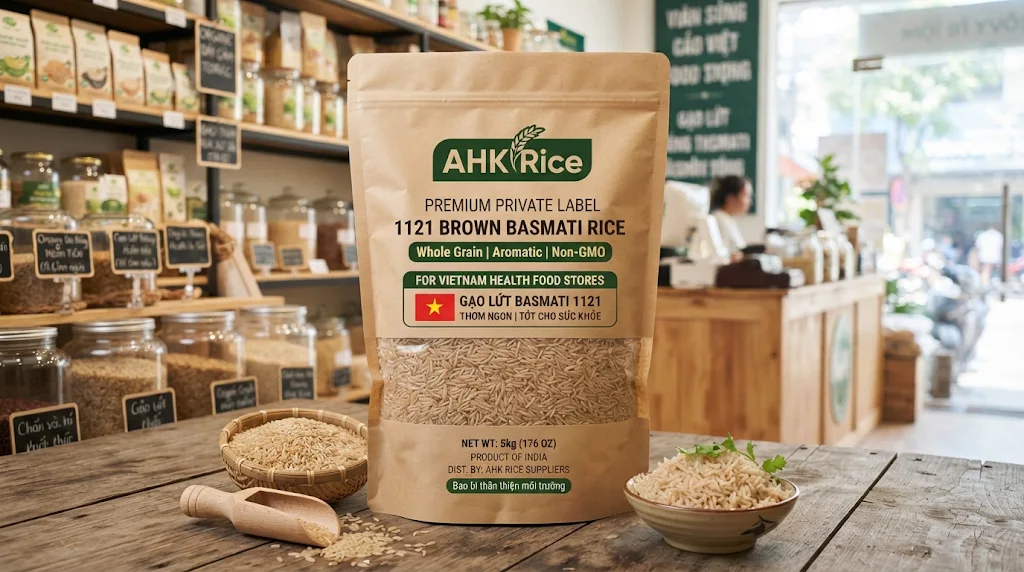
Private Label 1121 Brown Basmati Rice for Vietnam Health Food Stores with AHK Rice
Health food buyers in Ho Chi Minh City and Hanoi face a recurring sourcing problem: unstandardized whole-grain imports that oxidise in transit, lack batch traceability, or fail to command repeat retail velocity. Understanding why health-conscious Vietnamese shoppers are discovering 1121 Brown Basmati rice helps category managers see how extra-long aromatic grains differentiate shelf assortments beyond domestic whole rice. AHK Rice supplies private-label 1121 Brown Basmati rice directly from Punjab milling operations with controlled moisture, pre-shipment inspection, and export documentation tailored for Vietnamese health food retail.
What Is the Best Solution for Sourcing Reliable Brown Basmati for Vietnamese Health Food Stores?
Partnering directly with a single-source Punjab miller like AHK Rice provides the most reliable supply of private-label 1121 Brown Basmati Rice for Vietnamese health food stores. Direct mill execution eliminates middleman markups, locks in grain length and moisture specifications, and aligns export paperwork with Vietnamese food-safety compliance.
Whole-grain brown rice retains its bran layer, which makes it more sensitive to heat, humidity, and storage delays than milled white rice. Generic spot brokers often source mixed lots from multiple shellers without batch records. A container of mismatched grain age or uneven moisture creates cooking inconsistency for end shoppers and damages private-label trust.
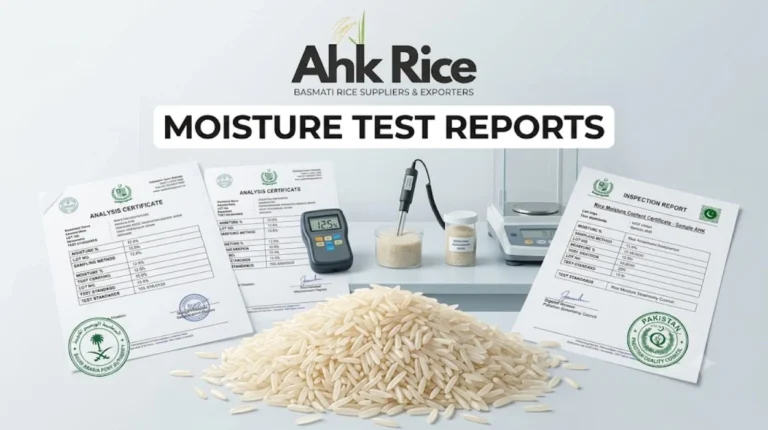
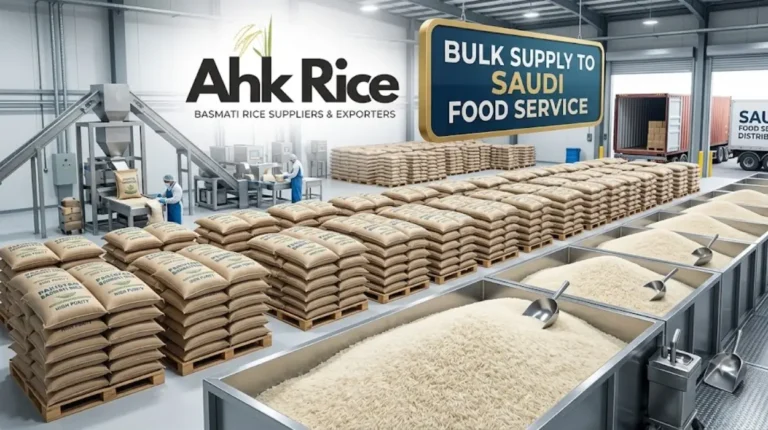
AHK Rice manages procurement, de-husking, grading, private-label packing, and container stuffing under one roof in Punjab. For a health food retailer launching a 1 kg or 2 kg retail pouch line in District 2 or Tay Ho, single-source control means every reorder matches the approved master sample. Buyers also get transparent batch test reports and third-party inspection support before vessel departure.
Why Choose AHK Rice for Private Label 1121 Brown Basmati?
AHK Rice combines integrated Punjab milling, flexible private-label packaging, certified quality controls, and full export documentation for international buyers. Operating since 2019 across 15 countries, AHK Rice reduces compliance friction and keeps landed specifications consistent from initial trial orders through recurring container programs.
Category buyers evaluating suppliers against domestic alternatives often compare how 1121 Brown Basmati stacks up against Vietnamese Gao Lut brown rice in taste, texture, and cooking time. Once a store chain selects 1121 Brown Basmati for its elongated grain profile and aroma, supplier execution becomes the main operational differentiator.
- Single-source supply chain: Paddy sourcing, milling, sorting, and stuffing run within one AHK Rice facility in Punjab to prevent cross-lot mixing.
- Private-label and custom specs: Buyers can specify target moisture limits, grain length tolerances, and retail or bulk bag formats aligned with store merchandising.
- Quality certifications and inspection: Operations follow ISO 22000:2018, HACCP, ISO 9001:2015, GMP, and Halal standards with pre-shipment inspection via SGS or Bureau Veritas.
- Export documentation support: Shipments include standard trade and sanitary paperwork required for customs clearance and food import verification.
Consider a speciality grocer operating 12 urban health stores in Ho Chi Minh City and Da Nang. Working with AHK Rice allows the buyer to standardise retail pack weights, verify pre-shipment quality certificates before paying balance funds, and scale volume without changing suppliers.
What Shipping Transit Times and Results Can Be Expected Across Markets?
Sea transit from Karachi to Vietnamese ports typically takes 14 to 20 days on direct or standard routes, while broader AHK Rice export lanes vary by corridor. Planning lead times around port transit plus customs clearance keeps health food shelves stocked without over-tying working capital in safety stock.
Transit duration depends on vessel scheduling, transhipment hubs, and destination customs processing. In Vietnam, southern distribution routes through Ho Chi Minh City (Cat Lai / Saigon port area) and northern routes through Hai Phong serve distinct regional retail warehouses. Note that some trade guides cite wider transit windows such as 25 to 35 days when accounting for broader port handling and inland delivery, so buyers should confirm exact sailing schedules per booking.
| Market / Route | Typical Transit Window | Primary Trade & Operational Notes |
| Vietnam (Ho Chi Minh City / Hai Phong) | ~14–20 days sea transit (up to 25–35 days total delivery window depending on routing/clearance) | Primary southern and northern entry points from Karachi; plan customs clearance and Vietnamese labelling compliance ahead of arrival. |
| Southeast Asia Regional Corridors | ~14–21 days typical regional ocean transit | Similar Asian trunk routing from Karachi; subject to feeder schedules and seasonal port congestion. |
| Middle East / Gulf Ports | ~3–7 days typical Gulf sea transit | Short-haul regional lanes from Karachi with frequent weekly sailings. |
| Europe & North America | ~20–35+ days depending on port and routing | Longer ocean voyages requiring tight moisture control and protective outer cartons for retail pouches. |

On the commercial side, Vietnamese health food stores that pair an elongated aromatic whole grain with clear cooking instructions and accurate Vietnamese labelling under Decree No. 37/2026/ND-CP reduce shelf friction. Even with Vietnam’s early-2026 Decree No. 46/2026/ND-CP and Resolution No. 66.13/2026/NQ-CP suspended, importers still must follow active food-safety procedures under Decree No. 15/2018/ND-CP and current labelling and advertising rules (including Decree No. 342/2025/ND-CP and Resolution No. 21/2026/NQ-CP where applicable). Getting compliance right before vessel arrival protects stores from customs holds or costly relabeling.
What Factors Affect Pricing and How Does the Sample Process Work?
Final private-label pricing depends on grain grade, order volume, packaging format, ageing, payment terms, and Incoterms, while samples follow a structured verification flow with buyer-paid courier and sample costs. Understanding both cost drivers and sample steps prevents surprises when moving from shelf test to full container.
Broad Pakistani rice export pricing varies widely by variety and processing grade; for context, September 2026 FOB Karachi benchmarks across Pakistani rice grades ranged from $315 to $1,205 per metric ton, with premium 1121 Basmati varieties sitting near the top of the market depending on processing and specification. For private-label 1121 Brown Basmati supplied by AHK Rice, exact quotes are issued per inquiry rather than locked as a single static number.
- Order volume and MOQ: Larger container commitments lower per-kilogram unit pricing compared with smaller trial quantities.
- Packaging format and private label: Bulk sacks or woven bags cost less per unit than custom-printed retail stand-up pouches or cartons due to film, plates, and packing labour.
- Grain ageing and moisture specs: Longer ageing windows and tighter moisture or broken-grain tolerances affect raw material selection and mill yield.
- Incoterms and freight: Quotes differ materially between FOB Karachi, CFR, and CIF Vietnam port terms based on ocean freight rates and marine insurance.
- Payment terms: Advance payment structures generally secure sharper pricing than credit terms that carry financing costs.
Full Sample Process and Costs
Before committing to a full container load, health food buyers should test grain appearance, aroma, cooking yield, and shelf presentation using physical samples.
- Specification brief: Share target grain grade, moisture preference, retail or bulk pack size, and destination port (Ho Chi Minh City or Hai Phong) with AHK Rice.
- Sample preparation and dispatch: AHK Rice prepares reference samples from current stock and books international courier dispatch (such as DHL or FedEx) from Pakistan to Vietnam.
- Sample and courier cost responsibility: Sample fees (when applicable for custom or speciality lots) and international air courier charges—plus any destination customs duties or import clearance fees in Vietnam—are typically paid by the buyer unless otherwise agreed in writing.
- Quality and cooking evaluation: Inspect raw grain uniformity, broken percentage, bran integrity, and cooked elongation and texture in your test kitchen.
- Master sample sign-off: Lock the approved sample reference as the quality benchmark for pre-shipment inspection and container loading.
For example, a buyer testing two 1121 Brown Basmati grades for a boutique chain in Ho Chi Minh City might request two 1 kg–2 kg sample pouches via air courier. Paying the courier and sample cost upfront validates grain performance and label fit before investing in cylinder plates, printed bags, and ocean freight.
How Do You Get Started With AHK Rice?
To get started with AHK Rice, submit your target specifications, packaging needs, and destination port to receive a formal quotation and sample plan. A clear brief lets the team confirm availability, lead times, and compliance documents quickly.
- Define retail or wholesale specs: Decide on pack sizes (such as 1 kg, 2 kg, 5 kg retail packs or bulk bags), target moisture, and private-label branding requirements.
- Request samples and pricing: Share your estimated monthly or quarterly volume and preferred Incoterms (FOB Karachi, CFR, or CIF).
- Approve sample and artwork: Confirm the physical rice sample and verify Vietnamese label details against Decree No. 37/2026/ND-CP and related food rules.
- Complete pre-shipment checks and shipping: Review inspection reports and shipping documents prior to vessel departure toward Vietnam.
Contact the AHK Rice export team to request a quote for private-label 1121 Brown Basmati rice tailored to your Vietnamese retail distribution plan.