Why Health-Conscious Vietnamese Shoppers Are Discovering 1121 Brown Basmati Rice
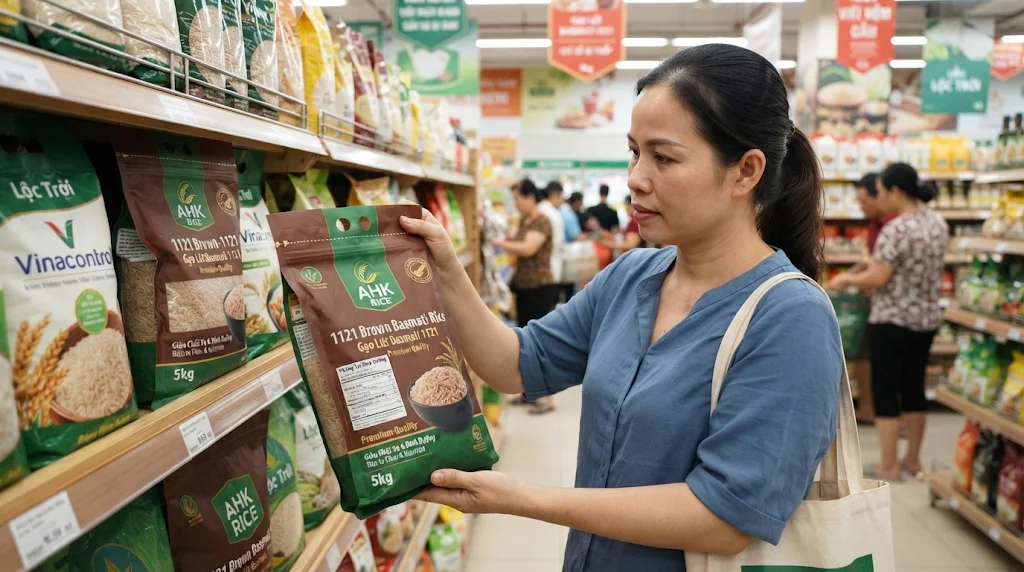
1121 Brown Basmati Rice is an extra-long, whole-grain rice variety grown in Punjab that retains its nutrient-dense bran layer after dehusking. Health-conscious Vietnamese shoppers buy it for its lower glycemic index, higher dietary fibre, and non-sticky grain separation.
Urban shoppers in Ho Chi Minh City and Hanoi increasingly compare whole grains across global cuisines. Traditional Vietnamese staples such as gao lut (local brown rice) and jasmine rice anchor daily meals, yet extra-long aromatic grains from South Asia enter speciality pantries. Understanding how 1121 Brown Basmati Rice is cultivated, milled, graded, and certified clarifies why this grain attracts buyers looking beyond standard white rice.
What Is 1121 Brown Basmati Rice?
1121 Brown Basmati Rice is unpolished, whole-grain 1121 Basmati produced by removing only the inedible outer hull from harvested paddy. The grain keeps its tan bran coat, germ, natural aroma, and extra-long kernel profile.
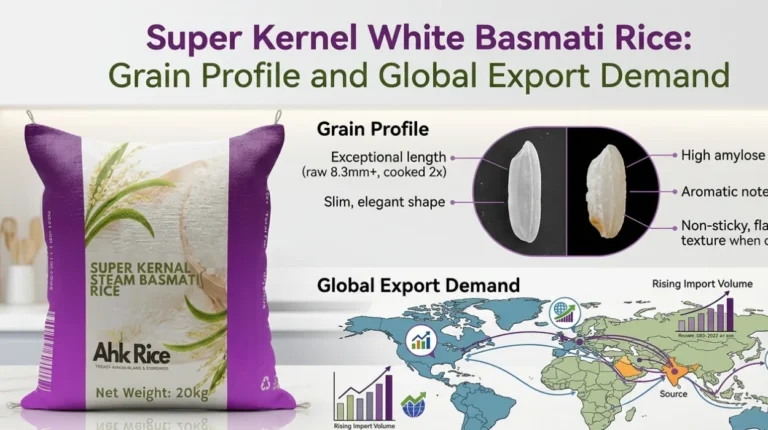
Unlike milled white basmati, which goes through whitening and polishing rollers that strip away outer layers, brown 1121 stays intact as a whole grain. Raw kernels measure around 8.4 mm in length and elongate up to 2.5 times when cooked. The bran layer adds chewiness, earthy flavour, and higher micronutrient density compared to polished white rice.
Where Is 1121 Basmati Grown?
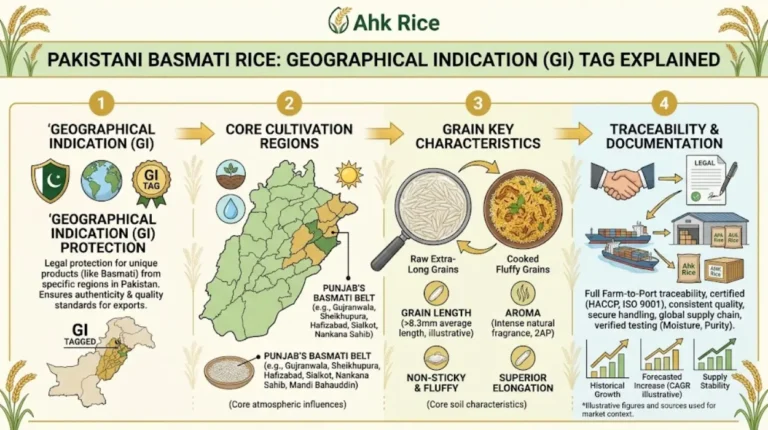
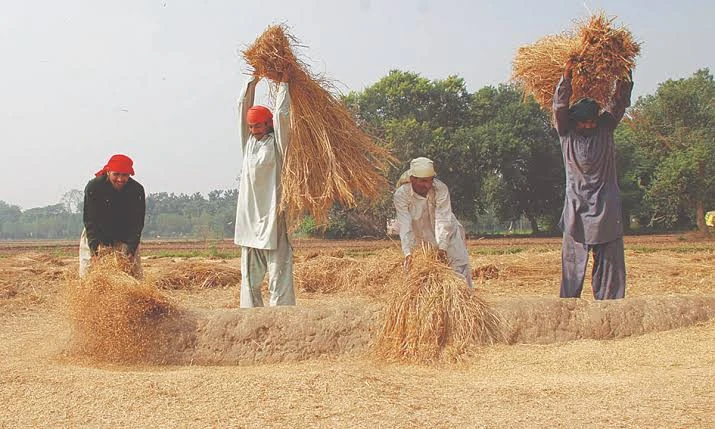
Farmers cultivate 1121 Basmati across the fertile plains of Punjab, Pakistan, during the annual Kharif season. Irrigation canals distribute monsoon and river water across levelled, flooded fields to prevent drought stress during grain filling. Alluvial silt soils and daytime-to-nighttime temperature shifts in Punjab support uniform kernel development and aroma compounds such as 2-acetyl-1-pyrroline.
How Does It Differ From Vietnamese Gao Lut?
Vietnamese gao lut refers to local unpolished brown rice varieties milled to keep the bran layer intact, often with shorter or medium grains depending on the cultivar. 1121 Brown Basmati features a slender, extra-long grain that cooks into separate, elongated strands rather than soft, cohesive clusters. Shoppers comparing how each grain cooks, chews, and pairs with Vietnamese dishes can explore the culinary comparison of 1121 Brown Basmati and Vietnamese gao lut to match grain structure to specific recipes.
How Is 1121 Brown Basmati Rice Processed Step by Step?
Processing 1121 Brown Basmati Rice follows 6 controlled stages from paddy intake to export packing: pre-cleaning, dehusking, paddy separation, sorting, moisture stabilisation, and bagging. Mills stop milling before whitening and polishing so the whole bran stays intact.
Controlled processing protects grain length and prevents rancidity during international transit. Modern mills in Punjab monitor grain moisture between 12% and 13%, ambient temperature between 20°C and 25°C, and relative humidity between 60% and 65%.
Step-by-Step Milling and Export Workflow
- Paddy cleaning: Vibrating screens, aspirators, and destoners remove dust, stones, straw, and empty husks from raw paddy harvested at 20% to 22% moisture.
- Rubber roller dehusking: Counter-rotating rubber rollers rub off the outer husk without scraping the underlying bran layer, turning raw paddy into brown rice.
- Paddy separation: Gravity separators return unhulled paddy grains to the huskers while routing clean brown kernels forward.
- Length grading and optical sorting: Length graders separate broken pieces from whole kernels, and optical colour sorters eject discoloured, immature, or chalky grains.
- Controlled conditioning and fumigation: Milled lots rest in steel silos or conditioned warehouses at 12% to 13% moisture, using fumigation chambers and pest controls to keep grains insect-free.
- Custom packaging and port dispatch: Packers weigh rice into retail pouches, vacuum packs, or 25 kg and 50 kg sacks for container loading through ports such as Karachi Port.
What Are the Key Components and Grades of 1121 Rice?
The 1121 Basmati production system combines certified seeds, canal irrigation, rubber roller huskers, optical sorters, and 7 processing grades. Brown 1121 sits at the unpolished whole-grain end of the 1121 grading spectrum.
Every 1121 grade starts from the same genetic variety, yet post-harvest thermal and milling treatments change appearance, cooking yield, and shelf life. Exporters such as AHK Rice supply 1121 alongside Super Kernel and 1509 varieties across 15+ countries with end-to-end milling and custom packaging.
All 7 Processing Grades of 1121 Basmati Rice
| Grade | Physical Trait | Processing Treatment | Typical Shelf or Storage Profile |
| Brown 1121 | Light-brown bran intact, firmer bite | Dehusked without whitening or polishing | Shorter natural shelf life than polished grades due to bran oils |
| Standard White 1121 | Bright white kernel, moderate fragrance | Dehusked, primary whitening, and polishing | Standard dry storage at 12–13% moisture |
| Extra-Milled White 1121 | Glossy white finish, high visual cleanliness | Extended whitening and fine polishing passes | Dry warehouse storage with low defect tolerance |
| Parboiled (Sella) 1121 | Harder grain, golden or yellow tint, low stickiness | Soaked, steamed, dried, then hulled and milled | Retains quality for up to 18 months at 40°C |
| Aged White 1121 | Tighter kernel, stronger aroma, linear separation | Light pre-steaming before final milling | Stable when kept in cool, dry conditions |
| Spray-Coated 1121 | Light surface film, smooth flow, anti-clumping | Light oil or adhesive coating after milling | Formulated for automated filling and bulk handling |
| Steam-Treated 1121 | Reduced starch leakage, softer cooked bite | Light pre-steaming before final milling | Retains quality for ~12 months in controlled storage |
What Are the Health and Trade Benefits of 1121 Brown Basmati Rice?
1121 Brown Basmati Rice delivers a low-to-medium glycemic index of 50 to 58, higher dietary fibre, B vitamins, minerals, and gluten-free whole-grain nutrition. Its intact bran slows carbohydrate digestion while elongated grains stay separate after cooking.
Vietnamese households actively track blood sugar response, weight management, and digestive health as urban diets shift toward higher-protein and whole-food meals. One cup of cooked basmati rice provides around 210 calories along with thiamine, niacin, folate, zinc, iron, magnesium, and less than 1 gram of fat.
Nutritional and Practical Advantages
- Glycemic control: Glycemic index values between 50 and 58 support a slower rise in blood glucose than high-glycemic white starches.
- Dietary fibre and digestion: Whole bran fibre supports bowel regularity, satiety, and long-term cardiovascular and metabolic health.
- Micronutrient retention: Keeping the bran and germ preserves B vitamins and minerals such as magnesium and zinc that polishing removes.
- Gluten-free versatility: Naturally gluten-free grains suit celiac diets and wheat-free meal prep.
- Distinct texture: Elongated grains separate cleanly rather than turning pasty, giving meal-prep bowls a firm bite.
Which Markets Import It and What Are Its Use Cases?
Pakistani basmati rice exports reach roughly 150 global markets across the GCC, European Union, United Kingdom, North America, Southeast Asia, and Africa. Buyers use 1121 Brown Basmati in health retail packs, meal-prep bowls, and speciality nutrition lines.
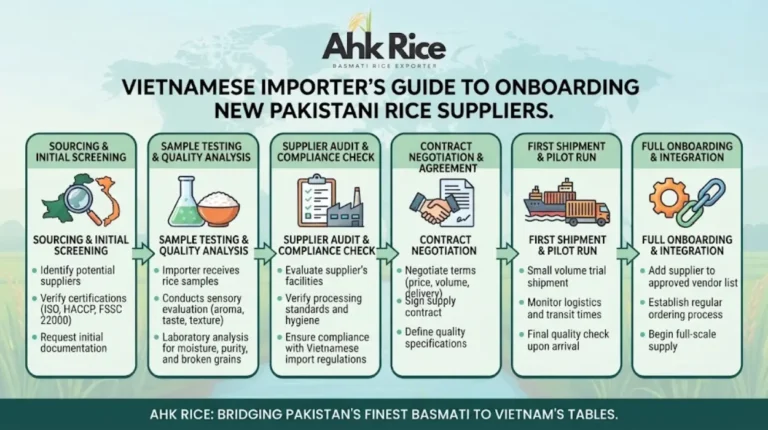
Vietnam’s rice market continues expanding alongside rising incomes and health-focused grocery retail, even as broader Vietnamese grain trade navigates shifting export volumes and livestock or aquaculture feed demand in 2025 and 2026. Importers across Southeast Asia, the Middle East, Europe, and North America pair phytosanitary certificates and certificates of origin with destination-specific food safety checks.
Certifications and Import Compliance Standards
- Phytosanitary and origin documents: National plant protection certificates and certificates of origin accompany cross-border shipments.
- Quality and safety management: Mills commonly maintain ISO 9001:2015, HACCP, and Halal certifications to verify hygiene and zero non-halal cross-contamination during processing.
- Independent laboratory testing: Pre-shipment testing from accredited bodies such as SGS, Intertek, and PCSIR verifies moisture, purity, and pesticide residue limits.
- Market-specific food rules: Destination markets enforce maximum residue limits (such as tricyclazole limits in Europe) and importer registration rules (such as FDA facility registration and FSVP in the United States).
Everyday Culinary Use Cases
Home cooks and meal-prep brands use 1121 Brown Basmati for grilled chicken bowls, steamed fish plates, stir-fried vegetables, and savoury herb pilafs. Its firm, nutty whole-grain texture holds up well in chilled or reheated lunch containers without clumping.
What Common Problems and Misconceptions Affect 1121 Brown Basmati?
Common quality issues in 1121 rice include broken grain rates above 5%, moisture outside 12% to 13%, and uneven harvesting or milling. Buyers also misread brown rice as “unfinished” or assume more milling always means higher quality.
Clear specifications prevent both kitchen disappointments and import rejections. When inspecting samples or planning orders, buyers check grain integrity, aroma, and storage conditions before committing to volume.
Milling Defects and Buyer Misconceptions
- Misconception that brown rice is inferior: Brown 1121 is less milled to preserve whole-grain bran and fibre, not made from lower-grade paddy.
- Misconception that aged rice is stale: Controlled ageing over 12 to 18 months under regulated temperature and humidity tightens grain structure and boosts aroma rather than spoiling the rice.
- Excessive broken grains and moisture swings: Late harvesting or miscalibrated huskers raise breakage above 5%, while moisture outside 12% to 13% risks spoilage during transit.
- Pesticide residue non-compliance: Unverified farm inputs cause shipments to fail strict residue limits in regulated import markets.