1121 Creamy Sella vs 1121 Golden Sella: Price and Quality Side by Side
1121 Creamy Sella delivers softer texture and lower price, while 1121 Golden Sella offers longer shelf life and stronger grain stability. Here is why: parboiling intensity defines color, durability, and export pricing across markets.
1121 Sella Basmati rice exists in two dominant grades: Creamy Sella and Golden Sella. Both originate from the same 1121 long-grain basmati variety cultivated in Punjab. Both undergo parboiling. The difference comes from heat intensity, drying cycles, and polishing stages.
Buyers compare these two grades because import decisions depend on three variables: price per metric ton, cooking performance, and storage conditions. This guide evaluates both grades using measurable trade specifications and real export use cases.
For a complete understanding of Creamy Sella basmati processing and grading fundamentals, read the guide here: Creamy Sella Basmati rice processing and grading
What is the actual difference between 1121 Creamy Sella and 1121 Golden Sella?
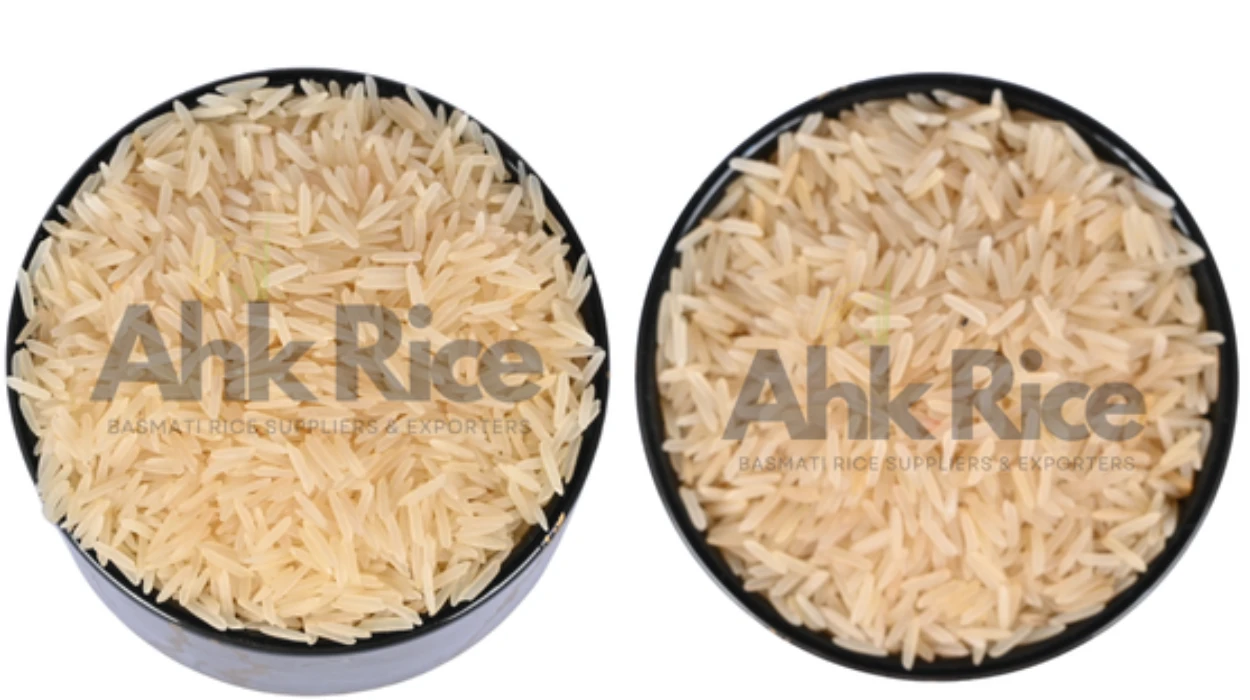
1121 Creamy Sella uses mild parboiling with light polishing, while 1121 Golden Sella uses high-temperature parboiling that strengthens grains and deepens color.
1121 Creamy Sella Basmati rice undergoes controlled soaking and steaming. The mill applies lower heat. The grain retains an off-white or creamy tone. The texture remains soft after cooking.
1121 Golden Sella Basmati rice undergoes extended steaming under higher pressure. The grain absorbs more nutrients into the kernel. The color turns golden. The structure becomes firm and non-sticky.
Processing difference (step-by-step)
- Clean the paddy
- Soak the grain
- Steam under controlled pressure
- Dry using mechanical dryers
- Dehusk the grain
- Polish to desired finish
- Sort by length and color
- Grade by export specification
- Pack and dispatch
Golden Sella uses longer steaming and drying cycles. Creamy Sella uses shorter cycles. This difference directly impacts durability and price.
With the processing difference defined, the next step is comparing measurable specifications side by side.
How do 1121 Creamy Sella and Golden Sella compare in specifications?
Golden Sella shows higher durability and shelf life, while Creamy Sella shows better softness and lower cost per metric ton.
Specification Comparison Table
| Attribute | 1121 Creamy Sella | 1121 Golden Sella |
|---|---|---|
| Grain Length | 8.20–8.40 mm | 8.30–8.50 mm |
| Color | Creamy white | Golden yellow |
| Moisture | 12–13% | 12–13% |
| Broken Ratio | 1–2% max | 1% max |
| Cooking Texture | Soft and fluffy | Firm and separate |
| Shelf Life | 12–18 months | 18–24 months |
| Average Price/MT | $850–$1050 | $950–$1200 |
Creamy Sella costs less because processing uses less energy. Golden Sella costs more because extended steaming increases production cost.
Golden Sella lasts longer in hot climates. In a 40°C warehouse in the UAE, Golden Sella maintains quality for 18–24 months. Creamy Sella performs best within 12–18 months.
With specifications compared, the next step is understanding real market preferences.
Which markets prefer Creamy Sella vs Golden Sella?
Middle East markets prefer Golden Sella for durability, while African markets prefer Creamy Sella for affordability and softer texture.
Middle East Market (UAE, Saudi Arabia, Qatar)
Golden Sella dominates this region. High storage temperatures require stronger grains. Catering companies prefer non-sticky rice for bulk cooking.
- Use Golden Sella for mandi and kabsa
- Use Golden Sella for long storage cycles
- Use Golden Sella for premium retail packaging
Export data shows strong demand for Golden Sella in Gulf countries (source: REAP export data, December 2025).
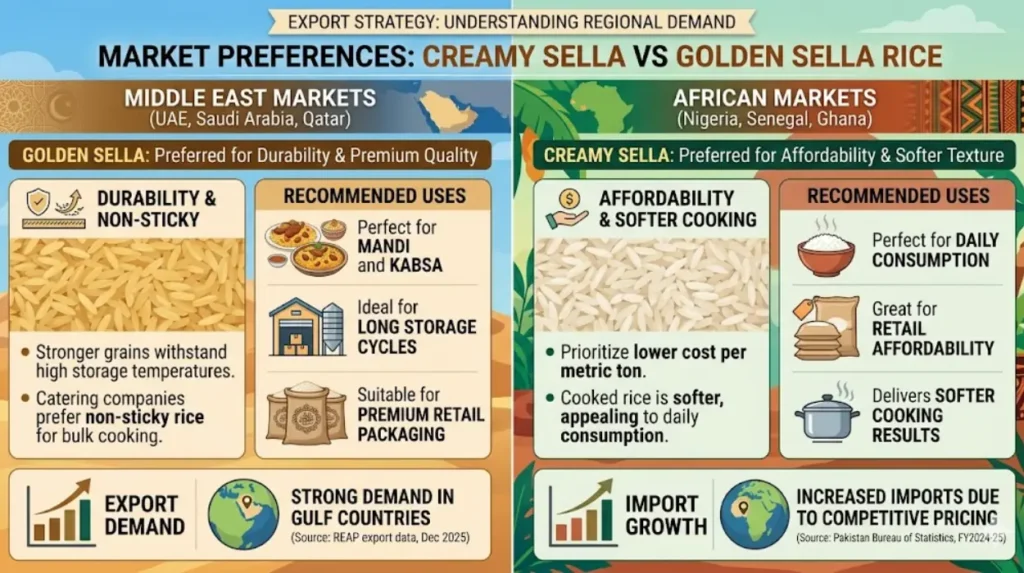
African Market (Nigeria, Senegal, Ghana)
Creamy Sella dominates due to price sensitivity. Buyers prioritize cost per metric ton over long storage.
- Use Creamy Sella for daily consumption
- Use Creamy Sella for retail affordability
- Use Creamy Sella for softer cooking results
African imports increased for Creamy Sella due to competitive pricing (source: Pakistan Bureau of Statistics, FY2024-25).
With market preferences clear, the next step is evaluating which option fits specific buyer needs.
Which option works best for different buyer types?
Golden Sella suits bulk storage and premium catering, while Creamy Sella suits price-sensitive retail and fast turnover distribution.
Buyer use-case mapping
- Choose Golden Sella for long-distance exports
- Choose Golden Sella for hot climate storage
- Choose Golden Sella for premium horeca clients
- Choose Creamy Sella for quick retail turnover
- Choose Creamy Sella for budget-focused markets
- Choose Creamy Sella for soft-texture cuisine
Iraqi catering buyers benefit from Golden Sella because non-climate storage demands durability. West African distributors benefit from Creamy Sella because lower price improves margins.
With buyer types defined, the next step is evaluating pros and cons in detail.
What are the pros and cons of Creamy Sella vs Golden Sella?
Creamy Sella offers affordability and softness, while Golden Sella offers strength, longevity, and premium perception.
Creamy Sella Pros
- Lower cost per metric ton
- Softer cooked texture
- Faster cooking time
- Strong demand in price-sensitive markets
Creamy Sella Cons
- Shorter shelf life
- Higher breakage risk during transport
- Less premium visual appeal
Golden Sella Pros
- Longer shelf life
- Strong grain structure
- Premium golden appearance
- Better performance in bulk cooking
Golden Sella Cons
- Higher price per metric ton
- Slightly longer cooking time
- Firmer texture not preferred in all cuisines
Golden Sella performs better in export logistics. Creamy Sella performs better in retail pricing strategies.
With advantages and limitations outlined, the next step is building a structured decision framework.
How should importers decide between Creamy Sella and Golden Sella?
Decision depends on storage duration, target market, pricing strategy, and end-use cooking requirements.
5-Row Decision Framework
| Decision Factor | Choose Creamy Sella | Choose Golden Sella |
|---|---|---|
| Budget | Low-cost priority | Premium pricing acceptable |
| Storage Time | Short-term (≤12 months) | Long-term (18–24 months) |
| Climate | Moderate temperature | High temperature (40°C) |
| End Use | Soft texture dishes | Firm grain dishes |
| Market Type | Retail-focused | Horeca and bulk catering |
Importers reduce risk by aligning rice grade with logistics conditions. Storage duration and climate impact quality more than grain length.
With decision factors defined, the next question is how pricing varies in real export scenarios.
How does price difference impact profitability?
Golden Sella increases upfront cost but reduces losses, while Creamy Sella lowers cost but requires faster turnover.
Golden Sella costs $100–$150 more per metric ton. This increase reflects energy-intensive processing.
Golden Sella reduces breakage during shipping. A 1% reduction in breakage saves significant volume in bulk shipments.
Creamy Sella improves entry-level market penetration. Lower pricing increases distributor competitiveness.
Profit strategy depends on rotation speed. Fast-selling markets benefit from Creamy Sella. Slow-moving inventory benefits from Golden Sella.
With pricing impact explained, the next step is identifying available sourcing solutions.
What sourcing and processing solutions are available?
Exporters provide multiple grading, packaging, and certification solutions to match market-specific requirements.
Standard export solutions
- Colour sorting for uniform grain appearance
- Length grading for export consistency
- Moisture control for shelf stability
- Fumigation for pest control
- Lab testing for quality verification
- Custom packaging for retail or bulk
- Container loading for 20ft and 40ft shipments
Certifications applied
- ISO Certification
- HACCP Certification
- Halal Certification
- SGS Inspection
- Phytosanitary Certificate
- Fumigation Certificate
Container capacity
- 20ft container: 25–27 MT
- 40ft container: 50–54 MT
Payment terms
- 30% advance, 70% against documents
Shipping timelines
- Middle East: 12–18 days
- Africa: 20–30 days
These solutions ensure buyers match product grade with logistics and compliance requirements.
With sourcing clarified, the final step is connecting evaluation to purchase decisions.
Where should buyers move next after comparison?
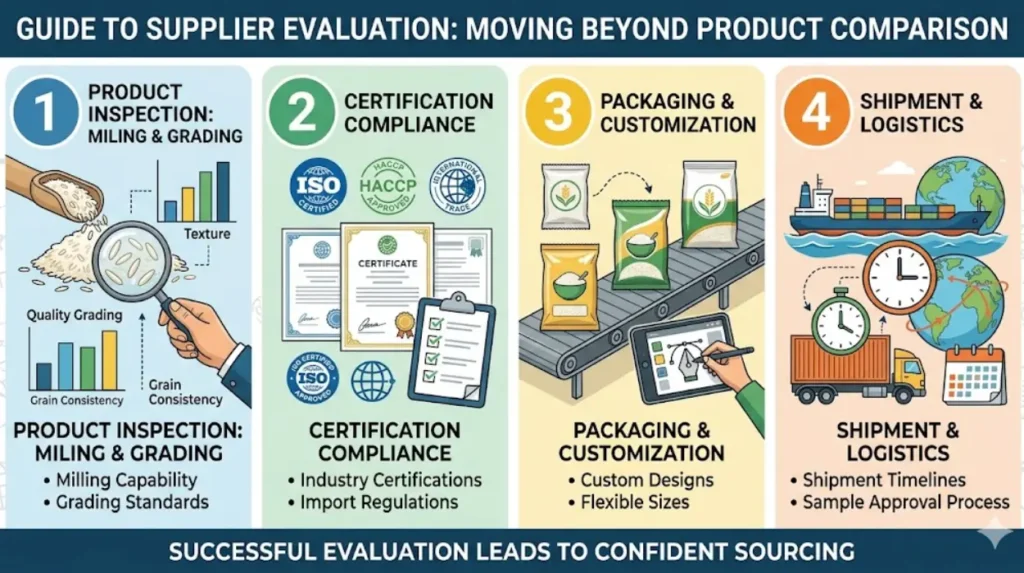
Buyers should move from comparison to supplier evaluation based on specs, certifications, and shipment capability.
1121 Creamy Sella and Golden Sella serve different strategies. No single option fits all markets. The correct choice aligns product characteristics with business model.
Buyers evaluating suppliers should verify:
- Milling and grading capability
- Certification compliance
- Packaging customization
- Shipment timelines
- Sample approval process
For a decision-focused supplier evaluation, read: AHK Rice 1121 creamy sella wholesale Middle East.
Frequently Asked Questions
What is the main difference between Creamy Sella and Golden Sella rice?
Creamy Sella is softer and lighter in color, while Golden Sella is firmer and golden due to stronger parboiling. Creamy Sella uses mild steaming, which keeps texture soft. Golden Sella uses high-temperature steaming, which strengthens the grain and improves durability.
Which is cheaper: Creamy Sella or Golden Sella?
Creamy Sella is typically $100–$150 per MT cheaper than Golden Sella. Lower processing intensity reduces production cost. Golden Sella costs more because extended steaming and drying require more energy and time.
Which rice is better for long storage in hot climates?
Golden Sella performs better for long storage in temperatures above 35–40°C. Stronger grain structure prevents breakage and spoilage. Creamy Sella suits shorter storage cycles under controlled conditions.
Which grade is preferred in Middle East and African markets?
Golden Sella dominates Middle East markets, while Creamy Sella leads in African markets. Gulf buyers prefer firm, non-sticky grains for catering. African importers prioritize affordability and softer texture for daily consumption.
Which rice cooks better for soft dishes?
Creamy Sella cooks softer and is better for dishes requiring fluffy texture. Golden Sella cooks firmer and suits dishes like mandi or biryani where grain separation is required.