Order 1509 Steam Basmati Rice with FOB Pakistan and CIF UAE Pricing from Exporter
Ordering 1509 Steam Basmati Rice directly from a Pakistani exporter is the most efficient procurement method for UAE importers. Here is why: direct sourcing provides better pricing control, verified quality specifications, and flexible FOB or CIF shipping options. Buyers who study the fundamentals of 1509 Steam pricing in our guide on understanding UAE import pricing structures can make faster purchasing decisions and reduce sourcing risks.
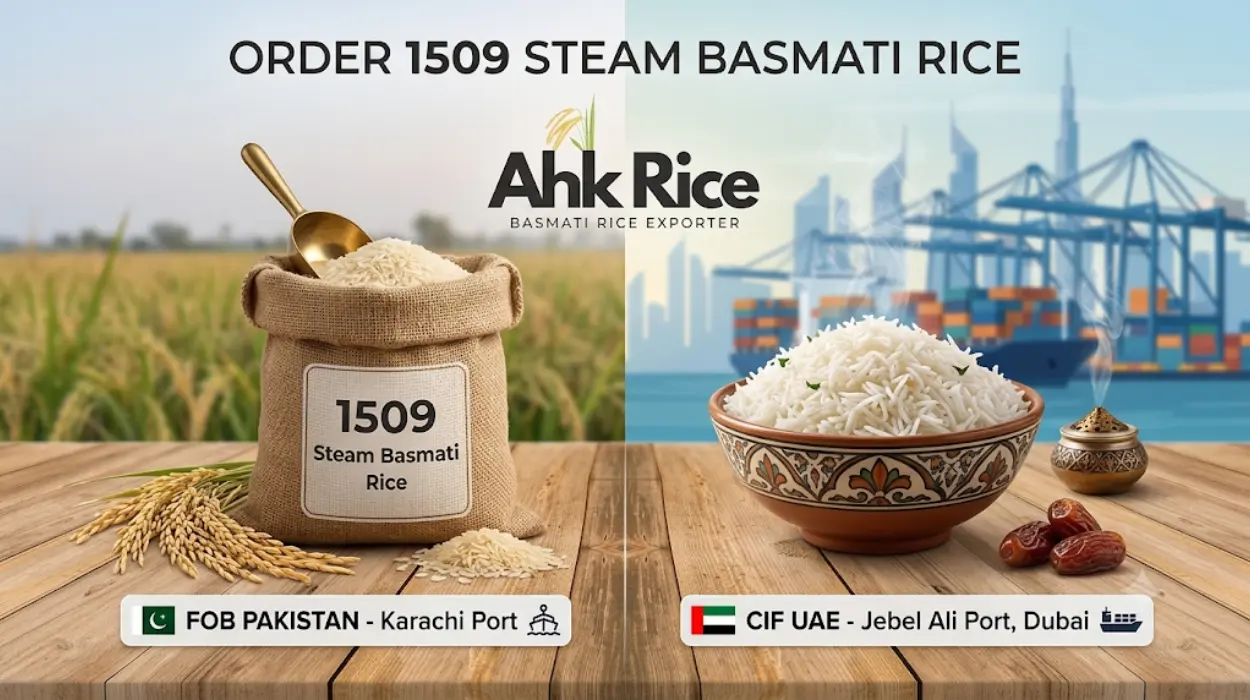
1509 Steam Basmati Rice remains one of the most imported premium rice grades in the Gulf region. The variety delivers long grain appearance, strong cooking performance, and competitive pricing compared to premium 1121 grades. AHK Rice exports this grade throughout the UAE, Saudi Arabia, Oman, Qatar, Kuwait, and Bahrain. AHK Rice supports importers with FOB Pakistan pricing and CIF UAE delivered pricing based on container quantity, destination port, and packaging requirements.
AHK Rice manages sourcing, milling, grading, inspection, documentation, container loading, customs clearance, and shipment coordination. This integrated process helps buyers reduce procurement complexity while maintaining quality consistency.
What is the best solution for importing 1509 Steam Basmati Rice?
FOB Pakistan suits experienced importers seeking freight control, while CIF UAE suits buyers seeking delivered cost certainty, faster procurement decisions, and simplified logistics management.
1509 Steam Basmati Rice offers an effective balance between premium grain appearance and commercial pricing. UAE wholesalers commonly select this grade because it delivers strong consumer acceptance without the higher costs associated with premium varieties.
1509 Steam Basmati Rice Specifications
| Specification | Typical Value |
|---|---|
| Grain Length | 7.8–8.2 mm |
| Moisture | 13% Max |
| Broken Grains | 2%–5% |
| Purity | 95%–100% |
| Crop Type | Current Crop |
| Milling Process | Steam Processed |
| Shelf Life | 12–18 Months |
AHK Rice cultivates partnerships with selected farming regions in Punjab, Pakistan. The company harvests paddy, mills rice, grades grains, sorts defects, and inspects every shipment before loading.
AHK Rice follows nine processing steps:
- Clean the paddy.
- De-husk the grain.
- Dry the rice.
- Mill the kernels.
- Polish the surface.
- Grade by size.
- Sort by colour.
- Inspect quality.
- Load containers.
These procedures help AHK Rice maintain export consistency across multiple shipments.
With the product specifications established, the next question is why buyers choose a specific exporter.
Why choose AHK Rice as your 1509 Steam Basmati Rice exporter?
Direct factory sourcing, export documentation support, quality verification, flexible packaging, and responsive logistics management make AHK Rice a practical sourcing partner.
AHK Rice supplies international importers through its export-focused processing facilities in Pakistan. Buyers can source directly from the company through the official rice export service platform without relying on intermediaries.
Export Services Offered by AHK Rice
- Quality inspections
- SGS verification support
- Colour sorting
- Moisture control
- Custom packaging
- Private labeling
- Container stuffing
- Export documentation
- Shipping coordination
AHK Rice verifies specifications before shipment. Quality reports include moisture levels, broken percentage, grain length, and packaging verification.
AHK Rice supports retail brands, wholesalers, food distributors, supermarkets, and catering suppliers. UAE buyers often select 5 kg, 10 kg, 20 kg, 25 kg, and 40 kg packaging formats depending on their distribution model.
AHK Rice also assists buyers with compliance requirements. Export shipments commonly include:
- Commercial Invoice
- Packing List
- Certificate of Origin
- Phytosanitary Certificate
- Fumigation Certificate
- Bill of Lading
- Quality Certificate
This export support simplifies procurement and prepares buyers for evaluating expected outcomes.
What results can buyers expect after ordering 1509 Steam Basmati Rice?
Consistent grain quality, predictable landed costs, reliable supply continuity, and competitive retail margins are the primary commercial outcomes.
1509 Steam Basmati Rice delivers excellent cooking elongation. The grain expands significantly after cooking while maintaining separate kernels. This characteristic supports restaurants and catering operations.
UAE wholesalers frequently select 1509 Steam because it combines visual appeal with commercial affordability. Retail customers recognize the long-grain appearance and associate it with premium Basmati quality.
Typical Market Applications
| Buyer Type | Primary Use |
|---|---|
| Supermarkets | Retail packs |
| Wholesalers | Bulk distribution |
| Restaurants | Daily cooking |
| Caterers | Large events |
| Food Distributors | Regional supply |
Pakistan remains one of the world’s leading rice exporters, with significant Basmati exports directed toward Gulf markets (source: Pakistan Bureau of Statistics, FY2024-25).
Importers comparing procurement structures should also review our analysis of FOB and CIF cost differences for bulk rice imports. Understanding freight allocation and landed cost calculations helps buyers choose the correct purchasing model.
These business outcomes naturally lead to the most important consideration: pricing.
What factors affect FOB Pakistan and CIF UAE pricing?
Rice grade specifications, packaging format, container quantity, destination port, freight rates, and seasonal market conditions determine final pricing.
FOB pricing includes product cost and loading expenses at the Pakistani port. Buyers arrange freight separately.
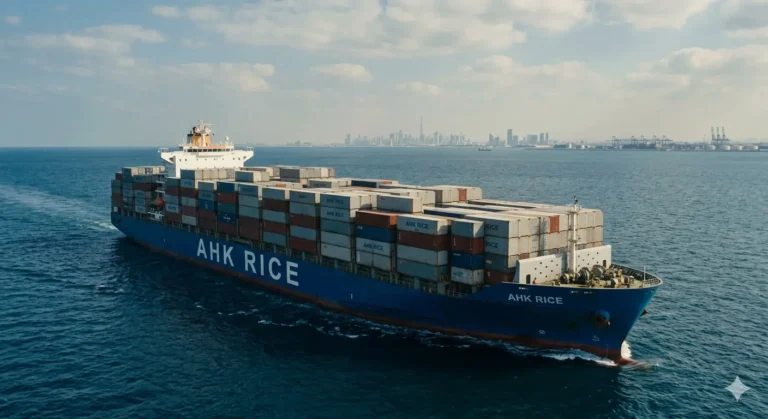
CIF pricing includes product cost, marine freight, and insurance until arrival at the destination port.
FOB Pricing Factors
- Grain length specifications
- Broken percentage
- Packaging materials
- Container quantity
- Crop season
- Exchange rates
- Export demand
CIF Pricing Factors
- Ocean freight charges
- Marine insurance
- Destination port fees
- Container availability
- Shipping schedules
- Fuel surcharges
- Transit routes
Shipping Time by Market
| Market | Transit Time |
|---|---|
| UAE | 7–12 Days |
| Oman | 10–15 Days |
| Qatar | 10–15 Days |
| Kuwait | 12–18 Days |
| Bahrain | 10–15 Days |
| Saudi Arabia | 12–20 Days |
Shipping durations vary according to vessel schedules, port congestion, and customs processing requirements.
AHK Rice provides updated quotations based on current freight conditions. This approach allows buyers to calculate realistic landed costs before confirming orders.
Pricing clarity becomes more valuable when buyers understand the complete sample approval process.
How does the sample process work before placing an order?
Product sampling reduces purchasing risk by allowing buyers to verify grain quality, cooking performance, and packaging standards before committing to container quantities.
AHK Rice recommends sample approval before large-scale procurement. This process helps buyers confirm specifications and avoid misunderstandings.
Sample Process
- Request the desired specification.
- Confirm destination country.
- Receive sample availability confirmation.
- Approve courier shipment.
- Test cooking quality.
- Verify grain specifications.
- Approve commercial quotation.
- Confirm production order.
Typical Sample Costs
| Sample Type | Estimated Cost |
|---|---|
| Product Sample | Free |
| Courier Charges UAE | USD 40–80 |
| Courier Charges GCC | USD 45–90 |
| Laboratory Testing | Buyer Dependent |
AHK Rice dispatches samples through international courier services. Delivery normally requires three to seven working days depending on destination.
Sample approval creates confidence for both buyer and exporter. Once approved, production begins according to the agreed specification.
With product verification completed, buyers can move directly into the ordering process.
How do you get started with AHK Rice?
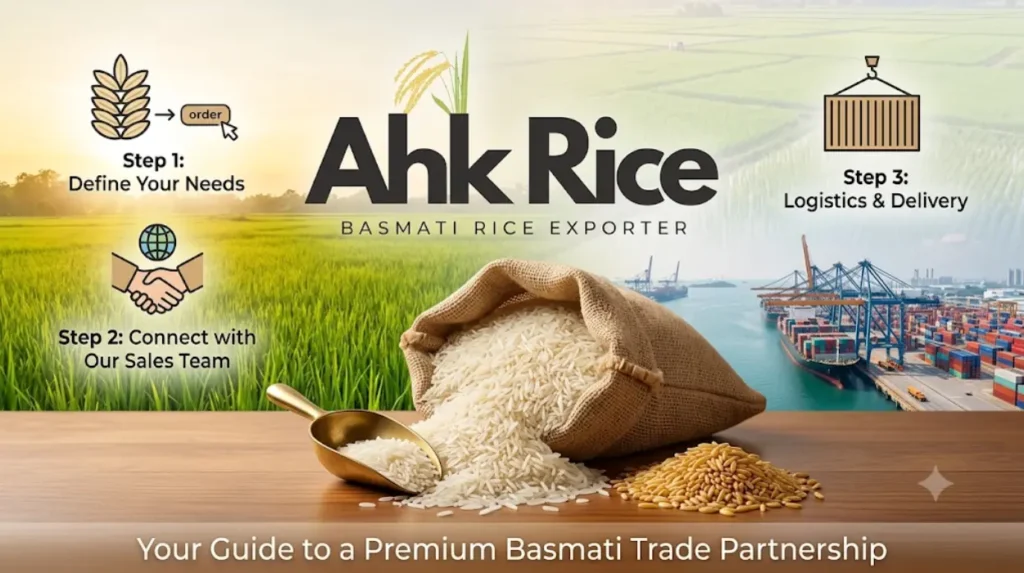
Request specifications, approve samples, confirm pricing, sign the sales agreement, and schedule shipment according to your procurement timeline.
AHK Rice follows a structured export workflow that helps buyers move efficiently from inquiry to delivery.
Ordering Process
- Submit product requirements.
- Confirm packaging specifications.
- Approve product sample.
- Receive FOB and CIF quotation.
- Confirm purchase order.
- Arrange payment terms.
- Approve production schedule.
- Receive shipment documents.
- Track container delivery.
AHK Rice provides communication throughout production and shipment stages. Buyers receive updates regarding processing progress, container loading, and vessel departure.
AHK Rice supports first-time importers and experienced distributors. The company helps buyers evaluate logistics options and select the most suitable purchasing structure.
1509 Steam Basmati Rice remains a strong commercial choice for UAE importers seeking quality, value, and dependable supply. Contact AHK Rice today and submit your requirements through Request a Quote to receive current FOB Pakistan and CIF UAE pricing.
Frequently Asked Questions
What is the difference between FOB Pakistan and CIF UAE pricing?
FOB pricing includes the rice cost and loading at the Pakistani port. The buyer arranges freight and insurance. CIF pricing includes freight and insurance to the UAE destination port. CIF provides easier budgeting for new importers. FOB offers greater shipping flexibility for experienced buyers.
What is the minimum order quantity for 1509 Steam Basmati Rice?
Most export orders begin with one 20-foot or 40-foot container. Container quantity depends on packaging size and loading configuration. Larger orders often receive better pricing. AHK Rice can also discuss trial shipments for qualified buyers. Final quantities depend on destination market requirements.
How long does shipping to the UAE take?
Transit time to the UAE usually ranges from 7 to 12 days. Vessel schedules influence exact delivery periods. Customs clearance may add additional processing time. Peak shipping seasons can affect transit schedules. Buyers receive shipment tracking after vessel departure.
What documents are provided with export shipments?
Export shipments typically include a commercial invoice, packing list, certificate of origin, and bill of lading. Additional certificates may be required by destination authorities. Phytosanitary and fumigation certificates are commonly supplied. Quality certificates can also be arranged. Documentation requirements vary by country.
Why should importers request a sample before ordering?
Samples allow buyers to verify grain length, moisture levels, and cooking performance. Product testing reduces purchasing risk. Sample approval confirms specification expectations before production begins. Buyers can also evaluate packaging quality. This process helps avoid misunderstandings during commercial orders.