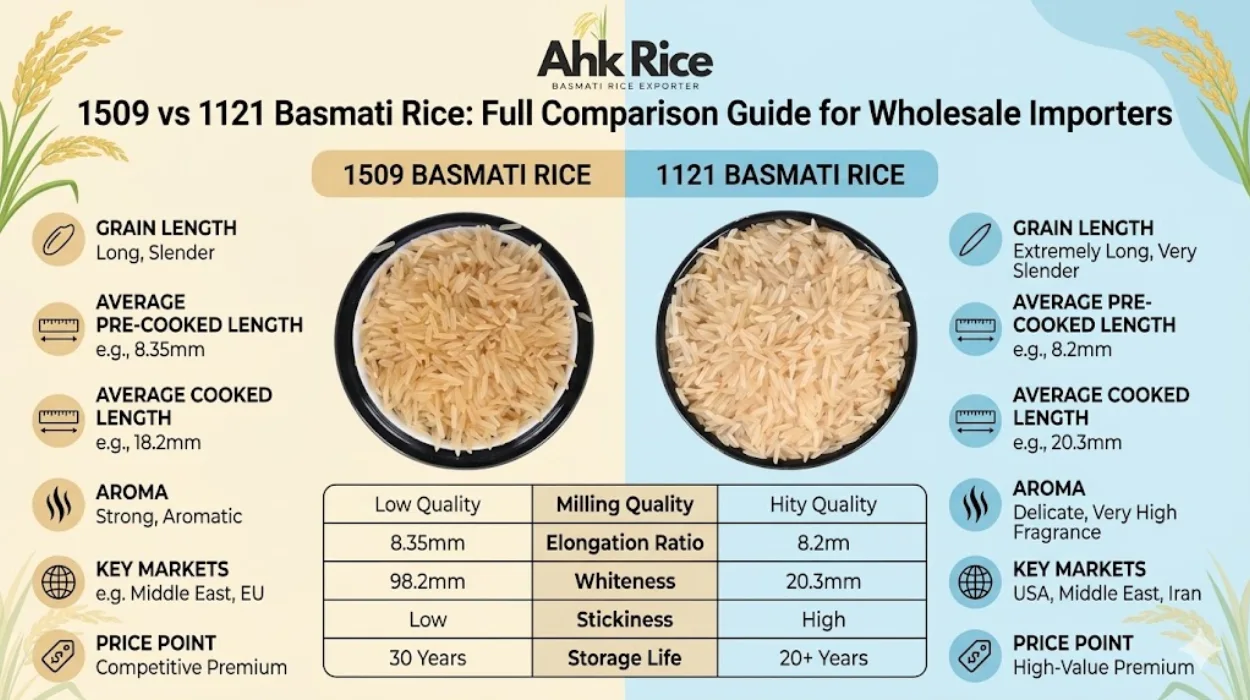
1509 vs 1121 Basmati Rice: Full Comparison Guide for Wholesale Importers
1509 Basmati offers faster cooking, lower cost, and higher turnover, while 1121 Basmati delivers premium length, stronger aroma, and higher export value. Here is why: 1509 matures faster and processes efficiently, while 1121 develops longer grain and superior elongation after cooking.
Wholesale importers choose between 1509 and 1121 based on price positioning, target market expectations, and storage conditions. Both varieties originate from Punjab, Pakistan, but differ in cultivation cycle, milling outcomes, and export demand patterns.
Importers evaluating these grades should first understand how Basmati varieties are cultivated, processed, and graded. A detailed breakdown of this process is covered in our educational guide on Basmati rice production and grading standards, which explains how grain length, moisture, and polishing affect export quality.
What are the available solutions for 1509 vs 1121 Basmati rice?
1509 and 1121 Basmati are available in three processing types: Steam, Sella (Parboiled), and Golden Sella, each offering distinct cooking behavior, shelf life, and market suitability for wholesale buyers.
1509 Basmati Variants
1509 Basmati is a short-duration crop cultivated in Punjab. Farmers harvest it earlier than 1121, which reduces production costs and increases supply volume.
- Steam 1509: Soft texture and quick cooking
- Sella 1509: Firmer grain with moderate shelf life
- Golden Sella 1509: Enhanced durability and longer storage
1509 performs well in high-volume markets because it cooks quickly and maintains acceptable elongation. African and Middle Eastern importers prefer this grade for price-sensitive segments.
1121 Basmati Variants
1121 Basmati is a premium long-grain variety known for its elongation and aroma.
- Steam 1121: Soft and aromatic for retail packaging
- Sella 1121: Balanced strength and elongation
- Golden Sella 1121: Maximum shelf life and durability
1121 delivers higher cooked grain length. Buyers targeting premium retail or catering segments select this grade for its visual appeal and consistency.
With the available solutions defined, the next step is comparing their technical specifications side by side.
How do 1509 and 1121 Basmati rice compare technically?
1121 Basmati exceeds 1509 in grain length and elongation, while 1509 offers lower price and faster cooking time, making each suitable for different wholesale strategies.
Specification Comparison Table
| Attribute | 1509 Basmati Rice | 1121 Basmati Rice |
|---|---|---|
| Grain Length (Raw) | 7.4–7.8 mm | 8.2–8.5 mm |
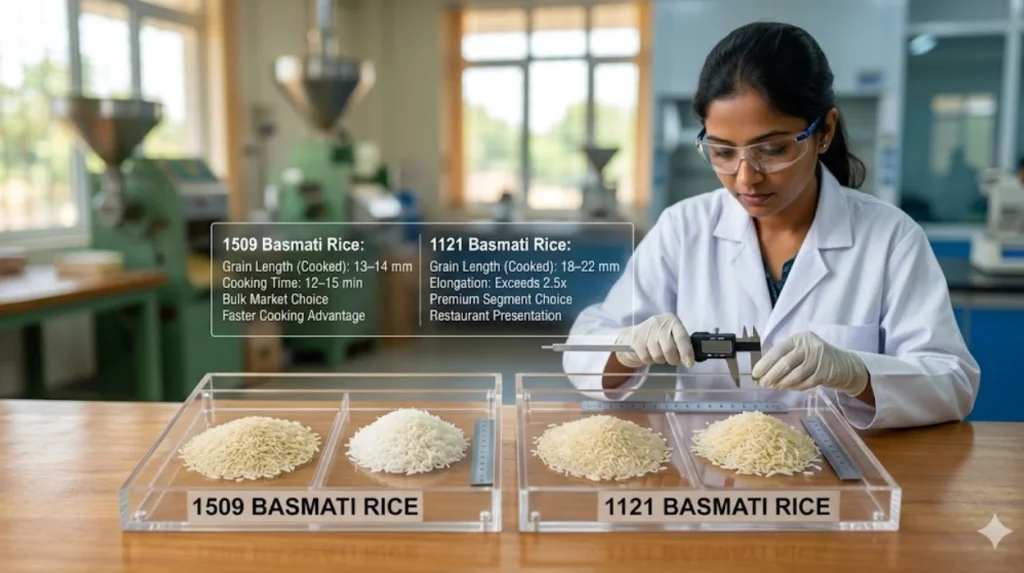
| Grain Length (Cooked) | 13–14 mm | 18–22 mm |
| Aroma Level | Mild | Strong |
| Cooking Time | 12–15 minutes | 18–22 minutes |
| Moisture Content | 12–13% | 12–13% |
| Average Price/MT | $850–$1050 | $1050–$1350 |
| Yield After Cooking | Good | Excellent |
1121 dominates premium segments because elongation exceeds 2.5x after cooking. Restaurants prefer this trait for presentation.
1509 dominates bulk markets because faster cooking reduces fuel costs in large kitchens. This operational advantage matters in catering contracts.
With specifications compared, the next step is understanding how regional demand influences buying decisions.
Which markets prefer 1509 vs 1121 Basmati rice?
Africa and price-sensitive Middle Eastern markets prefer 1509, while Gulf retail and European importers demand 1121 due to premium grain length and aroma expectations.
African Markets
African importers prioritize affordability and volume.
- Nigeria imports large volumes of 1509 Sella
- Senegal prefers durable parboiled grades
- Price sensitivity drives demand (source: REAP export data, December 2025)
1509 fits these markets because it balances cost and acceptable quality.
Gulf Markets (UAE, Saudi Arabia)
Gulf buyers demand premium rice for hospitality and retail.
- 1121 Golden Sella dominates catering
- Steam 1121 is used for branded retail packs
- Long grain and aroma are critical purchase factors
1121 performs better in hot climates. Golden Sella variants maintain stability for 18–24 months, while Steam variants last 10–12 months in similar conditions.
European Markets
European importers focus on quality consistency and packaging standards.
- 1121 Steam preferred for retail shelves
- Strict quality inspection and certification required
- Lower tolerance for broken grains
With market preferences clear, the next step is identifying which option fits specific business models.
Which method works best for different wholesale cases?
1509 works best for bulk distribution and cost efficiency, while 1121 performs best for premium branding and high-margin retail segments.
Case 1: Bulk Importers
Bulk buyers supplying wholesalers prioritize turnover.
1509 reduces procurement cost and speeds up distribution cycles. Faster cooking also appeals to institutional buyers.
Case 2: Retail Brands
Retail brands require consistent grain appearance.
1121 supports premium branding because long grains enhance shelf appeal. Consumers associate longer grains with higher quality.
Case 3: Catering and Hospitality
Hotels and restaurants focus on plate presentation.
1121 Golden Sella delivers long, separate grains after cooking. This improves visual quality in dishes like biryani.
Case 4: Government Tenders
Government contracts prioritize cost and supply stability.
1509 meets these requirements because it is widely cultivated and consistently available.
With use cases defined, the next step is evaluating advantages and limitations.
What are the pros and cons of 1509 vs 1121 Basmati?
1509 provides cost efficiency and quick cooking, while 1121 offers superior elongation and premium positioning, making each suitable for different commercial objectives.
1509 Basmati Pros
- Lower procurement cost
- Faster cooking time
- High availability
- Suitable for bulk distribution
1509 Basmati Cons
- Shorter grain length
- Lower aroma intensity
- Limited premium appeal
1121 Basmati Pros
- Extra-long grain elongation
- Strong aroma
- Premium market demand
- Higher resale margins
1121 Basmati Cons
- Higher cost per metric ton
- Longer cooking time
- Requires better storage conditions
For example, Golden Sella 1121 lasts longer in high heat environments. In a 40°C warehouse in UAE, it maintains quality for 18 months, while Steam 1509 requires faster turnover within 10–12 months.
With pros and cons clarified, the next step is defining structured decision criteria.
What decision factors should wholesale importers use?
Importers should evaluate price, target market, storage conditions, cooking requirements, and resale positioning to select between 1509 and 1121 Basmati effectively.
Decision Framework Table
| Factor | Choose 1509 When… | Choose 1121 When… |
|---|---|---|
| Budget | Low-cost sourcing needed | Premium pricing acceptable |
| Market Type | Bulk or institutional | Retail or hospitality |
| Storage Conditions | Short-term turnover | Long-term storage required |
| Cooking Requirement | Fast cooking needed | Presentation matters |
| Brand Positioning | Mass market | Premium branding |
Importers targeting Africa should prioritize 1509 for cost control. Importers targeting UAE retail should select 1121 for visual and aromatic appeal.
With decision factors established, the final step is connecting this evaluation to sourcing strategy.
How should importers finalize their sourcing decision?
Importers should request samples, verify specifications, and align rice grade with target market expectations before confirming bulk orders to reduce risk and ensure consistent quality.
Sample Evaluation Process
- Request physical samples for each grade
- Test cooking performance under local conditions
- Inspect grain length and breakage ratio
- Verify moisture content and polishing level
- Confirm certification documents

Export Documentation Requirements
- Phytosanitary certificate
- Certificate of origin
- Fumigation certificate
- Inspection report
- Commercial invoice and packing list
Exporters must inspect and certify each shipment before dispatch to meet international compliance standards.
For importers ready to move toward supplier selection, a detailed procurement guide is available in our decision-focused article on sourcing Basmati rice from Pakistan, which explains pricing structures, shipment timelines, and contract terms.
Frequently Asked Questions
What is the main difference between 1509 and 1121 Basmati rice?
1509 Basmati differs from 1121 primarily in grain length, cooking time, and price positioning. 1121 delivers extra-long grain elongation and strong aroma, while 1509 offers faster cooking and lower procurement cost, making it suitable for bulk markets.
Which Basmati rice is better for bulk import, 1509 or 1121?
1509 Basmati performs better for bulk import because it is cost-efficient and widely available. Importers supplying government tenders or mass distribution channels select 1509 to maintain margins and ensure consistent supply volume.
Why is 1121 Basmati rice more expensive than 1509?
1121 Basmati commands a higher price because it produces longer grains and better elongation after cooking. The cultivation cycle is longer, and the processing yield focuses on premium grading, which increases its export value in retail and hospitality markets.
Which Basmati rice has a longer shelf life for export markets?
Golden Sella variants of both 1509 and 1121 offer extended shelf life, but 1121 Golden Sella performs better in hot climates. It maintains grain structure and quality for up to 18–24 months under proper storage conditions, making it suitable for Gulf markets.
How should importers choose between 1509 and 1121 Basmati rice?
Importers should choose based on target market, budget, and storage capacity. 1509 fits cost-sensitive and high-volume markets, while 1121 suits premium retail and catering segments that require superior grain appearance and aroma.