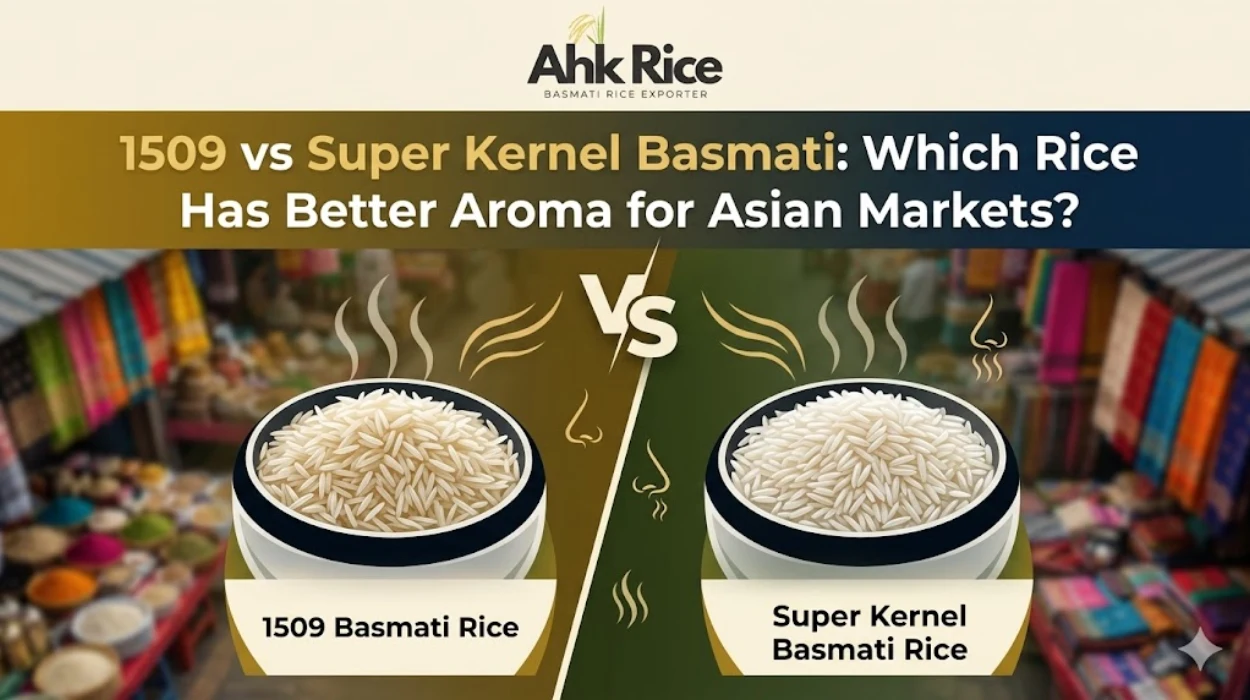
1509 vs Super Kernel Basmati: Which Rice Has Better Aroma for Asian Markets?
1509 Basmati delivers a lighter, fresher aroma, while Super Kernel offers a deeper, traditional fragrance preferred in premium Asian segments. Here is why: 1509 is early-harvest, lower aging, and volatile-aroma dominant; Super Kernel is aged longer, developing stable aromatic compounds that suit high-end culinary applications.
Asian buyers do not purchase rice by variety name alone. They evaluate aroma intensity, retention after cooking, and compatibility with regional cuisines. This creates a clear comparison between two major Pakistani basmati grades: 1509 and Super Kernel.
In this analysis, the comparison focuses on aroma chemistry, processing methods, market preferences, and trade outcomes. For foundational understanding of 1509 specifications and export positioning, refer to this detailed guide on how exporters position 1509 basmati across Asia and beyond.
What are the available solutions for aromatic rice in Asian markets?
Asian markets choose between 1509 Basmati for fresh aroma, Super Kernel for traditional fragrance, and 1121 for maximum elongation, based on cooking style and storage conditions.
Definition of 1509 Basmati
1509 Basmati is an early-maturing variety cultivated in Punjab. Farmers harvest it faster than traditional basmati. Millers process it with minimal aging. This preserves volatile aromatic compounds.
1509 Basmati produces a mild, clean fragrance. It suits markets that prefer light rice aroma without overpowering spices. China and Southeast Asia prefer this profile.
Definition of Super Kernel Basmati
Super Kernel Basmati is a traditional long-grain variety. Farmers cultivate it over a longer crop cycle. Exporters age it before milling.
Super Kernel develops deeper aromatic compounds during storage. This creates a stronger and more persistent fragrance. Middle Eastern and South Asian buyers prefer this profile.
Available grade formats
Both varieties are processed into multiple grades:
- Steam rice
- Sella (parboiled) rice
- Raw rice
- Creamy or white polished rice
- Broken percentage variants
Each grade impacts aroma retention differently because processing alters starch structure and moisture levels.
With the available solutions defined, the next step is to compare how these varieties differ at a specification level.
How do 1509 and Super Kernel compare in aroma and specifications?
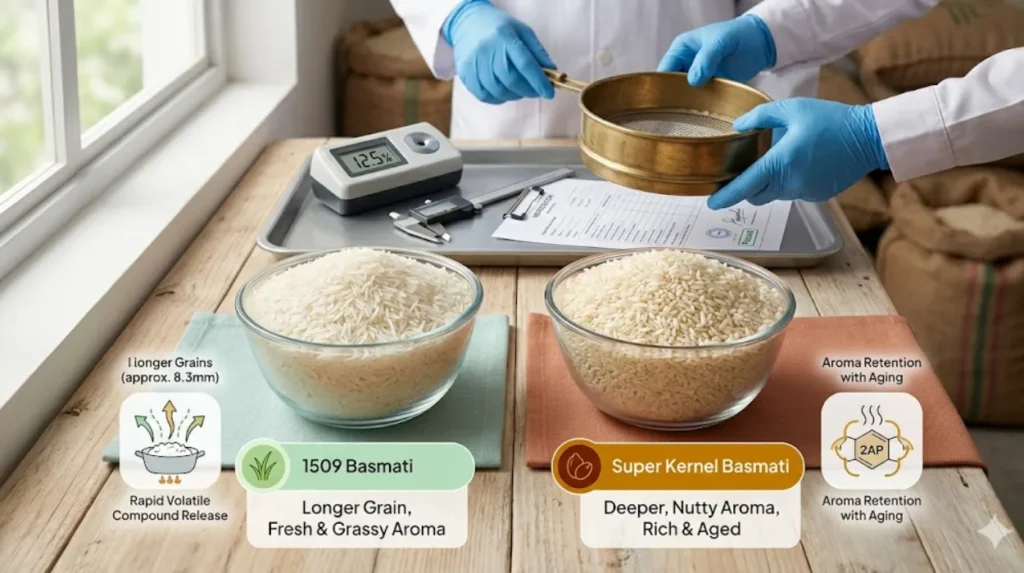
1509 delivers lighter aroma with faster release, while Super Kernel provides stronger aroma with longer retention due to aging and grain structure differences.
Specification Comparison Table
| Attribute | 1509 Basmati | Super Kernel Basmati |
|---|---|---|
| Grain Length (mm) | 8.10–8.30 mm | 7.40–7.70 mm |
| Aroma Type | Fresh, grassy | Deep, nutty |
| Aging Requirement | Minimal (0–3 months) | Extended (6–12 months) |
| Cooked Elongation | 1.8x–2.0x | 1.6x–1.8x |
| Aroma Retention | Moderate | High |
| Moisture % | 12–13% | 12–13% |
| Price per MT (FOB) | $850–$1050 | $900–$1200 |
Aroma mechanism comparison
1509 Basmati releases aroma quickly during cooking. This happens because it contains more volatile compounds that evaporate faster.
Super Kernel retains aroma longer. Aging stabilizes compounds such as 2-acetyl-1-pyrroline. This improves fragrance persistence in cooked dishes.
Processing impact on aroma
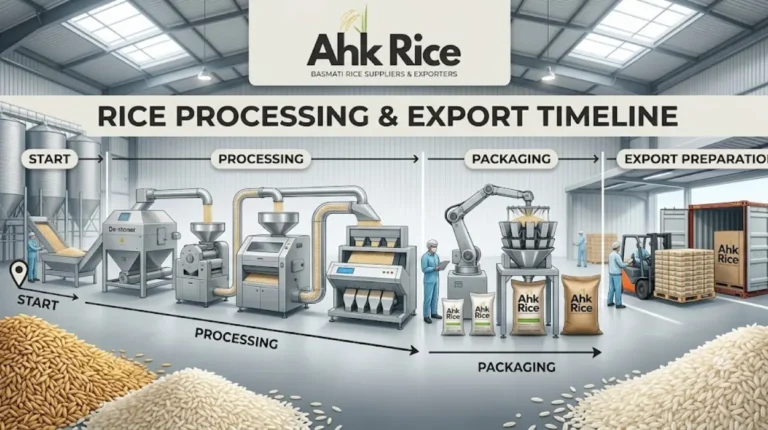
Processing determines final aroma delivery. Exporters follow a structured sequence:
- Clean the paddy
- Dehusk the grain
- Polish the rice
- Grade by length
- Sort by color
- Dry to moisture level
- Inspect for defects
- Test for aroma quality
- Pack for export
Each step affects aroma retention. Excess polishing reduces aroma intensity. Controlled drying preserves fragrance.
With specifications compared, the next step is to evaluate how these differences perform across Asian markets.
Which rice works best for different Asian markets?
1509 performs best in East and Southeast Asia, while Super Kernel dominates South Asia and premium Middle Eastern segments due to stronger aroma expectations.
Region 1: East & Southeast Asia
Countries include China, Malaysia, and Indonesia.
1509 Basmati performs better in these markets because consumers prefer subtle aroma. Dishes rely on sauces rather than rice fragrance.
Price sensitivity also influences decisions. Importers prefer lower-cost aromatic rice with acceptable elongation.
- Preferred grade: 1509 Steam or White
- Price range: $850–$1000 per MT
- Shelf life: 12–18 months under standard storage
Region 2: South Asia & Middle East
Countries include UAE, Saudi Arabia, and Bangladesh.
Super Kernel dominates these markets because rice aroma is central to dishes like biryani and pulao.
Buyers demand aged rice with strong fragrance retention.
- Preferred grade: Super Kernel Sella
- Price range: $950–$1200 per MT
- Shelf life: 18–24 months in hot climates
Shelf life comparison in real conditions
Storage conditions affect aroma retention directly.
Super Kernel lasts longer because aging stabilizes the grain. In high-temperature warehouses:
- Super Kernel maintains aroma for 18–24 months
- 1509 maintains aroma for 12–15 months
For Gulf buyers storing rice at 40°C, Super Kernel is the correct specification. For fast-moving retail markets, 1509 is more efficient.
With regional performance clear, the next step is to evaluate practical advantages and limitations.
What are the pros and cons of each variety?
1509 offers cost efficiency and faster turnover, while Super Kernel provides premium aroma and longer shelf stability.
1509 Basmati Pros
- Lower cost improves import margins
- Faster cooking suits urban consumers
- Higher yield increases supply availability
1509 Basmati Cons
- Lower aroma intensity limits premium positioning
- Shorter shelf life reduces long-term storage viability
Super Kernel Pros
- Strong aroma supports premium branding
- Longer shelf life reduces wastage
- Traditional profile matches regional cuisine
Super Kernel Cons
- Higher cost reduces price competitiveness
- Longer aging increases inventory time
Example scenario
A distributor in Malaysia imports rice for retail supermarkets. Faster turnover requires lower cost and mild aroma. 1509 Steam is the correct choice.
A catering supplier in Dubai serves biryani daily. Strong aroma defines product quality. Super Kernel Sella is the correct choice.
With advantages and limitations defined, the next step is to create a decision framework.
How should buyers decide between 1509 and Super Kernel?
Choose 1509 for cost efficiency and mild aroma, and choose Super Kernel for premium positioning and strong fragrance retention based on market demand and storage conditions.
Decision Framework Table
| Factor | Choose 1509 | Choose Super Kernel |
|---|---|---|
| Target Market | East Asia | Middle East / South Asia |
| Budget Level | Medium | High |
| Aroma Requirement | Light | Strong |
| Storage Duration | Short-term | Long-term |
| End Use | Daily meals | Premium dishes |
Decision logic explained
Cost-sensitive markets benefit from 1509. Faster inventory movement improves cash flow.
Premium markets require Super Kernel. Strong aroma increases perceived value and consumer satisfaction.
AHK Rice 1509 basmati trusted exporter Asia Africa Middle East.
Processing grade selection
Grade choice further refines the decision:
- Choose Steam for softer texture
- Choose Sella for longer shelf life
- Choose Raw for maximum aroma expression
Buyers must align grade with logistics conditions and consumer expectations.
How do exporters ensure consistent aroma quality?
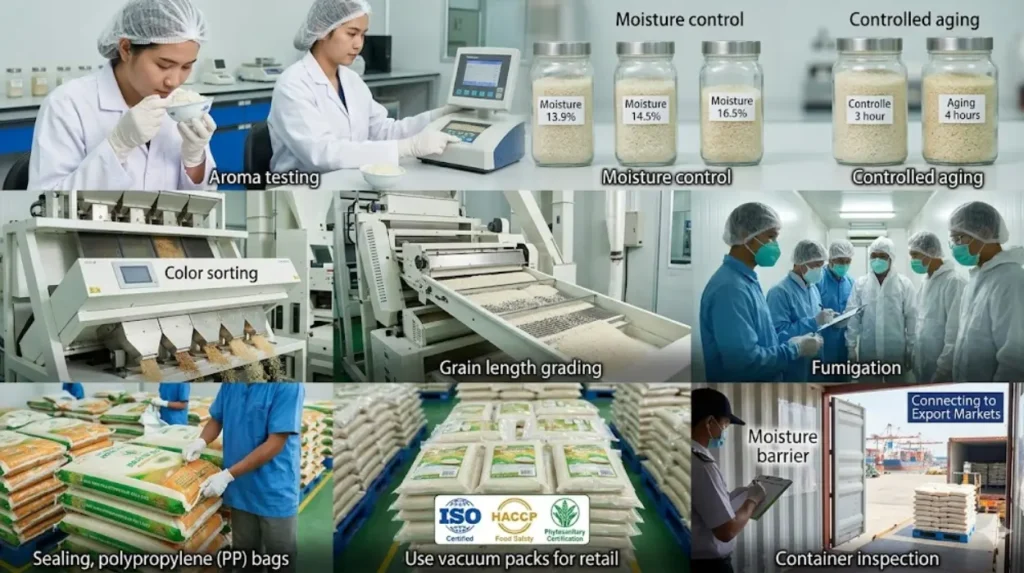
Exporters maintain aroma quality through controlled aging, moisture management, and multi-stage inspection systems across the supply chain.
Quality control steps
Exporters follow strict procedures:
- Moisture control
- Color sorting
- Grain length grading
- Aroma testing
- Fumigation
- Packaging sealing
- Container inspection
Each step prevents aroma loss and contamination.
Certifications required
Asian importers demand compliance with:
- ISO certification
- HACCP food safety standards
- Phytosanitary certification
- SGS inspection reports
These certifications ensure product consistency and regulatory compliance.
Packaging impact
Packaging protects aroma during transit.
- Use PP bags for bulk trade
- Use vacuum packs for retail
- Use moisture barriers for humid climates
Improper packaging reduces aroma retention during shipping.
With quality control explained, the final step is connecting this knowledge to sourcing decisions.
Final Recommendation: Which rice has better aroma for Asian markets?
Super Kernel has better aroma intensity, while 1509 has better aroma efficiency for high-volume markets.
Buyers must align aroma expectations with price and logistics.
1509 dominates high-volume Asian markets because it balances cost and acceptable fragrance.
Super Kernel leads premium segments because it delivers strong, lasting aroma required for traditional cuisine.
Frequently Asked Questions
Which rice has stronger aroma: 1509 or Super Kernel Basmati?
Super Kernel Basmati has a stronger aroma because it is aged for 6–12 months before milling. Aging stabilizes aromatic compounds, making the fragrance deeper and longer-lasting after cooking. 1509 Basmati produces a lighter, fresher aroma that releases quickly but does not persist as long.
Why do Asian markets prefer 1509 Basmati despite lower aroma?
Asian markets prefer 1509 Basmati because it offers a balance of price, availability, and mild aroma. Consumers in East and Southeast Asia focus more on texture and compatibility with sauces, so a lighter fragrance fits better with local cuisine and high-volume consumption.
How does aging affect the aroma of basmati rice?
Aging increases aroma intensity by stabilizing key compounds like 2-acetyl-1-pyrroline. Super Kernel undergoes extended storage, which enhances fragrance depth and retention. 1509 is minimally aged, so it retains a fresher but less complex aroma profile.
Which basmati rice is better for biryani and traditional dishes?
Super Kernel Basmati is better for biryani and traditional dishes because it delivers a strong, rich aroma that defines the flavor of these meals. Its longer grain structure and aroma retention make it suitable for premium culinary applications in South Asia and the Middle East.
What factors should importers consider when choosing between 1509 and Super Kernel?
Importers should evaluate target market preferences, budget, storage conditions, and end use. 1509 suits cost-sensitive, fast-moving markets with shorter storage cycles. Super Kernel suits premium markets requiring strong aroma and longer shelf life, especially in hot climates.