Where Does 1509 Sella Rice Fit in USA Rice Markets?
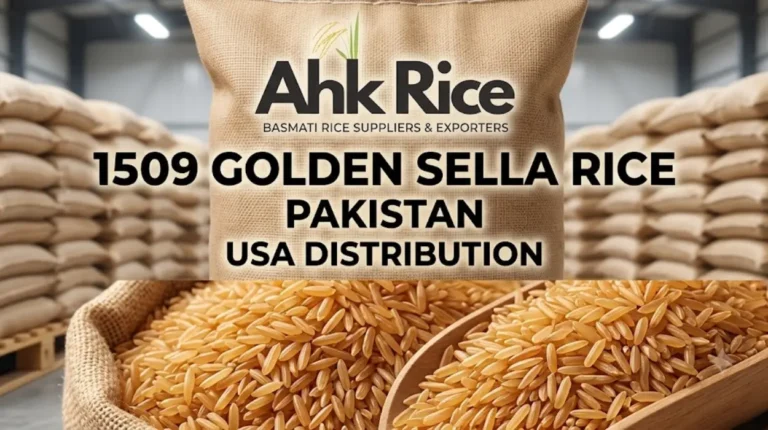
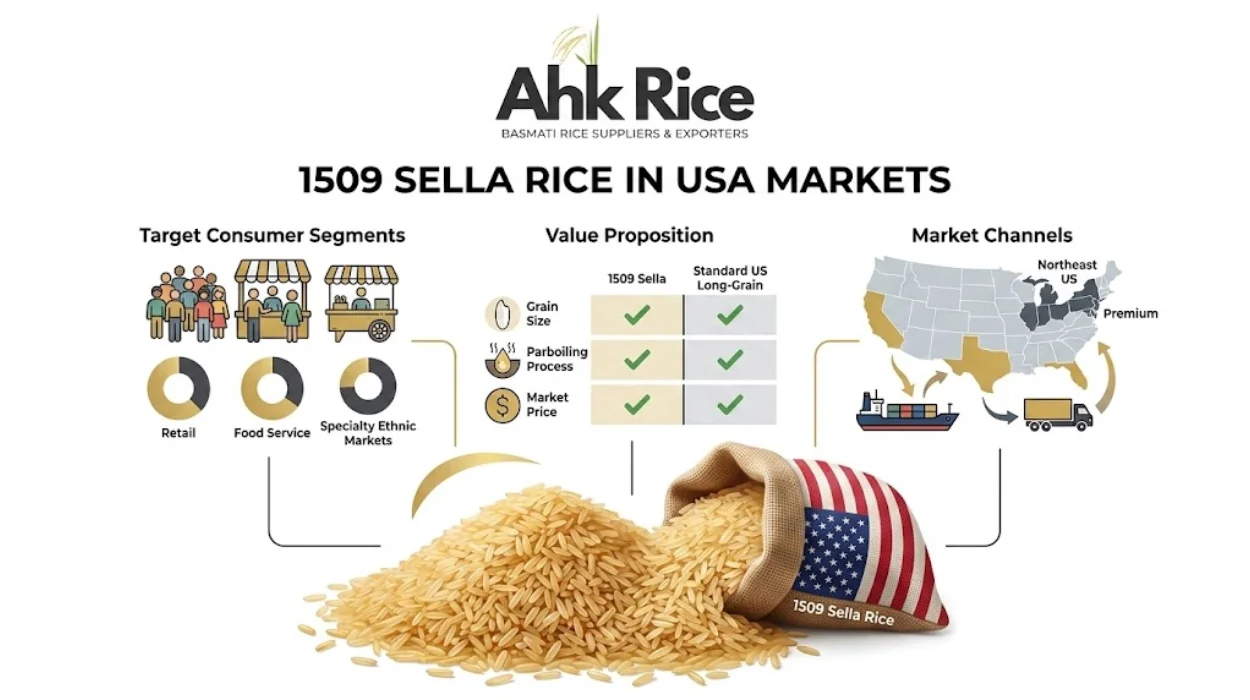
The answer is straightforward. 1509 Sella Rice occupies the premium value segment of the USA imported rice market because it combines long grain appearance, stable cooking performance, competitive pricing, and high processing efficiency. In 2026, it serves restaurants, foodservice distributors, ethnic grocery chains, private-label brands, and wholesale importers seeking consistent quality without the higher cost associated with traditional premium Basmati varieties.
Pakistan remains one of the leading global suppliers of 1509 Basmati rice, with commercial cultivation concentrated across Punjab. Exporters, including companies such as AHK Rice, process the variety through modern milling facilities before shipping it to international markets. The United States continues to import Pakistani Basmati rice to meet demand from South Asian, Middle Eastern, African, and increasingly mainstream consumers who prefer extra-long grain aromatic rice.
Understanding how premium imported Sella rice is positioned requires examining grain characteristics, processing methods, market demand, certification standards, and purchasing behavior. Readers interested in how importers differentiate premium imported Sella products can continue with the companion article on:
Market positioning strategies for premium imported Sella rice after learning the fundamentals presented here.
What Is 1509 Sella Rice?
1509 Sella Rice is a parboiled Basmati variety developed in Pakistan and India that produces extra-long grains, mild aroma, firm texture, high cooking yield, and excellent grain separation. The Sella process improves grain strength while preserving nutritional value inside the kernel during milling.
1509 refers to the rice variety.
Sella refers to the parboiling process.
Together they create a product designed for export markets requiring consistency throughout long-distance transportation and commercial food preparation.
Unlike ordinary white rice, Sella rice undergoes hydrothermal treatment before milling. This process hardens the grain and reduces breakage during polishing.
The variety typically features:
- Average grain length of 8.1–8.4 mm before cooking
- Cooking elongation reaching approximately twice its original length
- Low percentage of broken kernels
- Strong resistance to overcooking
- Uniform grain color
The USA market classifies imported Basmati separately from domestic long-grain rice because of its aroma, cooking characteristics, and premium positioning.
Where is 1509 Sella Rice grown?
Commercial production occurs primarily in Pakistan’s Punjab province.
Major cultivation districts include:
- Hafizabad
- Gujranwala
- Sheikhupura
- Narowal
- Sialkot
- Okara
These regions provide fertile alluvial soil, irrigation from the Indus Basin Irrigation System, and climatic conditions suitable for Basmati cultivation.
Farmers sow the crop during June and July.
Harvest generally begins between October and November.
How Does 1509 Sella Rice Work from Farm to Export?
1509 Sella Rice follows a controlled production chain beginning with certified seed selection and ending with container loading after grading, polishing, laboratory inspection, packaging, and export documentation. Every processing stage directly influences cooking performance, grain appearance, shelf stability, and international compliance.
The production system contains several clearly defined stages.
Seed selection
Certified seeds ensure varietal purity.
Uniform genetics produce consistent grain size and cooking quality.
Cultivation
Fields receive controlled irrigation.
Farmers manage weeds, pests, and nutrient applications according to agricultural best practices.
Harvesting
Mechanical harvesting minimizes field losses.
Harvest timing keeps moisture within acceptable processing ranges.
Cleaning
Incoming paddy passes through cleaning machines.
These systems remove:
- Stones
- Dust
- Straw
- Metal fragments
- Foreign seeds
Parboiling (Sella Process)
This stage defines Sella rice.
The paddy undergoes:
- Soaking
- Steaming
- Controlled drying
Heat transfers vitamins and minerals from the bran layer into the grain.
The kernel becomes harder and stronger.
Milling
Machines remove the husk.
Subsequent polishing creates the finished appearance while maintaining grain integrity.
Color sorting
Optical sorting equipment removes:
- Discolored grains
- Chalky kernels
- Damaged rice
- Foreign materials
Length grading
Length graders separate broken rice from whole kernels.
Export specifications determine acceptable broken percentages.
Laboratory testing
Quality laboratories evaluate:
- Moisture
- Broken percentage
- Grain length
- Purity
- Foreign matter
- Cooking quality
Packaging
Finished rice enters food-grade packaging.
Common export sizes include:
- 1 kg
- 2 kg
- 5 kg
- 10 kg
- 20 kg
- 25 kg
- 40 kg
- 50 kg
Container loading
Export containers undergo cleanliness inspection before loading.
Moisture management protects grain quality during ocean transport.
What Are the Key Components That Define Premium 1509 Sella Rice?
Premium 1509 Sella Rice combines varietal genetics, controlled parboiling, precision milling, accurate grading, laboratory testing, food-safe packaging, and export certification. Every component contributes directly to cooking quality, appearance, storage stability, and importer confidence across international markets.
Several measurable factors determine product quality.
Grain length
Long kernels create visual appeal.
Importers generally request extra-long grain specifications.
Broken percentage
Lower broken percentages improve presentation.
Premium grades contain significantly fewer broken kernels than economy grades.
Moisture level
Controlled moisture extends storage life.
Balanced moisture also protects grain texture during cooking.
Aroma
1509 produces a lighter fragrance than traditional 1121 Basmati.
Many commercial kitchens prefer this balanced aromatic profile because it complements different cuisines.
Grain hardness
Parboiling strengthens the kernel.
Hard grains withstand large-scale foodservice cooking.
Color
Premium Sella rice displays a uniform golden appearance before milling finishes.
Consistent color indicates standardized processing.
Which Grades of 1509 Sella Rice Are Available?
1509 rice is available in several commercial grades that serve different foodservice, retail, industrial, and wholesale requirements. Grade selection depends on grain length, milling quality, broken percentage, packaging format, and buyer specifications rather than a single universal export standard.
International suppliers commonly offer:
Premium Export Grade
Characteristics include:
- Extra-long grains
- Minimal broken percentage
- Uniform appearance
- High cooking elongation
Standard Export Grade
Suitable for:
- Wholesale distribution
- Foodservice
- Bulk retail
Sortex Grade
Optical color sorting creates exceptional visual consistency.
Retail brands frequently select this specification.
Double Polished Grade
Additional polishing improves appearance for premium shelf presentation.
Custom Buyer Specifications
Large importers often request unique combinations involving:
- Grain length
- Moisture
- Broken percentage
- Packaging
- Private labeling
What Benefits Make 1509 Sella Rice Competitive in USA Markets?
1509 Sella Rice delivers consistent cooking performance, attractive grain length, operational efficiency, storage stability, competitive pricing, and broad culinary flexibility. These advantages explain its growing position within USA foodservice, retail, wholesale, and private-label imported rice categories during 2026.
Commercial buyers evaluate measurable performance rather than marketing claims.
The variety performs well across several operational factors.
High cooking yield
Restaurants benefit from increased cooked volume.
Large kitchens prioritize predictable expansion ratios.
Grain separation
Individual grains remain separate after cooking.
This characteristic supports presentation quality.
Strong shelf stability
Parboiled rice maintains quality during extended storage when stored correctly.
Efficient transportation
The strengthened kernel reduces damage during export logistics.
Lower breakage improves shipment consistency.
Versatile menu applications
Examples include:
- Biryani
- Pilaf
- Fried rice
- Rice bowls
- Catering meals
- Buffet service
These applications span restaurants, hotels, institutional kitchens, and prepared meal manufacturers.
Where Does 1509 Sella Rice Fit Within USA Rice Markets?
1509 Sella Rice occupies the premium imported value category between traditional premium Basmati and standard long-grain rice. It satisfies buyers seeking long grains, dependable cooking performance, competitive procurement costs, and scalable supply for commercial distribution across the United States.
The United States contains several important customer groups.
Ethnic grocery retailers
These stores serve communities familiar with Basmati rice.
Examples include South Asian supermarkets, Middle Eastern grocery chains, and African food retailers.
Foodservice distributors
Distributors supply:
- Restaurants
- Hotels
- Caterers
- Universities
- Hospitals
Consistent cooking matters more than premium branding.
Private-label companies
Retail brands source bulk rice before packaging it under their own labels.
Uniform appearance supports brand consistency.
Restaurant chains
Multi-location restaurants require standardized ingredients.
1509 Sella Rice delivers repeatable cooking results across multiple kitchens.
Wholesale importers
Importers distribute containers to regional buyers throughout the United States.
Product consistency simplifies inventory planning.
What Certifications Apply to 1509 Sella Rice Exports?
International rice exports depend on recognized food safety, quality management, phytosanitary, and regulatory certifications. These documents verify production standards, laboratory compliance, traceability, and legal import requirements for destination markets including the United States.
Certification strengthens confidence throughout the supply chain.
Common certifications include:
ISO 22000
Food safety management system certification.
HACCP
Hazard Analysis and Critical Control Points identify and control food safety risks.
FSSC 22000
An advanced food safety certification recognized across international food manufacturing.
Phytosanitary Certificate
Confirms compliance with plant health requirements.
Certificate of Origin
Verifies exporting country.
Quality Inspection Reports
Laboratory reports commonly measure:
- Moisture
- Broken percentage
- Foreign matter
- Grain length
- Purity
Import documentation requirements vary according to destination regulations and importer specifications.
What Common Misconceptions Exist About 1509 Sella Rice?
Several misconceptions confuse buyers about 1509 Sella Rice. Product quality depends on processing standards, grading accuracy, laboratory testing, and varietal purity instead of color, price, or country perception alone. Understanding these differences improves purchasing decisions and product evaluation.
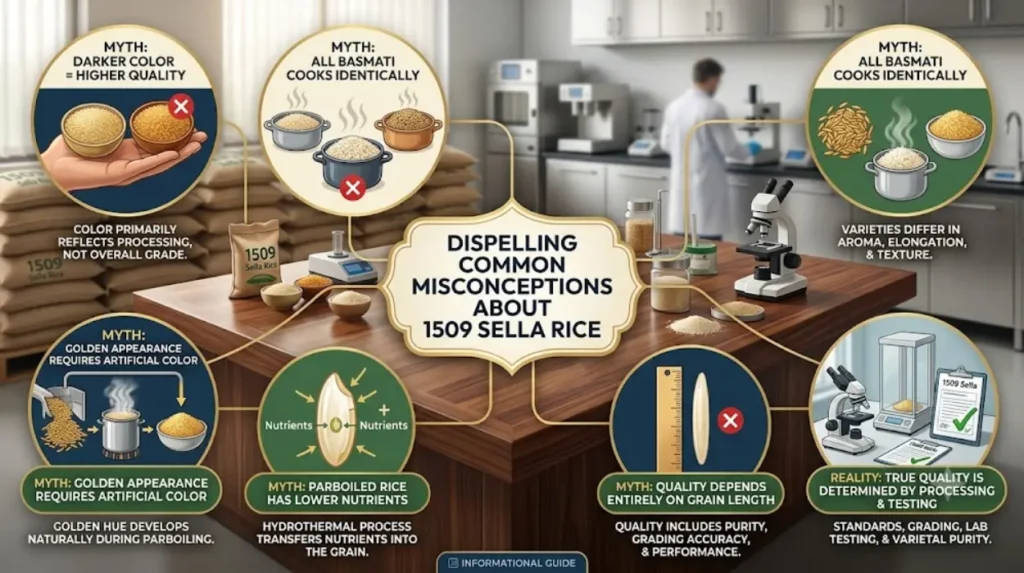
One common misconception states that darker golden color always means higher quality.
Color mainly reflects processing conditions rather than overall grade.
Another misconception assumes every Basmati variety cooks identically.
Different varieties produce different aroma intensity, elongation, and texture.
Some buyers also believe Sella rice contains artificial coloring.
The golden appearance develops naturally during parboiling.
Another misunderstanding claims parboiled rice has lower nutritional value.
The hydrothermal process actually transfers several nutrients from the outer bran into the grain before milling.
Some purchasers believe premium quality depends entirely on grain length.
Quality also includes purity, moisture control, grading accuracy, laboratory verification, and consistent cooking performance.
How Is the Future of 1509 Sella Rice Developing in the USA?
The USA imported rice sector continues expanding toward consistent quality, transparent traceability, stronger food safety systems, and premium value products. 1509 Sella Rice aligns with these purchasing priorities through reliable performance, scalable production, and standardized export processing during 2026.
Foodservice operators increasingly prioritize operational efficiency.
Retailers emphasize traceability and consistent shelf quality.
Consumers continue exploring international cuisines featuring aromatic rice.
Exporters invest in advanced optical sorting, automated packaging, digital traceability, and laboratory quality assurance.
These improvements strengthen confidence across the international rice supply chain while supporting growing demand for premium imported Sella rice in the United States.
Frequently Asked Questions
What makes 1509 Sella Rice different from other Basmati rice varieties?
1509 Sella Rice has extra-long grains, a mild aroma, and a parboiled structure that improves grain strength. It cooks into separate, fluffy grains and offers excellent consistency for foodservice and retail markets.
Why is 1509 Sella Rice popular in the USA?
The USA imports 1509 Sella Rice because it delivers reliable cooking performance, competitive pricing, long grain appearance, and versatility for restaurants, ethnic grocery stores, wholesalers, and private-label brands.
How is 1509 Sella Rice processed?
The rice is cleaned, soaked, steamed, dried, milled, polished, color sorted, graded, laboratory tested, packaged, and prepared for export under controlled quality standards.
Which countries export 1509 Sella Rice to the USA?
Pakistan and India are the primary exporters of 1509 Sella Rice to the United States, with Pakistan’s Punjab region recognized for producing premium-quality Basmati varieties.
What certifications are commonly required for 1509 Sella Rice exports?
Common certifications include ISO 22000, HACCP, FSSC 22000, Phytosanitary Certificate, Certificate of Origin, and laboratory quality reports covering moisture, purity, and grain specifications.
What industries use 1509 Sella Rice in the United States?
Restaurants, hotels, catering companies, foodservice distributors, ethnic supermarkets, wholesalers, private-label brands, and institutional kitchens are among the largest users of 1509 Sella Rice.
How should 1509 Sella Rice be stored?
Store it in a cool, dry, and well-ventilated place away from direct sunlight and moisture. Proper storage preserves grain quality, aroma, and shelf life.
Is 1509 Sella Rice suitable for commercial foodservice?
Yes. Its high cooking yield, firm texture, and excellent grain separation make it well suited for large-scale foodservice operations such as restaurants, catering businesses, and hotels.
Does the golden color of Sella Rice come from artificial coloring?
No. The golden color develops naturally during the parboiling process and does not require artificial coloring or additives.