1509 White vs 1121 White Basmati: Price Difference and Quality Gap Explained
For African and Southeast Asian importers, 1121 white basmati typically commands a higher price than 1509 white basmati, but the real decision comes down to how much extra length and aroma justify that premium within each market segment. 1509 white vs 1121 white basmati price quality differs in grain length, amylose‑content, milling‑yield, and export‑cost per metric‑ton, not just in branding.
What problem do 1509 and 1121 white basmati solve for importers?
1509 white vs 1121 white basmati price quality matters because buyers must choose between paying for higher‑length premium (1121) or getting a slightly lower‑cost, high‑yield long‑grain white rice (1509) without losing too much culinary quality. Both varieties are long‑grain white basmati, but they sit in different price brackets and perform differently in specific use cases.
Importers who mis‑align 1509 and 1121 with their market type often over‑pay or under‑position their rice. Fine‑dining and premium‑supermarkets usually need 1121, while mid‑range groceries, caterers, and value‑food‑service channels often fit 1509 better.
How do 1509 and 1121 compare in key technical attributes?
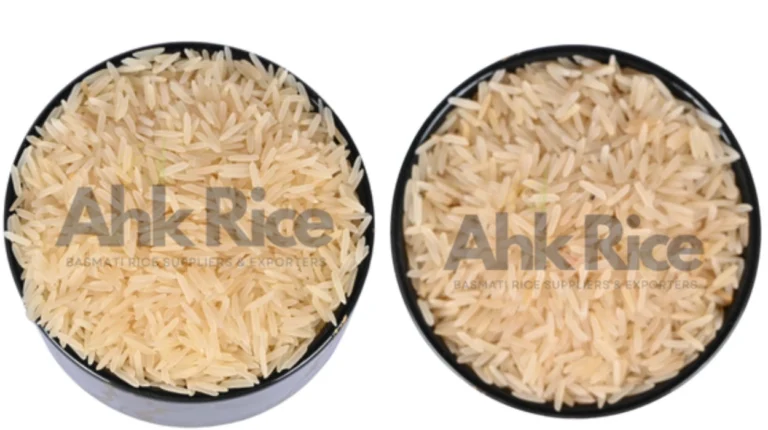
1509 white vs 1121 white basmati price quality can be understood by comparing grain length, amylose‑content, milling‑yield, aroma, colour, broken‑ratio, and typical export‑price per metric‑ton. A seven‑row specification table makes these differences concrete and actionable.
| Attribute | 1121 White Basmati | 1509 White Basmati |
|---|---|---|
| Average grain length (mm) | 8.3–8.7 mm | 8.2–8.5 mm |
| Typical amylose content | 18–20% (less sticky, more separate grains) | 19–21% (fluffy, slightly more tender) |
| Milling‑yield (%) | 50–55% (lower due to longer kernel handling) | 54–58% (better yield per paddy tonne) |
| Aroma strength | Strong, floral‑nutty, noticeable in raw rice | Medium, aromatic but less intense than 1121 |
| Colour and polish | Off‑white, dense, high‑gloss when polished | Slightly whiter, lighter, still bright |
| Broken‑ratio (whole‑grain export) | 0–2% broken in premium grades | 1–3% broken in top grades |
| Approx. FOB export price (per MT) | 1509 vs 1121 white comparison shows 1121 at roughly USD 100–180 higher than 1509 for comparable grades | 1509 sits in the mid‑range, offering a price gap advantage over 1121 |
This 1509 vs 1121 white comparison shows that 1121 is technically superior in length and perceived‑premium, but 1509 closes the quality gap with stronger yield, slightly higher amylose, and a lower price point. The rice price gap between the two is not fixed; it changes with season, port‑costs, and buyer‑volume, but 1121 consistently stays above 1509 in FOB‑terms.
How do African and Southeast Asian markets differ in grade preferences?
African and Southeast Asian markets differ in their 1509 vs 1121 white basmati preferences because West and East Africa lean toward 1509 for value‑retail and food service, while Southeast Asian urban buyers often prefer 1121 for premium hotels and supermarkets. These differences are driven by local price sensitivity, cooking habits, and brand‑expectations.
In West Africa, 1509 white basmati suits:
- Retail bags for 1–5 kg household use.
- Catering and event‑suppliers who need high‑volume, consistent‑white rice.
- Value‑supermarkets that want to keep prices competitive but still offer “basmati.”
East African markets show a mix:
- 1509 for everyday‑consumption and budget‑restaurants.
- 1121 for hotels, embassies, and expatriate‑oriented restaurants.
Southeast Asian markets, such as Malaysia, Indonesia, and Vietnam, use:
- 1121 white basmati for five‑star hotels, high‑end‑restaurants, and premium‑private‑label‑lines.
- 1509 white basmati for mid‑tier‑supermarkets, catering chains, and institutional‑contracts.
These patterns create a simple rule: the closer the market is to luxury‑hospitality, the more likely it is to demand 1121; the more price‑sensitive and volume‑driven the market, the better 1509 fits.
How does the price gap impact volume and shelf life choices?
1509 vs 1121 white basmati price quality affects both purchase volume and shelf‑life treatment, because 1121’s higher‑FOB‑cost pushes importers to order smaller‑containers or pay more per kg, while 1509’s mid‑range price allows for larger‑bulk shipments. For the same budget, an importer can move more 1509 white basmati rice per container than 1121.
Export‑price per metric‑ton translates into pricing per 25 kg or 50 kg retail pack. For example:
- If 1121 white basmati is at USD 1,100–1,200 per MT FOB, that feeds into higher‑retail‑price‑tags.
- If 1509 white basmati is at USD 950–1,050 per MT FOB, that gives more room for margin without shocking the consumer.
Shelf‑life is similar for both varieties when stored correctly (12–14% moisture, 18–25°C, low‑humidity warehouses), but 1121’s lower‑amylose and longer‑grain structure can make it slightly more prone to cracking if humidity‑fluctuates. 1509’s marginally higher‑amylose can help it tolerate minor storage‑variations better, which matters for African‑and‑Southeast‑Asian ports where climate‑control is inconsistent.
Buyers who must balance long grain white import volume and shelf‑life often choose 1509 when the goal is stable, affordable supply; they reserve 1121 for lower‑volume, high‑margin‑segments.
How do different procurement approaches compare?
When choosing between 1509 white and 1121 white basmati, importers face three main approaches: premium‑only 1121, blended 1509‑plus‑1121, or 1509‑dominant sourcing. Each approach has clear pros and cons.
1. Premium‑only 1121 white basmati
This approach uses only 1121 white basmati for all channels. Benefits include:
- Strong brand‑signal (“premium basmati”), good for hotel‑and‑gourmet‑segments.
- Consistent grain‑length and aroma, which simplifies chef‑training and menu‑planning.
Drawbacks include:
- Higher FOB‑cost, which reduces per‑ton‑profit or forces higher‑consumer‑prices.
- Smaller‑order‑sizes per budget, which can limit distribution‑reach.
Example: A luxury‑hotel chain that wants to standardise on one rice‑grade may choose only 1121, accepting the higher‑cost as part of the premium‑experience.
2. Blended 1509 and 1121
This approach uses 1121 in premium‑lines and 1509 in value‑lines. Benefits:
- Uses 1121 where aroma and length are most visible (e.g., à‑la‑carte dishes) and 1509 where volume‑matters (e.g., buffets, staff‑meals).
- Spreads the price gap across the portfolio, keeping average‑cost‑per‑kilogram lower.
Drawbacks:
- Requires more complex logistics and labelling, as each channel must receive the correct‑grade.
- Risk of consumer confusion if packaging is not clearly‑differentiated.
Example: A supermarket chain can label 1121 white basmati in “luxury” or “hotel‑style” packs and 1509 in “value” or “family‑size” packs, using the price gap to offer tiered options.
3. 1509‑dominant sourcing
This approach uses 1121 only for small‑premium‑lines and relies mainly on 1509 white basmati for volume. Benefits:
- Better‑cost‑efficiency and higher‑tonnage per budget, which suits African‑and‑Southeast‑Asian distributors who need wide‑distribution.
- Sufficient‑length and aroma for mid‑tier‑segments without paying full‑1121‑premium.
Drawbacks:
- Risk of being out‑branded by competitors who use 1121 as a hallmark‑of‑quality.
- Limited upside in high‑end‑market‑segments unless mixed with 1121.
Example: A large‑African‑distributor may ship 20 MT of 1509 and only 5 MT of 1121 per container, reserving 1121 for high‑margin private‑label‑brands
Which method works best for which market profile?
For low‑price‑sensitive African regions, 1509‑dominant sourcing works best; for premium‑urban‑Southeast Asian markets, 1121‑only or 1121‑rich‑blends fit better. The right method depends on consumer‑expectations, retailer‑price‑bands, and profit‑targets.
Here is a five‑row decision‑framework that importers can use to select between 1509 white and 1121 white basmati:
| Decision‑factor | 1121‑favourable conditions | 1509‑favourable conditions |
|---|---|---|
| Target price‑band | High‑end‑retail and hospitality, prepared to pay extra | Mid‑to‑low‑end‑retail, value‑oriented consumers |
| Average order volume | Smaller‑containers (10–20 MT) are acceptable | Large‑containers (20–40 MT) per shipment |
| Cooking‑need | Fine‑dining, boutique‑hotels, long‑grain‑presentation | Everyday‑home‑consumption, catering, buffet‑use |
| Brand‑positioning | “Premium basmati” as core‑differentiator | “Quality basmati at value‑price” |
| Storage and logistics | Stable‑climate warehouses, good‑handling | Variable‑climate ports, less‑sophisticated‑warehousing |
This 1509 vs 1121 white comparison table turns the rice price gap into a strategic lever rather than a cost‑liability. Importers can map their country‑portfolio to these rows and decide where each grade adds the most‑value.
What are the pros and cons of each variety in practice?
1509 white basmati has clear pros and cons versus 1121 white basmati, and the same‑applies in reverse, so buyers should match each variety to their operational‑constraints and margin‑targets.
1509 white basmati pros:
- Lower FOB‑price per MT, which improves per‑ton margin or allows lower‑retail‑prices.
- Higher milling‑yield, so you get more finished‑rice from the same paddy‑tonne.
- Slightly more amylose and robustness, which helps with storage‑fluctuations in tropical‑warehouses.
1509 white basmati cons:
- Grain is slightly shorter and less “showy” than 1121, which can matter for luxury‑menus.
- Aroma is present but not as intense, so fine‑dining‑chefs may still prefer 1121.
1121 white basmati pros:
- Longest‑visible‑grain length and strong aroma, which supports high‑premium positioning.
- Strong brand‑signal in African‑and‑Southeast‑Asian retail, where “1121” is often used as a quality‑marker.
1121 white basmati cons:
- Higher FOB‑cost per MT, which reduces volume or pushes retail‑prices higher.
- More delicate kernel structure, which can increase breakage if mills or storage‑practices are sub‑standard.
Examples of practical trade‑offs:
- A budget‑hotel in Lagos may save on food‑costs by using 1509 for daily‑meals and 1121 only for special‑dinner‑events.
- A supermarket in Jakarta can keep 1121 for “import‑only” rice‑shelves and 1509 for everyday‑basmati‑aisles, using the long grain white import choice as a conscious‑pricing‑tool.
What are the key decision factors for importers?
The key decision factors for 1509 white vs 1121 white basmati selection are target market‑segment, average container‑size, allowable retail‑price, storage‑conditions, and brand‑strategy. These factors convert the 1509 white vs 1121 white basmati price quality into a repeatable, data‑driven choice.
Importers should ask:
- What is the maximum retail‑price per kg that the local market will accept?
- What is the minimum container‑size that logistics and warehouse‑capacity allow?
- How much flexibility is there in storage‑humidty and temperature at the destination port?
- Is the brand trying to position as “premium‑only” or “value‑plus‑quality”?
If the answer to the first question is “low‑to‑mid,” and the second is “large‑containers,” 1509 white basmati usually fits better. If the answers are “high,” “small‑or‑medium‑containers,” and “premium‑branding,” 1121 becomes the logical‑core.
Buyers who still need concrete export‑pricing and volume‑examples for 1509 white basmati in African markets can explore AHK Rice 1509 White Basmati: Bulk Export Price for African Distributors for FOB‑breakdowns by container‑size and market‑type.