How to Import Pakistani Basmati Rice into the UK: Full 2026 Buyer Guide
Pakistani Basmati rice imports into the UK require verified exporters, compliant documentation, certified processing, and adherence to UK border inspection, labelling, and food safety rules in 2026. Here is why: the UK imports thousands of metric tons of Basmati annually from Pakistan because Pakistani Punjab cultivates long-grain aromatic varieties with high elongation ratios, controlled moisture levels, and internationally recognized certifications.
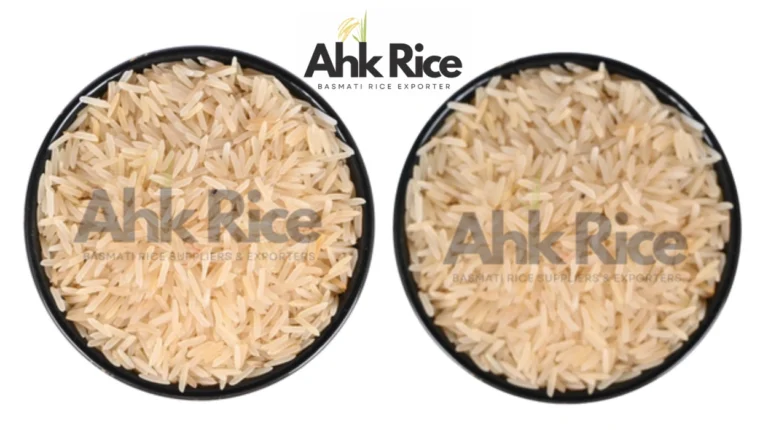
Pakistani Basmati rice remains a major staple in UK retail, wholesale, catering, and ethnic food sectors. UK buyers import multiple grades, including 1121 Steam, 1121 Golden Sella, Super Kernel White, and 1509 Steam, because each specification serves different retail and foodservice requirements.
According to REAP export data, the UK remained among the top European destinations for Pakistani rice exports during 2025 (source: REAP export data, December 2025). Punjab produces the majority of Pakistan’s export-quality Basmati because the region provides fertile soil, controlled irrigation systems, and climate conditions suited for aromatic long-grain cultivation.
What Is Pakistani Basmati Rice and Why Does the UK Import It?
Pakistani Basmati rice is a long-grain aromatic rice cultivated in Punjab with grain lengths reaching 8.30 mm before cooking and elongation ratios exceeding 2x after cooking. UK importers source it because of aroma stability, grain separation, and compatibility with retail and catering markets.
Pakistani Basmati rice belongs to the aromatic rice category cultivated primarily in Punjab regions including Hafizabad, Gujranwala, Sheikhupura, and Sialkot. Farmers cultivate these varieties under controlled irrigation conditions because consistent water supply protects grain length and aroma development.
1121 Basmati remains the dominant export variety for the UK market. Super Kernel Basmati continues to hold demand among traditional South Asian retailers because it delivers stronger aroma and softer cooked texture.
UK supermarkets, wholesalers, and restaurant suppliers import Pakistani rice because the grain maintains length after cooking. Long grain separation matters in biryani, pilaf, and catering applications because broken grains reduce visual presentation and plate consistency.
Pakistani rice exporters process Basmati through defined milling stages before shipment. Processing includes:
- Cleaning the paddy
- Dehusking the grain
- Polishing the rice
- Grading by length
- Sorting by colour
- Testing moisture levels
- Inspecting broken percentage
- Fumigating consignments
- Loading export containers
UK buyers evaluate rice based on grain length, purity, moisture, broken ratio, and packaging compliance. Retail chains often require 5%, 2%, or 1% broken specifications because consistent appearance supports premium shelf positioning.
With the definition of Pakistani Basmati established, the next question is how the UK rice import process actually works.
How Does the UK Basmati Rice Import Process Work in 2026?
UK rice imports in 2026 require supplier verification, phytosanitary certification, customs clearance, food safety compliance, and accurate commodity classification under UK import regulations.
UK importers start the procurement process by selecting an export-ready rice supplier. Export-ready suppliers maintain export registrations, food safety certifications, fumigation systems, and container loading facilities.
Importers then confirm the required rice specification. Specification selection includes:
- Grain variety
- Processing type
- Broken percentage
- Packaging size
- Moisture percentage
- Crop year
- Private labelling requirements
Processing type directly affects storage and retail performance. Golden Sella lasts longer than Steam rice because parboiling strengthens grain structure. In a 40°C warehouse environment, Golden Sella maintains commercial quality for approximately 18 months. Steam rice performs best within 12 months under the same storage conditions. UK wholesalers supplying non-climate-controlled catering warehouses often procure Golden Sella specifications.
After confirming specifications, exporters prepare shipment documents. UK customs authorities inspect documentation accuracy because mismatched declarations delay border clearance.
Required export and import documents include:
- Commercial invoice
- Packing list
- Phytosanitary certificate
- Certificate of origin
- Bill of lading
- Fumigation certificate
- Health certificate
- UK customs declaration
UK authorities also inspect compliance with food safety standards. Rice shipments entering the UK must comply with contaminant limits, pesticide residue regulations, and packaging labelling standards under UK food import laws (source: UK Food Standards Agency, 2025).
Importers classify rice under appropriate HS codes before customs filing. Incorrect classification increases inspection risk because customs systems flag inconsistent declarations.
Container shipping remains the preferred logistics method for rice exports. A standard 20-foot container loads approximately 24 metric tons of rice depending on packaging configuration.
With the import process established, the next question is which Basmati varieties dominate UK demand.
Which Pakistani Basmati Varieties Do UK Buyers Import Most?
1121 Basmati, Super Kernel Basmati, and 1509 Basmati dominate UK imports because each variety serves different retail pricing, aroma, and cooking requirements.
What Makes 1121 Basmati Popular in the UK?
1121 Basmati delivers grain lengths above 8.30 mm with cooked elongation exceeding 18 mm, making it the preferred choice for premium retail and restaurant sectors.
1121 White Rice serves premium supermarket shelves because consumers prefer bright grain appearance and long cooked separation.
1121 Steam Rice performs strongly in UK ethnic retail because steam processing preserves natural colour while improving shelf stability.
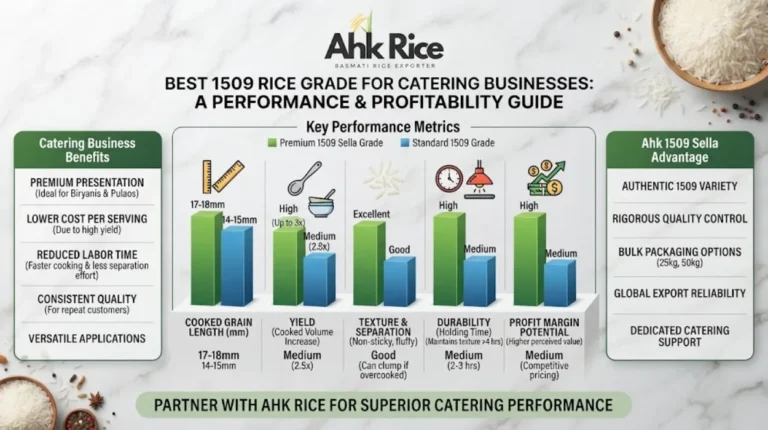
1121 Golden Sella supports catering demand because parboiling strengthens grain durability during bulk cooking operations.
UK restaurant suppliers prefer 1121 Golden Sella for buffet service because grains remain separate for extended holding periods.
Why Does Super Kernel Basmati Retain UK Demand?
Super Kernel Basmati offers stronger aroma and softer texture than 1121, making it popular among traditional South Asian consumers in UK retail stores.
Super Kernel grain length remains shorter than 1121. However, aroma intensity remains higher in many crop cycles because the variety preserves traditional Basmati fragrance characteristics.
UK retailers targeting Pakistani and Indian diaspora consumers continue sourcing Super Kernel because buyers associate the variety with traditional home cooking.
Readers comparing retail preferences between these varieties should review the detailed analysis on consumer demand differences between premium long-grain and traditional aromatic Basmati categories.
Why Is 1509 Basmati Growing in UK Imports?
1509 Basmati matures faster, costs less than 1121, and delivers long grain appearance suitable for value-focused UK retail segments.
1509 Steam Rice supports competitive retail pricing because agricultural yields remain higher than older Basmati varieties.
1509 White Rice also cooks faster than traditional Super Kernel grades. Fast cooking supports convenience-focused consumers purchasing budget-friendly Basmati packs.
With the major rice varieties established, the next question is how Pakistani rice is processed before export.
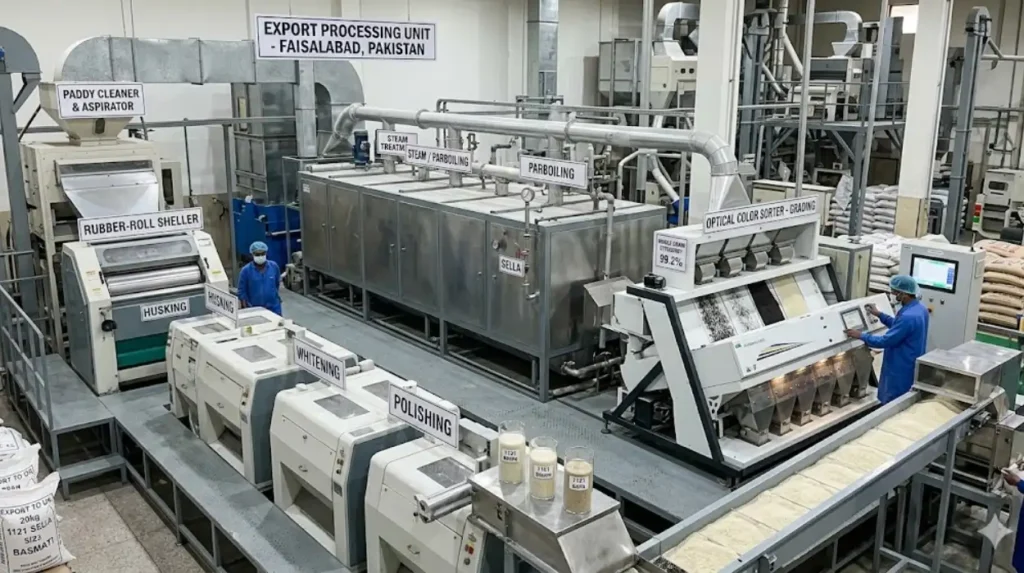
How Is Pakistani Basmati Rice Processed for UK Export?
Pakistani Basmati rice processing includes drying, milling, polishing, grading, sorting, testing, and packaging under controlled export standards.
Rice processing begins after paddy harvesting in Punjab. Farmers dry harvested paddy to controlled moisture levels because excessive moisture damages storage stability.
Export processing follows a defined sequence:
- Clean the harvested paddy
- Dry the grain to target moisture
- Dehusk the rice kernels
- Polish the grain surface
- Grade by grain length
- Sort damaged kernels
- Inspect colour consistency
- Test moisture percentages
- Pack export consignments
Moisture control remains critical during export preparation. Export-grade Basmati typically maintains 12% to 14% moisture levels because lower moisture reduces fungal contamination risk during sea transport.
Colour sorting systems remove discoloured grains through optical scanners. Optical sorting improves retail appearance because UK consumers associate colour consistency with premium quality.
Parboiling creates Golden Sella rice. Processors soak paddy, steam the grain, and dry kernels before milling. This process strengthens grain structure and increases shelf stability.
Steam rice processing differs from parboiling because processors expose rice to controlled steam without full parboiling treatment. Steam processing preserves lighter grain colour and softer texture.
Vacuum cleaning systems remove dust particles before packaging. Exporters inspect packaged rice because contamination claims increase customs inspections and retail rejection risk.
With processing standards established, the next question is which certifications UK importers require in 2026.
Which Certifications Apply to Pakistani Rice Exports to the UK?
UK importers require food safety, phytosanitary, and quality certifications including ISO, HACCP, PSQCA compliance, and phytosanitary verification.
Food safety certification protects importers against contamination risks. UK retailers request documented compliance because supermarkets operate under strict supplier approval systems.
Common export certifications include:
- HACCP certification
- ISO 22000 certification
- Halal certification
- Phytosanitary certification
- Fumigation certification
- PSQCA compliance
- SGS inspection reports
HACCP systems identify contamination risks during processing. Export mills implement monitoring checkpoints because temperature variation, moisture imbalance, and storage contamination affect food safety.
Phytosanitary certificates confirm plant health compliance. UK border authorities inspect these certificates because agricultural imports require pest-control verification.
SGS inspection reports verify shipment quality before dispatch. Buyers use pre-shipment inspection because container discrepancies create commercial disputes after arrival.
Halal certification remains important in UK Muslim retail markets. Retail distributors supplying halal grocery chains require recognized certification documentation before procurement approval.
According to the UK Food Standards Agency, imported rice products remain subject to contaminant and pesticide monitoring programs during border inspections (source: UK Food Standards Agency, 2025).
With certifications established, the next question is what problems UK importers face during rice procurement.
What Problems Do UK Rice Importers Face When Sourcing Pakistani Basmati?
UK importers face quality inconsistency, delayed documentation, incorrect moisture levels, and packaging non-compliance during rice procurement.
Quality inconsistency creates the largest commercial problem. Mixed grain lengths reduce retail value because premium Basmati categories require visual uniformity.
High moisture damages shipments during sea transit. Rice exceeding 14% moisture develops storage instability faster during long shipping periods.
Incorrect packaging also causes customs and retail problems. UK retail regulations require accurate food labels including:
- Country of origin
- Net weight
- Batch number
- Importer details
- Allergen information
- Storage instructions
Container delays increase freight costs. Delays usually occur because exporters submit incomplete documentation or incorrect HS classifications.
Broken percentage disputes also affect procurement contracts. Buyers purchasing 2% broken rice reject consignments exceeding contractual tolerance levels.
Some UK buyers misunderstand processing categories. Steam Rice and Golden Sella are not identical products. Steam Rice offers lighter colour and softer texture. Golden Sella offers stronger grain durability and longer shelf stability.
Storage misunderstandings also create losses. White Rice requires controlled humidity storage because excessive moisture softens grain texture during warehousing.
With common procurement problems clarified, the next question is how UK buyers select the correct rice specification.
How Should UK Buyers Choose the Correct Pakistani Basmati Specification?
UK buyers should select rice specifications based on retail segment, cooking application, storage duration, and target consumer preference.
Retail supermarkets generally procure premium grades because shelf appearance directly affects consumer purchasing decisions.
Restaurant suppliers prioritize grain durability because buffet operations require long holding periods after cooking.
Wholesale distributors targeting ethnic grocery chains often procure Super Kernel because aroma strength remains important for traditional consumers.
Key specification categories include:
- Grain length
- Broken percentage
- Moisture percentage
- Processing type
- Packaging format
- Crop year
- Aroma intensity
Golden Sella performs best for catering operations storing rice for extended periods. Steam Rice performs best for retail consumers preferring lighter grain colour and softer cooked texture.
Packaging format also affects distribution efficiency. UK wholesalers commonly import:
- 1 kg retail packs
- 5 kg family packs
- 10 kg retail bags
- 20 kg catering bags
- 40 kg wholesale PP bags
Private label demand continues increasing in UK supermarkets because retailers seek direct branding control over imported food categories.
UK importers also evaluate annual crop consistency before procurement contracts. Fresh crop rice contains higher moisture immediately after harvest. Aged rice generally cooks with better grain separation because natural drying stabilizes kernel structure.
With buyer specifications established, the final consideration is how UK import regulations shape rice procurement in 2026.
How Do UK Rice Import Regulations Affect Pakistani Basmati Trade in 2026?
UK rice import regulations in 2026 focus on traceability, contaminant control, customs accuracy, and food labelling compliance.
UK authorities require traceable supply chains because food safety systems depend on shipment verification at each logistics stage.
Importers maintain supplier records, inspection reports, and customs declarations because border authorities audit food import documentation.
Food contaminant monitoring remains strict under UK import systems. Authorities inspect rice shipments for pesticide residues, aflatoxins, and contamination thresholds (source: UK Food Standards Agency, 2025).
Labelling compliance affects retail distribution approval. Incorrect retail packaging delays supermarket onboarding because retailers require legally compliant product information.
Post-Brexit customs procedures also changed import documentation workflows. UK importers now manage independent customs clearance systems separate from EU frameworks.
Pakistan remains a strategically important rice source for the UK because Punjab cultivates multiple export-grade Basmati varieties with scalable processing infrastructure and established shipping networks.
Frequently Asked Questions
How long does Pakistani Basmati rice shipping take to the UK?
Pakistani Basmati rice shipments usually reach UK ports within 25 to 40 days depending on vessel schedules and customs clearance speed. Karachi port handles most rice container dispatch operations. Delays occur when shipping documents contain incorrect HS codes or incomplete customs declarations.
Which Pakistani Basmati grade suits UK restaurants best?
1121 Golden Sella suits UK restaurants best because the grain remains separate during bulk cooking and buffet holding. Catering businesses prefer Golden Sella because parboiling strengthens grain structure and improves storage performance in commercial kitchens.
What packaging sizes do UK rice importers usually buy?
UK importers commonly procure 1 kg, 5 kg, 10 kg, 20 kg, and 40 kg packaging formats. Supermarkets usually stock retail packs between 1 kg and 10 kg. Catering suppliers and wholesalers generally import 20 kg and 40 kg PP bags for foodservice distribution.
Why do UK buyers inspect moisture levels in rice shipments?
UK buyers inspect moisture levels because excess moisture damages storage stability during sea transport. Export-grade Basmati typically maintains 12% to 14% moisture content. Higher moisture increases fungal contamination risk and reduces shelf life in warehouse storage.
Which documents are mandatory for UK Basmati rice imports?
UK rice imports require a commercial invoice, packing list, phytosanitary certificate, certificate of origin, fumigation certificate, and bill of lading. UK customs authorities inspect these documents because food imports require traceability and food safety verification.