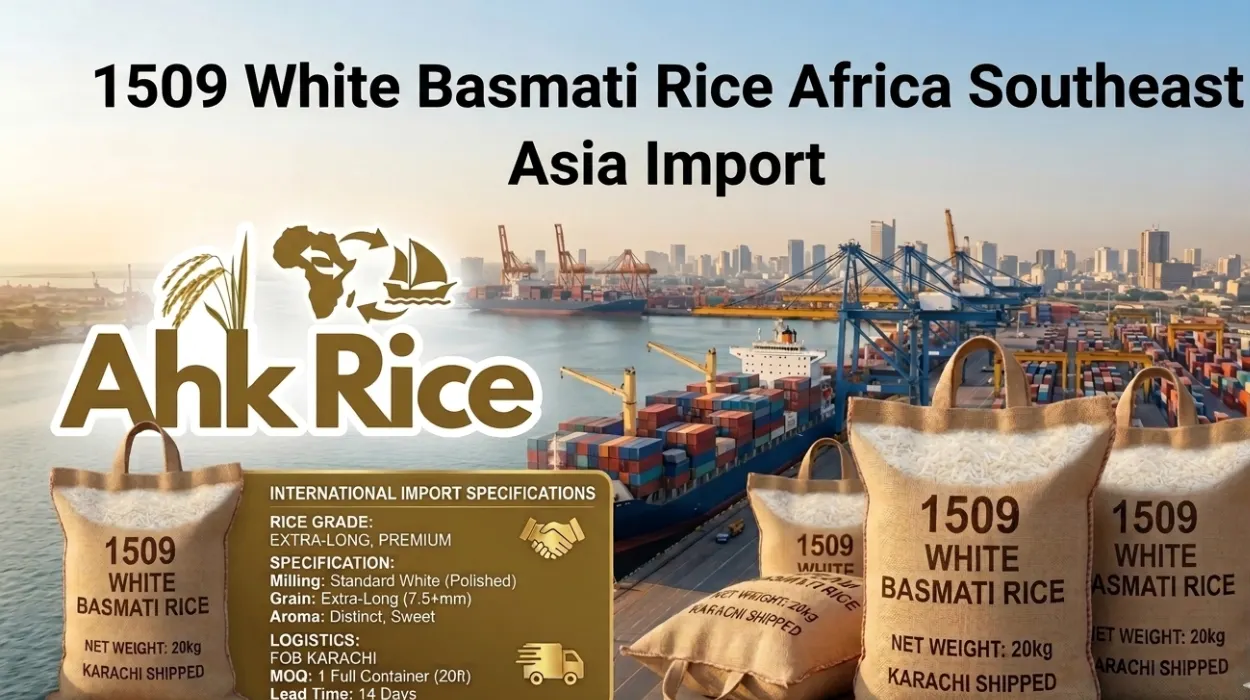
1509 White Basmati Rice: Why Africa and Southeast Asia Import This Grade
1509 white basmati rice is a premium long‑grain white rice variety grown mainly in Pakistan’s Punjab province, prized for its length, aroma, and consistency in export markets across Africa and Southeast Asia. This article explains what 1509 white basmati rice is, where it is grown, how it is processed, the grades available, and why African and Southeast Asian markets repeatedly choose this rice grade.
What is 1509 white basmati rice?
1509 white basmati rice is a long‑grain white rice variety known for its extra‑long kernel length, high straightness, and subtle aromatic‑notes in cooked rice. It is a white‑milled version of the original 1509 paddy, which is parboiled or milled to remove the bran layer and germ.
In the rice industry, 1509 white basmati is defined by specific physical and chemical criteria:
- Average grain length above 7.5 mm after milling.
- High straight‑grain‑ratio and low broken‑grain‑percentage.
- Moisture content kept between 12–14% for long‑term‑stability.
1509 white basmati rice Africa Southeast Asia import because these regions value the grain’s length, cooking‑performance, and suitability for traditional dishes such as biryani, pilaf, and plain‑steamed‑rice. Exporters classify 1509 white as a “white‑premium” grade, distinct from broken‑rice or lower‑length varieties.
How is 1509 white basmati rice produced?
1509 white basmati rice is produced by planting 1509 paddy, harvesting, drying, and then milling and grading the grain to meet strict export‑quality standards. The process starts in the field and ends in the mill, where each grain is sized, cleaned, polished, and packed for international markets.
Cultivation and harvesting
1509 paddy is grown in the fertile plains of Punjab, Pakistan, where canal‑irrigation, temperature‑difference between day and night, and clay‑loam soils create ideal‑conditions for basmati‑aroma‑development. Farmers plant 1509 seed in the Kharif season, irrigate at regular intervals, and harvest after 110–140 days when the grain reaches 18–22% moisture.
Harvesting is done with combine‑harvesters or traditional methods, and the paddy is immediately sun‑dried or mechanically‑dried to reduce moisture to 12–13%. This prevents fungal‑growth, ensures uniform milling, and preserves the grain structure.
How is 1509 white basmati rice processed step by step?
1509 white basmati rice is processed by cleaning paddy, de‑hulling, parboiling or dry‑milling, whitening, grading, and then packaging and labelling for export. Each step is carefully controlled to maintain length, colour, and cooking‑quality.
The typical processing flow looks like this:
- Paddy cleaning and pre‑soaking (if parboiled)
Raw 1509 paddy passes through vibratory sieves, destoners, and air‑separators to remove dust, stones, and immature grains. In the parboiled line, paddy is soaked in warm water, steamed, and dried again to move nutrients from the bran to the endosperm. - De‑hulling and shelling
Paddy enters hullers that remove the husk, producing brown‑rice. Machines separate hulls from grains using air‑sieves. The goal is to minimise broken‑grains and preserve whole‑length. - Milling and polishing (white‑basmati line)
For 1509 white basmati, the brown rice moves to the whitening‑mills, where abrasion‑rollers remove the bran and germ, leaving a translucent white‑grain. The rice is then polished with a light‑polish to add shine without over‑milling, which shortens the grain. - Length‑grading and colour‑sorting
Grading machines separate 1509 white basmati into different grades based on kernel‑length and broken‑percentage. Optical‑sorters remove discoloured, chalky, and foreign‑material‑grains, ensuring a clean, bright‑white‑batch. - Weighing, bagging, and labelling
Finally, the rice is packed into 5–25 kg polybags, jumbo‑bags, or export‑cartons, each with moisture‑and‑traceability‑labels. The packed rice moves to a warehouse for quality‑checks before shipping.
What are the key components of 1509 white basmati rice?
The key components of 1509 white basmati rice are its long slender grains, low amylose content, distinctive aroma, and controlled moisture‑profile that support good cooking‑performance and shelf‑life. These components are the reason African and Southeast Asian buyers repeatedly choose this grade.
- Grain size and length
1509 white basmati is characterised by extra‑long‑grain‑length (often 7.5–8 mm) and high straightness. Long grains cook fluffy, separate easily, and stretch more compared to short‑grain alternatives such as Thai jasmine. - Starch profile and aroma
1509 basmati has relatively low amylose content, which reduces stickiness and improves grain‑separation after cooking. The variety also contains 2‑acetyl‑1‑pyrroline, the same aroma‑compound found in other basmati grades, which gives cooked rice a subtle floral‑or‑nutty‑scent. - Moisture and impurity standards
Export‑quality 1509 white basmati usually keeps moisture between 12–14%. Broken‑rice must be below 2–5% depending on grade, and foreign‑matters, stones, and paddy‑grains are kept close to zero. These standards matter for importers who must meet supermarket‑and‑retail‑requirements.
What are the available grades of 1509 white basmati rice?
1509 white basmati rice is available in multiple grades such as A‑grade, 100% whole grain, 95% whole grain, and lower‑length/broken‑categories defined by broken‑ratio and colour‑uniformity. Each grade is priced and positioned differently in international markets.
- 100% whole grain (premium) grade
In this grade, 1509 white basmati contains 0–1% broken grains, excellent straightness, and uniform white colour. Exporters usually sell this to premium supermarkets, restaurants, and branded‑retailers in the Middle East, Africa, and Southeast Asia. - 95% whole grain (standard‑export) grade
This grade tolerates 3–5% broken grains and may include minor‑variations in colour and shape. It is widely used by industrial‑caterers, food‑service‑providers, and value‑retailers who prioritise cost‑effectiveness over absolute‑perfection. - Broken‑1509 white basmati
Broken‑1509 ranges from 10–30% broken content and is used in ready‑meals, bakeries, and industrial‑processes where appearance is less critical. Prices are noticeably lower than whole‑grain‑grades, which makes it attractive for bulk‑buyers.
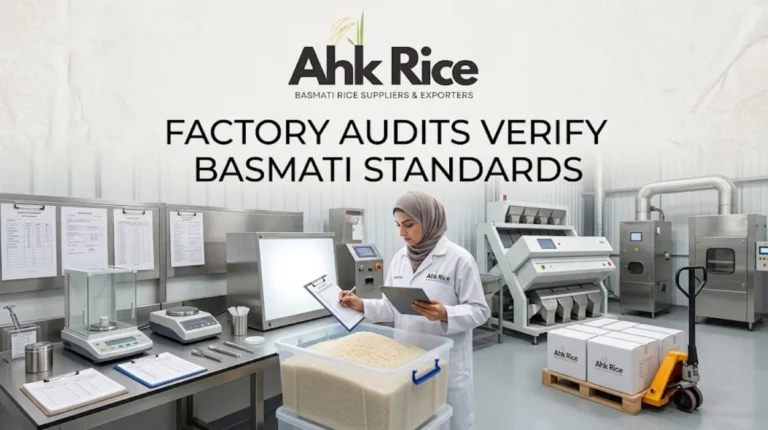
Grades are defined by internal lab‑reports and third‑party‑inspection‑agencies such as SGS or Intertek, which verify broken‑ratio, moisture, chalkiness, and aflatoxin‑levels before export.
What are the main benefits of 1509 white basmati rice for importers?
1509 white basmati rice offers importers long‑grain appearance, consistent cooking behaviour, good yield, and strong brand‑appeal in African and Southeast Asian markets. These benefits make it a preferred choice for both retail and food‑service channels.
- Visual and cooking‑quality
Long grains cook long, fluffy, and non‑sticky, matching consumer expectations in markets where basmati‑style‑rice is associated with premium‑meals. The grain‑length also supports presentations such as biryani, where rice must remain separate and glossy. - Yield and cost‑efficiency
1509 white basmati usually has high milling‑yield and good expansion‑ratio when cooked, which means buyers get more volume per kilogram. This is important for caterers, restaurants, and industrial‑processors who calculate per‑portion‑costs. - Brand‑and‑retail‑fit
Supermarkets and private‑label‑buyers in Africa and Southeast Asia recognise “basmati” as a higher‑value‑category. Labelling rice as 1509 white basmati supports shelf‑differentiation and helps justify slightly higher prices compared to ordinary long‑grain‑rice. - Traceability and compliance
1509 white basmati from Pakistan often comes with certificates such as HACCP, ISO 22000, and sometimes halal‑certification, which are required in many African and Middle‑Eastern‑markets. These documents help importers pass customs and retail‑compliance checks.
What are the main use cases for 1509 white basmati rice?
1509 white basmati rice is used mainly in home‑cooking, restaurants, catering, and industrial‑production of packaged‑rice and ready‑meals across Africa and Southeast Asia. Each use‑case demands a slightly different grade and packaging type.
- Home‑consumption and retail
Many African and Southeast Asian households buy 1509 white basmati in 1–5 kg retail bags for daily‑cooking. The grain’s long‑length, aroma, and ease of preparation align with cultural preferences for basmati‑style‑rice. - Food‑service and restaurants
Restaurants and catering companies use 1509 white basmati for biryani, pilaf, plain‑boiled‑rice, and mixed‑grain‑dishes. The consistency of grain‑length and colour reduces the risk of uneven‑textured‑plates and enhances plating‑quality. - Industrial and ready‑meal‑production
Industrial‑users rely also on 1509 white basmati, but they may prefer slightly lower‑grades or specific‑humidity‑profiles to match processing‑time and packaging‑technology. In some cases, pre‑cooked or parboiled‑1509 white is used in instant‑rice‑cups and retort‑meals.
What are the common problems and misconceptions about 1509 white basmati rice?
Common problems and misconceptions about 1509 white basmati rice include confusing it with 1121, overestimating moisture‑tolerance, and assuming all “white basmati” is the same quality. These misunderstandings can lead to the wrong‑grade‑choices and pricing‑errors for importers.
- Confusing 1509 with 1121 white basmati
Both 1509 and 1121 are white‑basmati, but they differ in grain‑length, amylose‑content, and market‑positioning. 1121 usually has higher‑length and is often priced at a premium, while 1509 balances cost and quality. Importers need to compare lab‑reports and not just rely on names. - Ignoring moisture and storage conditions
1509 white basmati must be stored in dry, ventilated warehouses at controlled temperatures. Excess‑moisture or temperature‑fluctuations can cause grain‑cracking, fungal‑growth, and discolouration, which lowers perceived‑quality and shelf‑life. - Assuming all 1509 is equal
Not all 1509 white basmati is the same. Differences in paddy‑crop, milling‑technology, sorting‑precision, and certification‑levels can change broken‑ratio, colour, and aroma‑intensity. Buyers should compare physical‑specs and lab‑certificates rather than generic‑descriptions. - Mistaking basmati‑for‑aroma‑only
Some buyers focus only on aroma and ignore length and cooking‑behaviour. 1509 white basmati’s value lies in the combination of length, texture, and subtle‑aroma, not just fragrance alone. This combination is what makes it suitable for diverse African and Southeast Asian‑cuisines.
How do African and Southeast Asian markets source 1509 white basmati rice?
African and Southeast Asian markets source 1509 white basmati rice through direct‑importers, local distributors, and international‑rice‑traders who work with Pakistan‑based mills and exporters. The grade is usually shipped in 20 ft or 40 ft containers with 25–50 kg bags or bulk‑liner‑bags depending on port‑and‑warehouse‑logistics.
Typical importing‑countries include:
- West African nations for retail and food‑service‑use.
- East African markets where basmati‑is associated with special‑occasions.
- Southeast Asian countries such as Malaysia, Indonesia, and Vietnam, where basmati‑is used in hotels, restaurants, and expatriate‑cuisine.
Importers check factors such as broken‑ratio, moisture, colour, aflatoxin‑levels, and certification‑status before approving shipments. Some buyers also request sample‑tests from third‑party‑labs to align with national‑food‑safety‑rules.
Where can readers learn more about 1509 white basmati vs 1121 white basmati?
Readers who want a detailed technical comparison between 1509 white basmati and 1121 white basmati should explore a separate article that explains price differences, amylose‑content, grain‑length, and market positioning in depth. 1509 White vs 1121 White Basmati: Price Difference and Quality Gap Explained covers these nuances in a structured, data‑driven way.