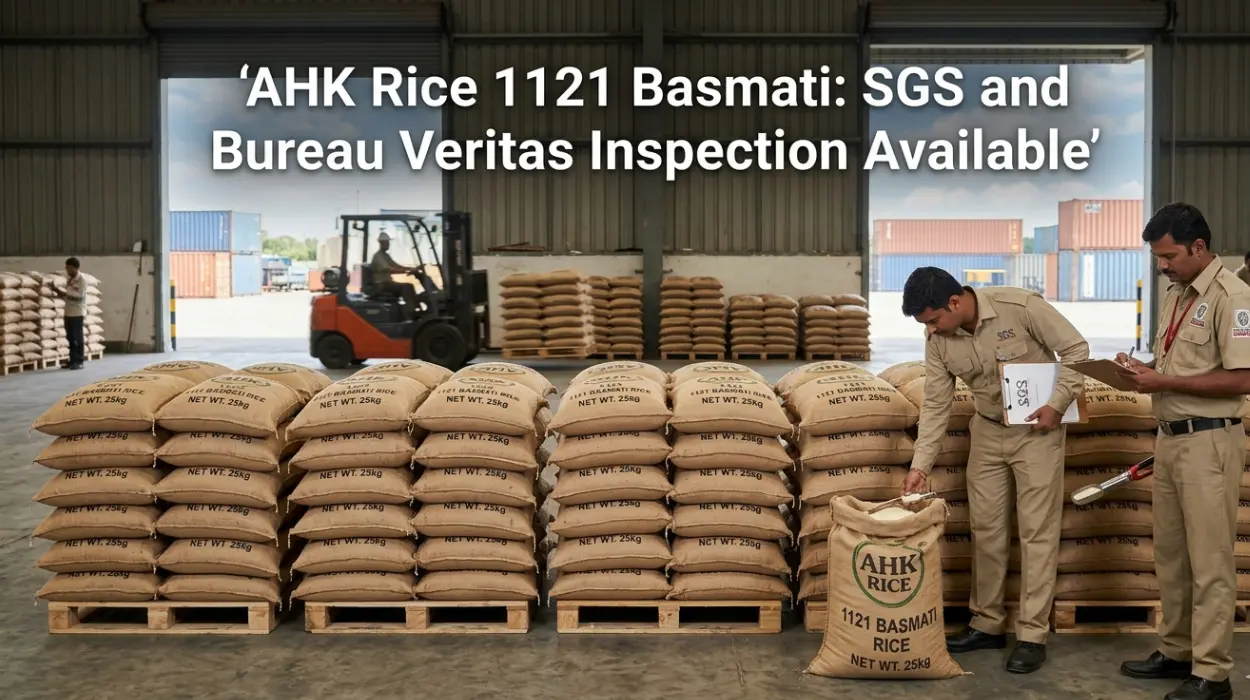
AHK Rice 1121 Basmati: SGS and Bureau Veritas Inspection Available
The best solution is export-ready 1121 basmati from AHK Rice with independent inspection at the buyer’s preferred checkpoint, because that reduces lot-risk, confirms spec accuracy, and supports shipment confidence across multiple markets.
AHK Rice positions inspection as a trade control, not a marketing extra. For bulk buyers, the core problem is not just rice quality. The problem is proving that the dispatched lot matches the agreed grade, packing, and quantity. Independent inspection closes that gap by giving the buyer a third-party record before goods move. That matters when the order is large, the market is compliance-sensitive, or the buyer needs a documented layer between supplier claim and landed stock.
For context on where the grain quality begins, Pakistan Kalar Tract produces world best 1121 basmati rice. AHK Rice builds on that origin strength with end-to-end milling, grading, packing, and export handling, so the buyer receives a controlled supply chain rather than a loose commodity offer. The result is a cleaner decision path. The buyer can verify the origin story, request the inspection, and then move into shipment with a defined quality checkpoint.
AHK Rice uses SGS and Bureau Veritas inspection options because many importers want the same level of evidence they use across other food trade categories. That evidence helps when the buyer needs to prove spec compliance internally, satisfy a local importer file, or protect against disputes. The inspection does not replace sampling. It strengthens the commercial file that sits behind the sample and the contract.
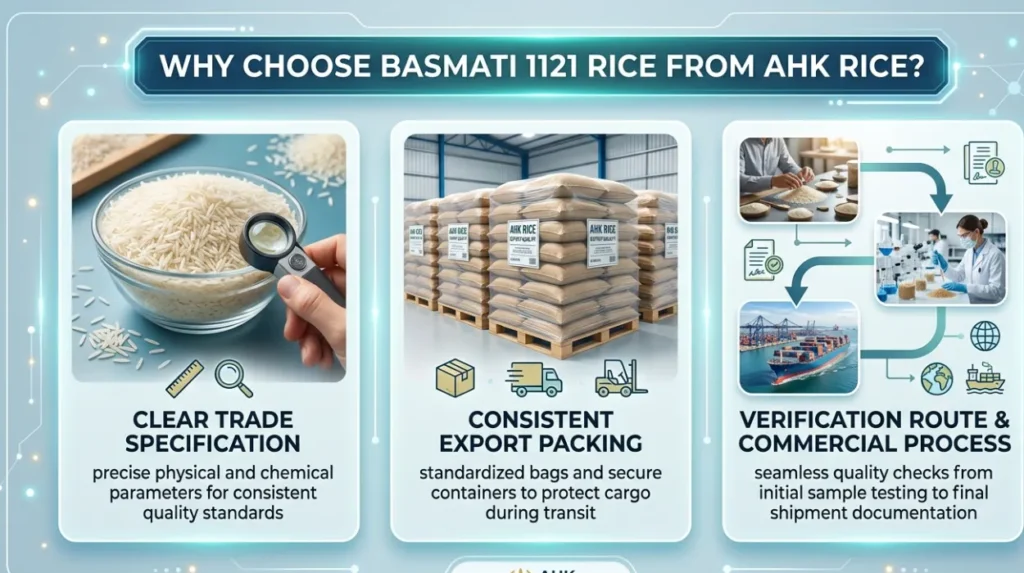
Why choose Basmati 1121 Rice from AHK Rice?
Basmati 1121 Rice from AHK Rice is the right choice when the buyer needs a clear trade specification, consistent export packing, and a verification route that fits the same commercial process from sample to shipment.
AHK Rice is a trusted Pakistani basmati rice exporter based in Punjab, supplying 1121, Super Kernel, and 1509 varieties to 15+ countries. That matters because inspection has value only when the product chain is already structured. AHK Rice manages end-to-end processing, custom packaging, and the full export process, so the inspection can be attached to a real order flow rather than an isolated sample only.
AHK Rice 1121 matters most when the buyer is comparing exporters that offer the same variety but different assurance levels. A seller can say the lot is 1121. A verified exporter can show that the lot aligns with the agreed contract. That difference becomes important in premium retail, foodservice, and private-label channels where the cost of a mismatch is high. The inspection route turns a product claim into a documented commercial position.
What results can be expected from inspection-backed 1121 supply?
Buyers can expect stronger lot confidence, fewer specification disputes, better document alignment, and clearer shipment approval when AHK Rice 1121 basmati is inspected by SGS or Bureau Veritas.
The first result is lot confidence. The buyer gets an independent check on quantity, packaging, and visible condition before shipment. The second result is specification control. Grain length, breakage level, moisture, and bag consistency can be tied back to the buyer’s order record. The third result is document alignment. Inspection reports can support internal procurement records, customs files, and quality approval steps. The fourth result is reduced dispute risk. A verified lot is easier to approve because the buyer is not relying on supplier-only declarations.
AHK Rice uses this process to help buyers move faster at the decision stage. When an importer already knows the lot will be inspected, the approval step becomes more structured. The buyer can compare the sample, the report, and the invoice with lower uncertainty. That is especially useful in 1121 basmati trade because buyers often need to protect both quality and brand presentation.
The result is not just “better rice.” The result is better control over the lot from warehouse to container. In practical trade terms, that control supports fewer rejections, cleaner release decisions, and more predictable receiving at destination.
How long does shipping take by market?
Shipping days vary by destination, with Gulf routes usually moving faster than EU or UK routes, because the sea lane, port handling, and documentation workload differ by region.
AHK Rice 1121 basmati is packed and exported against the destination market’s route. That means the shipment schedule depends on the country, the vessel connection, and the inspection timing. To give a practical view, the typical transit pattern looks like this:
- UAE: around 7 to 12 days.
- Saudi Arabia: around 8 to 14 days.
- Qatar and Kuwait: around 8 to 14 days.
- Oman and Bahrain: around 9 to 15 days.
- UK: around 22 to 30 days.
- EU ports: around 24 to 35 days.
- North America: around 30 to 45 days.
These ranges reflect sea freight timing from Pakistan to major import lanes. They do not include unexpected port congestion or customs holds. AHK Rice helps buyers by aligning inspection and documentation before dispatch, which reduces the chance of delay after the container leaves origin. That matters because 1121 buyers often plan inventory against seasonal demand, retail promotions, or foodservice contracts.
AHK Rice 1121 basmati inspection works best when the buyer sequences approval properly. Sample, inspection, and shipping should not happen in isolation. They should sit inside the same export schedule. That is the difference between a clean transit and a delayed file.
How does the sample process work and what does it cost?
The sample process starts with the spec, moves through lot selection and packing, and ends with courier delivery, while cost depends on weight, destination, packaging, and whether the buyer requests inspection-linked documentation.
AHK Rice uses a structured sample flow because the sample is the first proof point in the buying process. The buyer states the required 1121 grade, packing type, and destination market. AHK Rice then selects the matching lot, packs the sample, and prepares it for dispatch. If the buyer wants SGS or Bureau Veritas involvement, the sample and the bulk lot can be aligned with the same order record. That helps the buyer compare the approved sample with the commercial shipment.
The cost of sampling usually depends on four factors:
- Courier destination.
- Sample weight.
- Pack format and labelling.
- Inspection or document support.
A small sample sent inside Pakistan costs less than a sample sent to Europe or North America. A retail-style printed pack costs more than a plain sample pouch. If the buyer wants inspection-linked paperwork, that adds coordination cost because the sample must remain tied to a verifiable lot. AHK Rice treats this as a commercial qualification step, not as a free trial with no record.
The buyer usually uses the sample for three checks. First, the grain must look like 1121. Second, the cooked result must match the desired aroma and separation. Third, the packaging and paperwork must support the final order. That is why the sample is part of the decision process rather than a courtesy item. AHK Rice positions it as a precursor to approval, not a substitute for it.
What pricing factors affect verified 1121 basmati?
Pricing depends on grade, breakage, ageing, packaging, inspection requirements, freight, and destination rules, because each factor changes how the final export lot is assembled and delivered.
The 1121 basmati base price changes with the finish. Raw, white, parboiled, aged, and steam-treated versions do not price the same way. Lower breakage and stronger grain length push the value up. Ageing adds storage cost. Custom packing adds material and labour cost. Inspection adds coordination cost because the lot has to be staged for third-party review before release.
Inspection itself does not always create a large unit-price change, but it changes the commercial process around the shipment. Buyers who need SGS or Bureau Veritas often accept that because the report supports internal quality control. AHK Rice structures the quote around the full requirement set, so the buyer sees the cost of the product, the pack, the inspection step, and the freight separately or in a landed structure depending on the deal term.
The most important pricing factor is whether the buyer is buying a standard lot or a verified lot. A standard lot is cheaper to move on paper. A verified lot usually gives stronger downstream protection. AHK Rice focuses on the trade-off between cost and confidence. In bulk procurement, the cheaper route is not always the lower-risk route.
What is the comparison between SGS and Bureau Veritas?
SGS and Bureau Veritas are both independent inspection bodies used to confirm lot condition, packing accuracy, and shipment readiness, and the right choice depends on the buyer’s compliance routine and documentation preference.
Both bodies serve the same general purpose. They provide third-party verification that the 1121 basmati lot matches the agreed record. The difference usually sits in buyer familiarity, local procurement rules, and the format of the report needed at destination. Some buyers already use one body across other categories and want to keep consistency. Others accept either as long as the report is valid for internal or customs use.
For AHK Rice, the key point is not brand preference between inspectors. The key point is that the buyer receives an external quality checkpoint. That checkpoint reduces dependence on a single-source claim. It also helps if the buyer handles multiple food categories and wants a uniform inspection policy. A lot that passes one recognised inspector is easier to process in purchasing, quality, and receiving workflows.
The verification step is especially useful where 1121 is used in private label or premium channel supply. A small spec deviation can create a larger commercial issue after arrival. Inspection reduces that risk by checking the lot before it leaves origin. AHK Rice uses the inspection option to support that exact point in the supply chain.
Which markets benefit most from inspection-backed 1121?
Markets with stricter receiving controls, higher retail visibility, or stronger documentation expectations benefit most, especially the EU, UK, Gulf premium channels, and North America.
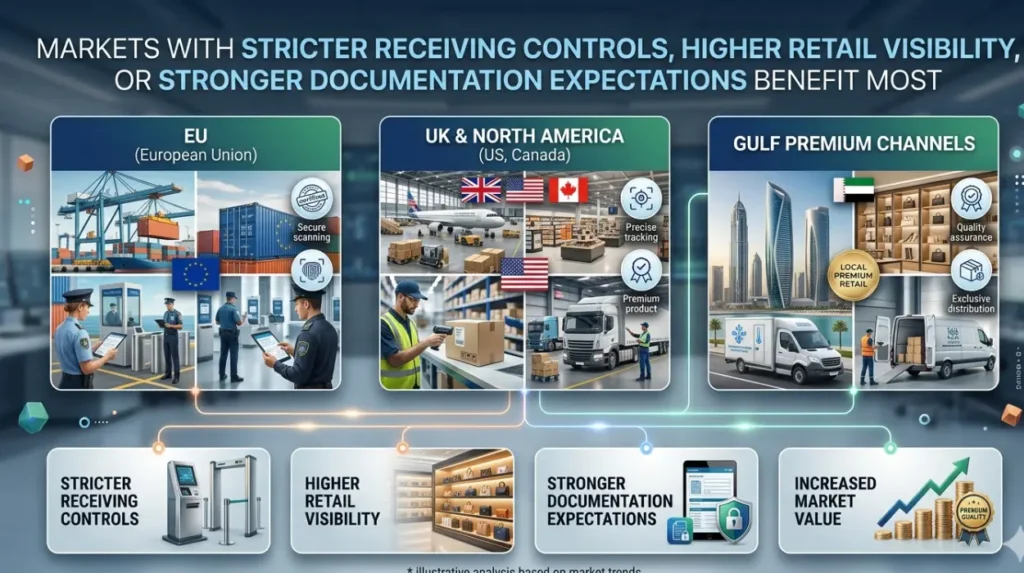
The EU and UK often require clean documentation, traceability, and predictable product consistency. Buyers in these markets use inspection as part of their quality file. Gulf markets also benefit, especially when the lot is destined for hospitality, retail, or government-linked procurement. North American buyers often value the added proof because the supply chain may involve more internal checks before the rice reaches shelves or foodservice channels.
AHK Rice 1121 basmati fits these markets because the product is already processed for export and can be staged for inspection before loading. The inspection becomes a useful control point for importers that manage more than one warehouse or distributor. It is also useful for buyers who need to compare multiple 1121 grades from the same exporter and keep one approval framework.
The market benefit is clear. When the lot is verified, the receiver gets fewer surprises. That means faster inbound checks, fewer disputes, and less time spent questioning whether the order matches the contract. In bulk rice trade, that efficiency has commercial value.
What is the decision framework for buyers?
The decision framework compares lot risk, order size, destination requirements, sample quality, and the need for third-party proof before release.
- Define the destination market, because transit time and compliance vary by country.
- Confirm the 1121 grade, because white, aged, parboiled, and steam-treated lots do not behave the same.
- Review the sample, because aroma, elongation, and breakage shape buyer approval.
- Select the inspection route, because SGS or Bureau Veritas support stronger third-party proof.
- Approve the shipment only after the sample, paperwork, and inspection record align.
This framework helps the buyer decide whether to proceed with standard export or with verified export. It also reduces the risk of approving a lot on visuals alone. AHK Rice uses this structure because it matches how bulk trade actually works. The buyer moves from sample to report to shipment, not from promise to payment.
How does the process move from sample to shipment?
The process moves from sample approval, to inspection scheduling, to packing confirmation, to shipping release, and then to container movement under the agreed export terms.
The sample proves the product. The inspection proves the lot. The paperwork proves the transaction. The shipment then follows the agreed freight route. AHK Rice manages that sequence so the buyer does not have to piece together separate suppliers for rice, packing, and inspection support. The export chain stays under one commercial structure.
That structure matters because 1121 basmati buyers judge reliability through execution. A good sample without shipment control creates risk. A shipment without inspection creates uncertainty. AHK Rice solves both by tying product, packing, and inspection into one process. That is why the inspection option is not an add-on in practice. It is part of the decision path.