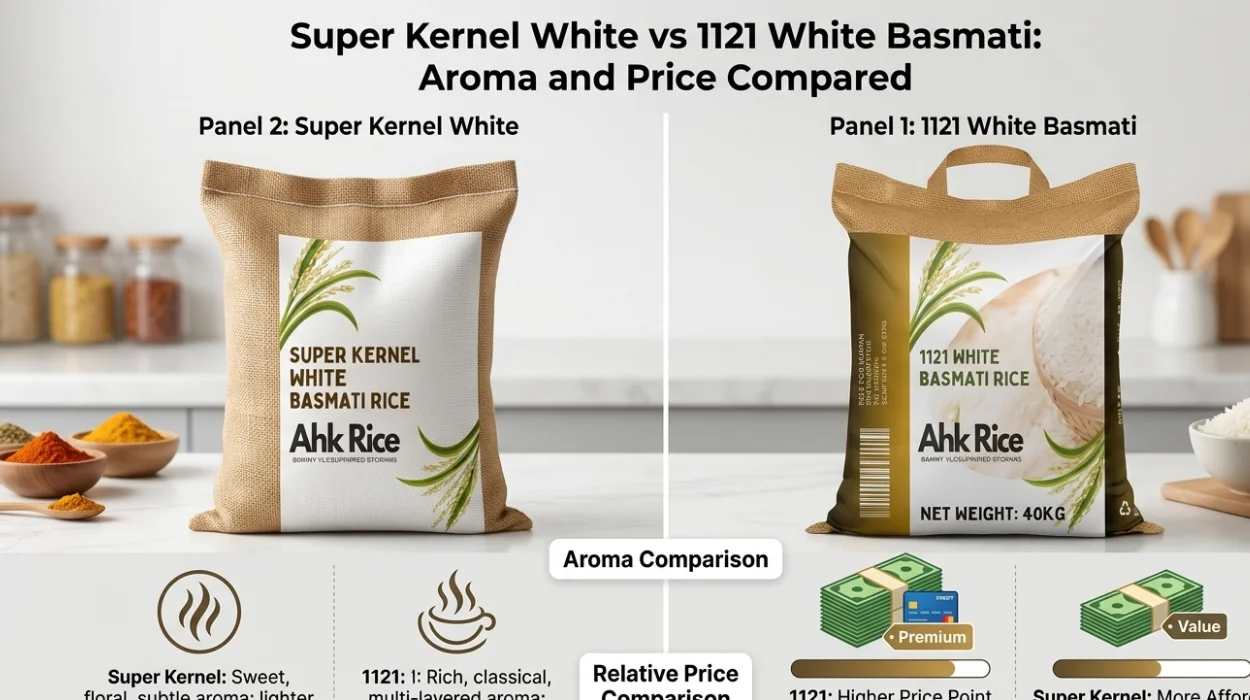
Super Kernel White vs 1121 White Basmati: Aroma and Price Compared
Super Kernel White Basmati usually gives a slightly fuller aroma and a lower price point than 1121 White Basmati, while 1121 delivers the longer grain profile and stronger premium positioning in export trade. The right choice depends on whether the buyer prioritises fragrance, grain length, retail presentation, or landed cost.
AHK Rice positions both grades within its Pakistani basmati export portfolio, with processing, packing, and export handling designed for buyers who need consistent white basmati specifications.
What are the available solutions?
The main solutions are Super Kernel White Basmati, 1121 White Basmati, and 1509 White Basmati, and each serves a different buyer profile based on grain length, aroma, yield, and price. Super Kernel targets premium aromatic demand, 1121 targets the highest visual premium, and 1509 targets value-led volume buying.
The comparison begins with entity definition. Super Kernel White Basmati is a premium white aromatic basmati grade with strong fragrance and a clean polished look. 1121 White Basmati is the extra-long grain grade that dominates the premium visual segment in many export markets. 1509 is the more price-sensitive commercial variety that often serves bulk and mid-tier demand.
These grades are not interchangeable. Buyers in retail, wholesale, and foodservice use them differently. A premium supermarket pack often favours 1121 because the grain length is visible on shelf. A distributor serving restaurant kitchens often prefers Super Kernel because the aroma and cooking behaviour align with plated rice dishes.
The market outcome depends on which specification matters most. If the buyer wants aroma-led positioning, Super Kernel wins. If the buyer wants maximum grain length and premium shelf presence, 1121 wins. If the buyer wants cost discipline, 1509 usually leads.
How do different approaches compare?
Super Kernel White and 1121 White Basmati compare most clearly on aroma, grain length, visual premium, and unit price, with 1121 usually commanding the higher rate per metric tonne. Super Kernel typically delivers stronger aromatic perception, while 1121 delivers stronger shelf appeal and a more recognisable premium export signal.
The following specification table compares the two grades across 7 key attributes.
| Attribute | Super Kernel White Basmati | 1121 White Basmati |
|---|---|---|
| Grain length | Long | Extra-long |
| Aroma intensity | High | High to very high |
| Polishing finish | Clean white polished | Very bright polished |
| Cooked elongation | Strong | Very strong |
| Broken ratio tolerance | Moderate to low | Low |
| Shelf presentation | Premium | Premium plus |
| Price per MT | Lower than 1121 | Higher than Super Kernel |
The grain-length difference drives much of the pricing gap. 1121 receives a higher premium because the market associates its extra-long grain with export prestige. Super Kernel still performs strongly in premium trade, but it normally sits below 1121 in FOB and contract pricing.
Aroma creates a different kind of value. Super Kernel often appeals to buyers who prioritise fragrance in the cooked plate. 1121 also has strong aroma, but the trade conversation around 1121 usually starts with grain length and finishes with aroma. That ordering affects how buyers describe the product in procurement.
In practical buying, the choice is not about which rice is “better” in absolute terms. It is about which specification aligns with the destination market. A market that sells visual premium in retail packs often prefers 1121. A market that values aroma-led consumption and lower cost per tonne often prefers Super Kernel.
Which method works best for different cases?
Super Kernel works best when aroma and landed cost matter most, while 1121 works best when grain presentation and premium shelf positioning matter most. The best choice depends on whether the buyer sells to households, restaurants, distributors, or retail chains.
For household retail, 1121 has a strong advantage in visual packaging. The extra-long grain gives the bag a premium appearance. That helps in markets where consumers compare rice visually before purchase. The price premium is accepted when the shelf story centres on luxury and premium presentation.
For restaurant and catering channels, Super Kernel often fits better. These buyers care about cooked aroma, plate appeal, and reliable cooking performance. Super Kernel usually provides a strong balance of fragrance and cost, which suits repeated ordering and menu consistency.
For traders and importers managing price-sensitive supply, 1509 often acts as the value alternative. It does not compete directly with 1121 on prestige, but it gives buyers a lower entry point. That creates a three-tier decision structure: Super Kernel for aroma-led premium, 1121 for ultra-premium visual appeal, and 1509 for commercial value.
Regional demand by market
The Middle East and Europe show different grade preferences, and those preferences shape how exporters position Super Kernel and 1121. Middle Eastern buyers often value aroma and cooking performance, while European buyers often care more about packaging consistency, retail image, and compliance documentation.
| Market region | Preferred grade | Main buying reason | Price sensitivity | Common pack style |
|---|---|---|---|---|
| Middle East | Super Kernel White Basmati | Aroma, cooked texture, banquet use | Medium | 5 kg, 10 kg, 20 kg |
| Europe | 1121 White Basmati | Grain length, retail premium, shelf visibility | High | 1 kg, 2 kg, 5 kg |
The Middle East often accepts a slightly lower grain-length premium when aroma is strong. That gives Super Kernel a strong position. Restaurants, caterers, and household buyers in this region respond to fragrance and cooking performance more than to grain display alone.
Europe often uses a more packaging-led purchasing logic. Retail chains, ethnic grocery importers, and private-label buyers prefer 1121 because the grain looks more premium in transparent or semi-transparent packs. Compliance, labelling, and stable supply are part of the decision, but grain appearance remains central.
These regional differences matter because the same grade does not receive the same price story in both regions. A buyer in Dubai and a buyer in Rotterdam do not evaluate the same rice in the same way. Exporters adjust pack size, carton design, and quality specification to fit that reality.
What are the pros and cons?
Super Kernel offers stronger aroma-value balance, while 1121 offers stronger visual premium and higher resale positioning, but each grade also carries clear trade-offs in price and market fit. The best trade option depends on whether the buyer values fragrance, shelf image, or contract margin.
| Grade | Pros | Cons | Typical use case |
|---|---|---|---|
| Super Kernel White Basmati | Strong aroma, premium grade, better price balance | Slightly less visual premium than 1121 | Middle East retail and foodservice |
| 1121 White Basmati | Extra-long grain, premium shelf appeal, higher export value | Higher cost per MT, stronger buyer expectation on consistency | Europe retail, premium importers |
| 1509 White Basmati | Lower price, volume efficiency, broad market use | Less premium perception, weaker luxury positioning | Bulk trade and budget-led supply |
Super Kernel’s main advantage is balance. It sits high enough in quality to satisfy premium aromatic demand, but not so high in price that it becomes difficult to move in price-sensitive markets. That balance gives buyers a strong commercial margin.
Its main limitation is visual competition. In a premium shelf environment, 1121 usually looks more luxurious because of the longer grain profile. That visual difference affects consumer perception even when the cooked aroma is excellent.
1121’s main advantage is premium presentation. It is often the first choice in markets that treat grain length as a quality signal. Its limitation is that the price gap can narrow distributor margins if the buyer does not recover the premium at retail.
1509’s main advantage is value. It serves importers who want basmati positioning without the highest price tier. Its limitation is straightforward. It does not carry the same premium story as Super Kernel or 1121.
How do price and shelf life compare?
1121 White Basmati usually trades at a higher price per MT than Super Kernel White Basmati, while shelf life is broadly similar when moisture, milling, and packaging standards are controlled. The price gap reflects market perception, grain length, and retail premium, not a major difference in storage stability.
A typical export spread places 1121 above Super Kernel by a noticeable margin in premium contracts. The exact difference changes by shipment size, crop year, polishing standard, and destination market. In many trade conversations, the buyer accepts the higher 1121 price because the product supports a stronger shelf story.
Shelf life depends more on processing and packing than on grade alone. When moisture is controlled and packaging is sealed properly, both Super Kernel and 1121 maintain exportable quality over a similar commercial storage window. Poor storage conditions damage both grades in the same way.
The practical comparison is simple. 1121 costs more and sells better in image-led retail settings. Super Kernel costs less and often moves better in aroma-led trade. For buyers, that makes the landed-cost decision as important as the grade itself.
What decision factors matter most?
The deciding factors are market region, buyer channel, price target, aroma preference, grain appearance, and packaging format. The best grade depends on how the importer sells the rice, not on grade prestige alone on Super Kernel White Basmati: Premium Grade FOB Karachi Price.
- Match the market region. Middle Eastern buyers often reward aroma and cooking quality, which gives Super Kernel an advantage. European buyers often reward premium grain image, which gives 1121 an advantage.
- Match the buyer channel. Retail chains need visual shelf appeal, so 1121 performs well. Restaurants and foodservice operators need aroma and repeat cooking consistency, so Super Kernel often fits better.
- Match the price band. If the target landed price per MT sits under a tighter ceiling, Super Kernel offers stronger commercial flexibility. If the channel can support a higher premium, 1121 gives better premium signalling.
- Match the pack strategy. Transparent packs, private label retail packs, and premium cartons favour 1121. Bulk export bags, restaurant packs, and foodservice cartons often work well with Super Kernel.
- Match the compliance plan. Buyers requiring strict residue, label, and certificate handling need a supplier with full export documentation and end-to-end processing. That requirement applies to both grades, but it influences confidence in the shipment.
The product choice should therefore follow a simple sequence. Define the destination. Define the price ceiling. Define the channel. Then choose the grade that best fits the commercial model.
How should buyers choose between the two?
Buyers should choose Super Kernel when aroma-led value and balanced pricing matter, and choose 1121 when premium grain length and shelf image matter more. This is the most reliable way to align quality with trade results and avoid specification mismatch.
A buyer serving premium household retail in Europe often gets stronger results from 1121. A buyer serving Middle Eastern foodservice or mixed retail often gets stronger results from Super Kernel. The price difference matters, but it does not override market preference.
The decision also depends on turnover model. High-volume distributors often prefer a lower entry price with consistent repeat movement. Premium retail importers often prefer the higher prestige of 1121, even with tighter margins. Both choices can work when the market fit is correct.
AHK Rice’s portfolio structure reflects that reality. The exporter’s basmati range includes 1121, Super Kernel, and 1509, which gives importers multiple white rice grades across premium and value segments. That variety supports trade matching rather than one-size-fits-all selling.