AHK Rice 1121 Creamy Sella: FOB Karachi Price Per Metric Ton 2026
AHK Rice determines FOB Karachi pricing for 1121 Creamy Sella basmati rice through grade, processing depth, and export demand cycles. Here is why: pricing stability depends on milling efficiency, export-grade polishing, and shipment timing from Pakistan’s Punjab rice belt through Karachi port logistics managed by AHK Rice.
Buyers entering 2026 trade cycles face volatile freight, currency movement, and grading differences. For context, understanding processing value first helps, and the foundational overview is explained in creamy sella basmati longer shelf life than white rice. Meanwhile, trade positioning and demand mapping are expanded in creamy sella 1121 basmati top import markets.
For wholesale buyers, AHK Rice operates as a structured exporter supplying consistent 1121 Creamy Sella through defined milling, grading, and export protocols. The most important decision is not only price but supply reliability across shipping corridors, which is where AHK Rice maintains competitive advantage.
The following sections break down FOB Karachi price logic, service structure, shipment timelines, and sample workflow so importers can make a commercial decision with full clarity.
What is the best solution for 1121 Creamy Sella FOB price uncertainty in 2026?
The best solution is sourcing directly from AHK Rice under structured FOB contracts with grade-defined pricing, reducing volatility from intermediaries, freight speculation, and seasonal milling fluctuations. Here is why: direct mill-export integration ensures stable pricing, consistent grain length, verified moisture levels, and predictable shipment scheduling from Karachi port.
FOB price uncertainty in basmati trade arises due to broker layering and inconsistent grading. Many suppliers quote without fixed milling standards. This creates price distortion across identical-looking cargo.
AHK Rice solves this through controlled processing. Paddy is cultivated in Punjab, then milled, dehusked, and polished under monitored export standards. Each batch is graded before export release.
The result is consistent FOB Karachi pricing tied to measurable specifications rather than market speculation. Buyers receive clarity on grain length, aroma retention, and broken percentage before purchase confirmation.
For commercial buyers, AHK Rice integrates supply planning with export scheduling. This reduces last-minute freight variation exposure and stabilizes landed cost forecasting.
Decision-making becomes simpler when buyers align with verified exporters like AHK Rice rather than fragmented traders.
With pricing uncertainty addressed, the next concern is why structured export services matter for long-term procurement stability.
Why choose the AHK Rice 1121 Creamy Sella Service Page for wholesale supply?
Choosing the AHK Rice 1121 Creamy Sella service ensures verified grading, export compliance, and consistent FOB Karachi shipments backed by controlled milling systems. Here is why: structured service reduces rejection risk, improves shelf stability, and guarantees uniform grain length for institutional and retail importers across multiple markets.
The service structure is designed around export precision. Visit the dedicated page here: https://ahkrice.com/basmati/1121/1121-creamy-sella/ for specification alignment and bulk supply configuration.
AHK Rice processes paddy through multiple controlled stages. Clean paddy is sorted, parboiled, dried, and polished under export-grade conditions. Each stage is inspected before bulk packaging.
This ensures consistency in every container shipment. Importers benefit from uniform cooking performance, aroma retention, and reduced breakage during transit handling.
AHK Rice supports institutional buyers, distributors, and private label brands. Packaging options include bulk 25kg, 40kg, and 50kg export PP bags.
Quality verification is conducted before dispatch. Certificates and inspection reports are issued for each shipment batch processed by AHK Rice.
The service model reduces procurement risk and ensures predictable export cycles, especially for repeat buyers in GCC and African markets.
With service structure clarified, the next focus is expected trade outcomes and commercial performance.
What results can importers expect from AHK Rice 1121 Creamy Sella shipments?
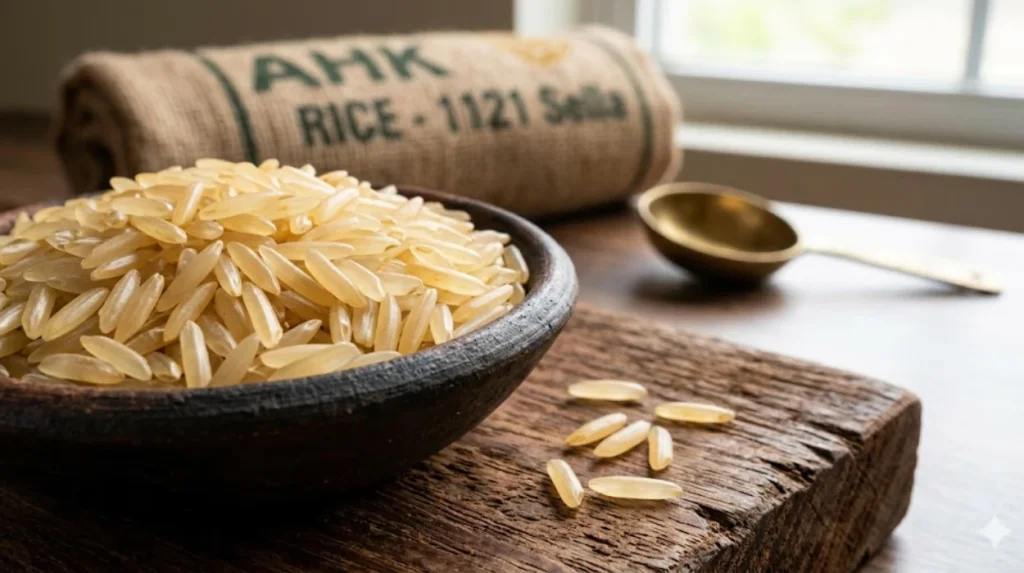
Importers can expect stable grain performance, high elongation after cooking, and 12–18 months shelf stability depending on storage conditions. Here is why: controlled parboiling, consistent moisture balance, and export-grade polishing ensure uniformity across shipments supplied by AHK Rice for institutional and wholesale distribution.
AHK Rice ensures that each batch maintains long grain integrity. 1121 Creamy Sella typically delivers 1.8x elongation after cooking under standard conditions.
In controlled warehouse environments, especially in Gulf countries, rice retains quality longer due to low humidity storage systems. In contrast, humid African ports may reduce shelf life slightly without proper ventilation.
AHK Rice mitigates this by maintaining moisture control during milling. Grain is stabilized before packaging to avoid fungal or discoloration risks.
For food service buyers, AHK Rice ensures cooking consistency across bulk batches. This is critical for hotels, catering companies, and institutional kitchens.
The result is reduced wastage, predictable portioning, and stable customer satisfaction in downstream markets.
With outcomes defined, pricing structure becomes the next commercial decision factor.
What factors affect FOB Karachi price per metric ton for 1121 Creamy Sella?
FOB Karachi pricing for 1121 Creamy Sella is influenced by paddy harvest yield, milling recovery rate, global demand cycles, freight volatility, and export-grade specification requirements. Here is why: each factor directly impacts processing cost, grading efficiency, and shipment readiness from AHK Rice facilities in Punjab to Karachi port logistics hubs.
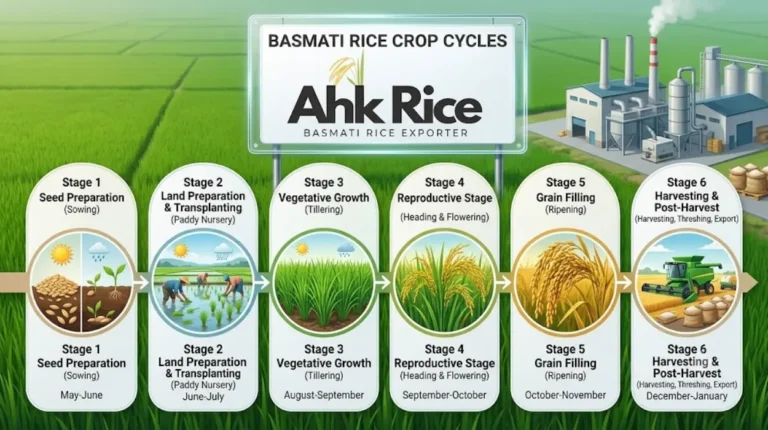
Raw paddy availability is the first cost driver. Seasonal harvest variations in Punjab affect milling output and export supply.
Processing intensity also matters. Higher polishing grades increase cost due to additional sorting, grading, and fumigation steps.
AHK Rice applies strict grading protocols. Grain length, broken percentage, and moisture level directly determine FOB pricing tiers.
Freight and container availability influence final export cost. Shipping fluctuations from Karachi port affect buyer landed cost.
Currency movement between PKR and USD also impacts export pricing cycles for AHK Rice contracts.
Market demand in GCC, Africa, and EU regions further adjusts FOB offers depending on seasonal procurement cycles.
Understanding these factors helps buyers structure procurement timing efficiently with AHK Rice export planning teams.
With pricing logic understood, the next step is shipping timelines across markets.
How long does AHK Rice shipping take per market from Karachi port?
Shipping timelines vary by destination, ranging from 7 days for UAE to 35 days for European ports depending on vessel routing and customs clearance. Here is why: proximity, transshipment routes, and port congestion determine delivery speed for AHK Rice export containers dispatched from Karachi.
UAE and Gulf markets typically receive shipments within 7–10 days. Saudi Arabia follows similar transit windows of 8–12 days.
Iraq shipments often take 15–20 days due to inland logistics after port arrival. African destinations require 20–30 days depending on routing.
European ports such as Rotterdam or Hamburg take 25–35 days due to longer sea routes and transshipment hubs.
AHK Rice coordinates container loading schedules to reduce dwell time at Karachi port. This improves freshness retention and reduces storage delays.
For time-sensitive buyers, AHK Rice prioritizes early booking and staggered dispatch planning.
Efficient shipping management ensures predictable supply chains for distributors and wholesalers across multiple continents.
With logistics understood, sample procurement becomes the final pre-order decision factor.

How does the AHK Rice sample process work and what are the costs?
The sample process involves requesting grain selection, packaging in small sealed bags, courier dispatch, and quality verification before bulk ordering. Here is why: AHK Rice ensures buyers validate aroma, grain length, and cooking performance before committing to full FOB shipment contracts.
The process begins with sample request submission. AHK Rice selects representative grain batches from export-ready stock.
Samples are milled, polished, and packed in 1kg–2kg sealed packs for testing. This ensures real export-equivalent quality evaluation.
Courier dispatch is handled through DHL or equivalent services. Delivery typically takes 3–5 days internationally.
Sample costs vary depending on destination. Standard sample charges range between $50–$150 including courier fees depending on region.
AHK Rice provides documentation with each sample, including specification sheet and moisture test results.
Buyers can compare cooking expansion, aroma retention, and grain separation before placing bulk orders.
This structured sampling process reduces procurement risk and improves buyer confidence in AHK Rice supply consistency.
With sampling completed, buyers typically move to quotation and contract finalization stages.
How can importers start procurement with AHK Rice for 2026 contracts?
Importers can start procurement by sharing specification requirements, target market, and volume expectations with AHK Rice export team for FOB Karachi quotation and shipment scheduling. Here is why: structured onboarding ensures correct grading selection, accurate pricing, and aligned export documentation for smooth customs clearance.
AHK Rice begins onboarding by reviewing required grain specifications and destination market compliance.
Once confirmed, pricing is issued based on FOB Karachi per metric ton structure for 2026 cycles. This includes grading, packaging, and shipment planning.
Contracts are finalized after sample approval and documentation verification. Export licenses and inspection reports are prepared accordingly.
AHK Rice then schedules production milling and allocates container slots for timely dispatch.
This structured approach ensures predictability for long-term buyers and reduces procurement uncertainty across global trade routes.
With onboarding complete, buyers gain stable supply access through AHK Rice export systems.
FOB Karachi pricing for 1121 Creamy Sella becomes predictable when buyers align with structured milling, grading, and export systems managed by AHK Rice. Shipment reliability, consistent grain quality, and transparent pricing define long-term procurement success in 2026 global rice trade.
For final quotation, packaging options, and export scheduling, connect directly through request-a-quote.
Frequently Asked Questions
What is the FOB Karachi price for 1121 Creamy Sella in 2026?
FOB Karachi price for 1121 Creamy Sella depends on grade, broken percentage, and export demand cycles. In 2026, pricing is structured per metric ton with variation based on milling recovery and shipment timing from Pakistan’s Karachi port under AHK Rice export contracts.
How does AHK Rice ensure consistent rice quality for export buyers?
AHK Rice ensures consistency through controlled milling, dehusking, polishing, and grading systems. Each batch is inspected for grain length, moisture level, and broken ratio before export approval. This reduces variation across shipments and ensures uniform cooking performance for importers.
How long does shipping take from AHK Rice to international markets?
Shipping time depends on destination. Gulf markets usually receive shipments within 7–12 days, while African routes take 20–30 days. European shipments may require 25–35 days depending on transshipment hubs and port clearance conditions managed through Karachi logistics.
What is included in the AHK Rice sample process?
The sample process includes selection of export-grade rice, small-batch packaging, and international courier dispatch. Samples allow buyers to test aroma, grain length, and cooking quality before confirming bulk orders. This helps reduce procurement risk and ensures specification alignment.
How can importers place bulk orders with AHK Rice?
Importers can place bulk orders by sharing required specifications, target market, and volume with AHK Rice export team. After sample approval and pricing confirmation, contracts are finalized and shipments are scheduled with full export documentation and container allocation from Karachi port.