AHK Rice 1121 White Basmati: Fine Dining and Gourmet Retail Grade Pakistan
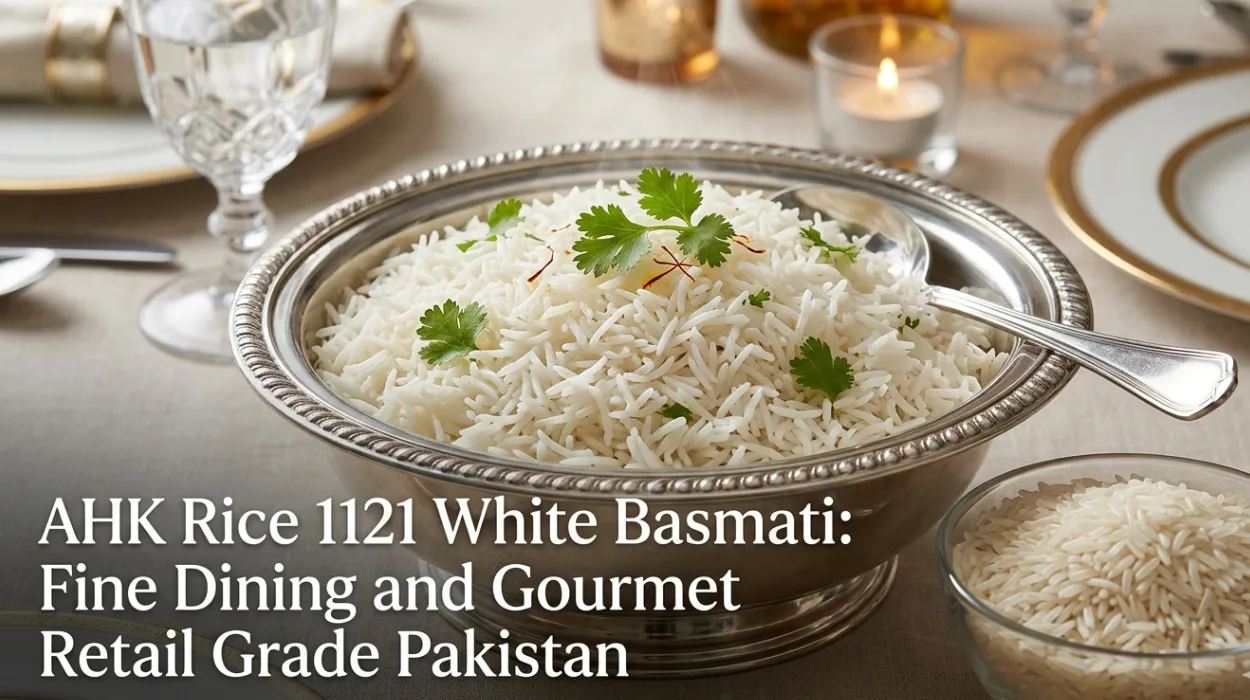
AHK Rice 1121 white basmati is the best solution for fine dining and gourmet retail buyers who need extra long grain, polished appearance, and reliable export control. AHK Rice pairs product quality with shipment discipline so the grain reaches premium channels in a usable commercial form.
What is the best solution for fine dining and gourmet retail buyers?
The best solution is export-grade 1121 white basmati with a polished long grain profile, controlled breakage, and a supply chain built for premium retail packs and foodservice kitchens that value presentation as much as performance.

Fine dining and gourmet retail buyers buy appearance, consistency, and trust. The rice must look refined in a retail pack and perform predictably on the plate. AHK Rice 1121 white basmati fits that need because it is milled to a bright finish and packed for export-grade handling. The grain starts as Punjab-grown basmati paddy and moves through cleaning, hulling, whitening, polishing, grading, and packing before it reaches the buyer.
For background on why the grain is valued so highly, the grain length basmati explains the varietal length advantage that supports premium positioning. That matters because gourmet buyers often compare grain profile before they compare price. AHK Rice works in that commercial reality by supplying 1121 in a format that aligns with shelf presentation and restaurant service.
The best solution is not only rice selection. It is also process control. Gourmet buyers need a product that stays consistent through sampling, shipping, customs, and shelf placement. AHK Rice is built around that requirement, which is why the supply model works for both fine dining kitchens and premium retail shelves.
Why choose 1121 White Basmati Rice?
1121 White Basmati Rice is the correct choice when the buyer needs a bright long grain, export grade white rice presentation, and a commercial format that supports gourmet brand positioning.
The first reason is visual quality. White basmati offers a clean polished look that fits premium shelf packaging and plated dining. The second reason is grain identity. 1121 is known for extra long raw grain length and strong elongation after cooking. The third reason is market fit. Gourmet retailers and fine dining operators both need a grain that signals quality before the first bite.
AHK Rice is relevant because it supplies 1121 in a full export structure. That means the buyer is not forced to manage a disconnected chain between milling and delivery. The supplier handles the product from processing to packing, which reduces the friction that premium buyers often face when they source from multiple intermediaries.
The choice is also commercial. Gourmet retail often depends on first impression. White basmati gives the pack a bright, premium image that supports higher shelf confidence. Fine dining depends on plate appearance. White basmati cooks into a long, separated grain that supports that presentation. That is why AHK Rice continues to see demand for this format from premium buyers.
What results can be expected from this supply?
The expected results are consistent polished grain, strong plate presentation, longer perceived quality, and a supply that matches premium retail and hospitality expectations.
At the product level, buyers receive a rice that looks clean, uniform, and export ready. The grain structure supports visual distinction on shelf and on plate. In fine dining, that matters because presentation affects perceived quality. In gourmet retail, it matters because shoppers often judge value from the pack before they cook the rice.
At the supply level, the result is predictability. AHK Rice manages the product as an export commodity with controlled milling and packing. That means less variation between lots and a clearer path from sample approval to shipment. Premium buyers care about lot consistency because one poor batch can damage a brand line or menu standard.
The result also includes practical commercial stability. AHK Rice ships into multiple markets, so the packaging and export handling are built for international movement. That makes the product suitable for buyers who need premium basmati without sourcing instability. The value is not only in the rice itself. The value is in the ability to keep the same quality standard across repeated orders.
What shipping days apply by market?
AHK Rice shipping days vary by destination market, with Gulf routes usually moving faster than UK or EU routes, and final arrival time shaped by vessel schedule, port handling, and customs clearance.
Shipping into the Gulf is usually faster because the lane is shorter. UAE and Saudi Arabia often sit in the shorter transit range, while UK and EU routes take longer because the sea journey is extended and the port process includes more steps. The buyer should therefore plan shipping days by market rather than assume one universal number.
For fine dining and gourmet retail, timing matters because stock runs on tighter planning windows. Retail launches, seasonal menu changes, and distributor arrivals all depend on predictable lead times. AHK Rice supports that by using export handling that aligns production, packing, and dispatch. That reduces the risk of stock arriving after the buyer’s commercial window has started.
The practical conclusion is simple. Gulf buyers often need shorter lead time and faster replenishment. UK and EU buyers need earlier planning and more buffer in the schedule. AHK Rice can support both, but the buyer must align the purchase timing with the destination market. That is the commercial logic behind export rice planning.
What does the sample process involve?
The sample process involves specification confirmation, sample packing, courier dispatch, kitchen or retail evaluation, and final commercial approval before bulk order release.
The first step is specification confirmation. AHK Rice confirms the exact grade, pack type, and destination market before sample preparation. That matters because 1121 white basmati must be compared on the correct trade specification, not on a generic rice assumption. The second step is sample packing. AHK Rice draws the sample from a relevant batch and seals it for transit.
The third step is evaluation. Gourmet retail buyers inspect grain length, whiteness, breakage, and visual fit for shelf packaging. Fine dining buyers test wash behaviour, cooking time, separation, and plate appearance. The sample is then compared against the buyer’s service standard. That matters because premium rice must perform in the actual use case, not only in a catalog description.
The final step is approval. Once the sample passes the buyer’s standard, the order can move into pricing, packing, and shipment planning. AHK Rice treats this stage as a conversion gate because premium buyers do not want uncertainty after commitment. The sample process therefore reduces risk before the buyer reaches bulk volume.
What costs apply to samples?
Sample cost depends on courier destination, sample weight, packing format, and whether the sample is drawn from a current export batch or prepared to a buyer-specific requirement.
A standard sample usually carries the lowest cost because the quantity is small and the packing format is simple. Courier cost increases when the destination is farther away or when the buyer requests faster delivery. If the sample requires special pack artwork or lot-specific handling, the cost rises because extra preparation is needed.
The most useful way to think about the sample fee is as a decision cost. The buyer pays a small amount to avoid a large procurement error later. That matters in premium rice because a mismatch in grain appearance or cooking quality can damage a retail launch or a restaurant menu. AHK Rice keeps the sample stage tied to the export process so the buyer can verify both product and commercial fit before scaling.
Sample cost is also linked to order intent. Buyers who move from sampling to bulk order often treat the sample as part of the qualification process rather than as a separate purchase. That is the rational way to handle premium food procurement because the sample confirms whether the rice matches the buyer’s standards and market positioning.
What pricing factors affect the order?
Pricing depends on grade, order size, packing style, compliance requirements, and shipping terms, because each one changes processing cost and landed cost.
The first factor is grade. 1121 white basmati sits in a premium export category because of its long grain profile and visual quality. The second factor is volume. Larger orders usually reduce unit cost because production and freight spread across more tonnes. The third factor is packaging. Gourmet retail packs cost more to prepare than bulk sacks because they need printed artwork, sealing, and unit control.
Compliance also influences the quote. Premium buyers often need documentation that supports destination market rules and food safety expectations. Shipping terms affect the final landed price as well. FOB, CIF, and delivered arrangements each place freight and risk differently between buyer and supplier. AHK Rice prices against the real export structure, not against a loose domestic estimate, which is the only model that matters for imported gourmet rice.
For fine dining and gourmet retail, price is not only a cost measure. It is a positioning tool. A higher spec pack can support a higher shelf or menu value if the buyer’s channel can absorb it. That is why AHK Rice buyers usually compare cost against market fit rather than against raw mill price alone.
What factors shape the decision?
The key decision factors are shelf presentation, plate performance, shipment speed, sample approval, and whether the buyer wants premium retail value or fine dining consistency.
Shelf presentation is the first factor for retail. The pack must look premium and the grain must present as refined and long. Plate performance is the first factor for restaurants. The grain must cook into a separated, elegant texture that supports the menu standard. Shipment speed matters because the buyer needs stock to arrive within the launch or replenishment window.
Sample approval is also central. Premium buyers do not rely on product claims alone. They need to cook and inspect the sample before committing to bulk purchase. The final factor is commercial intent. Some buyers want a retail premium line. Others want a hospitality product that performs consistently in service. AHK Rice is structured to serve both because the same 1121 base can move into different channels.
Decision framework
| Factor | Choose 1121 White Basmati When | Avoid Delay When |
|---|---|---|
| Shelf presentation | You need a bright gourmet retail pack | Retail positioning is still undecided |
| Plate performance | You need separated grains for dining service | The menu standard is still under review |
| Shipment speed | You have a clear market launch date | The order timing is not confirmed |
| Sample approval | The buyer wants cooked and visual testing | The sample has not been evaluated |
| Premium positioning | The product will sit in a high value segment | The price ladder is still open |
This framework helps the buyer move from interest to decision. It turns product comparison into a commercial choice. That is the level where premium rice procurement becomes efficient.
How does 1121 compare with other basmati forms?
1121 white basmati compares strongly with steam, brown, and parboiled basmati because it offers the brightest gourmet presentation, while the other formats prioritise storage resilience, fibre, or heat treatment.
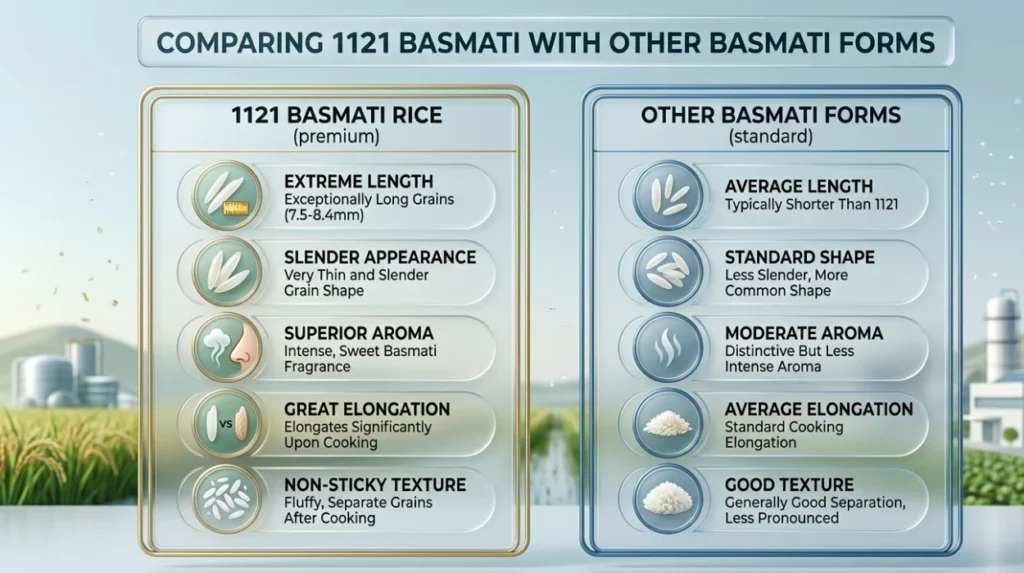
Steam basmati usually offers better shelf life and stronger storage stability. Brown basmati keeps the bran layer and suits buyers focused on wholegrain positioning. Parboiled basmati benefits from heat treatment and often performs well in rougher logistics. White basmati remains the most presentation-led format because it gives the cleanest visual profile for premium retail and fine dining.
That comparison matters because the buyer is selecting by channel, not by rice identity alone. AHK Rice supplies all of these forms from the same export base, so the buyer can match the grade to the market. For gourmet retail, white basmati often sits at the top because the polished appearance supports premium shelf communication. For hospitality, it also performs well because the grain separates cleanly and looks refined on the plate.
What should a buyer do next?
The buyer should move from sample review to specification confirmation, then to price request, shipment scheduling, and final order placement once quality and market fit are confirmed.
The first step is to approve the sample. The second step is to confirm the pack specification and shipping term. The third step is to request a formal quote. The fourth step is to lock the dispatch window. Once that sequence is clear, the order can move into export handling.
AHK Rice is built for that sequence because the company manages processing, custom packaging, and export handling in one chain. That reduces risk for fine dining and gourmet retail buyers who need premium rice without operational uncertainty. The final decision should rest on product fit, shipment timing, and commercial value, not on price alone.
AHK Rice 1121 White Basmati serves buyers who need premium presentation, export discipline, and a dependable route into fine dining or gourmet retail. The next step is to move from evaluation to procurement through formal quote.