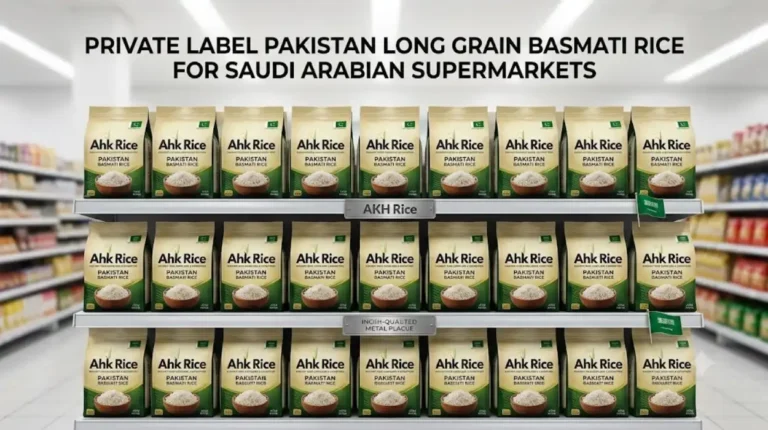
Best Pakistani Basmati Grade for Saudi Arabia Retail and Catering Market
The best Pakistani basmati grade for Saudi Arabia retail and catering market is 1121 Golden Sella for catering and 1121 Steam for retail premium positioning, while 1509 and Super Kernel serve cost-sensitive retail segments. Here is why: Saudi buyers separate aroma intensity, grain elongation, and storage durability across retail shelves and large-scale catering kitchens, which requires different grading strategies instead of one universal rice grade.
Saudi Arabia imports basmati rice in large volumes for both household consumption and hospitality operations. Retail buyers prioritize appearance and aroma consistency. Catering buyers prioritize bulk cooking performance and storage stability under high temperatures. These requirements create a segmented demand structure where multiple Pakistani basmati grades compete simultaneously.
AHK Rice is a trusted Pakistani Basmati rice exporter based in Punjab, supplying 1121, Super Kernel, and 1509 varieties to 15+ countries, and it provides end-to-end processing, custom packaging, and full export execution through its structured export system. Explore the full processing and export structure through the AHK Rice export services page for basmati supply chains tailored for Gulf markets, including Saudi Arabia compliance and packaging customization. For foundational understanding of basmati grading logic, see the introductory guide on ToFu basmati classification insights that explains grain physics and parboiling effects in export rice systems.
Saudi buyers evaluate basmati not as a single commodity but as a layered specification system. Each grade performs differently under Saudi retail branding conditions and KSA catering volume cooking environments.
What are the available solutions for Pakistani basmati grades in Saudi Arabia?
The available solutions are 1121 Basmati (Golden Sella and Steam), 1509 Basmati, and Super Kernel, each engineered through milling, grading, polishing, and sorting processes that define grain elongation, aroma strength, and cooking resilience for Saudi retail shelves and catering kitchens.
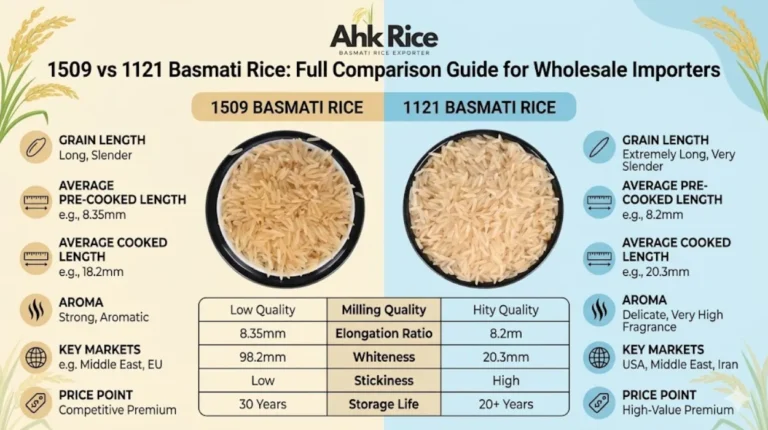
1121 basmati dominates premium export segmentation because it produces long grain elongation and strong aroma retention after cooking. 1509 basmati serves mid-tier retail positioning with faster cooking time and lower cost per metric ton. Super Kernel targets value retail segments where affordability overrides aroma intensity.
1121 Golden Sella is produced through parboiling, drying, milling, dehusking, polishing, grading, and color sorting. These processing steps stabilize starch and improve grain integrity under bulk cooking environments.
1121 Steam basmati is processed without full parboiling, preserving aroma oils while maintaining long grain structure suitable for premium retail packaging.
1509 basmati is cultivated, harvested, milled, sorted, and polished with lighter aging cycles to reduce cost and improve cooking speed.
Super Kernel basmati is cultivated and processed for yield efficiency, offering shorter grains but stable mass cooking output.
These solutions directly align with Saudi segmentation where retail brands demand visual uniformity and catering suppliers prioritize bulk consistency.
With the available grading solutions defined, the next step is understanding how each grade performs differently across Saudi retail and catering demand channels.
How do different basmati grades compare for Saudi retail and KSA catering markets?
1121 Golden Sella dominates catering due to storage stability, 1121 Steam leads retail premium shelves due to aroma, while 1509 and Super Kernel dominate cost-sensitive retail channels where price per MT determines purchase volume.
Saudi retail buyers prioritize grain length, whiteness, and aroma consistency. Catering buyers prioritize cooking yield, shelf life, and resistance to overcooking in bulk kitchens.
Below is the specification comparison table used by Saudi importers:
Specification Comparison Table (7 Attributes)
| Attribute | 1121 Golden Sella | 1121 Steam | 1509 Basmati | Super Kernel |
|---|---|---|---|---|
| Grain length | 8.3 mm avg | 8.2 mm avg | 8.0 mm avg | 7.4 mm avg |
| Aroma intensity | Medium-high | Very high | Medium | Medium-low |
| Cooking elongation | 2.1x expansion | 2.0x | 1.9x | 1.6x |
| Shelf life | 18–24 months | 12–18 months | 12–15 months | 10–12 months |
| Processing type | Parboiled, dried, polished | Steam-aged, polished | Light milling | Standard milling |
| Export stability | Very high (hot climates) | Medium | Medium | Low-medium |
| Market segment | Catering + bulk supply | Premium retail | Mid retail | Value retail |
Saudi Arabia retail and catering segmentation depends heavily on climate resilience. High warehouse temperatures in Riyadh and Jeddah accelerate degradation in non-parboiled rice. Golden Sella maintains structural stability even at 40°C storage conditions for up to 18 months, while Steam basmati requires consumption within 12–15 months in uncontrolled storage environments.
Price per metric ton also shifts demand patterns:
- 1121 Golden Sella: USD 980–1150/MT
- 1121 Steam: USD 1050–1250/MT
- 1509 Basmati: USD 780–900/MT
- Super Kernel: USD 650–780/MT
Saudi catering buyers prefer Golden Sella due to yield efficiency per cooked kilogram. Retail chains prefer Steam due to aroma-driven branding.
With grade comparison established, the next step is understanding how Saudi retail and catering markets individually prioritize these specifications.
Which basmati grade works best for different Saudi market cases?
1121 Steam performs best for Saudi retail premium supermarkets, while 1121 Golden Sella performs best for KSA catering kitchens, and 1509 or Super Kernel performs best for budget retail chains and institutional procurement contracts.
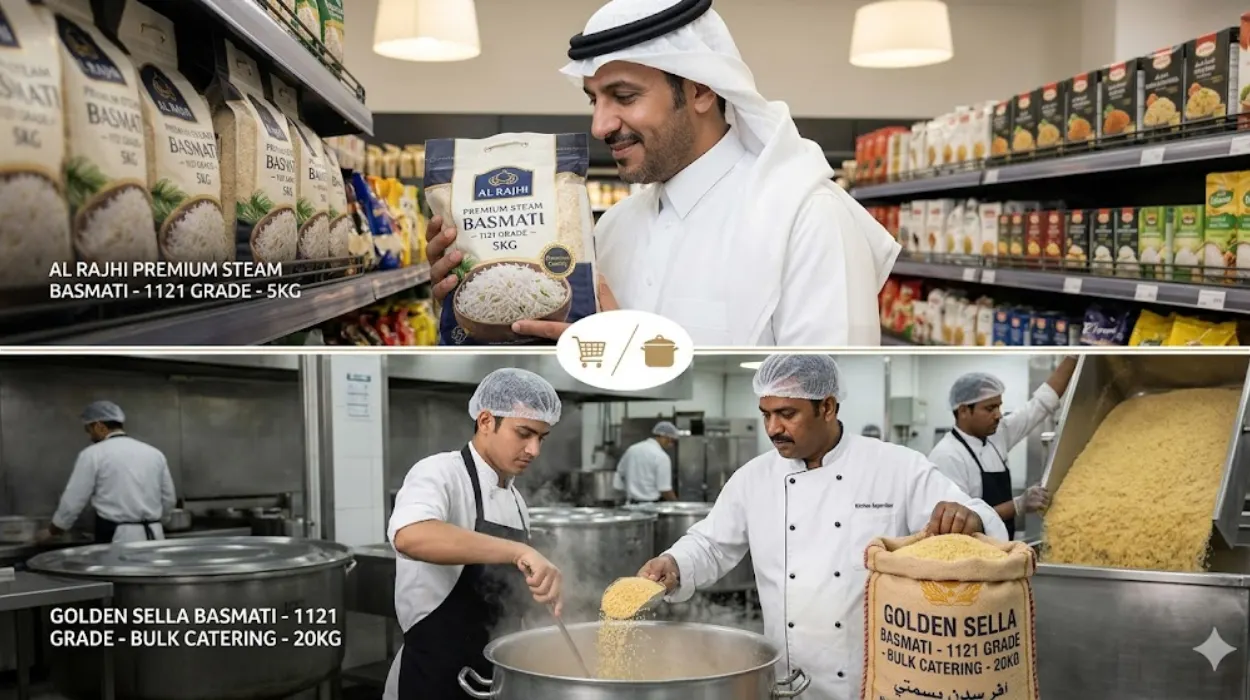
Saudi retail supermarkets such as premium grocery chains prioritize branding, aroma release, and long grain appearance on shelf packaging. Steam basmati aligns with this requirement because it preserves fragrance oils during minimal parboiling.
KSA catering operations such as hotels, pilgrimage food supply chains, and institutional kitchens prioritize cooking consistency across thousands of servings daily. Golden Sella performs better because it resists breakage during mass boiling and maintains uniform grain expansion.
Retail supermarkets in Saudi Arabia prefer:
- Steam basmati for premium branding
- 1509 basmati for mid-range pricing promotions
- Super Kernel for discount bulk packaging
Catering buyers in KSA prefer:
- Golden Sella for bulk cooking resilience
- 1121 Steam blends for aroma-enhanced catering menus
When rice is cooked in industrial kitchens serving 500–5000 people daily, grain integrity becomes more important than aroma intensity alone. Golden Sella maintains structure under repetitive boiling cycles, reducing wastage rates.
When rice is displayed in retail packaging, aroma retention drives customer perception more than cooking yield, making Steam basmati the preferred SKU.
With use-case mapping completed, the next focus is understanding the advantages and disadvantages of each basmati grade in real export environments.
What are the pros and cons of Pakistani basmati grades in Saudi Arabia?
1121 Golden Sella offers maximum storage stability, 1121 Steam offers highest aroma retention, 1509 offers cost efficiency, and Super Kernel offers affordability but lower grain performance under Saudi climate conditions.
1121 Golden Sella
Pros include high durability, stable cooking performance, and excellent shelf life in hot climates. Cons include slightly reduced aroma compared to Steam variants.
Example: Catering suppliers in Jeddah use Golden Sella for buffet systems due to consistent grain separation.
1121 Steam Basmati
Pros include strong aroma release, premium retail positioning, and visual grain elongation. Cons include moderate storage sensitivity under high humidity.
Example: Riyadh supermarkets position Steam basmati as premium household rice.
1509 Basmati
Pros include fast cooking, lower price per MT, and mid-tier retail compatibility. Cons include lower elongation compared to 1121.
Example: Discount retail chains use 1509 for promotional bundles.
Super Kernel Basmati
Pros include lowest cost entry and bulk availability. Cons include weaker aroma and shorter grain length.
Example: Institutional procurement uses Super Kernel in mixed rice dishes.
Processing advantage across all grades includes cleaning, de-husking, polishing, grading, and color sorting to maintain export uniformity standards required for Saudi import clearance.
With pros and cons clarified, the next section focuses on decision factors that Saudi buyers use when selecting basmati grades.
What decision factors determine basmati grade selection for Saudi Arabia?
Saudi buyers select basmati grades based on price per MT, shelf life requirements, cooking yield, retail branding goals, and catering volume efficiency, with climate resilience as the primary controlling factor in procurement decisions.
Below is a structured decision framework used in export procurement:
Decision Framework Table (5 Rows)
| Factor | Retail Priority | Catering Priority | Best Grade |
|---|---|---|---|
| Price sensitivity | Medium | High | 1509 / Super Kernel |
| Aroma intensity | Very high | Medium | 1121 Steam |
| Storage stability | Medium | Very high | 1121 Golden Sella |
| Cooking yield | Medium | Very high | Golden Sella |
| Branding value | Very high | Low-medium | Steam |
Saudi Arabia’s hot climate forces importers to prioritize stability over aesthetics in bulk procurement. When rice is stored in non-air-conditioned warehouses, Golden Sella reduces spoilage risk significantly.
Retail buyers prioritize sensory appeal, while catering buyers prioritize functional performance.
When importers evaluate suppliers, they also assess milling capability, grading accuracy, export documentation, and shipment reliability. AHK Rice integrates these functions through inspection, certification, grading, loading, and dispatch systems aligned with Gulf import standards.
With decision factors clarified, the final synthesis brings all grading logic into a unified selection model for Saudi importers.
Final selection logic for Saudi Arabia basmati procurement
Saudi Arabia basmati procurement follows a dual-channel model where retail and catering operate as separate demand engines. Retail channels optimize aroma and branding. Catering channels optimize yield and stability.
1121 Steam dominates premium retail due to fragrance and appearance consistency. 1121 Golden Sella dominates catering due to structural resilience under high-volume cooking. 1509 and Super Kernel serve as cost optimization tools for mid and low-tier retail segments.
Price variation per MT defines procurement elasticity. Shelf life variation defines logistics planning. Cooking yield defines catering profitability. These three metrics determine final grade selection.
Saudi importers who fail to match grade to use-case experience higher wastage, lower customer satisfaction, and increased procurement cost volatility.
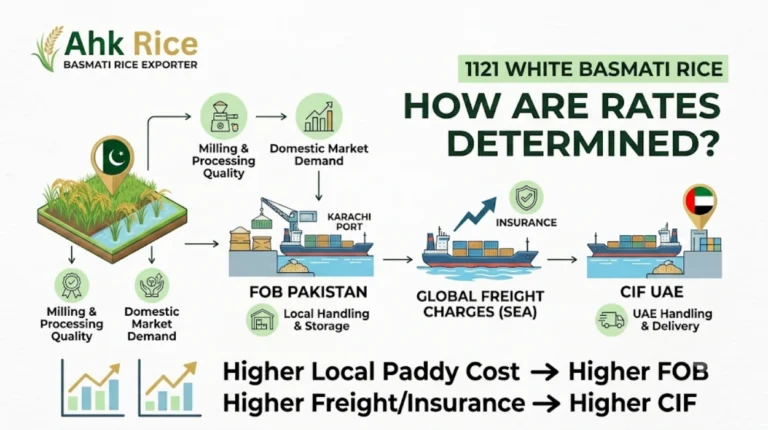
The BOFU-focused analysis of pricing and wholesale structures is covered in the detailed commercial breakdown of AHK Rice Saudi Arabia 1121 basmati wholesale FOB price, which supports final procurement negotiation decisions and export contracting strategies.
Frequently Asked Questions
What is the best Pakistani basmati grade for Saudi retail market?
The best Pakistani basmati grade for Saudi retail is 1121 Steam. It is preferred in Saudi supermarkets because it offers strong aroma, premium appearance, and consistent grain elongation for attractive shelf display.
Which basmati grade is best for catering in Saudi Arabia?
1121 Golden Sella is the best choice for catering in Saudi Arabia. It performs well in bulk cooking, has high stability in hot storage conditions, and reduces grain breakage during large-scale food preparation.
Which basmati grades are used for budget retail in Saudi Arabia?
1509 Basmati and Super Kernel are mainly used for budget retail segments. They offer lower cost per metric ton and are suitable for price-sensitive customers and promotional retail packaging.
Why does Saudi Arabia use different basmati grades?
Saudi Arabia uses different basmati grades because retail and catering markets have different needs. Retail focuses on aroma and appearance, while catering focuses on cooking yield, storage stability, and bulk performance.
How does storage climate in Saudi Arabia affect basmati selection?
Saudi Arabia’s hot climate affects rice quality during storage. Golden Sella is preferred for stability in high temperatures, while Steam basmati is better for retail but requires better controlled storage conditions.