How Is Basmati Rice Priced for Export from Pakistan to the USA?
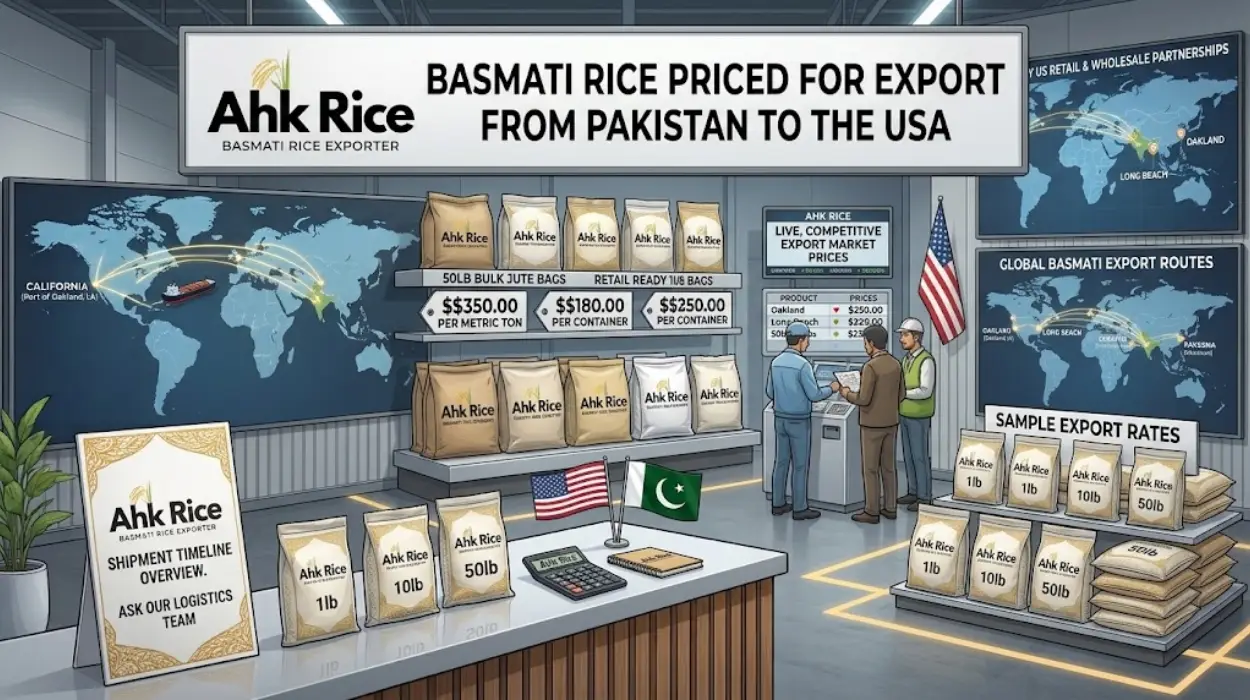
Basmati rice export prices from Pakistan to the USA depend on rice variety, grain quality, processing method, packaging, order volume, freight, insurance, and import-related expenses. Buyers compare the rice’s quoted price with its total landed cost to understand the actual expense of importing Pakistani Basmati rice.
Pakistan produces several Basmati varieties, including 1121, Super Kernel, and 1509 Basmati rice. Each variety has different grain characteristics, processing options, and commercial applications. Export quotations also differ according to whether the price is quoted on a Free on Board (FOB) or Cost, Insurance and Freight (CIF) basis. Understanding these factors helps importers, distributors, wholesalers, and food businesses evaluate suppliers and prepare accurate purchasing budgets.
What Determines the Export Price of Pakistani Basmati Rice?
The export price of Pakistani Basmati rice depends on variety, grain length, broken percentage, moisture, processing, packaging, order quantity, and shipping terms. Market demand, crop availability, testing requirements, and destination-specific expenses also influence the final quotation offered to an importer.
Rice variety and grain quality
The variety establishes the starting point for price comparisons. Premium 1121 Basmati is valued for its long grains, aroma, and cooked elongation. Super Kernel Basmati serves buyers seeking traditional Pakistani aroma and familiar cooking characteristics. The 1509 variety attracts commercial buyers looking for long grains and competitive sourcing economics.
Grain length, broken percentage, color, aroma, and purity determine whether a consignment meets the buyer’s specification. A shipment with consistent grain dimensions and a low broken percentage requires appropriate milling, grading, and quality control.
Processing and packaging costs
Processing expenses depend on the product specification. Steam, Golden Sella, and Creamy Sella processing involve different treatment methods and produce different grain appearances and cooking characteristics. Sortex optical sorting removes discolored grains and selected foreign material. Double Sortex processing adds another sorting pass when the agreed specification requires it.
Packaging also affects the quotation. A 5 kg retail bag requires different materials and packing operations from a 25 kg wholesale bag or a 50 kg commercial sack. Printed branding, moisture barriers, labeling, and palletization add costs according to the order requirements.
Order quantity and commercial terms
Large orders distribute certain fixed costs across more tonnes of rice. Container loading, inspection arrangements, documentation, and packaging setup influence the economics of an export order. The actual price advantage depends on the specification and shipment volume.
Payment arrangements, shipment schedules, and the agreed Incoterm establish which expenses belong to the seller and which belong to the buyer. A reliable comparison uses identical product specifications, quantities, and delivery terms.
How Does Basmati Rice Export Pricing Work from Pakistan to the USA?
Export pricing starts with the rice specification and processing requirements, followed by packing, inspection, documentation, and transportation calculations. The exporter then quotes an agreed delivery term, while the importer estimates freight, customs-related charges, and other expenses to calculate the total landed cost.
Step 1: Define the product specification
The buyer identifies the rice variety, processing type, grain length, broken percentage, moisture limit, crop year, and packaging format. These details form the basis of the commercial quotation.
For example, an importer ordering 1121 Golden Sella Basmati in 25 kg bags requires a different specification from a retailer purchasing Super Kernel Steam Basmati in branded 5 kg packs. Comparing these products without accounting for their differences produces misleading price conclusions.
Step 2: Calculate milling and processing expenses
The exporter calculates the cost of sourcing paddy or milled rice, removing the husk when applicable, polishing, grading, sorting, and preparing the required product. Processing yield also matters because the quantity of finished export-grade rice differs from the original quantity of paddy.
Additional quality checks verify compliance with the agreed specification. Laboratory testing, residue analysis, and other inspections contribute to costs when required by the buyer or applicable regulations.
Step 3: Add packaging and export preparation
The finished rice is packed in the specified bag size and material. The exporter arranges marking, lot identification, weighing, container loading, and export documentation according to the contract.
Packaging specifications should identify net weight, product description, country of origin, batch details, and any required retail-label information. The buyer and exporter confirm the applicable labeling requirements before production.
Step 4: Apply the shipping term
The exporter calculates the quotation according to the selected Incoterm. Under FOB, the seller’s responsibilities generally extend to loading the goods aboard the vessel at the named port. Under CIF, the seller also arranges and pays the ocean freight and required insurance to the named destination port.
Step 5: Calculate the importer’s total cost
The importer adds expenses not included in the quotation. These can include destination handling, customs brokerage, applicable duties, examination charges, port fees, inland transportation, warehousing, and distribution.
The final calculation depends on the specific customs classification, entry circumstances, shipment arrangements, and applicable US regulations. Importers should verify current charges before confirming an order.
Which Pakistani Basmati Varieties Have Different Export Price Structures?
Pakistan’s principal commercial Basmati options include 1121, Super Kernel, and 1509. Their prices differ according to grain characteristics, processing requirements, buyer positioning, and availability. Each variety can be supplied in different grades and processing styles under an agreed export specification.
1121 Basmati rice
1121 Basmati is known for its exceptionally long grains and pronounced cooked elongation. Buyers source white, Steam, Golden Sella, Creamy Sella, and Brown variants according to their market requirements.
Premium retail brands, specialty rice distributors, restaurants, and catering companies select 1121 when grain presentation and cooked appearance are central to the product’s value. Export pricing reflects the specific grade, processing method, broken percentage, and packaging.
Super Kernel Basmati rice
Super Kernel is a traditional Pakistani Basmati variety associated with characteristic aroma and cooking quality. Its market positioning depends on grain consistency, purity, processing, and the intended customer segment.
Importers serving South Asian grocery stores, ethnic food distributors, wholesalers, and restaurant suppliers compare Super Kernel against competing varieties using both raw-grain specifications and cooking tests.
1509 Basmati rice
1509 is an early-maturing Basmati variety associated with high agricultural yield and long grains. Commercial specifications commonly target raw grain lengths around 8.10–8.50 mm, although the agreed grade and measurement method determine the actual requirement.
Buyers choose 1509 for retail distribution, foodservice, catering, and price-sensitive markets. Steam and Golden Sella options address different product preferences, so the processing style must appear clearly in the quotation.
How Do FOB and CIF Prices Affect Basmati Rice Import Costs?
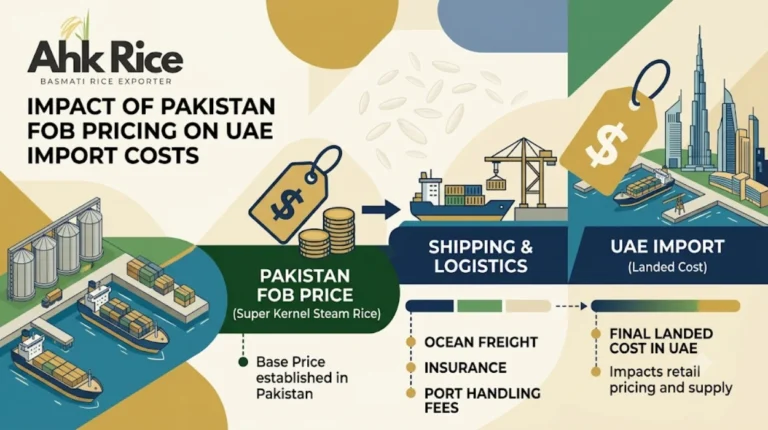
FOB and CIF prices allocate transportation responsibilities differently. FOB generally excludes the buyer’s main ocean freight and insurance, while CIF includes seller-arranged ocean freight and required insurance to the named destination port. Neither quotation automatically represents the complete landed cost.
FOB Karachi
Under FOB Karachi, the quotation covers the seller’s contractual responsibilities up to delivery aboard the vessel at Karachi. The buyer generally arranges the main ocean freight, insurance, and destination-side expenses.
This structure gives experienced importers greater control over freight selection and shipping arrangements. It also allows buyers to compare rice quotations separately from carrier pricing.
CIF New York, Houston, and Los Angeles
Under CIF, the seller arranges and pays the ocean freight and required insurance to the named destination port. The importer remains responsible for destination costs and import formalities that fall outside the seller’s obligations.
New York, Houston, and Los Angeles can produce different shipping costs because carrier rates, routing, transit schedules, port charges, and inland delivery requirements vary. The exact port, shipment date, container type, and destination services must be specified before comparing quotations.
For a complete explanation of these differences, buyers can consult the comparison of [FOB Karachi and CIF pricing for major US ports]([Insert Link to MOFU Article]). It should explain how freight, insurance, destination charges, and inland transportation change the overall cost structure.
What Quality Standards and Certifications Affect Export Pricing?
Quality requirements influence export costs through laboratory testing, inspection, traceability, processing controls, and documentation. US-bound shipments must meet applicable food safety and import requirements. Certifications add commercial value when buyers require them, but certification claims must match valid documentation and the actual shipment.
Food safety and laboratory testing
US food importers assess the requirements administered by the Food and Drug Administration (FDA). Applicable obligations include food facility registration, prior notice, and the Foreign Supplier Verification Program (FSVP), depending on the parties and circumstances.
Rice specifications can also include limits for pesticide residues, heavy metals, moisture, foreign material, and other quality indicators. The buyer and exporter should identify the relevant test methods, acceptance criteria, and laboratory documentation before production.
Origin and shipment documentation
Export documentation can include a commercial invoice, packing list, bill of lading, certificate of origin, and phytosanitary certificate when required. Additional documents depend on the commodity, importing rules, and contract.
Traceability records connect the rice lot with its processing and shipment details. Buyers requiring particular food safety systems, halal certification, kosher certification, or organic status should verify the relevant certification scope and validity. These requirements do not apply identically to every shipment.
Packaging and labeling compliance
US retail packaging must comply with applicable labeling rules. Requirements depend on the product, packaging format, claims, and intended sale. Imported rice labels need accurate product identity and country-of-origin information, alongside other applicable declarations.
Retail-ready printing and compliance reviews affect packaging costs. Importers should approve artwork before production to reduce relabeling, storage, and shipment-delay expenses.
What Are the Main Benefits of Understanding Export Price Components?
Breaking export prices into product, processing, packaging, freight, and import expenses helps buyers compare equivalent offers. This approach improves budget accuracy, identifies hidden charges, supports supplier negotiations, and reduces the risk of comparing different rice grades or delivery terms incorrectly.
Better supplier comparisons
A standardized specification allows buyers to evaluate quotations on equal terms. Comparing two offers for the same variety, processing style, broken percentage, moisture limit, bag weight, and Incoterm makes price differences easier to explain.
More accurate inventory planning
Importers can estimate the cost per tonne, kilogram, retail bag, or case. They can also include freight changes, customs-related expenses, inland delivery, and storage when calculating distribution margins.
Fewer commercial misunderstandings
Clear specifications establish expectations for quality, inspection, packaging, and delivery responsibilities. Written agreements reduce disputes over grain quality, documentation, and unexpected expenses.
What Common Misconceptions Affect Pakistani Basmati Rice Pricing?
The most common pricing mistakes involve treating FOB as a landed price, assuming CIF includes every import expense, comparing different grades directly, and treating indicative market prices as binding offers. A valid comparison requires a complete specification and clearly defined delivery responsibilities.
The lowest quotation is not always the cheapest shipment
A lower unit price can reflect a different grain grade, packaging format, processing method, or delivery term. A higher quotation can include services excluded from another offer. Buyers should compare total costs against the same quality requirements.
CIF does not mean delivery to the warehouse
CIF covers the named destination port under the applicable contract terms, not automatic delivery to the importer’s warehouse. Destination handling, customs clearance, duties, and inland transportation require separate review.
Certifications do not guarantee every shipment’s compliance
A supplier’s certification does not replace shipment-specific checks or the importer’s legal responsibilities. Product testing, accurate declarations, valid documentation, and applicable FDA requirements remain important.
A market benchmark is not a final quotation
Rice prices change with crop availability, grade, quantity, currency movements, freight, and contract timing. Buyers should request a dated quotation with a defined validity period, product specification, quantity, packing details, and Incoterm.
How Should US Importers Evaluate a Pakistani Basmati Rice Quotation?
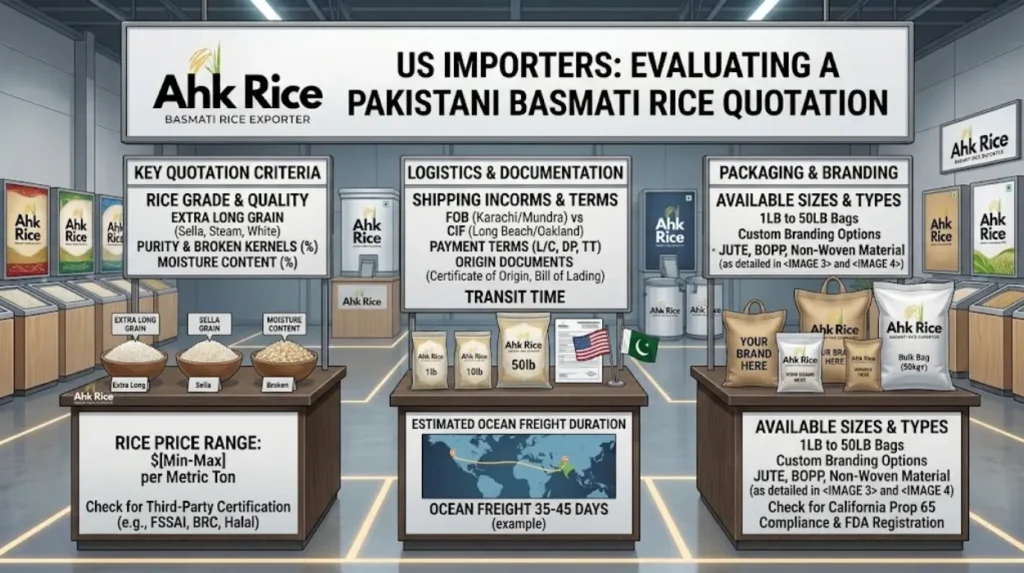
US importers should verify the rice specification, exporter documentation, processing method, packaging, shipping term, and expected destination expenses. A complete quotation identifies the product, quantity, price basis, shipment schedule, payment conditions, and documents required for the transaction.
Start by selecting the variety and processing style that match the intended market. Confirm grain length, broken percentage, moisture, crop year, and packaging before requesting a price. Ask for a sample when cooking performance, aroma, and grain appearance require evaluation.
Next, compare quotations using the same Incoterm and destination. Calculate the expected landed cost per tonne and per saleable kilogram, including freight, insurance where applicable, port expenses, customs-related charges, and inland transportation. Verify current US import requirements with the relevant authorities and qualified customs professionals.
Finally, confirm quality acceptance procedures, payment terms, shipment timing, and document responsibilities in writing. This creates a consistent basis for evaluating Pakistani Basmati rice and planning an import order.
Frequently Asked Questions
How is Basmati rice priced for export from Pakistan to the USA?
Basmati rice export prices depend on rice variety, grain length, broken percentage, moisture, processing, packaging, order quantity, freight, insurance, and shipping terms. The final landed cost also includes applicable import expenses and destination charges.
What is the difference between FOB Karachi and CIF USA?
FOB Karachi generally covers the seller’s responsibilities through loading the goods aboard the vessel at Karachi. CIF includes the seller-arranged ocean freight and required insurance to the named destination port. Destination charges and import clearance expenses remain separate where they fall outside the seller’s obligations.
Which Pakistani Basmati rice varieties are exported to the USA?
Common commercial varieties include 1121, Super Kernel, and 1509 Basmati. Buyers select them according to grain length, aroma, cooking performance, processing method, price positioning, and the requirements of their retail or foodservice customers.
Does CIF pricing include US customs duties and inland delivery?
No. CIF covers ocean freight and required insurance to the named destination port. Importers must separately assess applicable customs duties, clearance charges, port handling, and inland transportation.
Which factors increase Pakistani Basmati rice export costs?
Premium grain specifications, additional sorting, specialized processing, branded retail packaging, laboratory testing, inspection, and larger documentation requirements can increase costs. Freight rates, insurance, order quantity, and destination arrangements also affect the quotation.