How Is Basmati Rice Processed from Paddy to Export-Ready Grain?
Basmati rice is processed through controlled stages that convert harvested paddy into clean, graded, polished, sorted, packed, and export-ready grain. Here is why: each stage controls moisture, husk removal, grain breakage, appearance, purity, size, and final shipment quality.
What Is Basmati Rice Processing?
Basmati rice processing converts harvested paddy into finished grain through drying, cleaning, dehusking, whitening, polishing, grading, sorting, inspection, and packing for domestic or export markets.
Basmati paddy is rice grain enclosed inside a protective husk. Pakistani Basmati varieties include 1121, Super Kernel, and 1509 Basmati rice. These varieties are cultivated mainly in Punjab, where soil, climate, irrigation, and growing conditions support aromatic long-grain production.
Paddy arrives at the mill after harvesting and initial handling. The mill first checks the incoming lot for moisture, impurities, grain condition, and variety characteristics. Moisture control matters because excessive moisture affects storage and milling performance.
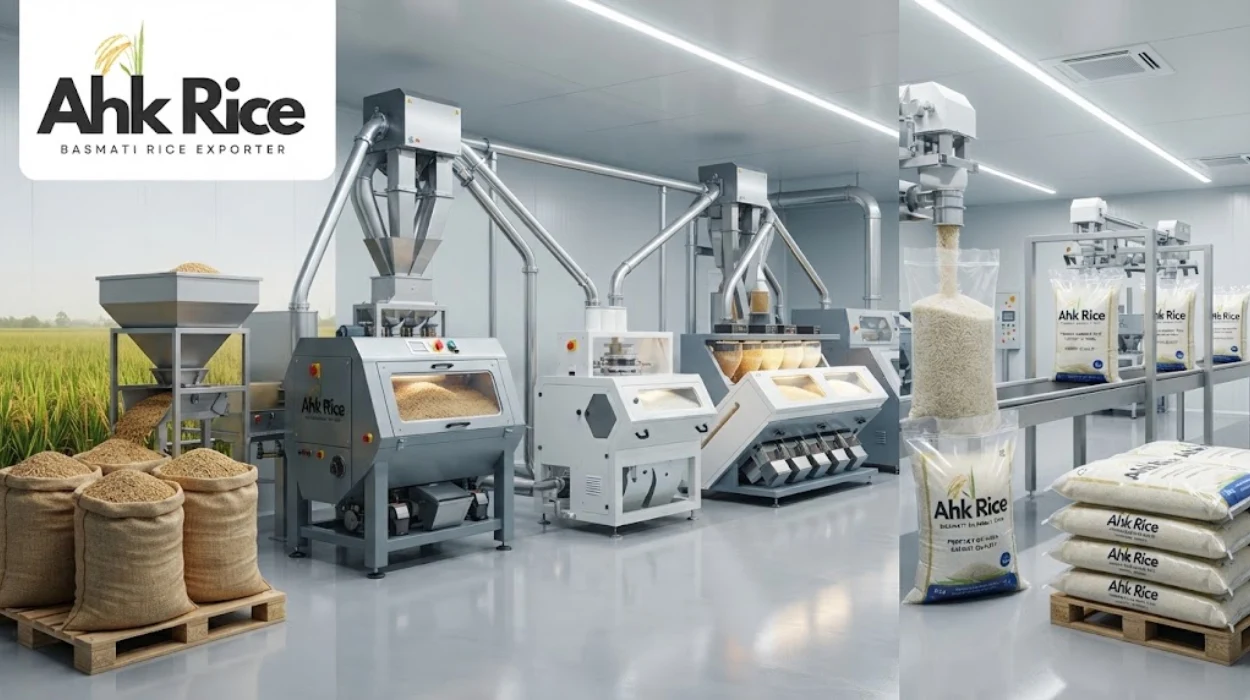
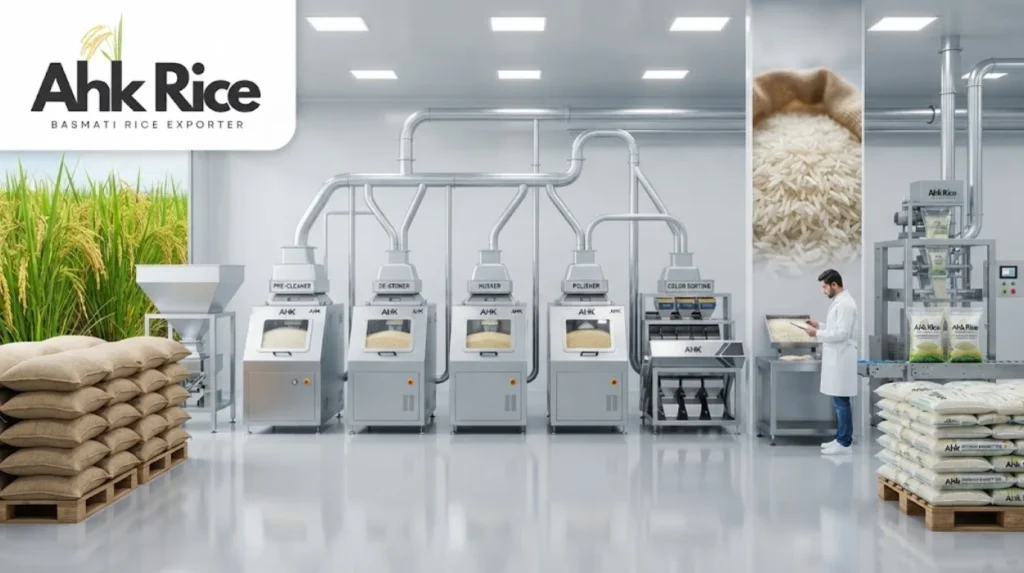
Modern rice mills use multiple machines rather than one milling operation. Cleaning removes foreign material. Dehusking removes the outer husk. Whitening removes bran. Polishing improves surface appearance. Grading separates grain sizes. Sortex sorting removes discoloured and defective kernels.
Basmati processing also separates whole kernels from broken rice. Export specifications define requirements such as grain length, broken percentage, moisture, polish, colour, purity, and packaging format.
With the processing definition established, the next question is how paddy moves through each production stage.
How Does Basmati Rice Processing Work Step by Step?
Basmati processing follows a controlled sequence: receive paddy, test moisture, clean impurities, dehusk, separate brown rice, whiten, polish, grade, sort, inspect, pack, and load.
Clean the Paddy
Paddy cleaning removes straw, dust, soil, seeds, stones, and other foreign materials. Pre-cleaners, aspirators, sieves, magnets, and destoners perform different separation functions.
Destoning uses differences in density to separate stones from rice. Magnetic separation captures metallic particles. Aspirators remove lighter materials such as husk fragments and dust.
De-husk the Grain
Dehusking removes the outer husk from paddy and produces brown rice. Rubber-roll hullers apply controlled pressure to separate the husk while limiting kernel damage.
A paddy separator then separates brown rice from remaining unhusked paddy. Unhusked grains return to the husking stage for another pass.
Whiten the Brown Rice
Whitening removes the bran layers surrounding brown rice. Abrasive and friction milling systems gradually remove bran from the kernel surface.
Multi-stage milling controls the amount of bran removed. Controlled milling also helps limit excessive grain breakage.
Polish the Grain
Polishing refines the surface after whitening. Abrasive, friction, dry, or mist polishing systems produce different surface finishes.
Regular polish, double polish, and silky polish represent common commercial finishes. The selected finish depends on the buyer specification and market requirement.
Grade the Rice
Grading separates whole kernels from broken kernels and separates grains according to length and width. Length graders and plan sifters establish consistent commercial grades.
Basmati buyers commonly specify whole-grain percentage, broken percentage, average grain length, moisture, and chalky grain limits.
Sort the Finished Grain
Sortex machines use optical sensors to identify unwanted colour and visual defects. The equipment removes discoloured, chalky, damaged, and abnormal kernels from the accepted rice stream.
Colour sorting improves visual uniformity. Pakistani rice-processing facilities use optical sorting alongside mechanical grading to produce consistent export-quality lots.
Inspect and Pack the Rice
Final inspection verifies the finished specification before packing. Quality checks examine moisture, broken percentage, grain appearance, foreign matter, purity, and other contracted requirements.
Packaging then protects the finished grain during storage, handling, container loading, and international transport. Common formats include PP, BOPP laminated, and custom retail packaging.
With the processing sequence established, the next question is which components determine the final grain specification.
What Are the Key Components of Basmati Rice Processing?
The key components are moisture control, mechanical milling, grain grading, optical sorting, quality inspection, packaging, storage, and export documentation. Each component controls a measurable part of final rice quality.
Moisture Control
Moisture control protects grain stability during processing and storage. Milling performance depends on suitable grain moisture because excessive dryness increases breakage while excessive moisture complicates milling and storage.
Commercial mills therefore test paddy before processing and monitor moisture during production.
Milling Equipment
Milling equipment includes cleaners, destoners, rubber-roll hullers, paddy separators, whiteners, polishers, graders, and optical sorters.
Each machine performs a defined operation. The sequence prevents one aggressive operation from placing unnecessary stress on the grain.
Quality Inspection
Quality inspection connects the physical process with the commercial specification. Mills sample paddy at intake and inspect finished rice before packing.
Common measurements include moisture percentage, broken percentage, grain length, foreign matter, damaged kernels, chalkiness, colour, and overall purity.
Packaging and Storage
Packaging protects rice from contamination, moisture exposure, handling damage, and transport conditions. Export packaging can use retail bags, wholesale sacks, or custom private-label formats.
Finished rice requires clean, dry storage before dispatch. Separate storage areas also help prevent contamination between raw paddy and processed rice.
With these components identified, the next question is which Basmati grades move through this processing system.
Which Basmati Rice Grades Are Produced Through Processing?
Major Pakistani Basmati grades include 1121, Super Kernel, and 1509, with white, steam, Sella, Golden Sella, creamy Sella, brown, and broken formats produced according to processing and market specifications.
1121 Basmati
1121 Basmati is an extra-long grain variety used extensively in premium retail, foodservice, catering, and international trade. Processing can produce white, Steam, Golden Sella, Creamy Sella, brown, and broken formats.
Its long grain structure requires careful milling and grading to protect head-rice yield.
Super Kernel Basmati
Super Kernel is a traditional Pakistani Basmati variety associated with aromatic cooking characteristics and long grains. Processing produces white, steam, Sella, and other commercial specifications.
Typical commercial specifications focus on grain length, moisture, broken percentage, aroma, purity, and polish level.
1509 Basmati
1509 Basmati is a high-yielding, shorter-duration Basmati variety cultivated in Punjab. Processing produces white, Steam, and Sella formats.
The variety serves retail, foodservice, catering, and bulk distribution markets. Buyers select the processing format according to cooking characteristics, appearance, storage requirements, and price positioning.
Detailed processing stages such as cleaning, dehusking, whitening, polishing, grading, and Sortex sorting are covered in this step-by-step Basmati rice milling guide [Insert Link to MOFU Article].
With the principal grades established, the next question is where processed Basmati rice is used.
Where Is Processed Basmati Rice Used?
Processed Basmati rice serves retail, wholesale, foodservice, catering, restaurants, institutional kitchens, private-label brands, and bulk distribution across Gulf, European, North American, African, and Asian markets.
Retail Markets
Retailers use polished Basmati in consumer packs ranging from small household formats to larger family bags. White Basmati often serves everyday retail demand.
Premium retailers also use extra-long grades such as 1121 for customers seeking longer cooked grains and aromatic characteristics.
Foodservice Markets
Foodservice operators require consistent cooking performance and predictable grain specifications. Restaurants, caterers, hotels, and institutional kitchens commonly purchase larger bags.
Steam and Sella formats serve applications requiring specific appearance, cooking performance, or holding characteristics.
Wholesale and Private Label
Wholesalers purchase bulk quantities for distribution through grocery stores, restaurants, and foodservice networks. Private-label buyers specify packaging artwork, bag material, net weight, rice grade, and quality requirements.
Pakistan supplies Basmati rice to international markets where importers establish specifications around product quality, food safety, packaging, and documentation.
With the principal use cases established, the next question is which certifications and controls support international trade.
What Certifications and Documents Apply to Export-Ready Basmati Rice?
Export-ready Basmati rice requires product testing, food-safety controls, phytosanitary documentation, commercial documents, and destination-specific compliance based on the importing country’s regulations and buyer specification.
Food-Safety Certification
Food-safety systems can include HACCP, ISO 22000, ISO 9001, and other recognised management or certification systems. The applicable certification depends on the supplier, buyer, destination, and contract.
Third-party inspection can also verify shipment specifications before container loading.
Laboratory Testing
Laboratory testing verifies measurable product characteristics. Testing can cover moisture, pesticide residues, aflatoxins, microbiological parameters, heavy metals, purity, and other requirements established by the destination market.
European and other regulated markets apply specific food-control requirements to imported food products.
Export Documentation
Export shipments commonly require commercial invoices, packing lists, certificates of origin, phytosanitary certificates, transport documents, and other documents required by the importing country.
The exact document set depends on the destination and shipment terms. Importers should verify current requirements before dispatch.
Pre-Shipment Inspection
Pre-shipment inspection confirms that the packed rice matches the agreed specification. Inspection companies such as SGS, Bureau Veritas, and Intertek perform independent inspection services in international rice trade.
With certification and documentation established, the final question is what problems commonly affect processed Basmati rice.
What Are Common Problems and Misconceptions in Basmati Rice Processing?
Common problems include excessive grain breakage, uncontrolled moisture, poor cleaning, inconsistent polishing, weak colour sorting, incorrect grading, and incomplete export documentation.
Excessive Grain Breakage
Grain breakage reduces head-rice yield and changes the commercial specification. Excessive mechanical pressure during husking, whitening, or polishing increases breakage.
Gentle multi-stage processing protects long Basmati kernels. Length grading then separates broken kernels from whole rice.
Incorrect Moisture
Incorrect moisture affects storage stability and milling performance. Mills therefore measure moisture during intake and processing.
Controlled drying and storage reduce the risk of fissuring, mould growth, and quality deterioration.
Poor Sortex Performance
Colour sorting removes defective kernels through optical detection. Poor calibration or inconsistent feeding reduces sorting accuracy.
Modern optical systems detect colour differences and eject unwanted kernels from the accepted product stream.
Confusing Grade With Processing Format
A rice variety and a processing format describe different characteristics. 1121, Super Kernel, and 1509 identify varieties. White, Steam, Sella, and Golden Sella describe processing formats.
This distinction matters when buyers compare specifications, prices, cooking behaviour, and market applications.
Treating Polishing as a Quality Grade
Polishing describes surface treatment rather than the complete commercial quality of rice. Regular, double, and silky polishing produce different appearances.
Final quality also depends on grain length, broken percentage, moisture, purity, sorting, and the contracted specification.
Basmati processing therefore combines agricultural quality, controlled milling, measurable grading, food-safety testing, and export preparation rather than relying on polishing alone.
Why Does Controlled Processing Matter From Paddy to Export?
Controlled processing preserves grain integrity, standardises appearance, separates broken rice, removes defects, verifies specifications, and prepares Basmati rice for safe storage, packaging, container loading, and international shipment.
The complete chain begins with cultivated paddy and ends with an inspected export lot. Every processing stage affects the final specification.
Paddy quality determines the starting point. Cleaning establishes physical purity. Dehusking produces brown rice. Whitening removes bran. Polishing establishes surface finish. Grading establishes size and broken percentage. Sortex sorting establishes visual uniformity.
Final inspection connects the physical grain with the buyer specification. Packaging then prepares the accepted lot for storage, container loading, customs clearance, and international shipment.
AHK Rice follows this complete processing concept across its Pakistani Basmati supply chain, covering 1121, Super Kernel, and 1509 varieties with processing, packaging, and export coordination.
The journey from paddy to export-ready Basmati is therefore a sequence of measurable operations, not a single milling step.
Frequently Asked Questions
How is Basmati rice processed from paddy?
Basmati rice is processed by cleaning paddy, removing the husk, separating brown rice, whitening, polishing, grading, colour sorting, inspecting, and packing the finished grain.
What is the first step in Basmati rice processing?
The first processing stage is paddy intake and cleaning. Mills remove foreign materials such as dust, straw, seeds, stones, and metallic particles before dehusking.
What happens during Basmati rice dehusking?
Dehusking removes the outer husk from paddy and produces brown rice. Rubber-roll hullers separate the husk while controlled operation limits kernel breakage.
What is Sortex sorting in Basmati rice?
Sortex sorting uses optical technology to identify and remove discoloured, chalky, damaged, or abnormal kernels from the finished rice stream.
What is the difference between Basmati variety and processing grade?
1121, Super Kernel, and 1509 identify Basmati varieties. White, Steam, Sella, and Golden Sella describe processing formats applied to those varieties.