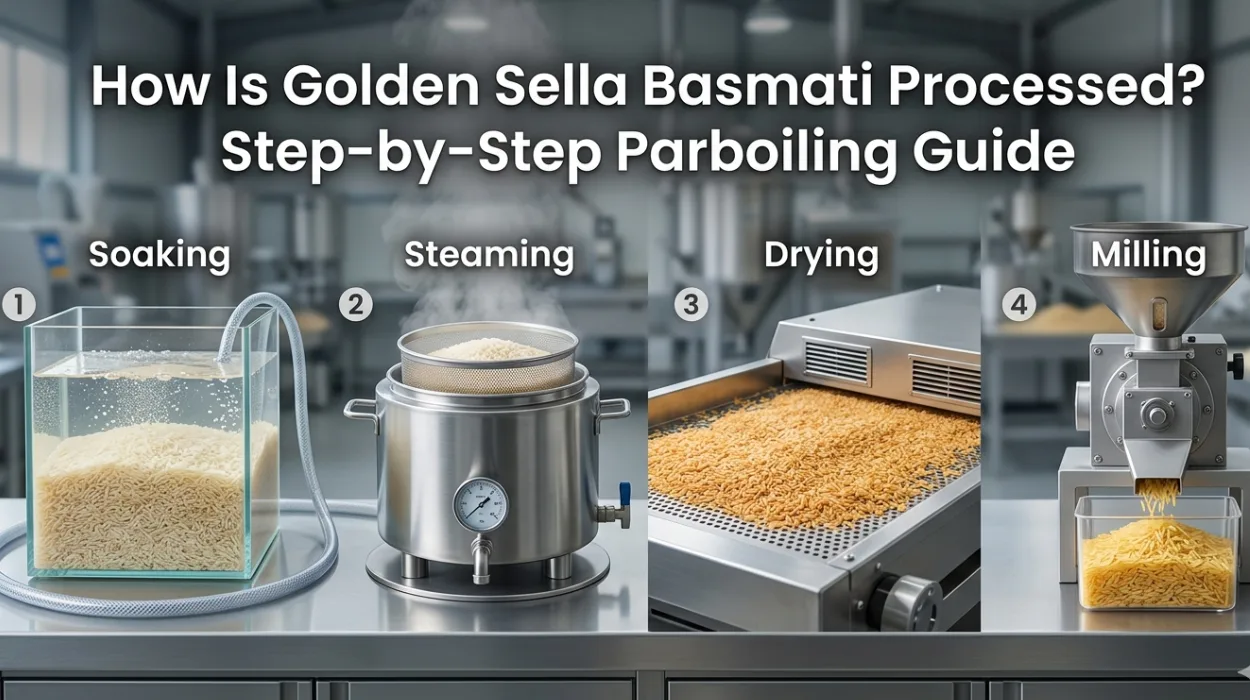
How Is Golden Sella Basmati Processed? Step-by-Step Parboiling Guide
Golden Sella Basmati is processed through a parboiling sequence that soaks paddy, steams it, dries it, mills it, grades it, and packs it for export. This sella processing method gives the grain its golden colour, firmer texture, and better transport stability than raw white rice.
What is Golden Sella Basmati?
Golden Sella Basmati is a parboiled long-grain Basmati rice that is processed before final milling, which changes the grain colour, firmness, and storage behaviour while preserving the aromatic identity of Basmati.
Golden Sella is not a separate botanical species. It is a processing outcome. The original paddy comes from Basmati varieties grown in Punjab, Pakistan, where soil type, canal irrigation, and temperature variation support long-grain development. The “1121” label identifies the variety, while “Golden Sella” identifies the parboiled finish.
The term “sella” refers to the parboiling route. The term “golden” refers to the yellow-gold tint created by steaming the paddy in the husk before milling. This process is used across basmati parboil production lines because it improves grain strength and reduces breakage during shipping.
AHK Rice uses this processing route for export-grade Basmati, including 1121, Super Kernel, and 1509 lines. That makes Golden Sella a central format in the company’s export model, especially for markets that want stable cooking performance and long shelf life.
How does the Golden Sella parboiling process work?
Golden Sella parboiling works by moving the grain through four linked stages: cleaning and soaking, steaming, drying, and milling, with each stage changing the starch structure and physical durability of the kernel.
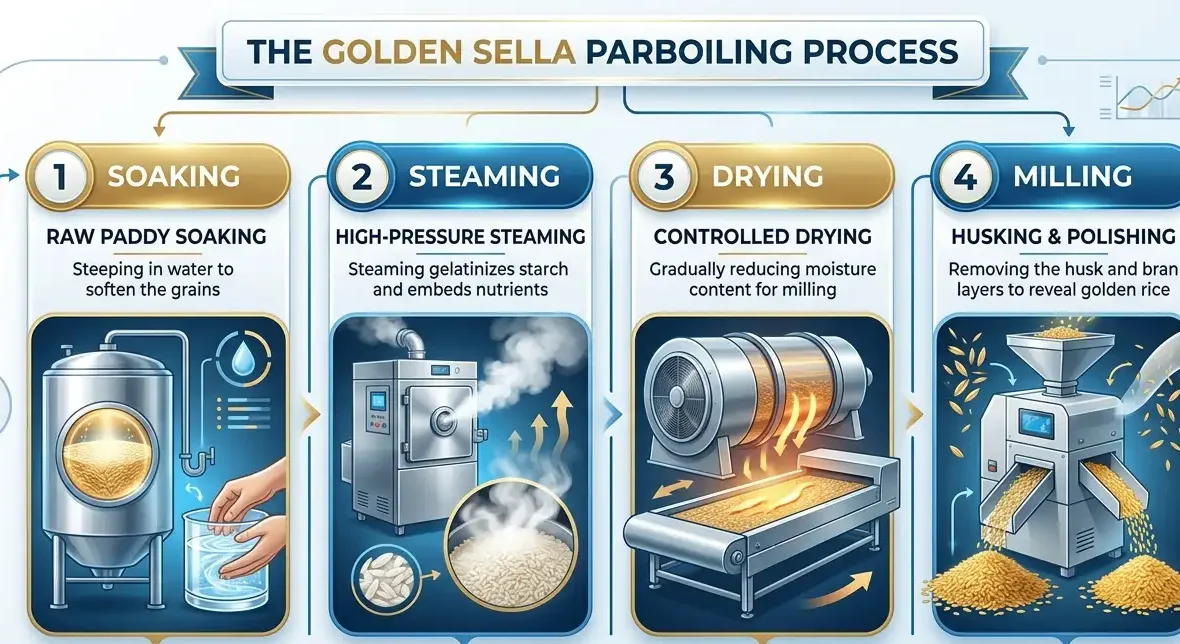
The first stage is paddy cleaning. Raw harvested paddy is screened to remove dust, straw, broken husks, and field impurities. The cleaned paddy is then graded by size and moisture level so that the next stages run evenly. Uniform input matters because uneven paddy creates uneven colour and breakage later in the line.
The second stage is soaking. Clean paddy is placed in water tanks and held until the grain absorbs enough moisture for starch gelatinisation. Water temperature and duration vary by plant design, but the goal remains the same: hydrate the kernel so it can accept heat evenly. Soaking prepares the grain for a controlled structural change without cooking it fully.
The third stage is steaming. The soaked paddy is exposed to pressurised steam while still inside the husk. This heat causes starch molecules in the endosperm to swell and partially set. That is the point at which the kernel becomes firmer and more resistant to fracture. The golden hue begins to appear during this stage because the heat alters the natural pigments and internal structure.
The fourth stage is drying. After steaming, the paddy contains high moisture and cannot be milled safely. It is moved into mechanical or controlled-air dryers until moisture falls to export-safe levels. Drying must be even because rapid moisture loss creates cracked grains. Slow, controlled drying preserves head rice yield and supports better visual grading.
The fifth stage is husking and milling. Once dry, the paddy passes through huskers that remove the outer husk. The brown rice then moves through polishing and milling systems that remove bran layers and refine the finish. The final output is Golden Sella Basmati, sorted by length, broken ratio, and appearance before packing.
What are the key components of the sella processing method?
The key components of the sella processing method are water absorption, heat transfer, moisture reduction, and mechanical grading, and each component determines grain strength, colour, and export quality.
Water absorption is the first component. It allows the starch inside the grain to prepare for heat treatment. Without sufficient soaking, steaming does not penetrate evenly and the final grain shows inconsistent colour or weak texture. This is the reason basmati parboil production lines control soak time closely.
Heat transfer is the second component. Steam enters the grain while it is still in the husk, which prevents direct mechanical damage during the setting stage. This component is responsible for the firm bite and lower stickiness of Golden Sella when cooked. It also helps preserve grain length during transport and handling.
Moisture reduction is the third component. After steaming, the paddy must be dried back to a safe storage level. If the grain keeps too much moisture, it spoils in storage or suffers surface cracking during milling. Controlled drying is therefore one of the most important quality checkpoints in Golden Sella processing.
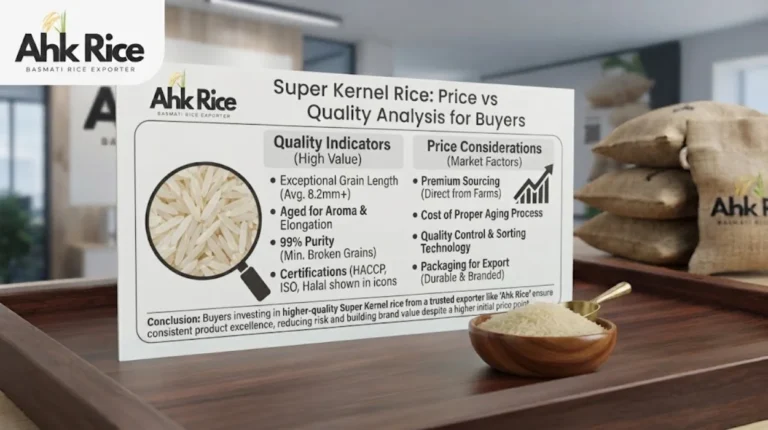
Mechanical grading is the fourth component. After milling, the rice passes through length graders, colour sorters, and broken-grain separators. These machines separate full grains from smaller fragments and remove discoloured kernels. AHK Rice uses this stage to keep export lots aligned with customer specs for 1121, Super Kernel, and 1509.
What benefits does Golden Sella processing provide?
Golden Sella processing provides stronger grains, longer shelf life, lower breakage, and more predictable cooking results, which explains why it remains one of the most exported parboiled formats from Pakistan.
The first benefit is durability. Parboiling hardens the internal structure of the grain, so the rice resists fracture during bagging, loading, shipping, and storage. This matters for long-distance export markets where containers can travel for 20 to 35 days before arrival.
The second benefit is shelf life. Parboiled rice stores better than raw polished rice because the grain has already gone through a moisture-and-heat stabilising cycle. That stabilisation reduces the risk of spoilage and supports smoother inventory planning for traders and distributors.
The third benefit is cooking consistency. Golden Sella stays separate when cooked and produces a firmer texture than white Basmati. Buyers in food service and retail prefer that result because it gives a repeatable plate presentation and reduces wastage from overcooking.
The fourth benefit is export efficiency. Rice with lower breakage and more stable moisture survives industrial handling better. That makes Golden Sella useful for container shipments, bulk packaging, and private-label retail runs. It also reduces the proportion of broken kernels at destination, which protects commercial value.
Where is Golden Sella Basmati grown and which markets import it?
Golden Sella Basmati starts in Punjab, Pakistan, and moves into export markets in the Middle East, Africa, Europe, North America, and parts of Asia, where buyers prefer long-grain parboiled rice with stable cooking performance.
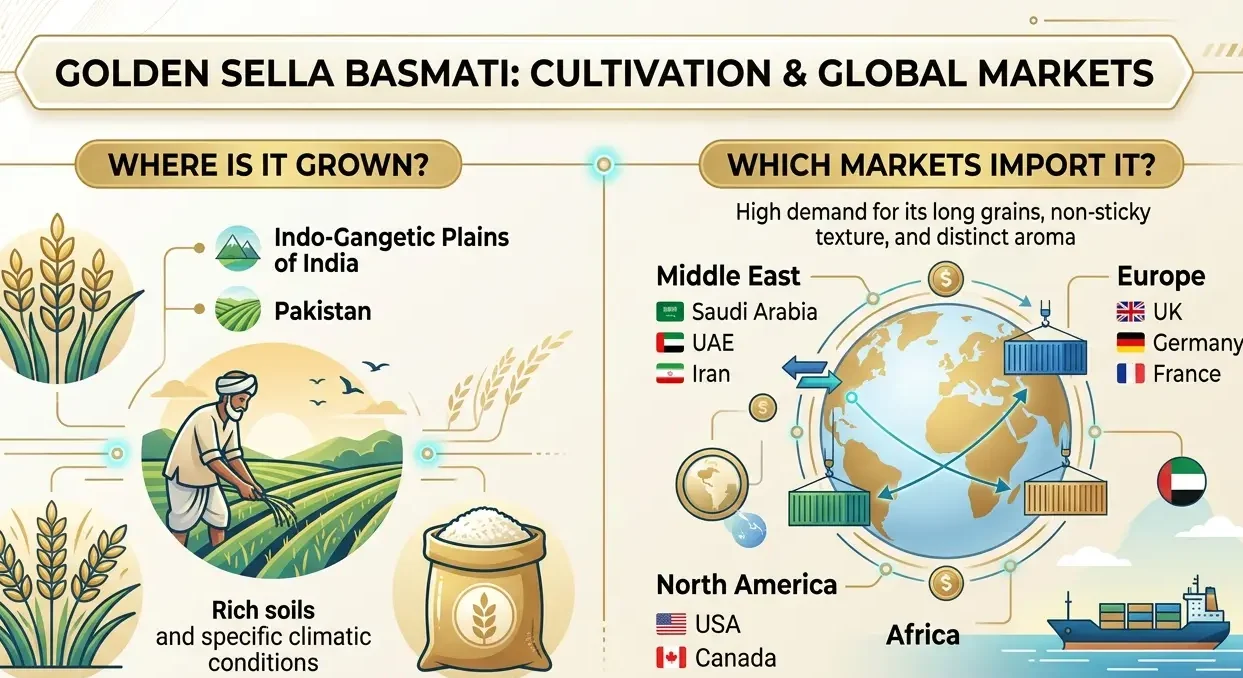
Punjab is the core cultivation zone because its climate, soil texture, and irrigation systems support Basmati growth. Districts such as Gujranwala, Hafizabad, Sheikhupura, Sialkot, Narowal, and nearby rice belts are known for long-grain production. The climate in these areas supports the aroma and length traits that define premium Basmati.
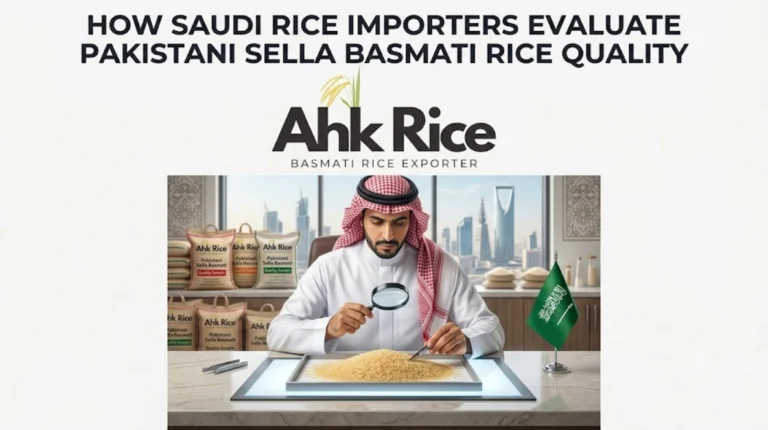
The main import markets for Golden Sella include the UAE, Saudi Arabia, Qatar, Kuwait, Oman, Iraq, Yemen, and Bahrain. These markets often use Golden Sella for household cooking, catering, and bulk retail packaging. Buyers in these regions value storage stability and firm texture because large volumes move through import warehouses before final sale.
European buyers import Golden Sella as well, especially food service operators, ethnic retailers, and wholesalers. The United Kingdom, Germany, the Netherlands, and France all have demand for parboiled Basmati formats in retail and wholesale channels. North American importers also buy Golden Sella for ethnic grocery supply chains and food distribution lines.
AHK Rice supplies these markets through a full export process that includes grading, packing, and container-level shipment planning. That export structure supports buyers that require consistent quality and traceable supply from farm to port.
What certifications and quality standards apply to Golden Sella exports?
Golden Sella exports rely on food-safety certification, phytosanitary control, moisture compliance, and export-spec documentation that prove the rice is fit for international trade.
Food-safety systems such as HACCP and ISO-based controls are common in export mills. These systems cover hygiene, hazard prevention, traceability, and batch control. They are important because importers need proof that the rice was processed in a monitored environment.
Phytosanitary clearance is also important. Importing countries often require documentation showing that the rice is free from regulated pests and meets local import rules. This is especially relevant for container shipments that cross multiple inspection points before release.
Moisture compliance matters because rice that is too wet loses value and can fail quality checks. Export grades usually target safe storage moisture after drying and milling. Colour uniformity, broken-grain ratio, foreign material limits, and kernel length also form part of the acceptance standard.
AHK Rice uses these requirements in its export workflow for 1121, Super Kernel, and 1509 Golden Sella grades. That makes the product more suitable for buyers who need documented quality rather than informal spot-market rice.
What are the available grades in Golden Sella Basmati?
The available Golden Sella grades usually follow the underlying Basmati variety, with 1121, Super Kernel, and 1509 forming the most common export-grade options.
1121 Golden Sella is the premium long-grain format. It is known for extra length, strong elongation after cooking, and wide acceptance in GCC and European wholesale channels. This grade suits buyers who want visible grain length and a higher-end market position.
Super Kernel Golden Sella offers a slightly different profile. It remains long-grain and export-grade, but the market uses it where a premium Basmati look and strong cooking behaviour matter more than absolute grain length. It is often used in retail bags and institutional cooking.
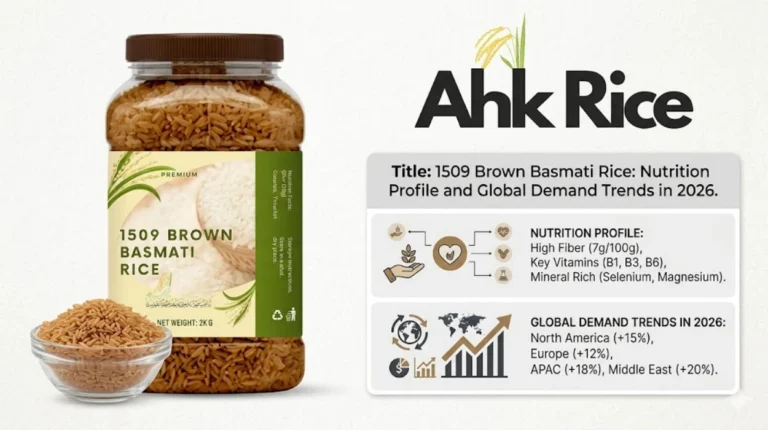
1509 Golden Sella is a newer export format that gives buyers a long-grain option with a different value structure. It is useful where price sensitivity, volume, and cooking quality need to balance. AHK Rice supplies all three grades so buyers can match product choice to market tier.
What are the common problems and misconceptions about Golden Sella processing?
The most common misconceptions are that Golden Sella for European retail buyers is artificially coloured, that parboiling destroys aroma, and that any steamed rice is the same as Sella, but none of these statements is technically correct.
Golden Sella is not dyed. The golden tone comes from the parboiling process and the way heat interacts with the grain before milling. That colour is part of the processing outcome, not a chemical coating.
Parboiling does not destroy the Basmati identity. It changes the texture and storage profile while keeping the variety’s long-grain character. Aroma can become slightly less sharp than raw white rice, but the grain still remains recognisably Basmati.
Steam-treated rice and Sella are not the same. A lightly steamed white rice line does not go through the same parboiling-and-drying sequence, so its moisture structure and shelf-life behaviour differ. That difference matters for European retail buyers, which is why the MOFU article on 1121 Golden Sella vs white basmati European retail buyers fits naturally after this section.
Another misconception is that all Golden Sella performs the same. In reality, paddy origin, soak timing, steam pressure, drying speed, and milling control all influence final quality. That is why exporters with integrated processing, like AHK Rice, can hold tighter control over specification and output.