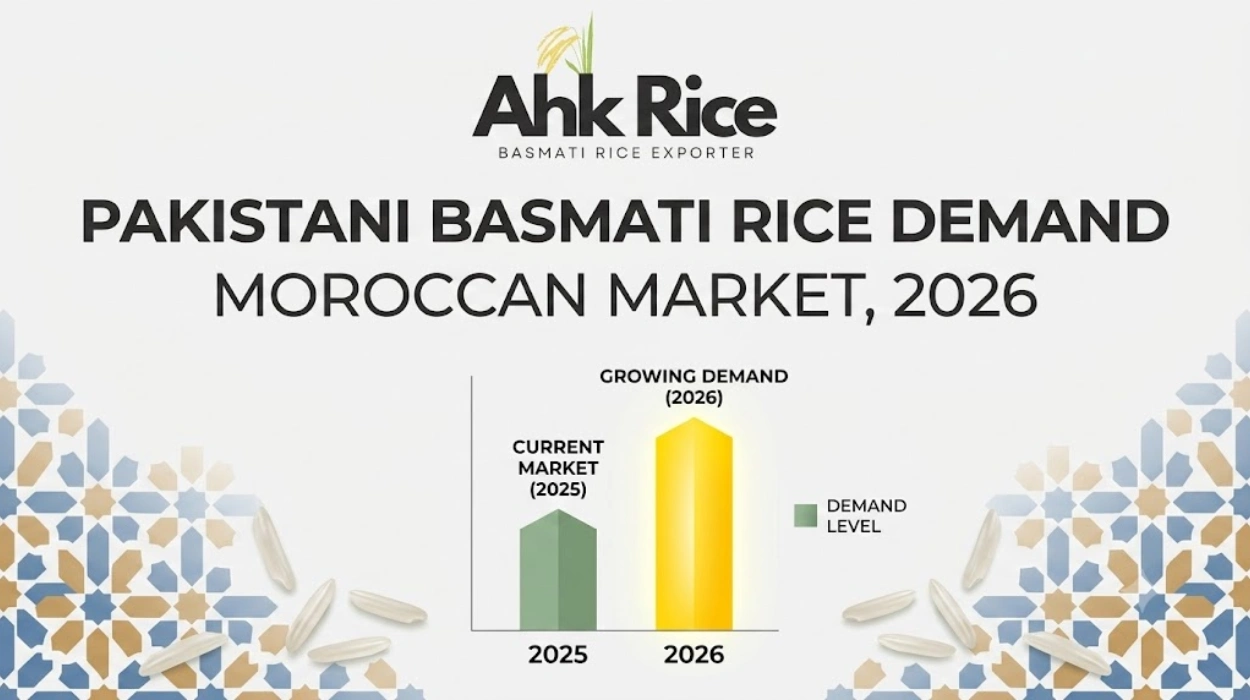
Pakistani Basmati Rice Demand in the Moroccan Market in 2026
Pakistani Basmati rice demand in Morocco is expected to grow in 2026 because Moroccan importers require premium aromatic rice with stable supply, competitive pricing, and reliable export logistics. Here is why: Pakistan offers multiple Basmati grades, consistent production volumes, and established export infrastructure that supports long-term procurement contracts. Buyers researching Asian rice demand trends often start with insights from Most In-Demand Pakistani Rice Varieties in Malaysia’s Import Market regional import market preferences and variety demand patterns before evaluating supplier capabilities.
What is driving Pakistani Basmati rice demand in the Moroccan market in 2026?
Moroccan buyers increasingly prefer premium aromatic rice, long grain consistency, competitive pricing, stable supply chains, and export-ready quality certifications that support retail, wholesale, and food service distribution channels throughout the country.
Morocco continues expanding imports of premium rice categories as urban consumers demand higher-quality food products. Pakistani Basmati rice fits this requirement because it combines aroma, grain elongation, and affordability.
Pakistani Basmati rice serves multiple Moroccan market segments. Retail chains prefer premium packaged rice. Food service distributors source larger volumes for hotels and restaurants. Wholesale traders procure container quantities for regional distribution.
Pakistan remains one of the leading global suppliers of Basmati rice due to favorable cultivation conditions in Punjab. Farmers cultivate Basmati varieties under irrigation systems that support grain quality and consistency. Exporters then mill, grade, inspect, and ship rice according to buyer specifications.
Moroccan importers often prioritize the following characteristics:
- Long grain length
- Strong aroma
- High cooking elongation
- Low broken percentage
- Competitive container pricing
- Reliable shipment schedules
- International certifications
Demand growth also reflects increasing awareness of premium rice products among Moroccan consumers. Higher-income households increasingly choose aromatic rice varieties over commodity alternatives.
According to Pakistan export statistics, rice exports continue contributing significantly to national agricultural exports.
With Moroccan demand drivers established, the next question is which Pakistani rice specifications best match buyer requirements.
Which Pakistani Basmati rice grades are most suitable for Moroccan importers?
1121 Steam Basmati, 1121 Sella Basmati, Super Kernel Basmati, and 1509 Basmati offer the strongest commercial opportunities because they combine grain length, aroma, cooking performance, and pricing flexibility.
1121 Steam Basmati Rice
1121 Steam Basmati remains one of the most requested grades for premium retail markets.
Specifications
| Attribute | Specification |
|---|---|
| Grain Length | 8.30 mm+ |
| Aroma | Strong |
| Broken | 2–5% |
| Moisture | 13% Max |
| Purity | 95%+ |
| Cooking Elongation | 2x+ |
| Shelf Life | 24 Months |
1121 Steam Basmati produces a soft texture after cooking. Moroccan supermarkets frequently prefer this specification for premium packaging programs.
1121 Golden Sella Basmati Rice
1121 Golden Sella undergoes a parboiling process before milling.
Specifications
| Attribute | Specification |
|---|---|
| Grain Length | 8.30 mm+ |
| Color | Golden |
| Broken | 2–5% |
| Moisture | 13% Max |
| Shelf Life | 24 Months |
| Cooking Performance | Excellent |
| Bulk Market Suitability | High |
Golden Sella lasts longer than Steam rice in challenging storage conditions. In warmer warehouses, Golden Sella maintains quality for extended periods. Large food service buyers often select this grade for inventory stability.
Super Kernel Basmati Rice
Super Kernel Basmati remains a recognized traditional export variety.
Specifications
| Attribute | Specification |
|---|---|
| Grain Length | 7.20–7.60 mm |
| Aroma | Traditional Basmati |
| Broken | 2–5% |
| Moisture | 13% Max |
| Purity | 95%+ |
| Shelf Life | 24 Months |
| Retail Demand | Strong |
Moroccan importers targeting traditional Basmati consumers frequently procure Super Kernel Basmati.
1509 Basmati Rice
1509 Basmati offers a balance between premium quality and competitive pricing.
Specifications
| Attribute | Specification |
|---|---|
| Grain Length | 8.00 mm+ |
| Aroma | Moderate to Strong |
| Broken | 2–5% |
| Moisture | 13% Max |
| Cooking Length | Excellent |
| Market Position | Value Premium |
| Shelf Life | 24 Months |
With suitable grades identified, buyers must evaluate which exporter can consistently deliver these specifications.
Why choose AHK Rice for Moroccan Basmati rice imports?
AHK Rice provides export-grade processing, multiple Basmati varieties, documented quality controls, flexible packaging options, and reliable shipment coordination that supports Moroccan wholesalers, distributors, retailers, and food service buyers.
Moroccan importers require more than competitive pricing. They require consistent specifications across multiple shipments.
AHK Rice operates as a Pakistani Basmati rice exporter supplying international markets from Punjab. Buyers can source 1121 Steam, 1121 Sella, Super Kernel, and 1509 Basmati through <a href=”https://ahkrice.com/”>AHK Rice</a> while maintaining specification consistency.
AHK Rice follows a structured processing sequence:
- Clean the paddy.
- De-husk the grain.
- Dry the rice.
- Polish the kernels.
- Grade by size.
- Sort by color.
- Inspect the quality.
- Test moisture levels.
- Pack for export.
AHK Rice also supports multiple packaging requirements.
- PP bags
- BOPP bags
- Non-woven bags
- Retail packs
- Private label packaging
- Bulk export bags
Quality verification remains critical for Moroccan buyers. AHK Rice inspects every shipment before loading. AHK Rice verifies moisture, broken percentage, grain length, and purity levels before dispatch.
Importers comparing suppliers often evaluate quality systems before signing contracts. Many buyers review Supplier Evaluation Criteria Used by Malaysian Rice Importers When Buying from Pakistan to benchmark exporter capabilities.
AHK Rice supports this evaluation process through documentation transparency and product specification sheets.
With supplier selection addressed, buyers next need realistic expectations regarding results and commercial outcomes.
What results can Moroccan importers expect from sourcing Pakistani Basmati rice?
Importers can expect premium positioning, stronger consumer acceptance, repeat purchasing behavior, competitive margins, and access to multiple rice grades that support different retail and wholesale strategies.
Pakistani Basmati rice creates differentiation in premium rice categories.
Retailers benefit from strong consumer recognition of Basmati rice. Long grains and aromatic cooking characteristics support repeat purchases.
Distributors benefit from multiple product tiers. Premium consumers may select 1121 Steam. Institutional buyers may prefer 1121 Sella. Value-focused customers may choose 1509 Basmati.
Importers also gain sourcing flexibility. AHK Rice supplies several specifications from one export origin. This reduces procurement complexity.
Container-based purchasing supports inventory planning. Buyers can schedule shipments according to forecast demand rather than purchasing opportunistically.
AHK Rice assists buyers through specification discussions before production begins. This process reduces quality disputes after delivery.
With commercial outcomes clarified, pricing considerations become the next decision factor.
What factors affect Pakistani Basmati rice pricing for Morocco in 2026?
Rice variety, crop season, broken percentage, packaging type, certification requirements, container quantity, and freight rates are the primary factors influencing final landed cost in Morocco.
Rice pricing changes throughout the year because harvest cycles influence supply availability.
The main pricing factors include:
| Cost Factor | Impact Level |
|---|---|
| Rice Variety | High |
| Crop Quality | High |
| Broken Percentage | Medium |
| Packaging Type | Medium |
| Container Volume | High |
| Freight Charges | High |
| Certification Requirements | Medium |
1121 Steam generally commands a premium over 1509 Basmati because grain length and aroma specifications are higher.
Private label packaging increases costs because specialized materials and printing are required.
Freight rates affect landed pricing significantly. Ocean shipping costs fluctuate according to carrier availability and seasonal demand.
Moroccan importers often request FOB and CIF quotations to compare total procurement costs accurately.
AHK Rice prepares quotations according to buyer requirements and shipment terms.
With pricing factors understood, importers can move toward sample evaluation and shipment planning.
How does the sample process work before placing a rice order?
Professional sampling includes specification confirmation, laboratory verification, sample dispatch, buyer evaluation, approval confirmation, and production scheduling before commercial shipment begins.
Sampling reduces procurement risk.
AHK Rice generally follows this process:
- Confirm required rice grade.
- Confirm target specifications.
- Prepare representative sample.
- Inspect sample quality.
- Dispatch sample internationally.
- Review buyer feedback.
- Approve commercial production.
Sample costs depend on destination and courier service.
| Item | Typical Cost Range |
|---|---|
| Product Sample | Often Free |
| Documentation | Minimal |
| Courier Charges | Buyer or Seller Agreement |
| Laboratory Testing | Optional |
| Additional Samples | Case Dependent |
Buyers often request multiple grades during evaluation. This allows direct comparison between 1121 Steam, 1121 Sella, Super Kernel, and 1509 Basmati.
AHK Rice coordinates communication throughout the sample process to ensure specifications match purchasing requirements.
With samples approved, shipment timelines become the final operational consideration.
How many shipping days are required from Pakistan to Morocco?
Most Moroccan shipments require approximately 22–35 days depending on port schedules, vessel routing, customs processing, and seasonal shipping conditions.
Shipping timelines vary according to destination port and carrier schedules.
| Market | Estimated Transit Time |
|---|---|
| Casablanca | 22–30 Days |
| Tangier | 24–32 Days |
| Agadir | 25–35 Days |
| Other Moroccan Ports | 25–35 Days |
AHK Rice coordinates container loading after production completion and final inspection.
Export documentation generally includes:
- Commercial Invoice
- Packing List
- Certificate of Origin
- Phytosanitary Certificate
- Bill of Lading
- Quality Certificates
AHK Rice verifies documentation before shipment dispatch to minimize customs delays.
With logistics timelines established, the final step is beginning supplier discussions and obtaining commercial pricing.
How can Moroccan buyers get started with AHK Rice?
The fastest approach is submitting specification requirements, evaluating samples, reviewing quotations, confirming packaging details, and scheduling production for shipment according to projected market demand.
AHK Rice works with wholesalers, retailers, distributors, and food service buyers seeking reliable Pakistani Basmati rice supply.
AHK Rice provides multiple rice grades, export documentation support, quality inspections, and shipment coordination. AHK Rice also assists buyers with packaging customization and specification matching. AHK Rice focuses on long-term export relationships rather than transactional sales. AHK Rice supports procurement planning through transparent communication and documented specifications.
Contact AHK Rice with your required grade, quantity, packaging format, and destination port, then request a customized quotation through this quotation request page.
Frequently Asked Questions
Is Pakistani Basmati rice popular in Morocco?
Yes. Moroccan importers increasingly source Pakistani Basmati rice because it offers premium aroma, long grain length, and competitive pricing. Retail and food service sectors both demand high-quality aromatic rice. Premium consumers recognize Basmati rice as a value-added category. Demand is expected to remain strong in 2026.
Which Basmati rice grade sells best in Morocco?
1121 Steam Basmati and 1121 Golden Sella Basmati are among the most commercially attractive grades. They provide excellent grain length and cooking performance. Super Kernel Basmati also maintains demand in traditional markets. Grade selection depends on the target customer segment. Importers often evaluate several options before purchasing.
How long does shipping take from Pakistan to Morocco?
Most shipments require between 22 and 35 days depending on destination port and vessel schedules. Casablanca usually receives shipments faster than secondary ports. Seasonal shipping conditions can influence transit times. Documentation accuracy also affects customs clearance speed. Early planning improves delivery reliability.
What documents are required for rice imports into Morocco?
Importers generally require a commercial invoice, packing list, certificate of origin, phytosanitary certificate, and bill of lading. Additional documents may be requested by authorities or buyers. Exporters prepare documentation before dispatch. Accurate paperwork reduces customs delays. Verification before shipment is recommended.
Why do importers choose AHK Rice?
AHK Rice offers multiple Basmati varieties, quality inspections, export documentation support, and packaging flexibility. Buyers can source different grades from one supplier. Consistent specifications help reduce procurement risk. Sample evaluations support purchasing decisions. Long-term supply planning becomes easier through structured export processes.