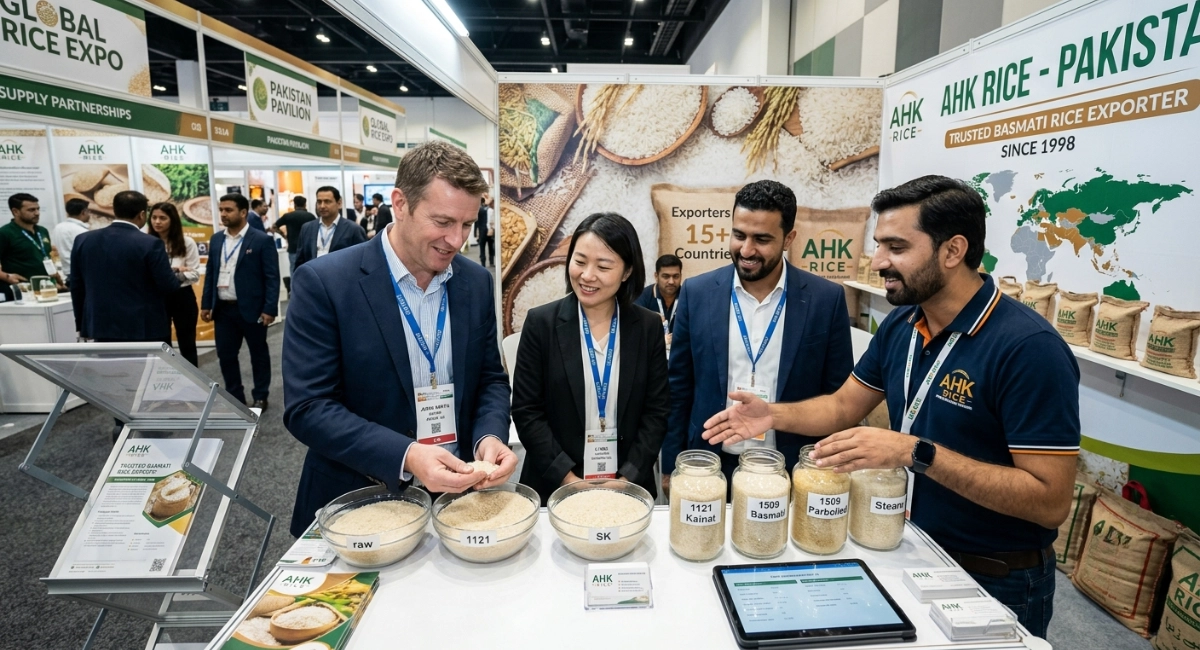
International Rice Buyers Explore New Supply Partnerships
What is Pakistani Basmati rice?
Pakistani Basmati rice is a premium long-grain aromatic rice variety grown exclusively in the fertile Indus River basin of the Punjab province, characterized by its distinct fragrance, delicate texture, and remarkable length expansion during cooking cycles without breaking.
This agricultural commodity belongs to the species Oryza sativa. The plant synthesizes a chemical compound called 2-acetyl-1-pyrroline, which produces the signature popcorn-like aroma. International trade standards distinguish this specific grain by its physical metrics. The raw grain measures a minimum of 6.61 millimeters in length. Upon cooking, the grain exhibits a minimum elongation ratio of 1.8x, stretching to double its original size.
The product possesses a low glycemic index compared to standard white long-grain rice, making it a stable digestible carbohydrate for health-conscious demographics. International supply chains rely on specific seed variations that preserve these traits. The marketplace categorizes these variations under dedicated nomenclature codes, including 1121 Kainat, Super Kernel, and 1509 Basmati. Each variant presents unique dimensions, aging capacities, and culinary applications for global hospitality and consumer sectors.
Where is this aromatic grain grown?
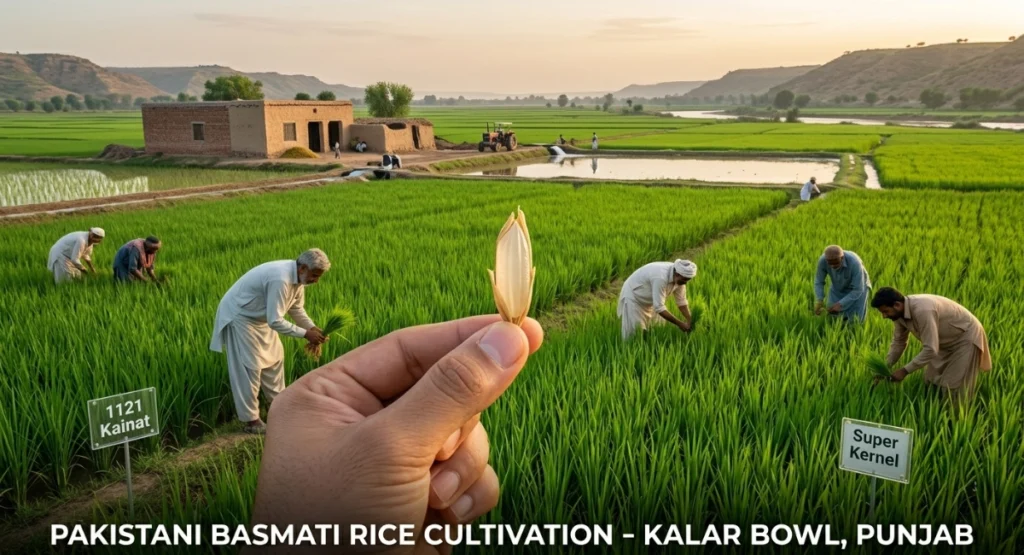
This aromatic grain grows exclusively within the geographical boundaries of the Kalar Bowl tract, a highly specialized microclimate region located between the Ravi and Chenab rivers in the northeastern sector of the Punjab province in Pakistan.
The production zone spans dedicated administrative units, including Gujranwala, Hafizabad, Sheikhupura, Sialkot, and Nankana Sahib. The geological profile of this region consists of fine, mineral-rich alluvial soil deposited by Himalayan river systems over millennia. This specific soil matrix retains optimal moisture levels while delivering high trace minerals like zinc and iron to the root structures.
The regional climate provides the exact environmental triggers required for aroma synthesis. The cultivation cycle demands high humidity during the vegetative stage, followed by cooler night temperatures below 25 degrees Celsius during the grain-filling period in autumn. These specific thermal fluctuations prevent the premature evaporation of essential volatile oils within the rice kernel. Attempting to cultivate these seeds outside of this geographical zone results in a total loss of the characteristic elongation and aroma properties.
How is Basmati rice processed step by step?
The industrial refinement of Basmati rice involves an end-to-end, multi-stage technological workflow spanning mechanical harvesting, precise moisture reduction, pneumatic de-husking, multi-stage abrasive polishing, optical color sorting, and automated customized packaging for international shipment.
1. Mechanical Harvesting and Initial Threshing
The processing sequence begins in the fields when the paddy moisture drops to approximately 21 percent. Combine harvesters cut the stalks and separate the rough paddy grains from the straw matrix.
2. Temperature-Controlled Paddy Drying
Freshly harvested paddy undergoes immediate forced-air drying within industrial vertical column dryers. The machinery lowers the internal moisture content from 21 percent to a stable 12.5 percent over a 24-hour period. This precise dehydration prevents fungal growth, stops enzymatic degradation, and hardens the internal starch structure to minimize broken grains during subsequent milling phases.
3. Pneumatic De-husking and Separation
Dried paddy moves through rubber-roll hulling machines. Pneumatic pressure strips the outer protective husk layer away from the kernel, creating raw brown rice. A cascading separator divides the unhulled paddy from the brown rice, recycling the unhulled grains back into the huller.
4. Multi-Stage Abrasive Polishing and Whitening
The brown rice enters vertical friction whiteners. Abrasive carborundum rollers strip away the nutrient-rich bran layers, transforming the grain into white polished rice. The system utilizes water-injection polishers to buff the starch surface, removing residual bran dust and imparting a clean, pearlescent sheen to the grain.
5. Mechanical Grading and Length Sizing
The polished grains pass through series of rotating indented cylinders called length sizers. This machinery separates whole grains from broken fractions, ensuring the final batch complies with precise contractual length specifications.
6. Optical Color Sorting
The sized grains flow into high-speed monochromatic or trichromatic digital color sorters. High-definition cameras monitor the cascading grain stream, utilizing pneumatic air jets to blast away discolored, yellow, chalky, or damaged grains at a speed of 10,000 grains per second.
7. Automated Custom Packaging
The verified whole grains enter automated filling lines. The equipment dispenses the rice into customized packaging materials, including non-woven bags, jute sacks, and polyethylene pouches, weighing from 1 kilogram to 50 kilograms.
1.Paddy Intake & Mechanical Drying:Moisture reduction to 12.5%.
Raw paddy arrives at the facility and undergoes immediate moisture removal to stabilize the starch core.
2.De-husking & Bran Removal:Pneumatic hulling and whitening.
Rubber rollers strip the outer hull, and friction polishers remove the bran layers to expose the white endosperm.
3.Optical Sorting & Size Grading:Color cameras and indented cylinders.
Advanced optical sorters eliminate defects, while rotary sizers separate whole grains from broken fractions.
4.Automated Weighing & Packaging:Custom bags from 1kg to 50kg.
Computerized filling units seal the uniform grains into specified export materials for containerized freight.
Key components: what are the available grades?
The marketplace classifies export-ready Basmati rice into four primary functional components based on the structural treatment of the grain starch, consisting of raw white rice, parboiled sella rice, steamed rice, and brown rice.
1121 Kainat Basmati
This variety represents the longest grain classification in the global market, featuring an average pre-cooked length of 8.35 millimeters. The grain expands up to 20 millimeters upon cooking, providing exceptional plate coverage for catering businesses.
Super Kernel Basmati
This traditional variety delivers the highest aromatic concentration and softest texture profile. It features an average raw length of 7.20 millimeters and requires an aging period of 12 to 24 months to unlock its maximum elongation potential.
1509 Basmati
This early-maturing variant serves as an economical alternative to the 1121 strain, featuring a raw grain length of 8.20 millimeters. It possesses a shorter crop duration of 90 days, which lowers irrigation water requirements.
Process-Based Classifications
The physical processing method establishes distinct functional grades across all seed varieties:
- White Basmati: Traditional milled rice with all bran layers removed, offering the quickest cooking time.
- Parboiled (Sella) Basmati: Paddy undergoes soaking, steaming, and vacuum-drying before milling, which gelatinizes the starch inside the kernel. This process drives water-soluble vitamins from the bran into the endosperm, creating a yellowish grain that never breaks during mass catering operations.
- Steamed Basmati: Paddy receives direct steam exposure while bypassing the soaking phase, preserving the white color of the grain while strengthening the starch matrix against over-cooking.
- Brown Basmati: The husk is removed while retaining the bran layer, offering maximum dietary fiber and micronutrients like magnesium.
Benefits: why do international buyers import it?
International buyers import this premium grain because it yields superior volume expansion ratios, provides excellent structural stability during commercial warm-holding phases, commands high retail profit margins, and satisfies specific dietary demands.
Volumetric Expansion and Yield Advantages
Packaged white Basmati expands up to 2.5 times its dry volume when boiled. One kilogram of dry premium Basmati yields significantly more served portions than standard short-grain rice, optimizing raw material costs for commercial restaurants.
Structural Integrity in Foodservice
The high amylose starch content of approximately 22 percent prevents the grains from sticking together or forming clumps. The cooked grains remain separate and free-flowing even after remaining inside commercial buffet warming trays for 4 hours, eliminating food waste in the hospitality sector.
Commercial Marketability and Value Addition
The product sits within the high-value luxury grocery segment. Retailers and distributors achieve higher gross profit margins per shelf unit by stocking premium branded Basmati packages compared to generic white rice commodities.
Use cases: how is the product utilized globally?
The global market utilizes this specialized grain across diverse culinary and commercial channels, ranging from traditional Middle Eastern culinary preparations to large-scale ready-to-eat manufacturing sectors and gourmet consumer retail brands.
Traditional Middle Eastern Foodservice
Commercial kitchens across the Gulf region employ parboiled sella Basmati to prepare high-volume traditional dishes, including Biryani, Mandi, and Kabsa. The grains endure the heavy pressure of meat weight and intense steaming cycles within industrial pots without breaking or discharging excess starch.
Ready-to-Eat Industrial Food Production
Food manufacturers in European territories utilize steamed Basmati grades in automated processing lines to create microwaveable pouch meals. The starch structure survives the intense retorting and sterilization temperatures without dissolving into paste.
Premium Consumer Private Label Retail
International supermarket chains package aged Super Kernel or 1121 white variations under private labels for residential consumers. These products cater to premium consumer segments seeking authentic culinary ingredients for home scratch-cooking.
Which global markets import Pakistani Basmati?
The distribution network for Pakistani Basmati encompasses major geographical regions, with key destination hubs located across the Middle East, the European Union, East Africa, Central Asia, and North America.
The United Arab Emirates and Saudi Arabia serve as the largest volume consumers, absorbing over 50 percent of total Basmati shipments to supply their vast commercial hospitality infrastructures. The European Union market, led by the United Kingdom and Germany, focuses heavily on brown and white 1121 grades, enforcing strict import regulations regarding maximum residue limits for agricultural chemicals.
East African nations, including Kenya and Tanzania, import substantial volumes to fulfill urban culinary needs. Central Asian markets, including Kazakhstan and Uzbekistan, represent rapidly expanding land-based trade routes, importing direct containerized shipments via modernized rail and road corridors. North American markets, encompassing the United States and Canada, show steady import growth driven by expanding diaspora populations and widening mainstream consumer adoption.
What certifications apply to Basmati exports?
Exporting Basmati rice from Pakistan to global destinations requires a comprehensive framework of international food safety, quality management, phytosanitary, and religious compliance certifications.
| Certification Category | Specific Standards / Bodies | Operational Requirement |
| Food Safety Management | ISO 22000, FSSC 22000, BRCGS | Validates systemic hazard controls from paddy intake to final bag sealing. |
| Phytosanitary Compliance | Department of Plant Protection (DPP) | Mandates pre-shipment methyl bromide fumigation to eliminate storage pests. |
| Quality Verification | SGS, Intertek, Bureau Veritas | Independent third-party testing of average grain length, moisture, and broken percentages. |
| Religious Compliance | Jakim Halal, GAC Halal, Kosher | Certifies the complete absence of cross-contamination with non-permissible items. |
| Trade Legality | REAP Membership, Chamber Certificate | Mandatory registration with the Rice Exporters Association of Pakistan for customs clearance. |
Common problems and misconceptions about Basmati rice
The international rice trade frequently struggles with misconceptions surrounding grain aging processes, kernel fractures during milling, and varietal purity validation.
The Misconception of Freshness Versus Aging
A prevalent consumer misconception assumes that freshly harvested rice delivers the best culinary performance. The opposite fact applies to premium Basmati; fresh paddy contains high moisture and unstable starches that cook into a sticky, clumped texture. Industrial processing facilities age the grain for 12 to 24 months in temperature-controlled warehouses, allowing moisture normalization and natural enzymatic changes that harden the kernel, eliminate stickiness, and maximize elongation traits.