Why Pakistani Sella Basmati Rice Remains Popular in Qatar
Pakistani Sella Basmati rice remains popular in Qatar because it combines extra-long grain length, high cooking yield, strong grain separation, extended shelf life, and competitive import value. Qatar’s retail, catering, hospitality, and food service sectors rely on Sella Basmati rice because it performs consistently in large-scale cooking operations and matches consumer preferences for aromatic long-grain rice.
Qatar imports significant quantities of Pakistani rice each year due to established trade routes, consistent production volumes, and strong demand for Basmati-based dishes (source: Pakistan Bureau of Statistics, FY2024-25). Pakistani Sella Basmati rice serves households, restaurants, catering companies, labor camps, and luxury hospitality establishments across the country.
What Is Pakistani Sella Basmati Rice?
Pakistani Sella Basmati rice is a parboiled aromatic long-grain rice that typically measures 7.0–8.4 mm before cooking and expands significantly after cooking while remaining separate and fluffy.
Pakistani Sella Basmati rice originates from the fertile Basmati-growing regions of Punjab, Pakistan. Basmati refers to a specific aromatic rice category cultivated in designated geographic areas with unique soil composition, irrigation systems, and climate conditions.
Sella rice undergoes a parboiling process before milling. Parboiling transfers nutrients from the outer layers into the grain core. This process strengthens the grain structure and improves cooking stability.
Pakistani Sella Basmati rice differs from white rice because it receives heat treatment before milling. The treatment reduces grain breakage and improves storage performance.
Qatari consumers prefer Sella rice for biryani, mandi, kabsa, pulao, and buffet applications because the grains remain separate after cooking and retain their shape during extended holding periods.
With the definition of Pakistani Sella Basmati rice established, the next question is how this specialized processing method works.
How Does Pakistani Sella Basmati Rice Processing Work?
The Sella process includes 9 major stages: cleaning, soaking, steaming, drying, dehusking, milling, polishing, grading, and packaging.
Parboiling transforms raw paddy into durable rice suitable for international trade. Each processing stage affects grain quality, appearance, and cooking performance.
Step 1: Clean the Paddy
Clean the harvested paddy to remove stones, dust, straw, and foreign materials. Cleaning protects equipment and improves processing efficiency.
Step 2: Soak the Paddy
Soak the paddy in controlled water tanks. Soaking increases grain moisture and prepares the rice for heat treatment.
Step 3: Steam the Paddy
Steam the soaked paddy under controlled temperatures. Steam gelatinizes starch and transfers nutrients into the grain center.
Step 4: Dry the Paddy
Dry the steamed paddy until moisture reaches export-grade levels. Controlled drying prevents cracking and discoloration.
Step 5: Dehusk the Grain
Dehusk the dried paddy to remove the outer husk layer. Dehusking exposes the edible rice kernel.
Step 6: Mill the Rice
Mill the rice to remove bran layers. Milling improves appearance and prepares rice for grading.
Step 7: Polish the Rice
Polish the milled rice for a uniform finish. Polishing improves visual consistency.
Step 8: Grade and Sort the Rice
Grade the rice according to length, purity, and broken percentage. Sort the rice using optical color sorters and grading equipment.
Step 9: Package the Rice
Package the finished rice in export-approved bags. Packaging sizes commonly include 1 kg, 5 kg, 10 kg, 20 kg, 25 kg, and 40 kg.
Pakistani exporters process rice through these stages because consistent grain quality supports international buyer requirements. The next section explains the major components that create quality differences.
What Are the Key Components That Determine Sella Basmati Quality?
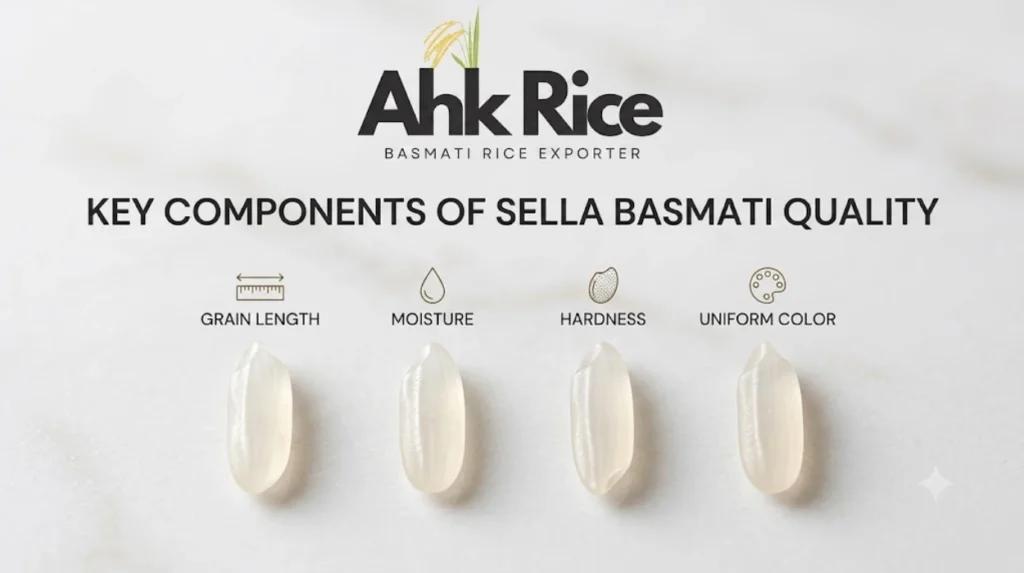
Grain length, aroma, moisture level, purity, broken percentage, aging, and color determine commercial quality.
Rice buyers evaluate multiple specifications before selecting a shipment.
Grain Length
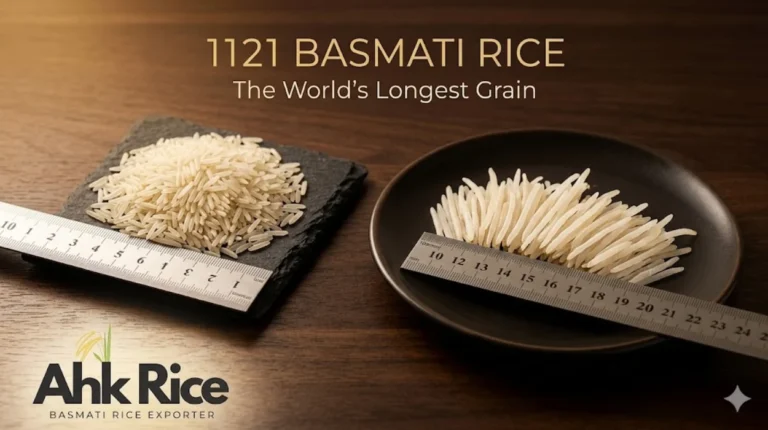
Longer grains command higher market value. Premium 1121 Sella Basmati often exceeds 8.2 mm before cooking.
Aroma
Natural Basmati aroma distinguishes genuine Basmati rice from ordinary long-grain varieties.
Moisture Content
Export-grade rice generally maintains 12%–14% moisture. Proper moisture improves storage stability.
Purity Level
Purity refers to the percentage of the declared variety within a shipment. Higher purity improves consistency.
Broken Percentage
Broken grains affect presentation and pricing. Premium grades contain lower broken percentages.
Aging
Rice aging improves cooking performance and aroma development. Many importers prefer aged Basmati rice.
Color Uniformity
Uniform color indicates effective processing and sorting procedures.
These quality components explain why certain grades attract stronger demand in Qatar. The next section examines the available grades.
What Grades of Pakistani Sella Basmati Rice Are Available?
The main grades include 1121 Golden Sella, 1121 Creamy Sella, Super Kernel Sella, 1509 Sella, and PK-386 Sella.
Different grades serve different price points and market segments.
1121 Golden Sella Basmati Rice
1121 Golden Sella represents the premium category.
| Specification | Value |
|---|---|
| Grain Length | 8.2–8.4 mm |
| Grain Type | Extra Long |
| Cooking Expansion | 2–3 Times |
| Color | Golden |
| Market Segment | Premium Retail & Hospitality |
Qatari hotels and premium restaurants frequently select this grade because of its visual appearance.
1121 Creamy Sella Basmati Rice
1121 Creamy Sella offers similar grain length with a lighter appearance.
| Specification | Value |
|---|---|
| Grain Length | 8.2–8.4 mm |
| Color | Creamy White |
| Texture | Soft |
| Use | Retail & Food Service |
Super Kernel Sella Basmati Rice
Super Kernel Basmati remains one of Pakistan’s traditional export varieties.
| Specification | Value |
|---|---|
| Grain Length | 7.0–7.4 mm |
| Aroma | Strong |
| Market Position | Mid-Premium |
1509 Sella Basmati Rice
1509 offers excellent yield and competitive pricing.
| Specification | Value |
|---|---|
| Grain Length | 8.0–8.3 mm |
| Maturity | Early |
| Value Segment | Commercial |
PK-386 Sella Rice
PK-386 targets budget-conscious buyers requiring long-grain rice.
| Specification | Value |
|---|---|
| Grain Length | 6.8–7.2 mm |
| Price Level | Economical |
| Use | Institutional Supply |
With the available grades explained, the next question is why these products continue attracting Qatari buyers.
What Benefits Make Pakistani Sella Basmati Rice Popular in Qatar?
High cooking yield, grain separation, long shelf life, aroma retention, heat resistance, and value efficiency drive demand.
Qatar’s food industry requires rice that performs consistently under commercial cooking conditions.
High Cooking Yield
Sella rice expands significantly after cooking. Food service operators obtain more servings from the same quantity of rice.
Excellent Grain Separation
Separate grains improve presentation quality. Biryani and mandi dishes depend on this characteristic.
Long Shelf Life
Parboiled rice stores longer than many alternative rice categories. Extended storage reduces inventory risk.
Heat Stability
Cooked Sella rice maintains structure during buffet service. Restaurants benefit from reduced waste.
Aroma Retention
Natural Basmati fragrance enhances consumer acceptance.
Competitive Import Economics
Pakistani rice remains cost-efficient compared with many premium alternatives while delivering strong cooking performance.
These benefits explain demand growth across multiple sectors. The next section examines actual applications.
Where Is Pakistani Sella Basmati Rice Used in Qatar?
Hotels, restaurants, catering companies, supermarkets, labor camps, and households use Pakistani Sella Basmati rice daily.
Qatar’s food ecosystem includes several major consumption channels.
Hospitality Industry
Luxury hotels use premium 1121 grades for buffet operations and specialty rice dishes.
Restaurants
Indian, Pakistani, Arab, and international restaurants rely on Basmati rice for menu consistency.
Catering Companies
Large-scale catering providers require rice that performs well in bulk cooking environments.
Supermarkets
Retail consumers purchase packaged Basmati rice for home cooking.
Institutional Food Supply
Labor accommodations and institutional kitchens use commercial rice grades to manage costs while maintaining quality.
These applications demonstrate broad market acceptance. The next section addresses common misconceptions.
What Common Misconceptions Exist About Pakistani Sella Basmati Rice?
Sella rice is not artificial, not nutritionally empty, not lower quality than white rice, and not limited to commercial kitchens.
Several misconceptions affect purchasing decisions.
Misconception 1: Sella Rice Is Artificial
Sella rice receives heat and water treatment. The process uses natural agricultural methods rather than artificial ingredients.
Misconception 2: White Rice Is Always Higher Quality
Quality depends on specifications and intended use. Premium Golden Sella often commands higher export prices than standard white rice.
Golden Sella lasts longer than many white rice alternatives. In Gulf warehouse conditions, Golden Sella commonly maintains quality for up to 18 months, while standard white rice often requires faster turnover. For catering buyers managing large inventories, Golden Sella provides operational advantages.
Misconception 3: Sella Rice Has Less Aroma
Modern processing techniques preserve Basmati aroma effectively. Premium aged Sella grades retain strong fragrance characteristics.
Misconception 4: Sella Rice Is Only for Restaurants
Households across Qatar regularly prepare biryani, kabsa, and pulao using Sella rice.
Understanding these misconceptions helps explain continued market growth. The final section examines certifications and trade requirements.
What Certifications Apply to Pakistani Sella Basmati Rice Exports?
Phytosanitary certification, fumigation certification, quality testing reports, ISO systems, HACCP compliance, and food safety documentation support international trade.
Rice exports require compliance with importing country regulations.
Phytosanitary Certification
Phytosanitary certificates verify that shipments meet plant health requirements.
Fumigation Certification
Fumigation certificates confirm pest control treatment before export.
Quality Analysis Reports
Laboratories test moisture, purity, grain length, and broken percentage.
HACCP Compliance
Hazard Analysis and Critical Control Point systems support food safety management.
ISO Certification
ISO-certified facilities operate under documented quality management procedures.
Health and Origin Documents
Export shipments include documentation required by customs authorities and food regulators.
Certification systems strengthen buyer confidence and facilitate smooth import procedures into Gulf markets, including Qatar.
Pakistani Sella Basmati rice remains popular in Qatar because it combines long grain length, strong cooking performance, extended shelf life, natural aroma, and commercial value. The rice originates from Pakistan’s Basmati-growing regions, undergoes a structured 9-step parboiling process, and reaches global markets in multiple grades including 1121 Golden Sella, 1121 Creamy Sella, Super Kernel Sella, 1509 Sella, and PK-386. These characteristics support demand across hospitality, retail, catering, and institutional food sectors throughout Qatar.
Frequently Asked Questions
Why does Qatar import Pakistani Sella Basmati rice?
Qatar imports Pakistani Sella Basmati rice because it offers long grains, strong cooking performance, reliable supply volumes, and competitive pricing.
What is the difference between Golden Sella and Creamy Sella rice?
Golden Sella has a golden appearance due to parboiling intensity, while Creamy Sella has a lighter cream-colored appearance. Both provide excellent grain length and cooking expansion.
Which Pakistani Basmati grade is most popular in Qatar?
1121 Golden Sella Basmati rice remains one of the most widely demanded grades due to its extra-long grain and premium presentation.
How long can Sella Basmati rice be stored?
Properly stored Sella Basmati rice commonly maintains quality for 12–24 months depending on storage conditions.
Is Sella rice suitable for biryani and kabsa?
Yes. Sella Basmati rice is widely used for biryani, kabsa, mandi, pulao, and buffet applications because the grains remain separate after cooking.