Launch an Online Basmati Rice Brand in Indonesia with AHK Rice Private Labelling
The fastest route to launching an online Basmati rice brand in Indonesia is to combine compliant Pakistani rice sourcing, private-label packaging, Halal and BPOM preparation, and export logistics with one supplier. AHK Rice provides the supply and export-side workflow needed to move from product selection to commercial shipment.
Indonesia offers a strong opportunity for imported Basmati rice brands targeting premium households, restaurants, caterers, specialty food stores, and online shoppers. The commercial challenge is not simply finding rice. The importer must establish a product specification, packaging format, regulatory pathway, shipment plan, and repeatable supply process before selling under a new brand.
Before choosing a supplier, buyers should understand whether imported Basmati rice can enter and sell through Indonesian online channels. The educational foundation is covered in Can Imported Basmati Rice Be Sold on Indonesian E-Commerce Platforms?, which explains the commercial route from importation to online selling.
What is the best solution for launching a Basmati rice brand online in Indonesia?
The best solution is a private-label supply model that combines Pakistani Basmati sourcing, specification control, custom packaging, export documentation, sample approval, and shipment coordination before the Indonesian brand begins commercial sales.
A new brand should avoid starting with an unverified bulk commodity shipment. The safer route is to select the target rice first, approve a commercial sample, confirm packaging and labeling requirements, complete the required Indonesian regulatory preparation, and then place the production order.
AHK Rice can support this workflow from Pakistan. Its service model covers Basmati sourcing, processing, grading, packing, and export preparation. Buyers can use AHK Rice private-label Basmati rice supply when they want the rice packed under their own brand rather than purchasing an established retail brand.
For Indonesian e-commerce, the product specification should be fixed before artwork is finalized. This includes Basmati variety, grain length, broken percentage, moisture, processing type, packing weight, cooking characteristics, and quality documentation.
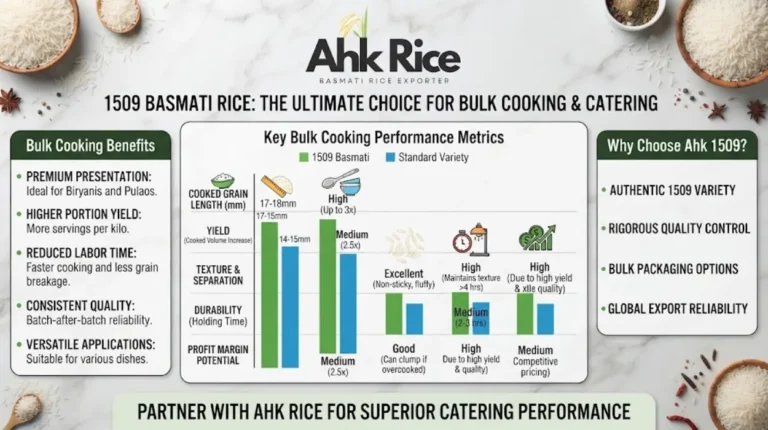
Popular options include 1121, Super Kernel, and 1509 Basmati. The commercial choice depends on positioning. A premium online brand can focus on long-grain appearance, aroma, cooking performance, and consistency, while a price-sensitive foodservice brand can prioritize yield and landed cost.
Why choose AHK Rice for Indonesian private labelling?
AHK Rice is suitable for Indonesian private-label projects because the buyer can coordinate rice selection, processing, custom packaging, sample approval, export documentation, and shipment preparation through one Pakistan-based supply chain.
The advantage is operational control. A buyer does not need to coordinate separate rice processors, packers, documentation providers, and export agents for every stage.
The rice can be selected according to the required commercial specification. Processing can include grading and Sortex cleaning, while packaging can be prepared according to the buyer’s retail strategy. The final specification should be confirmed through an approved sample and commercial documentation before production.
Private labelling also gives Indonesian sellers control over their brand positioning. A 5 kg pack can target households, while 10 kg or larger formats can serve restaurants, caterers, distributors, and institutional buyers.
For packaged consumer products, regulatory preparation must be treated as part of the launch plan rather than an afterthought. Indonesian Halal requirements, BPOM registration requirements where applicable, packaging information, importer responsibilities, and product documentation need to be assessed before commercial distribution.
The practical comparison is explained in Packaging, Halal and BPOM Requirements for Selling Basmati Rice Online in Indonesia, which helps buyers connect packaging decisions with compliance and online-market positioning.
What results can be expected from private-label Basmati rice?
A properly planned private-label project gives the buyer a defined rice specification, approved commercial sample, branded packaging, documented export process, and repeatable shipment structure for Indonesian e-commerce and distribution.
The first commercial result is consistency. Once the buyer approves a specific grade and specification, future orders can be matched against the same commercial requirements instead of selecting rice shipment by shipment.
The second result is stronger brand control. The Indonesian seller owns the consumer-facing packaging and can build a product identity around Pakistani Basmati origin, aroma, grain length, cooking performance, and selected pack sizes.
The third result is better purchasing visibility. Instead of comparing only the price per metric tonne, the buyer can evaluate rice cost, packaging, quantity, destination, documentation, freight, insurance where applicable, and applicable import costs together.
A realistic example is an Indonesian online grocery brand launching a premium 5 kg Basmati product. The buyer first evaluates 1121 and Super Kernel samples, selects the preferred cooking and grain profile, confirms the packaging design, prepares the required Indonesian compliance pathway, and then moves to commercial production.
The same workflow can be scaled for multiple pack sizes once the initial product is established.
How many days does shipping to Indonesia take?
Pakistan-to-Indonesia shipment timing depends on port, vessel schedule, documentation readiness, container availability, and destination, but buyers should plan the complete order cycle rather than treating ocean transit time as the only delivery period.
For Jakarta, a practical commercial planning window is commonly around 20–35 days for ocean transit, excluding production, documentation, port handling, and customs clearance.
For Surabaya, buyers should similarly plan around 25–40 days for ocean transit, with the actual schedule determined by the selected shipping service and routing.
These figures are planning ranges rather than guaranteed delivery commitments. A complete private-label order takes longer because rice production, packaging, inspection, export documentation, container loading, and vessel scheduling occur before the shipment reaches Indonesia.
For a new brand, the first shipment should therefore be planned several weeks ahead of the intended online launch. Repeat orders become easier to schedule once the supplier, specification, packaging, and shipping pattern are established.
What affects the cost of launching a private-label Basmati brand?
Private-label pricing depends on rice variety and grade, grain specification, broken percentage, moisture, processing, packaging material, pack size, order quantity, destination, freight, documentation, and selected Incoterm.
Rice price is only one part of the landed cost. A premium 1121 or Super Kernel specification can carry a different price from a commercial 1509 specification.
Packaging also changes the calculation. Printed bags, laminated packaging, artwork requirements, carton configuration, pack size, and minimum production quantities all influence the final quotation.
Shipping terms matter as well. FOB pricing separates the Pakistan-side export value from the buyer’s freight and destination costs. CIF pricing incorporates ocean freight and insurance to the agreed destination port, subject to the quotation terms.
A buyer should request a quotation using one complete specification instead of asking only for the lowest Basmati rice price. This produces a more useful comparison between suppliers.
What is the full sample process and sample cost?
The sample process should begin with product specification, followed by sample selection, courier dispatch, cooking evaluation, commercial approval, and final production confirmation; sample costs depend on the selected product, quantity, courier destination, and applicable charges.
The first step is to define the required Basmati grade. The buyer specifies variety, grain length, processing type, moisture target, broken percentage, packing preference, and intended market.
AHK Rice can then prepare the relevant product sample. For qualifying Super Kernel sampling requests, the rice sample can be provided up to 20 kg, while the buyer covers courier shipping and applicable phytosanitary charges.
After receiving the sample in Indonesia, the buyer should conduct a cooking test. The evaluation should cover aroma, grain separation, elongation, softness, appearance, taste, and consistency after cooking.
If the sample passes, the buyer confirms the commercial specification. Packaging artwork and final pack configuration can then proceed before the commercial production order.
For larger or customized samples, the final courier and documentation cost should be confirmed before dispatch because charges vary by shipment size and destination.
How should an Indonesian buyer start the project?
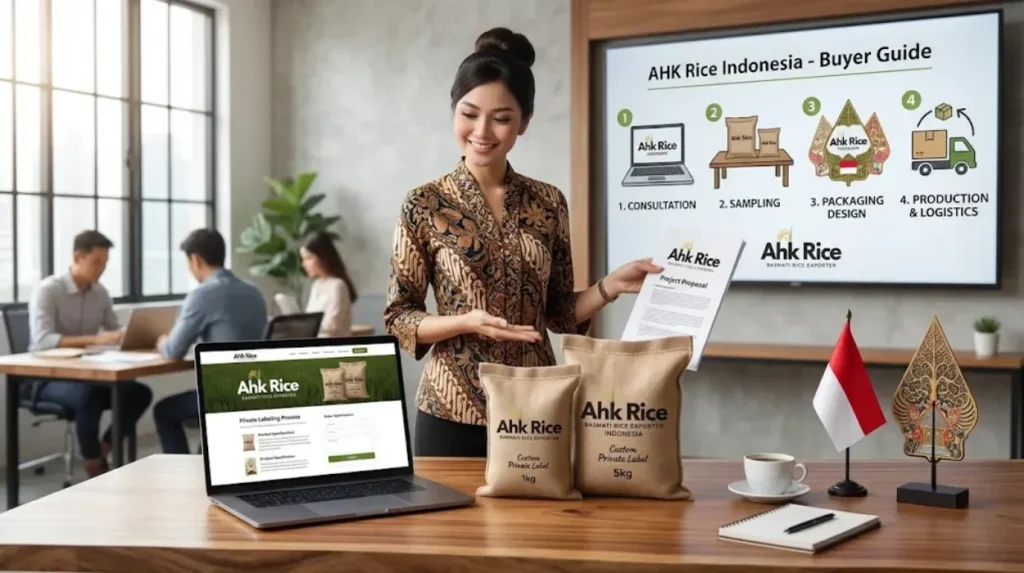
Start with one clearly defined rice specification, request a sample, complete cooking and quality evaluation, confirm packaging and regulatory requirements, approve the commercial specification, and then request the final shipment quotation before placing the production order.
A practical launch sequence is:
- Select 1121, Super Kernel, or 1509 Basmati.
- Define grain, moisture, broken, processing, and packaging requirements.
- Request the relevant sample.
- Pay courier and applicable sample-related charges.
- Conduct Indonesian cooking and quality testing.
- Confirm Halal, BPOM, labeling, and importer requirements.
- Approve the final product specification.
- Finalize private-label packaging.
- Request FOB or CIF pricing for the intended Indonesian port.
- Confirm production, export documents, loading, and shipment schedule.
This process reduces the risk of launching an online brand around a rice specification that later changes because of price, packaging, or quality problems.
AHK Rice should be evaluated not only on the initial rice quotation but also on its ability to maintain the approved specification across repeat orders. That consistency is important for an Indonesian e-commerce brand because customer expectations are built around the same package, cooking result, aroma, and grain appearance.
The commercial decision is straightforward: buyers that want to build an Indonesian Basmati brand should secure the product specification first, validate the sample, prepare compliance and packaging requirements, and then lock the commercial shipment terms. A private-label model gives the seller greater control over branding while keeping rice sourcing and export preparation with an experienced Pakistani supplier.
For a current project-specific quotation covering rice grade, packaging, quantity, destination, and shipping terms, request a quote from AHK Rice.
Frequently Asked Questions
Can I launch my own Basmati rice brand in Indonesia?
Yes, Indonesian importers can launch a private-label Basmati rice brand.
AHK Rice can supply Pakistani 1121, Super Kernel, and 1509 Basmati.
The buyer selects the rice specification, pack size, and branding requirements.
Custom packaging can be prepared according to the approved product specification.
Local Indonesian import and regulatory requirements must be completed before sale.
Can AHK Rice provide private-label Basmati rice for Indonesia?
Yes, AHK Rice supports private-label Basmati rice supply for Indonesian buyers.
Available options include 1121, Super Kernel, and 1509 varieties.
Buyers can specify processing, grain quality, moisture, broken percentage, and packing.
Custom retail or bulk packaging can be coordinated before production.
The final specification should be approved before commercial shipment.
How does the Basmati rice sample process work?
The buyer first selects the preferred variety and required product specification.
AHK Rice prepares a representative sample for physical and cooking evaluation.
Qualifying Super Kernel sampling arrangements can provide up to 20 kg.
The buyer covers courier shipping and applicable phytosanitary charges.
Bulk production follows after the buyer approves the commercial sample.
How much does a Basmati rice sample cost?
Sample costs depend on quantity, destination, courier service, and documentation requirements.
Courier shipping is paid by the Indonesian buyer under the sampling arrangement.
Applicable phytosanitary or regulatory charges can also apply.
Additional testing or customized packaging can create separate costs.
AHK Rice should confirm the exact sample charges before dispatch.
Which Basmati rice variety is best for Indonesia?
1121 suits premium brands seeking long grains and strong cooking presentation.
Super Kernel provides an aromatic premium-value option for retail positioning.
1509 can suit buyers prioritising commercial efficiency and competitive pricing.
Steam and Golden Sella can target different cooking and foodservice requirements.
The final choice should follow sample testing and target-market pricing.
How long does shipping from Pakistan to Indonesia take?
Indicative sea transit can take around 18–30 days depending on routing.
Jakarta, Surabaya, and other Indonesian ports have different vessel schedules.
Production and export documentation add time before vessel departure.
Customs clearance and local delivery add time after arrival.
AHK Rice should confirm the current shipment schedule before ordering.
What affects private-label Basmati rice pricing?
Rice variety, processing, grain length, moisture, and broken percentage affect price.
Packaging material, bag size, printing, and order quantity also affect cost.
Freight and destination port charges depend on the selected shipping route.
FOB and CIF quotations include different cost components.
The buyer should compare complete landed costs rather than rice price alone.
Can AHK Rice provide custom Basmati rice packaging?
Yes, AHK Rice can coordinate custom packaging for suitable private-label orders.
Buyers can specify retail or bulk bag sizes and packaging requirements.
Private-label artwork should be approved before packaging production begins.
Packaging cost depends on material, printing, pack size, and order volume.
The final packaging specification should match the approved rice product.
What documents are needed for exporting Basmati rice to Indonesia?
Common export documents include commercial invoices and packing lists.
Shipments can also require phytosanitary and Certificate of Origin documents.
Fumigation certification and bill of lading documentation may also apply.
The exact document set depends on shipment and destination requirements.
Indonesian importers should confirm current local requirements before dispatch.
What should I confirm before placing a private-label order?
Confirm the rice variety, processing grade, quality specification, and sample approval.
Confirm packaging size, artwork, quantity, destination port, and Incoterm.
Review the export