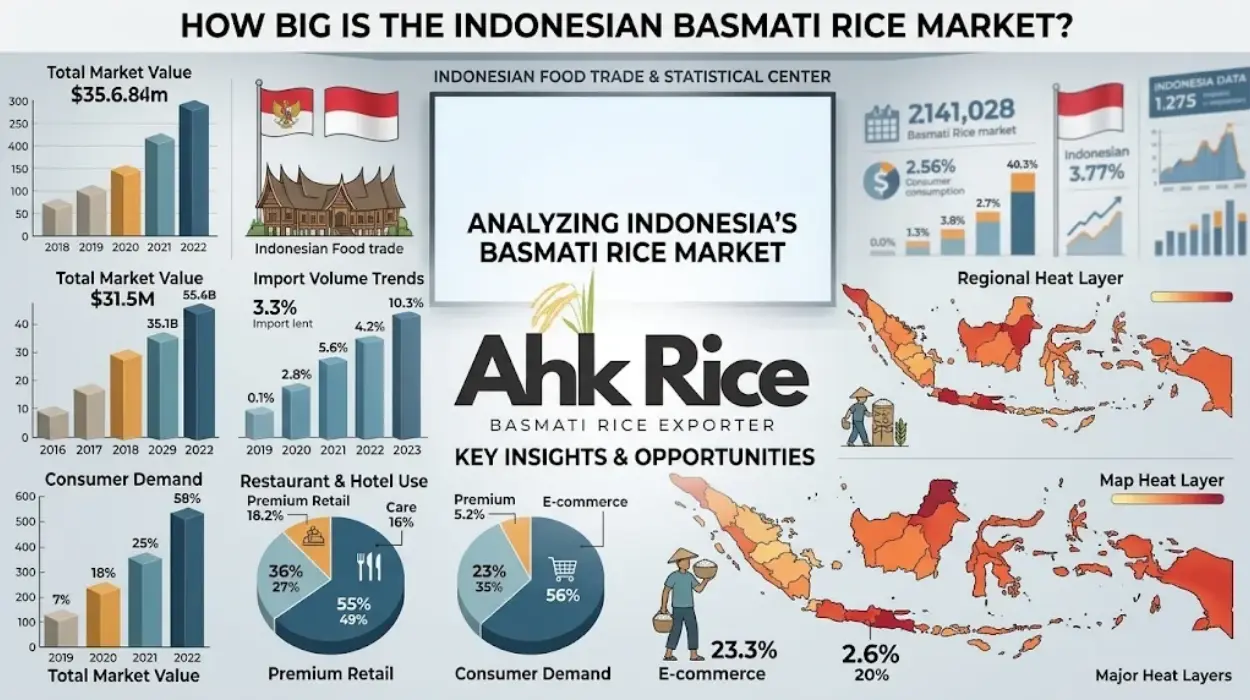
How Big Is the Basmati Rice Market in Indonesia?
Indonesia’s Basmati rice market is a small but commercially important specialty-rice segment within one of the world’s largest rice-consuming countries. The market is not measured by Indonesia’s total rice imports because most imported rice consists of staple and industrial categories rather than Basmati.
Indonesia imported 4.52 million tonnes of rice in 2024, according to Statistics Indonesia (BPS). Pakistan supplied 803,844.7 tonnes, representing about 17.8% of total rice imports. However, Basmati itself formed a much smaller segment. BPS data reported 7,450 tonnes of Basmati imports from January through November 2024, equal to about 0.19% of rice imports during that period.
The market therefore needs to be understood as a specialty segment driven by premium foodservice, hotels, restaurants, catering, specialty retail, and specific industrial requirements. Indonesia’s Ministry of Agriculture stated in 2026 that specialty imports such as Basmati, Thai Hom Mali, and steamed rice serve specific requirements, particularly in hotels, restaurants, and cafés.
What Is the Basmati Rice Market in Indonesia?
Indonesia’s Basmati rice market is a small specialty segment within the country’s larger rice market. Basmati serves premium foodservice, hotels, restaurants, retail, and industrial uses rather than ordinary staple consumption. Indonesia imported 7,450 tonnes of Basmati rice during January-November 2024.
Basmati is an aromatic long-grain rice associated primarily with South Asian production. Pakistani and Indian Basmati occupy the main international supply base.
Indonesia’s domestic rice system is dominated by rice produced for everyday consumption. Basmati operates differently because its long grain, aroma, cooking characteristics, and premium positioning serve specialized consumers.
The distinction becomes clear when total imports are compared with Basmati imports. Indonesia imported 4.52 million tonnes of rice in 2024, while Basmati imports recorded during January-November were only about 7,450 tonnes.
This difference shows why the Basmati market should not be described as a percentage of Indonesia’s entire rice consumption without identifying the relevant product classification.
How large is the Pakistani position?
Pakistan became a major supplier of rice to Indonesia during the 2023–2024 import surge. BPS recorded 803,844.7 tonnes from Pakistan in 2024, compared with 309,309.7 tonnes in 2023.
However, this figure covers rice under broader HS 1006 classifications. It does not mean that all Pakistani rice entering Indonesia was Basmati.
The distinction matters because Basmati is regulated as specialty rice and represents only one part of Pakistan’s rice trade with Indonesia.
How Does Basmati Rice Enter the Indonesian Market?
Indonesia imports Basmati through a regulated specialty-rice system rather than unrestricted staple-rice channels. Import approvals, importer eligibility, product classification, quality limits, customs documents, and food-safety requirements determine entry. Private businesses access specialty imports through approved channels and established procedures commercially.
The Indonesian import system separates ordinary rice requirements from specialty-rice requirements. Current Ministry of Trade rules identify Basmati under HS 1006.30.50 within the specialty-rice category. The regulation specifies a maximum of 5% broken grains for specialty Basmati.
Import controls also define who can bring different rice categories into Indonesia. Specialty rice follows a controlled route involving approved Indonesian entities and import procedures.
The process begins with product classification. The importer identifies the correct HS code and confirms whether the product falls under Basmati, other fragrant rice, broken rice, or another category.
The next stage involves import approval and documentation. Commercial shipments require the importer and exporter to satisfy applicable Indonesian trade, customs, food, and quarantine requirements.
The product specification also matters. A shipment described commercially as premium Basmati still needs to match the specification accepted under the relevant Indonesian import classification.
What Are the Key Components of the Indonesian Basmati Market?
The market consists of imported Basmati varieties, producing countries, importers, distributors, foodservice buyers, retailers, processors, and regulatory authorities. Important specifications include grain length, broken percentage, moisture, milling quality, aroma, variety, packaging, origin, certificates, and permitted import classification requirements for trade.
Basmati varieties
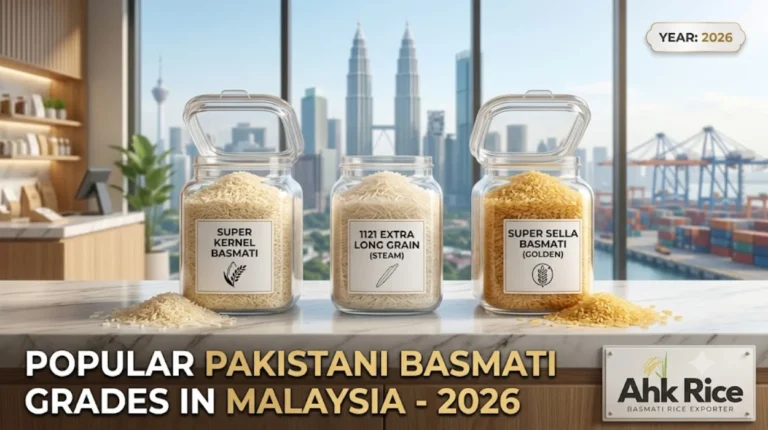
The principal commercial varieties include 1121 Basmati, Super Kernel Basmati, and 1509 Basmati from Pakistan, alongside Indian Basmati varieties.
These varieties differ in grain length, aroma, yield characteristics, cooking performance, and market positioning.
1121 is recognized for its exceptional grain length and cooked elongation. Super Kernel is associated with aromatic Pakistani Basmati and long-grain cooking performance. 1509 combines long grain characteristics with strong commercial demand in bulk and foodservice applications.
Processing
Processing determines whether harvested paddy becomes export-grade Basmati.
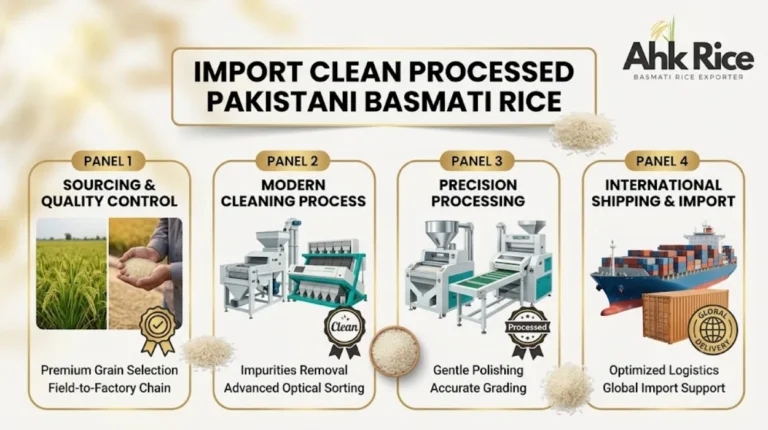
The process normally begins with paddy reception and quality inspection. The grain is then cleaned to remove foreign material.
Husking removes the outer husk. Milling removes the bran layers. Grading separates grains according to size and quality.
Optical sorting, including Sortex processing, removes discolored and defective grains. Advanced processors use multiple sorting stages when the required specification demands higher purity.
The final stages include weighing, packaging, quality testing, lot identification, and shipment preparation.
Quality specifications
Important specifications include moisture, broken grains, foreign matter, grain length, milling degree, chalkiness, damaged grains, and varietal purity.
For specialty Basmati in Indonesia, the 5% broken-grain limit is particularly important under the cited specialty-rice classification.
Other commercial specifications remain part of the buyer-seller contract. A foodservice buyer can request a specific variety, packing format, crop year, milling specification, or quality tolerance.
Origin and documentation
Origin is another important component. Pakistani Basmati is linked to Punjab production areas, while Indian Basmati comes primarily from northern Indian production zones.
Commercial export documentation identifies the product, origin, quantity, packing, shipment, and relevant certificates.
What Are the Benefits of Basmati Rice for Indonesian Buyers?
Basmati provides differentiated cooking performance, aroma, grain separation, and premium positioning for Indonesian buyers. Its strongest commercial role is specialized demand where restaurants, hotels, caterers, retailers, and food manufacturers require distinct aromatic rice instead of standard domestic or imported rice.
The main benefit is differentiation.
Basmati produces a different eating experience from conventional rice. Long grains, aroma, and cooked grain separation support premium dishes and specialized menus.
Restaurants use Basmati for dishes such as biryani, pilaf, pulao, and other South Asian or Middle Eastern preparations.
Hotels can use it in buffet menus where international cuisine requires specific rice characteristics.
Retailers can position Basmati as a premium imported product. Packaging can range from small consumer packs to larger foodservice formats.
Food manufacturers also use specialty rice according to product requirements. In these cases, consistency matters as much as aroma.
Price is another consideration. Basmati normally occupies a different market position from ordinary Indonesian rice because production origin, processing, grain quality, import controls, and specialized demand affect the commercial cost structure.
Where Is Basmati Rice Used in Indonesia?
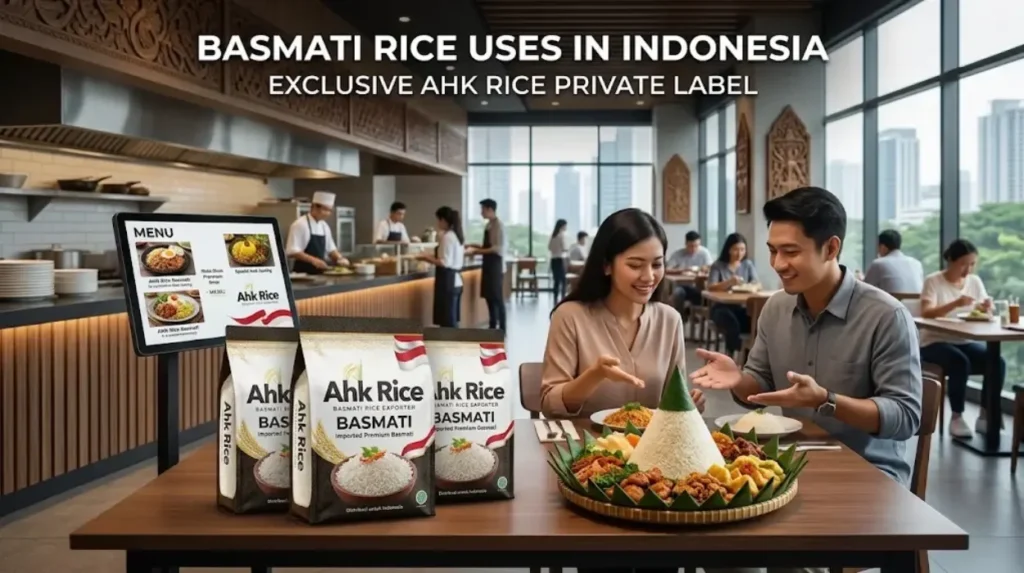
Basmati enters Indonesia through specific commercial uses. Examples include hotel buffets, Indian and Middle Eastern restaurants, premium grocery shelves, catering operations, private-label packs, specialty food distribution, and food manufacturing. These applications prioritize aroma, appearance, consistency, packaging, and dependable specification control.
Hotels and hospitality
Hotels represent an important specialty-rice application because international menus require different rice varieties.
Basmati supports Indian, Middle Eastern, Persian, and South Asian dishes served in hotels and resorts.
Restaurants
Indian restaurants form a natural demand segment because Basmati is central to dishes such as biryani and pulao.
Middle Eastern restaurants also use long-grain aromatic rice for rice-based meals and mixed platters.
Catering
Large catering operations need consistent grain quality across repeated production batches.
A catering buyer therefore evaluates broken percentage, cooking yield, aroma, grain appearance, pack size, and supply consistency.
Premium retail
Retail Basmati competes through origin, variety, packaging, grain appearance, and cooking performance.
Common retail formats include 1 kg, 2 kg, 5 kg, and larger foodservice packs.
Private-label products
Importers and distributors can sell Basmati under their own retail brands.
Private-label programs require consistent specifications across multiple shipments. Packaging, labeling, product registration, and batch traceability become important parts of the supply chain.
What Are the Common Problems and Misconceptions About Indonesia’s Basmati Market?
The main misconception is that Indonesia’s total rice imports represent the Basmati market. They do not. Indonesia imported 4.52 million tonnes of rice in 2024, while Basmati accounted for about 7,450 tonnes during January-November, showing a sharply smaller specialty segment.
The first misconception is that Pakistan’s 803,845-tonne rice export volume to Indonesia represents Pakistani Basmati demand. It does not. The figure covers broader rice classifications.
The second misconception is that Indonesia stopped importing rice completely after the large 2024 import cycle. In reality, the composition changed. Indonesian authorities stated that 2025 and 2026 imports focused on specialty and specific-use rice rather than medium-grade rice for general consumption.
The third misconception is that a large national rice market automatically creates an equally large Basmati market. Indonesia’s total rice market is enormous, but Basmati occupies a narrow specialty position.
The fourth problem is incorrect product classification. Basmati needs to be treated according to the applicable Indonesian HS classification and specialty-rice rules.
The fifth problem is specification mismatch. A buyer requesting premium Basmati needs a clear specification covering variety, broken percentage, moisture, grain characteristics, packaging, origin, and required documentation.
What Does the Indonesian Basmati Market Look Like in 2026?
Indonesia’s Basmati market is best understood as a specialty import market rather than a mass-volume rice market. Current Indonesian government statements identify Basmati among specialty rice types that continue to enter the country for specific uses.
The wider market changed sharply between 2024 and 2025. BPS recorded 4.52 million tonnes of rice imports in 2024, followed by only 450,734 tonnes in 2025, a reduction of about 90%. Pakistan’s volume fell from 803,844.7 tonnes in 2024 to 49,373 tonnes in 2025.
This decline does not mean specialty demand disappeared. It shows that Indonesia’s import policy and supply requirements shifted toward specific categories.
For Basmati exporters and Indonesian buyers, the important market indicators are therefore not only total rice imports. Relevant indicators include specialty-rice approvals, Basmati-specific volumes, importer eligibility, broken-grain limits, hotel and restaurant demand, retail distribution, and foodservice requirements.
The Indonesian Basmati market is small in volume compared with the national rice market, but its premium positioning gives it a distinct commercial role. Understanding the difference between total rice imports and specialty Basmati imports is essential when evaluating demand, competition, and export opportunities.
Frequently Asked Questions
How big is the Basmati rice market in Indonesia?
Indonesia’s Basmati market is a small specialty segment. Basmati imports recorded during January-November 2024 reached about 7,450 tonnes, while total Indonesian rice imports reached about 4.52 million tonnes for the full year.
Does Indonesia import Basmati rice from Pakistan?
Yes. Pakistan is a major rice supplier to Indonesia and also supplies Basmati. However, Pakistan’s overall rice export volume to Indonesia includes several rice categories, so total Pakistani rice imports should not be treated as Basmati volume.
Is Basmati popular in Indonesia?
Basmati has specialized demand in Indonesia, particularly among hotels, restaurants, catering businesses, premium retailers, and international-food consumers. It is not a replacement for the ordinary rice consumed by the general Indonesian population.
What Basmati varieties are available from Pakistan?
Major Pakistani commercial varieties include 1121 Basmati, Super Kernel Basmati, and 1509 Basmati. These varieties differ in grain characteristics, aroma, cooking performance, yield profile, and commercial positioning.
What is the Indonesian HS code for Basmati rice?
Indonesia’s specialty-rice regulations identify Basmati under HS 1006.30.50. The cited specialty classification specifies a maximum of 5% broken grains. Importers must verify the current applicable classification and requirements before shipment.
Who buys Basmati rice in Indonesia?
Key buyers include Indian and Middle Eastern restaurants, hotels, caterers, premium grocery distributors, specialty food importers, private-label retailers, and food manufacturers.
Is Basmati imported for normal household consumption?
Basmati is primarily treated as specialty rice rather than general staple rice. Indonesian authorities have stated that specialty imports serve specific requirements, including hotels, restaurants, and cafés.
What quality specifications matter when importing Basmati?
Important specifications include variety, grain length, broken percentage, moisture, milling quality, foreign matter, damaged grains, aroma, packaging, origin, and required certificates. Indonesian specialty classification also sets specific broken-grain requirements.