Pakistan to Germany Rice Shipping Duration via Suez Canal in 2026
Rice shipping Pakistan to Germany in 2026 refers to the structured sea freight movement of processed Basmati rice from export hubs like Karachi to European ports such as Hamburg, following regulated logistics timelines, transit corridors, and customs protocols.
Rice shipping is a multi-stage international trade process. It begins at processing mills in Punjab. It ends at European distribution centers. The core objective is to move food-grade cargo under controlled conditions with minimal delay.
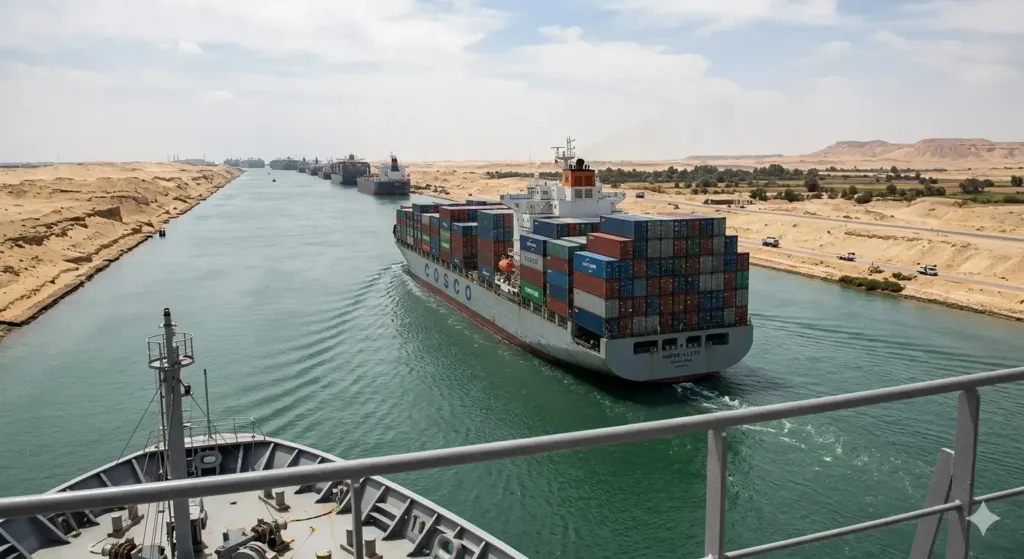
The central route is maritime. Containers travel from Karachi Port or Port Qasim. Ships enter the Arabian Sea. They pass through the Gulf of Aden. Then they cross the Suez Canal. After that, vessels enter the Mediterranean Sea. They continue toward Northern Europe through the Strait of Gibraltar and finally reach Hamburg.
Transit time defines the commercial viability. In 2026, the standard duration ranges between 22 to 32 days depending on vessel schedule, port congestion, and customs clearance.
Rice exports from Pakistan include multiple grades. Examples include 1121 Basmati Sella, Super Kernel Basmati White, and 1509 Steam Rice. Each grade follows the same shipping framework but differs in packaging and storage requirements.
How does sea freight Pakistan Germany work through the Suez Canal?
Sea freight from Pakistan to Germany follows a fixed maritime corridor where vessels depart Karachi, cross the Arabian Sea, pass the Suez Canal, and reach Hamburg within 22 to 32 days, depending on transit conditions and port handling efficiency.
Step-by-step shipping process
Rice shipping follows a linear sequence. Each stage adds time and cost.
1. Inland transport to port
Processed rice is transported from Punjab mills to Karachi using trucks or rail. The average inland transit time is 2 to 4 days.
2. Container stuffing and sealing
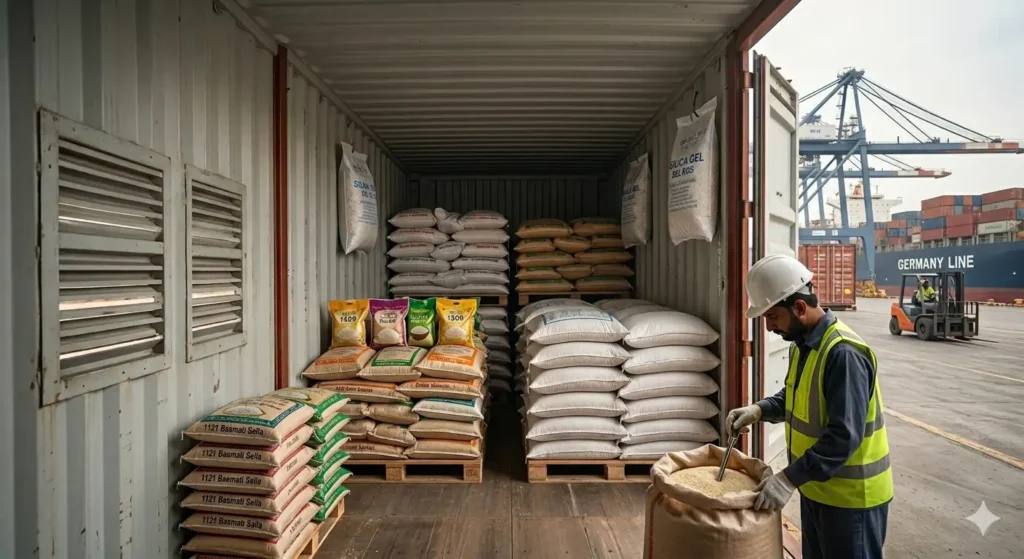
Rice is packed in 5 kg, 10 kg, 25 kg, or 50 kg bags. These bags are loaded into 20-foot or 40-foot containers. Each container is sealed under export supervision.
3. Port handling and customs clearance
Export documentation includes invoice, packing list, phytosanitary certificate, and bill of lading. Clearance takes 2 to 5 days depending on inspection requirements.
4. Ocean freight movement
The vessel departs Karachi. It follows a fixed route:
- Arabian Sea crossing: 5 to 7 days
- Gulf of Aden passage: 3 to 4 days
- Suez Canal transit: 1 to 2 days
- Mediterranean crossing: 7 to 10 days
- Northern Europe approach: 5 to 7 days
5. Arrival and European clearance
At Hamburg, containers undergo customs clearance and food safety checks. This process takes 3 to 6 days.
Total timeline breakdown
- Inland + port handling: 5 to 9 days
- Sea transit: 22 to 32 days
- Destination clearance: 3 to 6 days
Total delivery duration: 30 to 45 days
What are the key components affecting Karachi Hamburg shipping time?
Karachi to Hamburg shipping time depends on vessel schedules, port congestion, Suez Canal traffic, customs clearance speed, container availability, and seasonal demand cycles, each contributing measurable delays or efficiencies in total transit duration.
Vessel scheduling
Shipping lines operate weekly or bi-weekly sailings. Missing a vessel adds 7 days to the timeline.
Port congestion
Busy ports increase waiting time. Karachi and Hamburg both experience peak congestion during high trade seasons such as pre-holiday months.
Suez Canal transit
The canal is a controlled passage. Ships wait in queues during heavy traffic. Delays range from 12 hours to 48 hours.
Container availability
Shortages of empty containers delay loading. This issue increases during global trade imbalances.
Weather conditions
Sea storms in the Arabian Sea or Mediterranean affect speed. Delays range from 1 to 3 days.
Customs inspections
Random inspections extend clearance time. Food-grade cargo is frequently inspected for compliance.
What benefits does Suez Canal rice transit provide for Europe deliveries?
Suez Canal transit reduces distance between Pakistan and Germany by over 7,000 kilometers compared to alternative routes, cutting shipping time by 10 to 15 days and lowering freight costs while maintaining consistent delivery schedules.
The canal acts as a direct connector between Asia and Europe. Without it, ships would need to travel around the Cape of Good Hope in Africa. That route adds significant time and fuel cost.
Shorter transit improves product freshness. Rice maintains aroma and texture when delivery cycles remain controlled. This is critical for premium Basmati varieties.
Freight cost efficiency is another benefit. Reduced fuel consumption lowers per-ton shipping cost. This impacts final pricing in European retail markets.
Predictability is the strongest advantage. Shipping schedules remain stable. Buyers in Germany rely on consistent arrival cycles for inventory planning.
What are the use cases of rice delivery Europe from Pakistan?
Rice delivery from Pakistan to Europe serves multiple commercial use cases including wholesale distribution, retail packaging, private labeling, and food service supply chains, each requiring specific shipping timelines and packaging formats.
Wholesale importers
Large distributors import full container loads. Example: 20 MT of 1121 Sella rice. These shipments prioritize cost efficiency over speed.
Retail chains
Supermarkets import packaged rice under private labels. Packaging includes 1 kg and 5 kg branded bags. Delivery schedules align with shelf stocking cycles.
Ethnic food markets
South Asian stores in Germany import traditional varieties. Examples include Super Kernel Basmati and 1509 Steam Rice. These markets demand consistent supply.
Food service industry
Restaurants and catering companies import bulk rice. Packaging is usually 25 kg or 50 kg bags. Delivery timing aligns with consumption rates.
Each use case requires precise logistics planning. Delays directly impact business operations.
What common problems affect rice shipping Pakistan to Germany 2026?
Common problems in rice shipping include port congestion, documentation errors, Suez Canal delays, container shortages, and customs inspections, all of which extend delivery timelines and increase operational costs in measurable ways.
Documentation errors
Incorrect paperwork delays clearance. Missing phytosanitary certificates or mismatched invoices cause shipment holds.
Port congestion
High traffic increases loading and unloading time. Delays range from 2 to 7 days.
Canal disruptions
Incidents in the Suez Canal halt traffic. Even a single blockage affects global shipping schedules.
Container shortages
Limited availability delays booking. Exporters wait several days for containers.
Misconception: All shipments take the same time
Shipping duration varies. Factors such as vessel speed, route, and inspections create differences.
Misconception: Faster shipping always costs more
Optimized logistics reduce time without increasing cost. Efficient scheduling minimizes delays.
How are rice grades handled during sea freight Pakistan Germany?
Different rice grades such as 1121 Basmati Sella, Super Kernel, and 1509 are handled using standardized containerization methods, with packaging variations and moisture control systems ensuring quality preservation during 30 to 45 days of transit.
Packaging formats
- 5 kg retail bags
- 10 kg consumer packs
- 25 kg wholesale bags
- 50 kg bulk sacks
Each format serves a specific market.
Moisture control
Desiccants are placed inside containers. These absorb humidity and prevent spoilage.
Container types
Standard dry containers are used. For premium shipments, ventilated containers improve airflow.
Quality assurance
Pre-shipment inspection ensures grain length, purity, and moisture content meet export standards.
What certifications apply to rice delivery Europe?
Rice exported from Pakistan to Germany requires certifications such as phytosanitary compliance, ISO standards, HACCP food safety systems, and EU import regulations, ensuring the product meets strict European food safety and quality requirements.
Phytosanitary certificate
Issued by government authorities. Confirms the rice is pest-free.
ISO certification
Ensures quality management systems are followed during processing.
HACCP compliance
Identifies and controls food safety risks across the supply chain.
EU regulations
European Union import laws define pesticide limits, labeling rules, and traceability requirements.
These certifications directly affect clearance time. Proper documentation reduces delays at Hamburg port.