How Do Saudi Arabian Buyers Evaluate Grain Length When Importing Pakistan Basmati Rice?
Saudi Arabian buyers evaluate grain length by measuring the physical length of rice kernels before cooking and the elongation ratio after cooking. Grain length directly affects product positioning, retail value, consumer preference, and purchasing decisions across the Saudi rice market.
Pakistan Basmati rice holds a strong position in Saudi Arabia because long-grain aromatic rice is widely used in traditional dishes such as Kabsa, Mandi, Bukhari rice, and Madghout. Importers, distributors, wholesalers, catering suppliers, and private-label brands assess grain length as one of the most important quality indicators before placing orders.
In 2026, Saudi buyers commonly compare grain length specifications, broken percentage, uniformity, elongation performance, milling quality, and certification compliance before selecting a rice grade.
What Is Grain Length in Pakistan Basmati Rice?
Grain length is the physical measurement of a rice kernel before cooking. Saudi Arabian buyers use grain length as a primary quality benchmark because longer grains create better visual appearance, stronger market value, and higher consumer acceptance in retail and foodservice sectors.
Grain length refers to the distance from one end of a rice kernel to the other. It is measured in millimeters using grading equipment during quality inspection.
For Pakistan Basmati rice, grain length generally ranges from 6.8 mm to more than 8.5 mm depending on the variety.
Saudi importers classify rice according to appearance standards because consumers often associate longer grains with premium quality.
Rice shipments entering Saudi Arabia are commonly evaluated based on:
- Average grain length
- Grain width
- Length-to-width ratio
- Uniformity percentage
- Broken grain percentage
- Post-cooking elongation
These measurements create a standardized framework for import decisions.
Why Do Saudi Arabian Buyers Focus on Grain Length?
Saudi Arabian buyers focus on grain length because consumers prefer rice that appears long, elegant, and separate after cooking. Grain length directly influences shelf appeal, restaurant presentation, consumer satisfaction, and product pricing throughout the Saudi market.
Rice plays a central role in Saudi cuisine. Large family gatherings, restaurants, hotels, catering companies, and institutional kitchens regularly serve rice-based meals.
Long grains create a premium appearance in dishes such as Kabsa and Mandi. Shorter grains often fail to meet expectations in premium market segments.
Importers therefore prioritize varieties that maintain:
- Long kernel structure
- Minimal breakage
- Strong elongation
- Consistent appearance
The visual impact of rice after cooking influences repeat purchases and brand loyalty.
How Do Saudi Buyers Measure Grain Length During Import Evaluation?
Saudi importers measure grain length through laboratory testing, physical inspection, and quality certification reports. Multiple samples are collected from production lots to verify average kernel size, uniformity, and compliance with contractual specifications.
Rice evaluation begins before shipment.
Exporters submit technical specifications describing:
- Average grain length
- Moisture content
- Broken percentage
- Purity level
- Milling degree
Saudi buyers often request pre-shipment inspection reports.
Physical Sampling Process
Inspectors collect representative samples from different sections of a production batch.
The kernels are examined under grading systems that calculate:
- Minimum length
- Maximum length
- Average length
- Grain consistency
Uniformity is important because mixed grain sizes reduce visual quality.
Cooking Evaluation Process
Saudi buyers also perform cooking tests.
The rice is cooked under controlled conditions.
Inspectors evaluate:
- Elongation ratio
- Grain separation
- Texture
- Aroma retention
The results determine whether the rice meets market expectations.
Which Pakistan Basmati Varieties Are Commonly Evaluated for Saudi Arabia?
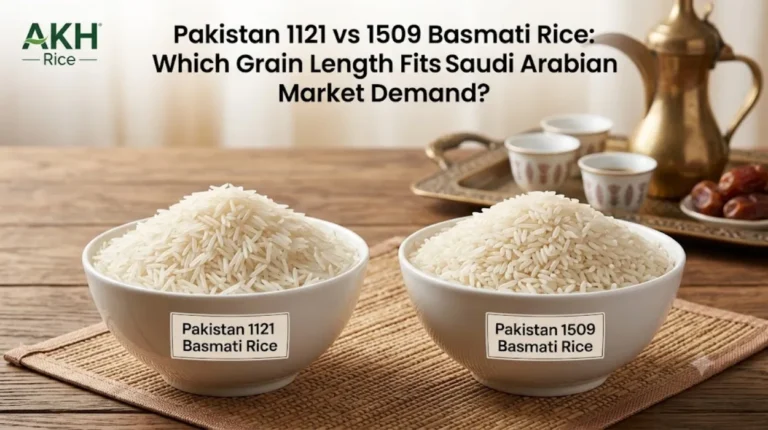
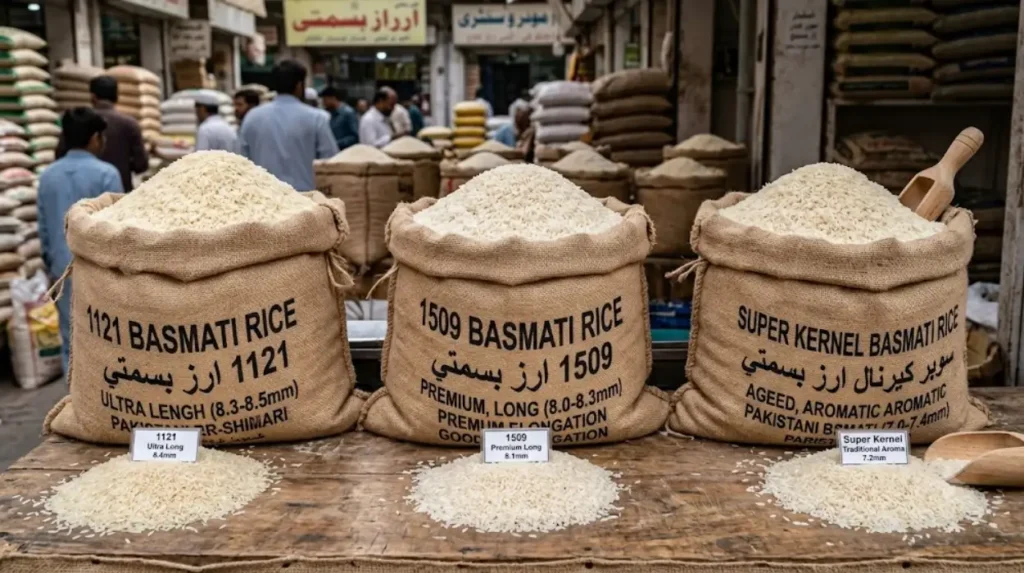
Saudi Arabian importers primarily evaluate 1121 Basmati Rice, 1509 Basmati Rice, and Super Kernel Basmati Rice. Each variety offers different grain lengths, cooking characteristics, pricing structures, and market positioning opportunities.
Pakistan exports several Basmati varieties to Saudi Arabia.
The most commonly assessed grades include:
1121 Basmati Rice
1121 Basmati is known for its exceptionally long grain.
Typical characteristics include:
- Average grain length: 8.3–8.5 mm
- High elongation ratio
- Premium appearance
- Strong demand in hospitality sectors
Many Saudi buyers consider 1121 one of the most visually attractive rice varieties available.
1509 Basmati Rice
1509 Basmati provides a balance between grain length and affordability.
Typical characteristics include:
- Average grain length: 8.0–8.3 mm
- Good elongation
- Faster crop maturity
- Competitive pricing
This variety serves both retail and foodservice markets.
Super Kernel Basmati Rice
Super Kernel remains a traditional Pakistani Basmati variety.
Typical characteristics include:
- Average grain length: 7.0–7.4 mm
- Strong aroma
- Distinct texture
- Established consumer recognition
Many long-term importers continue sourcing Super Kernel for traditional market segments.
Readers comparing these varieties in greater detail can explore the article discussing how different Basmati grades align with Saudi importer preferences and consumption requirements.
Where Is Pakistan Basmati Rice Grown Before Export to Saudi Arabia?
Pakistan Basmati rice is primarily grown in Punjab’s fertile rice belt. The region provides suitable soil composition, irrigation systems, climate conditions, and agricultural expertise required for producing premium aromatic long-grain rice.
Punjab remains the center of Pakistan’s Basmati cultivation.
Major production districts include:
- Gujranwala
- Hafizabad
- Sheikhupura
- Narowal
- Sialkot
- Nankana Sahib
- Mandi Bahauddin
These areas benefit from:
- Fertile alluvial soils
- Canal irrigation networks
- Warm growing seasons
- Suitable humidity levels
The regional environment contributes to grain development and aroma formation.
How Is Pakistan Basmati Rice Processed Before Saudi Import Evaluation?
Pakistan Basmati rice undergoes harvesting, drying, storage, milling, grading, polishing, sorting, packaging, and quality testing before export. Every processing stage influences grain length preservation and final product quality.
Maintaining grain length requires careful handling throughout the supply chain.
Harvesting
Farmers harvest rice when the crop reaches physiological maturity.
Proper timing reduces grain damage.
Drying
Freshly harvested paddy contains elevated moisture levels.
Controlled drying stabilizes grain quality and protects kernel structure.
Storage
Paddy is stored in suitable facilities.
Storage conditions influence grain strength and aging characteristics.
Milling
The husk is removed.
The rice is processed into edible kernels while minimizing breakage.
Grading
Rice is separated according to size and quality specifications.
Uniform grain length is achieved during this stage.
Color Sorting
Advanced optical sorters remove:
- Discolored kernels
- Foreign matter
- Defective grains
Quality Testing
Laboratories evaluate:
- Grain length
- Moisture
- Purity
- Broken percentage
- Foreign matter levels
The results become part of export documentation.
What Grain Length Standards Are Considered Attractive in Saudi Arabia?
Saudi Arabian buyers generally prefer extra-long grain rice because it delivers premium presentation after cooking. Rice varieties exceeding 8.0 mm before cooking often receive stronger attention in high-value retail and hospitality channels.
Consumer expectations influence purchasing specifications.
Premium segments frequently favor:
| Rice Variety | Average Grain Length |
|---|---|
| 1121 Basmati | 8.3–8.5 mm |
| 1509 Basmati | 8.0–8.3 mm |
| Super Kernel Basmati | 7.0–7.4 mm |
Grain length alone does not determine quality.
Importers also examine:
- Aroma
- Texture
- Elongation
- Purity
- Appearance
The combination of these factors creates market acceptance.
What Benefits Does Longer Grain Length Provide?
Longer grain length improves visual appeal, enhances premium positioning, increases consumer satisfaction, and supports stronger differentiation in competitive rice markets. These advantages explain why grain measurement remains a major import evaluation criterion.
Long grains create a distinctive appearance after cooking.
The kernels remain visually separate and elegant.
Restaurants prefer rice that performs consistently across large-volume cooking operations.
Retail brands value products that stand out on store shelves.
Consumers often associate longer grains with authenticity and premium quality.
Examples include:
- Premium retail packs
- Hospitality rice programs
- Catering contracts
- Luxury restaurant supply chains
These market segments often prioritize presentation quality.
What Common Misconceptions Exist About Grain Length?
Many buyers assume that longer grain automatically means better rice quality. Professional rice evaluation considers multiple parameters including aroma, elongation, purity, texture, milling quality, and food safety compliance.
Several misconceptions continue to appear in rice trade discussions.
Longer Grain Always Means Better Quality
Grain length is only one quality factor.
A long grain with poor milling quality can perform worse than a slightly shorter grain with superior processing.
All Basmati Varieties Perform Identically
Different varieties produce different cooking results.
1121, 1509, and Super Kernel each have unique characteristics.
Grain Length Never Changes After Cooking
Basmati rice elongates significantly during cooking.
The final appearance depends on both raw grain length and elongation ratio.
Visual Inspection Is Enough
Professional importers rely on laboratory testing and documented specifications.
Scientific measurements provide greater accuracy than visual assessment alone.
What Certifications Support Saudi Arabian Rice Imports?
Saudi Arabian buyers evaluate certifications to verify food safety, traceability, quality management, and regulatory compliance. Certification documentation supports confidence in imported rice supply chains.
Certification requirements vary according to buyer category and distribution channel.
Commonly requested certifications include:
ISO 22000
Demonstrates food safety management systems.
HACCP
Identifies and controls food safety hazards throughout production.
Halal Certification
Confirms compliance with Islamic dietary requirements.
Phytosanitary Certificate
Verifies plant health compliance for international trade.
Certificate of Origin
Confirms the country where the rice was produced.
Fumigation Certificate
Documents pest-control treatment where required.
These documents accompany export shipments and facilitate import procedures.
How Do Saudi Buyers Make Final Import Decisions Based on Grain Length?
Saudi buyers combine grain length analysis with cooking performance, quality consistency, certifications, market positioning goals, and pricing considerations. The final decision depends on overall value rather than a single measurement.
Importers evaluate rice according to intended use.
Retail brands focus on consumer expectations.
Hotels emphasize presentation quality.
Restaurants prioritize consistency.
Foodservice distributors assess operational performance.
The evaluation process typically includes:
- Reviewing technical specifications.
- Verifying certifications.
- Examining grain length data.
- Conducting cooking tests.
- Comparing varieties.
- Approving commercial terms.
- Finalizing procurement decisions.
This structured approach helps buyers select rice that matches market demand and product objectives.
Understanding grain length evaluation provides important insight into how Saudi Arabian importers assess Pakistan Basmati rice in 2026. While grain length remains one of the most visible quality indicators, professional buyers combine physical measurements, cooking performance, processing quality, and certification compliance to determine the suitability of each rice variety for the Saudi market.
Frequently Asked Questions
What grain length do Saudi Arabian buyers prefer in Pakistan Basmati rice?
Saudi Arabian buyers generally prefer extra-long grain Basmati rice with a raw grain length above 8.0 mm. Varieties such as 1121 Basmati and 1509 Basmati are popular because they provide long, separate grains after cooking.
Is grain length the only factor Saudi importers check when buying Basmati rice?
No, grain length is one important quality factor, but Saudi importers also evaluate aroma, cooking performance, broken percentage, purity, moisture level, milling quality, and required food safety certifications before approving shipments.
Which Pakistan Basmati rice variety has the longest grain length?
1121 Basmati rice has one of the longest grain lengths among Pakistani Basmati varieties. Its raw kernel length usually measures around 8.3–8.5 mm, with strong elongation after cooking.
Why is 1121 Basmati rice popular in the Saudi Arabian market?
1121 Basmati rice is popular because its long grains create a premium appearance in traditional Saudi dishes such as Kabsa and Mandi. Restaurants, hotels, and premium retail buyers often prefer its presentation quality.
How do Saudi rice importers verify Basmati grain quality before shipment?
Saudi rice importers verify grain quality through laboratory reports, sample inspections, cooking tests, and export documentation. They review grain length, broken percentage, moisture content, certifications, and overall product consistency before accepting shipments.