Pakistan to USA Rice Shipping Duration East vs West Coast Ports 2026
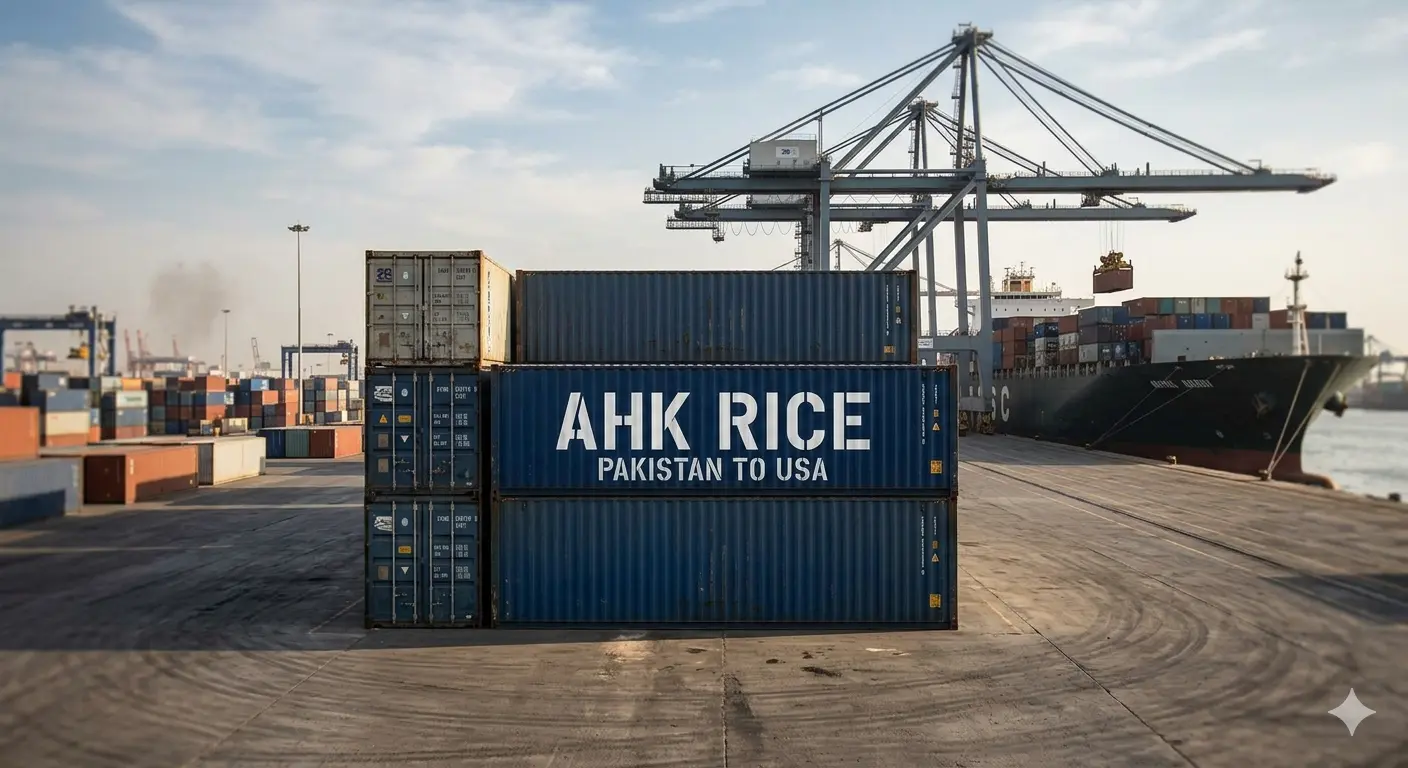
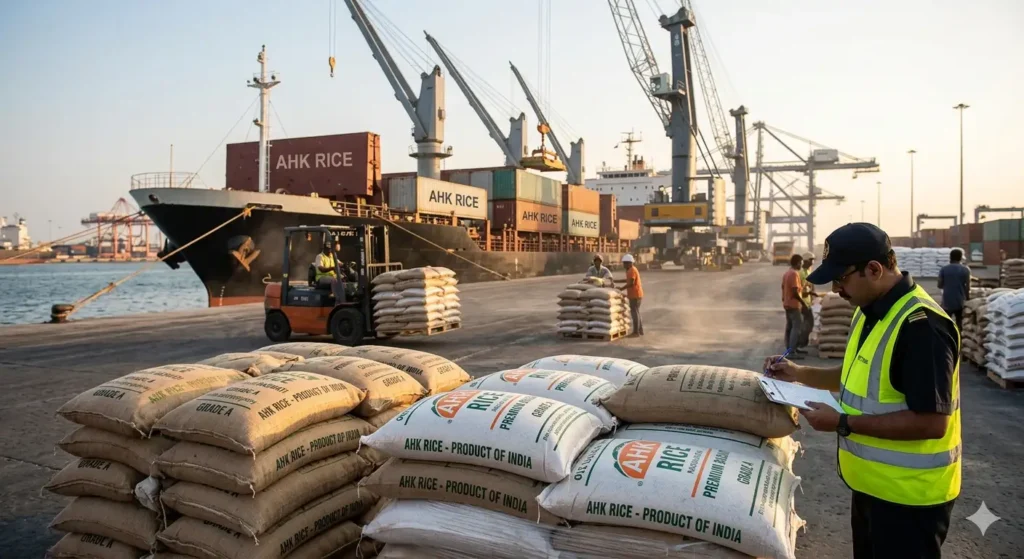
Rice shipping Pakistan to USA 2026 refers to the total transit duration, documentation, handling, and ocean freight process required to move processed rice from Pakistan’s export terminals to major U.S. ports such as West Coast and East Coast entry points.
Rice shipping is a structured logistics chain. It begins with processed rice leaving mills in Punjab. It ends when containers are cleared at U.S. ports and delivered inland. The timeline depends on route selection, vessel schedules, port congestion, and customs clearance.
In 2026, exporters rely on containerized sea freight. Bulk shipments exist, but packaged basmati rice uses 20-foot and 40-foot containers. Each container carries defined weight ranges such as 24 metric tons for 20ft and 26–28 metric tons for 40ft.
The two major shipping corridors define transit time:
- West Coast (example: Port of Los Angeles)
- East Coast (example: Port of New York and New Jersey)
These routes differ in distance, handling stages, and inland delivery time.
How does rice shipping from Pakistan to the USA work step by step?
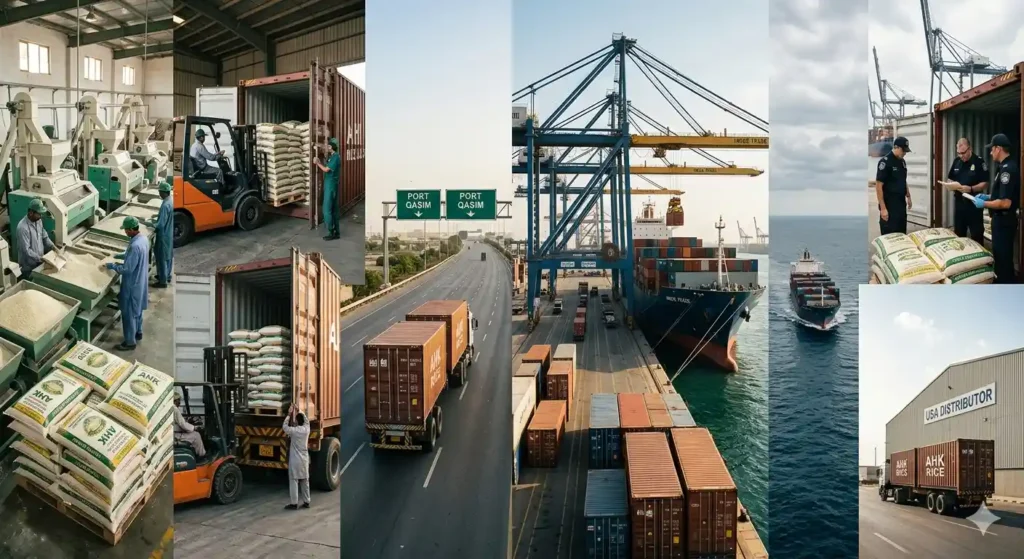
Rice shipping follows a defined sequence: milling, grading, packing, container stuffing, inland transport to port, customs clearance, ocean freight, port unloading in the USA, and final inland delivery to warehouses or distributors.
Pre-shipment processing
Rice is milled, polished, and sorted. Examples include 1121 basmati steam rice, super kernel basmati white rice, and 1509 sela rice. Each variety is graded based on grain length, moisture content (typically 12–14%), and broken percentage.
After grading, rice is packed. Common packaging sizes include 5 kg, 10 kg, 20 kg, and 50 kg bags. Packaging materials include woven polypropylene bags and BOPP laminated bags.
Container stuffing and sealing
Rice bags are loaded into containers at warehouses. Each container is fumigated and sealed with a unique seal number. This ensures phytosanitary compliance and cargo integrity.
Inland transport to Pakistani ports
Containers are transported by truck or rail to ports such as Karachi Port and Port Qasim. Transit time ranges from 1 to 3 days depending on warehouse location.
Export documentation and clearance
Exporters prepare documents such as:
- Commercial invoice
- Packing list
- Bill of lading
- Phytosanitary certificate
- Certificate of origin
Customs clearance takes 1–3 days when documents are accurate.
Ocean freight journey
Containers are loaded onto vessels. Shipping lines follow fixed routes. Transit time varies by destination coast.
Import clearance in the USA
Upon arrival, U.S. customs and FDA inspections occur. Clearance typically takes 3–7 days depending on inspection intensity.
Inland delivery in the USA
Containers move to warehouses using trucks or rail. Delivery time depends on distance from port.
What is the rice transit time USA for West Coast vs East Coast ports?
West Coast delivery takes 22–30 days total transit, while East Coast delivery takes 35–50 days due to longer sea routes or transshipment via Europe or the Mediterranean.
West Coast transit duration
Shipping to the Port of Los Angeles or Port of Long Beach is faster.
Breakdown:
- Inland Pakistan transport: 2 days
- Export clearance: 2 days
- Sea freight: 18–22 days
- U.S. clearance: 4–6 days
Total: 22–30 days
This route is direct or involves minimal transshipment. It is preferred for faster turnover.
East Coast transit duration
Shipping to the Port of New York and New Jersey or Port of Savannah takes longer.
Breakdown:
- Inland Pakistan transport: 2 days
- Export clearance: 2 days
- Sea freight: 28–35 days
- U.S. clearance: 4–7 days
Total: 35–50 days
Ships often pass through transshipment hubs such as Mediterranean ports or use the Suez Canal route.
What key components affect sea freight Pakistan America transit time?
Transit time depends on shipping route, vessel schedule, port congestion, customs efficiency, container availability, and seasonal demand patterns that influence delays and freight capacity across global shipping lanes.
Shipping route selection
Direct routes reduce time. Indirect routes increase time. West Coast routes are shorter. East Coast routes are longer due to geographic distance.
Vessel schedules
Shipping lines operate weekly or bi-weekly services. Missing a vessel adds 7–10 days delay.
Port congestion
Congestion at origin or destination increases waiting time. Peak seasons such as pre-holiday imports in the USA increase congestion.
Container availability
Shortage of containers delays loading. Exporters must secure containers in advance.
Weather and maritime conditions
Storms and ocean conditions slow vessels. Seasonal monsoons in South Asia affect port operations.
Customs and inspections
Random inspections add 2–5 days. Documentation errors add more delays.
What are the benefits of choosing the right port for rice delivery?
Selecting the correct port reduces delivery time, lowers inland transport costs, improves supply chain efficiency, and ensures timely distribution to retail, wholesale, and food service markets across the United States.
Faster distribution
West Coast ports allow quick access to western states. Examples include California, Arizona, and Nevada.
East Coast ports serve eastern states. Examples include New York, New Jersey, and Pennsylvania.
Cost efficiency
Shorter routes reduce freight costs. West Coast shipments often cost less than East Coast routes due to reduced sailing distance.
Inventory planning
Predictable transit times improve inventory management. Importers maintain consistent stock levels.
Reduced risk of delays
Fewer transshipments reduce cargo handling risks. Direct routes reduce chances of delays.
What are the main use cases for different U.S. ports in rice imports?
Different ports serve specific distribution networks: West Coast ports supply Asian and Middle Eastern communities, while East Coast ports serve dense urban populations and retail chains across the northeastern and southeastern United States.
West Coast use cases
West Coast ports handle high demand for basmati rice among Asian communities. Cities such as Los Angeles and San Francisco import large volumes.
Retail chains and ethnic grocery stores distribute rice quickly from these ports.
East Coast use cases
East Coast ports serve large metropolitan areas. Examples include New York City, Boston, and Washington D.C.
These ports supply supermarkets, wholesalers, and restaurant chains.
Central U.S. distribution
Some shipments move inland via rail. Containers from both coasts reach central states such as Texas and Illinois.
What common problems and misconceptions exist in rice shipping duration?
Common issues include misunderstanding total transit time, ignoring port congestion, assuming direct routes for all shipments, and underestimating documentation errors that delay customs clearance and extend delivery schedules.
Misconception: Sea time equals total delivery time
Sea freight time is only one part. Total transit includes inland transport, clearance, and delivery.
Problem: Documentation errors
Incorrect invoices or missing certificates delay customs. This adds several days to delivery.
Misconception: All shipments are direct
Many shipments involve transshipment. This adds 5–10 days.
Problem: Seasonal delays
Peak seasons increase congestion. Importers experience delays during holiday demand spikes.
Misconception: East Coast is always better for large markets
West Coast ports often provide faster and cheaper access even for inland distribution due to efficient rail networks.
How does rice quality and processing impact shipping timelines?
Proper processing, drying, grading, and packaging ensure faster clearance, reduced inspection risk, and smoother handling, which directly shortens shipping delays and maintains product integrity during long-distance transport.
Moisture control
Rice must maintain moisture between 12–14%. High moisture leads to rejection or inspection delays.
Packaging quality
Strong packaging prevents damage. Examples include laminated bags and vacuum packaging.
Fumigation compliance
Fumigation certificates are mandatory. Missing documents delay clearance.
Standardized grading
Consistent grading reduces inspection time. U.S. importers prefer uniform grain size and quality.
How do certifications influence rice shipping to the USA?
Certifications ensure compliance with U.S. food safety regulations, reduce inspection delays, and build trust with importers by confirming quality, hygiene, and traceability throughout the supply chain.
Required certifications
- Phytosanitary certificate
- FDA registration
- Certificate of origin
Quality certifications
- ISO standards
- HACCP compliance
These certifications ensure smooth entry into the U.S. market.
Impact on transit time
Proper certification reduces inspection frequency. This shortens port clearance time.