Rice Packaging Sizes and FDA Nutrition Labelling Standards for USA 2026
Rice packaging sizes define the standardized weight formats used for retail and bulk distribution, while FDA nutrition labelling standards specify mandatory nutritional disclosures, formatting rules, and compliance requirements for food products sold in the United States in 2026.
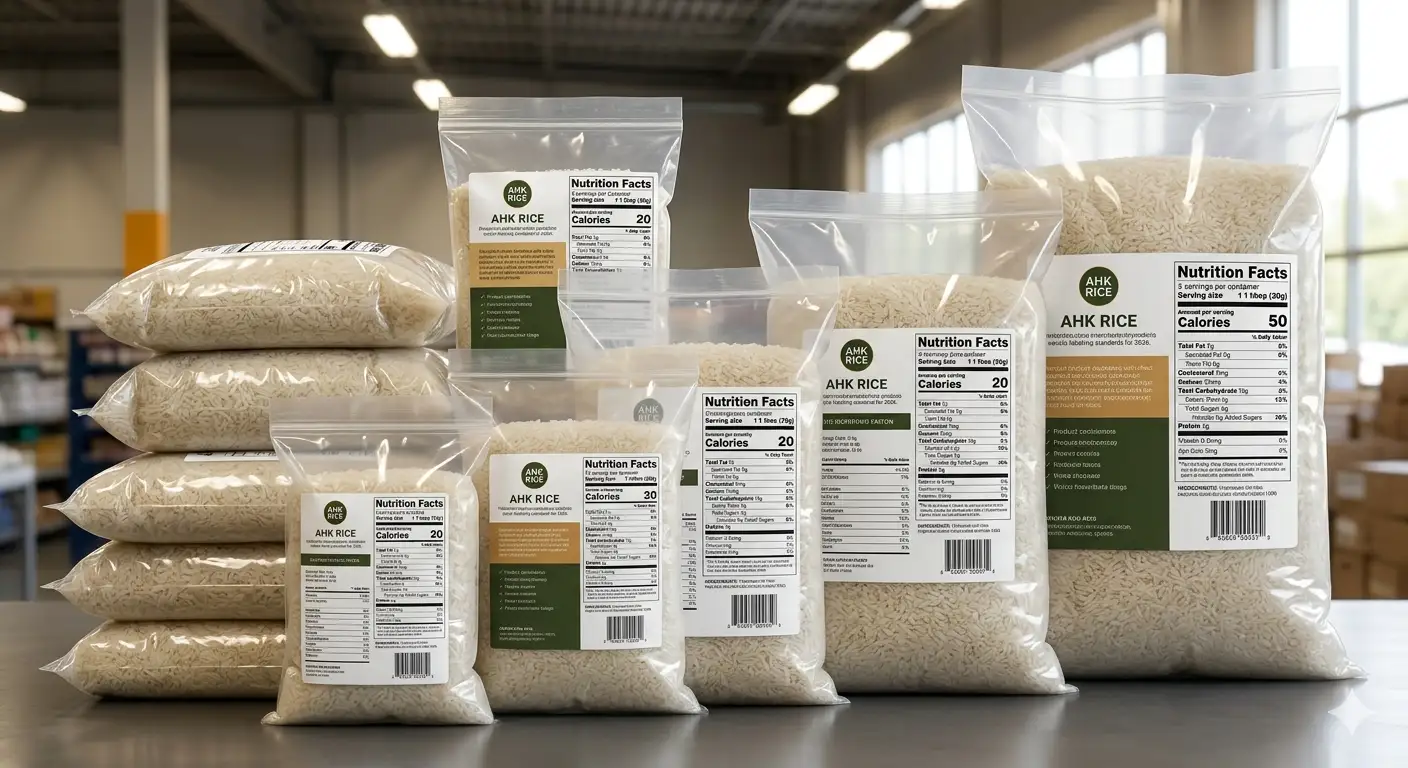
Rice packaging sizes refer to fixed quantity units such as 1 lb (454 g), 2 lb (907 g), 5 lb (2.27 kg), 10 lb (4.54 kg), 20 lb (9.07 kg), and 50 lb (22.68 kg). These sizes align with retail shelf dimensions, logistics efficiency, and consumer purchasing behavior.
FDA nutrition labelling standards define how food information appears on packaging. This includes calories, macronutrients, micronutrients, serving sizes, and ingredient lists. The FDA mandates a uniform “Nutrition Facts” panel with precise typography, spacing, and measurement units.
Together, packaging sizes and labelling standards form a compliance framework. This framework ensures product safety, transparency, and consistency across the US retail and wholesale food system.
How do rice packaging sizes and FDA labelling systems work in the USA?
Rice packaging operates through standardized weight categories, while FDA labelling works through regulated panels that present nutritional data per serving and per container, ensuring clarity, comparability, and legal compliance across all rice products entering the US market.
Rice packaging begins at the processing stage. Rice is milled, graded, and sorted into quality categories. Each category is assigned a packaging size based on target markets. Retail markets prefer 1 lb to 10 lb packs, while wholesale buyers require 20 lb to 50 lb sacks.
FDA labelling functions through a structured system. Each package must include a Nutrition Facts panel. This panel calculates values based on serving size, which is standardized for rice at approximately 45 g (uncooked).
The system includes dual-column labels for larger packs. For example, a 5 lb bag displays nutrition per serving and per entire package. This supports both portion control and bulk consumption awareness.
What are the standard rice packaging sizes used in the US market?
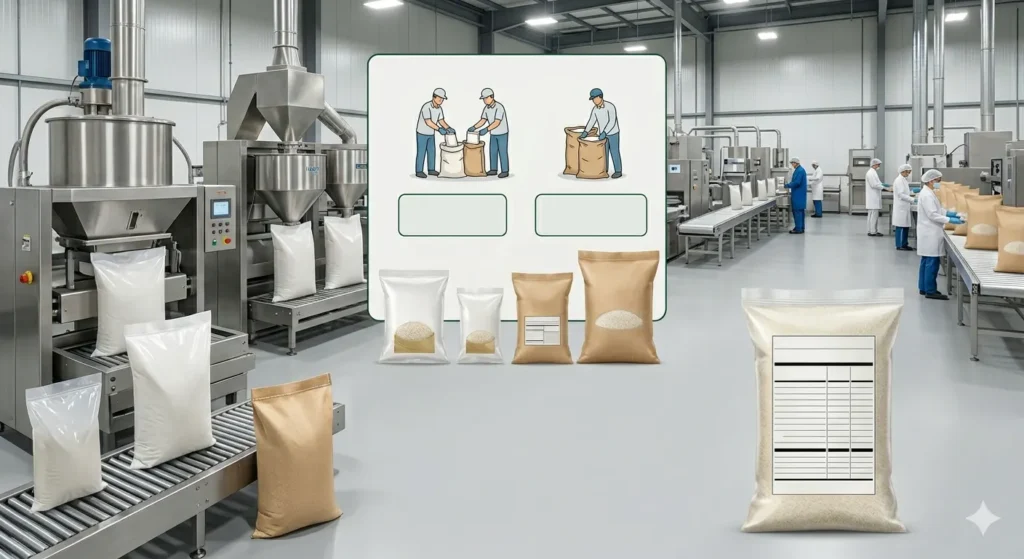
The US rice market uses standardized packaging sizes including 1 lb, 2 lb, 5 lb, 10 lb, 20 lb, and 50 lb formats, each designed for specific distribution channels such as supermarkets, ethnic stores, food service, and bulk import operations.
Retail Packaging Sizes
Retail packaging targets household consumption. Common sizes include:
- 1 lb (single-use or trial packs)
- 2 lb (small families)
- 5 lb (standard household consumption)
- 10 lb (frequent users)
These sizes fit retail shelves and comply with consumer storage habits. Clear plastic or laminated bags dominate this segment.
Bulk Packaging Sizes
Bulk packaging serves restaurants and distributors. Examples include:
- 20 lb sacks for mid-scale kitchens
- 50 lb bags for large-scale food service
These bags use woven polypropylene or jute materials. They prioritize durability and cost efficiency.
Specialty Packaging Sizes
Specialty rice types, such as basmati or organic rice, use premium packaging. Examples include:
- 1 kg resealable pouches
- 2 kg vacuum packs
- 5 kg branded cartons
These formats emphasize quality perception and shelf differentiation.
What are the key components of FDA nutrition labels for rice in 2026?
FDA nutrition labels for rice include mandatory elements such as serving size, calories, macronutrients, micronutrients, ingredient list, allergen declaration, and formatting rules that ensure uniform presentation across all food products sold in the United States.
Nutrition Facts Panel
The Nutrition Facts panel is the central component. It includes:
- Calories per serving
- Total fat, saturated fat, trans fat
- Cholesterol and sodium
- Total carbohydrates, dietary fiber, sugars
- Protein
Each value is expressed in grams and percentage Daily Value (%DV).
Serving Size Standardization
Serving size for rice is defined as 45 g uncooked. This standard allows comparison across brands.
For larger packages, dual columns show:
- Per serving values
- Per container values
Ingredient List
Rice packaging must list ingredients in descending order by weight. For plain rice, this includes:
- Rice (single ingredient)
For flavored rice products, examples include:
- Rice, salt, spices, vegetable oil
Allergen Declaration
Rice is naturally gluten-free. However, cross-contact must be declared if applicable. Statements such as “Processed in a facility handling wheat” are required when relevant.
How are rice packaging sizes selected for different US market segments?
Rice packaging sizes are selected based on consumption patterns, distribution channels, storage capacity, and pricing strategies, ensuring alignment between product quantity and buyer behavior across retail, wholesale, and institutional markets.
Retail buyers prefer smaller sizes due to storage limits and budget control. A 5 lb bag fits typical kitchen storage and weekly consumption cycles.
Ethnic markets demand larger packs. South Asian and Middle Eastern households often purchase 10 lb or 20 lb bags due to higher rice consumption frequency.
Food service buyers prioritize cost per kilogram. A 50 lb bag reduces packaging cost and minimizes restocking frequency.
E-commerce platforms favor medium sizes such as 2 lb and 5 lb. These sizes balance shipping cost and consumer convenience.
What benefits do standardized rice packaging sizes and FDA labels provide?
Standardized packaging sizes and FDA labels provide transparency, regulatory compliance, logistical efficiency, and consumer trust by ensuring consistent product information, easy comparison, and safe handling across all stages of the supply chain.
Standardization simplifies logistics. Uniform sizes optimize container loading, pallet stacking, and warehouse storage. For example, 50 lb bags align with pallet weight limits.
FDA labels improve decision-making. Consumers compare calorie content, carbohydrate levels, and serving sizes easily.
Retailers benefit from shelf optimization. Fixed sizes allow predictable spacing and inventory planning.
Importers ensure compliance. Meeting FDA standards prevents shipment rejection and financial loss.
What are the common use cases of rice packaging sizes in the USA?
Rice packaging sizes are used across multiple applications including household consumption, restaurant supply, institutional procurement, and international import distribution, each requiring specific size formats to match operational and consumption needs.
Household Consumption
Households use 1 lb to 10 lb packs. These sizes match weekly or monthly consumption cycles.
Restaurants and Catering
Restaurants use 20 lb and 50 lb bags. High-volume cooking requires bulk supply to reduce operational costs.
Institutional Buyers
Institutions such as schools and hospitals use standardized bulk packaging. Examples include:
- 25 lb bags for controlled distribution
- 50 lb sacks for central kitchens
Import and Distribution
Importers receive rice in 20 ft or 40 ft containers. Packaging sizes influence container capacity. For example:
- 20 ft container holds approximately 24 metric tons using 50 lb bags
What problems and misconceptions exist around rice packaging and FDA labelling?
Common problems include incorrect serving size calculations, non-compliant label formatting, misunderstanding of packaging size requirements, and the misconception that bulk packaging does not require full FDA labelling compliance.
One misconception states that bulk rice does not require full labels. This is incorrect. All packaged food products must include FDA-compliant labels regardless of size.
Another issue involves incorrect serving size scaling. Exporters often miscalculate nutritional values when converting from 100 g to 45 g serving sizes.
Formatting errors are frequent. The FDA requires specific font sizes, bold headings, and alignment rules. Non-compliance leads to import rejection.
Packaging confusion also occurs. Exporters assume that US markets accept metric-only labeling. The FDA requires dual units such as pounds (lb) and ounces (oz).
How does the rice packaging and labelling process work step by step?
The rice packaging and labelling process follows a structured sequence including milling, grading, weighing, packaging, label design, compliance verification, and export documentation to ensure that products meet US regulatory and market requirements.
Step 1: Milling and Processing
Paddy rice is cleaned and milled. Husks are removed. Grains are polished and sorted.
Step 2: Grading
Rice is classified into grades based on length, purity, and broken percentage. Examples include:
Step 3: Weighing and Packaging
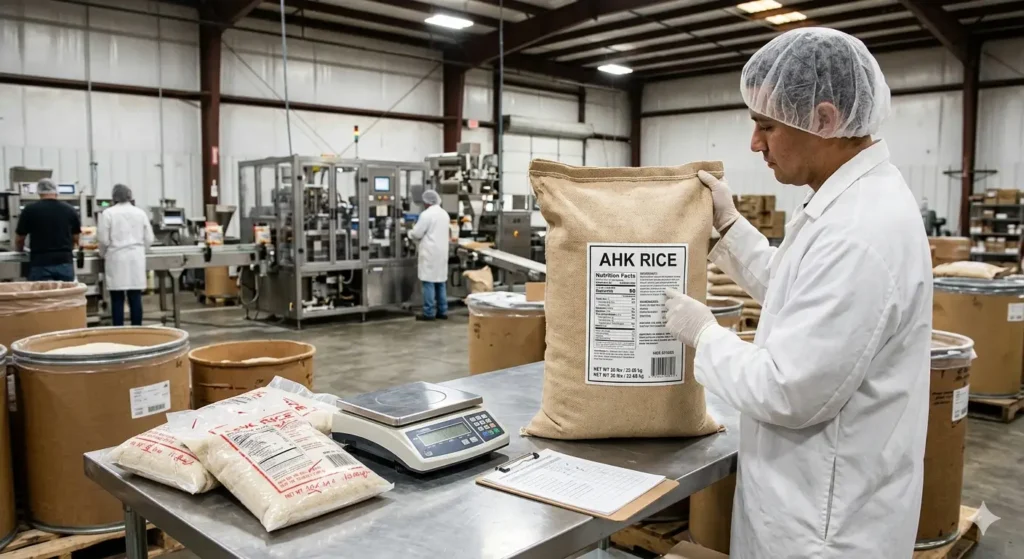
Rice is weighed into predefined sizes such as 5 lb or 50 lb. Automated machines ensure accuracy.
Step 4: Label Creation
Labels are designed according to FDA standards. Nutritional values are calculated per serving.
Step 5: Compliance Verification
Labels are reviewed for accuracy and formatting. Regulatory checks confirm alignment with FDA rules.
Step 6: Export and Distribution
Packaged rice is loaded into containers. Documentation includes:
- Commercial invoice
- Packing list
- Certificate of origin