Pakistani 1121 Golden Sella Rice Exporter for Saudi Rice Traders
Pakistani 1121 Golden Sella Rice is the preferred choice for Saudi rice traders seeking long grain length, high cooking yield, stable shelf life, and competitive import pricing. Here is why: Pakistani processors supply consistent export specifications, Saudi buyers prefer Golden Sella for catering and wholesale distribution, and AHK Rice provides certified export programs designed for commercial importers.
Saudi rice importers compare origins, grain quality, cooking performance, shipment reliability, and landed cost before selecting a supplier. Traders who want to understand market differences can first review how Gulf buyers evaluate origins in this guide about Pakistani and Indian rice preferences in Saudi Arabia: How Is Pakistani Basmati Rice Different from Indian Rice in the Saudi Market?.
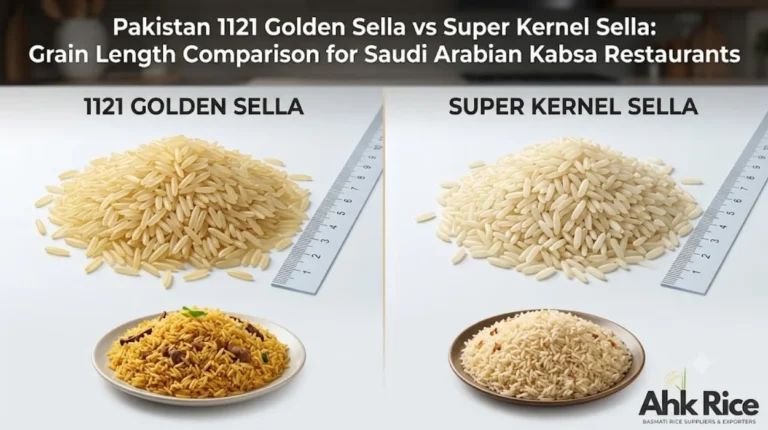
Pakistani 1121 Golden Sella Rice remains one of the strongest products in the Saudi import market because it combines extra-long grain length with high volume expansion after cooking. Saudi wholesalers, catering suppliers, restaurant distributors, and retail packers regularly source this grade for consistent performance and consumer acceptance.
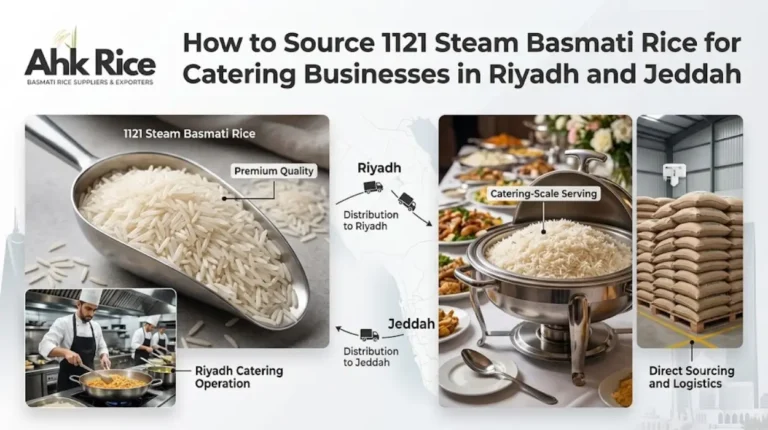
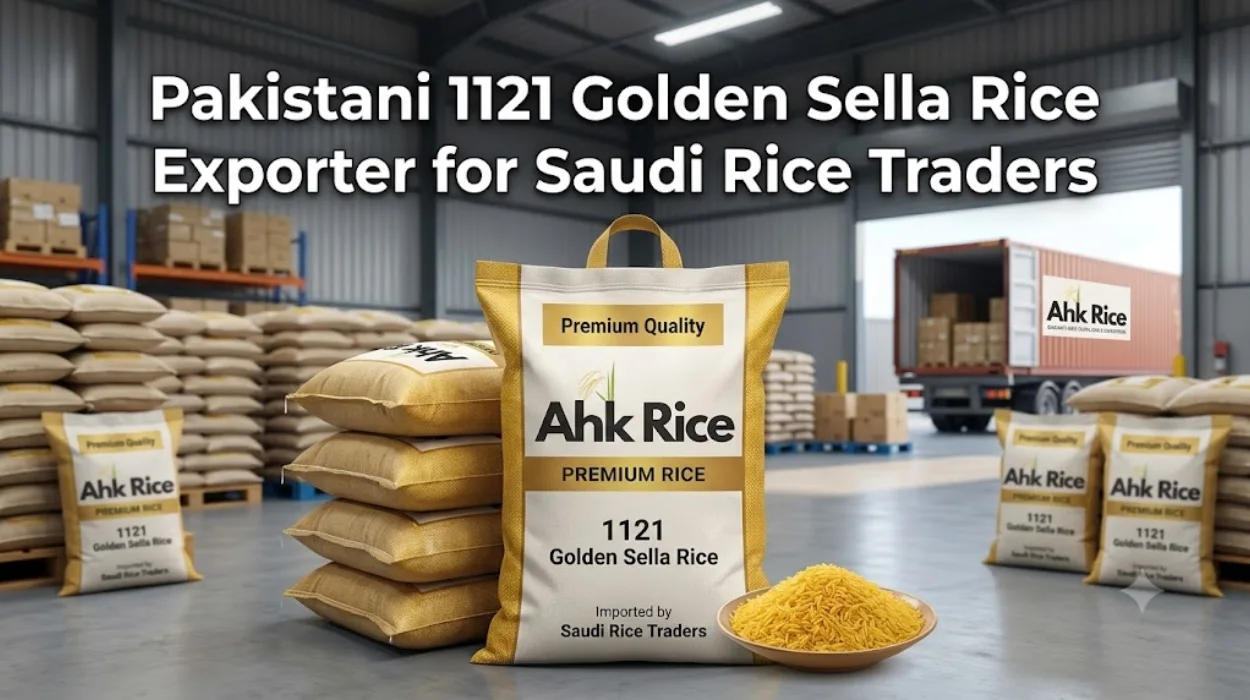
AHK Rice exports Pakistani 1121 Golden Sella Rice directly from Pakistan to Saudi Arabia through structured quality control, export documentation, and containerized shipping programs. AHK Rice focuses on supplying commercial buyers who require repeatable specifications, verified quality reports, and dependable shipment schedules.
What is the best solution for Saudi traders sourcing 1121 Golden Sella Rice?
Direct sourcing from a certified Pakistani exporter provides better specification control, consistent quality, transparent documentation, and competitive procurement costs for Saudi importers.
Saudi traders often face three common procurement challenges. Product inconsistency creates retail complaints. Delayed shipments disrupt inventory planning. Unclear specifications increase commercial risk.
Pakistani 1121 Golden Sella Rice solves these issues through a standardized export process. The grain undergoes controlled parboiling, drying, milling, grading, sorting, and packaging before shipment. This process improves grain strength and reduces breakage during transportation.
Why Saudi buyers prefer 1121 Golden Sella
1121 Golden Sella Rice delivers excellent cooking performance. The grain elongates significantly during cooking and maintains a separate texture. Saudi consumers prefer this appearance for Kabsa, Mandi, Bukhari Rice, and catering applications.
1121 Golden Sella Rice also performs well in large-scale kitchens. Catering companies value predictable cooking results because consistent output reduces food waste and operational costs.
AHK Rice supplies multiple export specifications for Saudi importers. AHK Rice customizes packaging, quality parameters, and loading plans according to buyer requirements.
Export specifications offered by AHK Rice
Specification Table
| Parameter | Export Range |
|---|---|
| Grain Length | 8.20–8.40 mm |
| Purity | 95–100% |
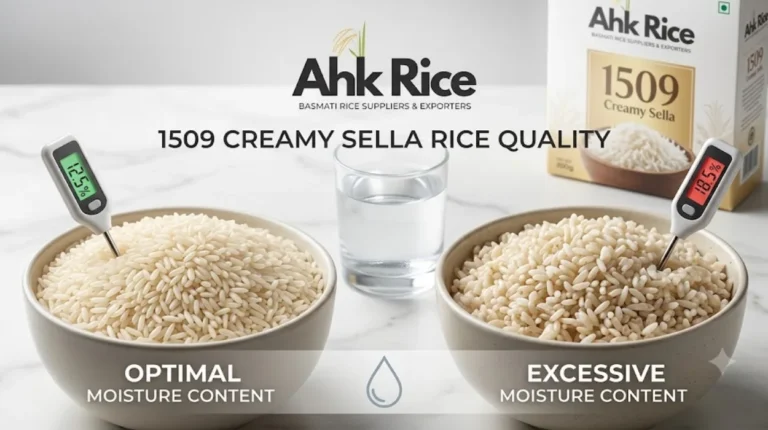
| Moisture | 12–14% |
| Broken Grains | 1–5% |
| Foreign Matter | 0.1% max |
| Average Cooking Expansion | 2.5–3 times |
| Shelf Life | 18–24 months |
AHK Rice processes rice through nine defined stages:
- Clean the paddy.
- Soak the grain.
- Parboil the rice.
- Dry the grain.
- Mill the rice.
- Polish the kernels.
- Grade by size.
- Sort by color.
- Pack for export.
These processing controls help Saudi traders receive consistent container-to-container quality.
With sourcing solutions established, the next question is what commercial results Saudi traders can expect after importing Pakistani 1121 Golden Sella Rice.
What results can Saudi rice traders expect from Pakistani 1121 Golden Sella Rice?
Higher customer acceptance, stronger cooking yield, reduced breakage, and repeat purchasing behavior are the most common commercial outcomes.
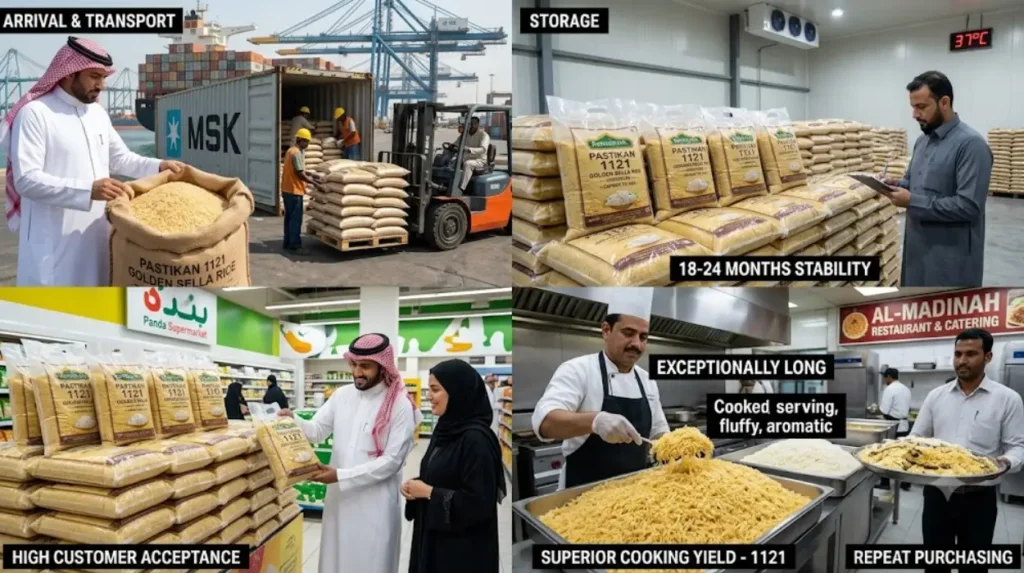
Saudi wholesalers evaluate rice performance after arrival, storage, distribution, and final consumption. Pakistani 1121 Golden Sella Rice performs well across all four stages.
Higher cooking yield
1121 Golden Sella Rice expands significantly during cooking. This characteristic increases serving output for restaurants and catering operations.
Golden Sella lasts longer than Steam rice. In a 40°C warehouse environment common across Gulf markets, Golden Sella maintains quality for approximately 18–24 months, while Steam rice typically performs best within 12–18 months under similar storage conditions. Saudi distributors benefit from greater inventory flexibility.
Better transportation durability
Parboiling strengthens the grain structure. Stronger grains reduce breakage during loading, unloading, warehousing, and inland transportation.
Lower breakage percentages improve retail presentation. Better shelf appearance supports stronger consumer confidence and repeat purchases.
Consistent retail performance
Saudi retailers prefer products with stable visual quality. Uniform grain length creates a premium appearance in transparent packaging.
AHK Rice conducts quality verification before dispatch. AHK Rice tests moisture, grain length, purity, broken percentage, and color consistency before loading containers.
AHK Rice also provides laboratory reports and shipment documentation to support import compliance.
Comparison with Indian alternatives
Many Saudi traders compare Pakistani 1121 Golden Sella with Indian Pusa varieties before making procurement decisions. Buyers seeking a detailed comparison can review this analysis of Golden Sella and Indian alternatives for Gulf trade requirements: comparison of 1121 Golden Sella and Indian Pusa rice for Saudi traders.
Saudi buyers often prioritize extra-long grain appearance and cooking elongation. Pakistani 1121 Golden Sella frequently aligns with these requirements because of its grain characteristics and market familiarity.
With expected business outcomes explained, the next question concerns pricing and the factors that influence landed cost.
What affects the price of Pakistani 1121 Golden Sella Rice exports?
Quality grade, crop season, packaging type, freight rates, container availability, and order volume directly influence export pricing.
Rice pricing changes throughout the year. Harvest conditions, export demand, currency fluctuations, and shipping costs all affect final quotations.
Major pricing factors
Cost Drivers Table
| Factor | Impact on Price |
| Grain Purity | Higher purity increases price |
| Broken Percentage | Lower breakage increases price |
| Packaging Type | Custom packaging increases cost |
| Freight Rates | Ocean shipping affects landed value |
| Crop Availability | Limited supply raises prices |
| Order Volume | Larger orders improve pricing |
Saudi traders often secure stronger pricing through container-volume purchasing. Full container procurement generally reduces unit costs compared with smaller consolidated shipments.
Packaging options available
AHK Rice supplies several export packaging formats:
- PP bags
- BOPP laminated bags
- Non-woven bags
- Paper bags
- Private label packaging
- Retail consumer packs
- Bulk export sacks
Packaging selection depends on the buyer’s distribution model. Retail distributors often prefer branded packaging. Foodservice distributors typically prefer larger commercial sacks.
Export grades available
AHK Rice offers seven processing grades:
- 1121 Golden Sella
- 1121 Steam Rice
- 1121 White Rice
- Super Kernel Basmati
- PK 386 Rice
- IRRI-6 Rice
- C9 Rice
Saudi importers commonly select 1121 Golden Sella because of its balance between appearance, durability, and market acceptance.
According to Pakistan’s rice export performance, Saudi Arabia remains an important destination for Pakistani rice shipments (source: Pakistan Bureau of Statistics, FY2024-25). Continued demand supports regular export availability from established suppliers.
With pricing considerations covered, the next decision factor is shipment planning and delivery timelines.
How long does shipping take from Pakistan to Saudi Arabia?
Most Saudi destinations receive shipments within approximately 10–25 days depending on port selection, vessel schedules, and customs processing.
Saudi traders require accurate planning for inventory management. Shipping schedules vary according to destination port and carrier routing.
Typical transit times
Saudi Shipping Table
| Destination | Estimated Transit Time |
| Jeddah Islamic Port | 12–18 days |
| Dammam Port | 15–22 days |
| Riyadh via Dammam | 18–25 days |
| Jazan Port | 15–22 days |
| Yanbu Port | 14–21 days |
Transit times may change because vessel schedules vary throughout the year. Freight forwarders provide final schedules before loading confirmation.
Export documents provided
AHK Rice supplies essential export documentation:
- Commercial Invoice
- Packing List
- Certificate of Origin
- Phytosanitary Certificate
- Fumigation Certificate
- Bill of Lading
- Quality Inspection Report
Documentation accuracy reduces customs clearance delays and supports smoother import operations.
Quality control before shipment
AHK Rice follows a structured inspection process.
- Verify grain length.
- Test moisture levels.
- Inspect purity levels.
- Check broken percentage.
- Examine color consistency.
- Confirm packaging quality.
- Approve container loading.
These controls help Saudi importers receive cargo matching agreed specifications.
With shipping timelines clarified, the final question becomes how Saudi traders can begin sourcing with confidence.
How can Saudi rice traders start importing from AHK Rice?
Requesting samples, verifying specifications, approving packaging, and confirming shipment terms creates the fastest path to reliable procurement.
Commercial rice sourcing begins with product verification. Saudi traders typically evaluate physical samples before placing container orders.
Sample process and costs
AHK Rice follows a straightforward sampling procedure.
- Request the desired specification.
- Receive available grade options.
- Approve sample preparation.
- Dispatch samples through courier service.
- Evaluate cooking performance.
- Confirm commercial requirements.
- Finalize order specifications.
Sample costs depend on destination, courier service, and quantity requested. Most Saudi sample shipments range between USD 40–120 for courier and handling charges. Larger sample quantities may require additional freight costs.
Information required for quotation
Saudi buyers should provide:
- Target grade
- Required purity
- Packaging preference
- Container quantity
- Destination port
- Private label requirements
- Delivery schedule
Providing complete specifications helps AHK Rice prepare accurate commercial quotations quickly.
Why Saudi traders work with AHK Rice
AHK Rice specializes in export-focused rice processing. AHK Rice maintains quality control systems designed for international buyers. AHK Rice provides customized packaging solutions for wholesalers and distributors. AHK Rice supports documentation requirements for commercial imports. AHK Rice manages shipment coordination from processing facilities to export loading. AHK Rice prioritizes specification consistency for repeat procurement programs.
Saudi rice traders seeking dependable supply, verified specifications, competitive export pricing, and professional shipment support can begin the procurement process by discussing requirements with AHK Rice and submitting details through the quotation form at /request-a-quote/.
Frequently Asked Questions
What makes Pakistani 1121 Golden Sella Rice popular in Saudi Arabia?
Pakistani 1121 Golden Sella Rice is popular because of its extra-long grain length, attractive golden color, and high cooking expansion. Saudi consumers prefer it for dishes such as Kabsa, Mandi, and Bukhari Rice. The grain remains separate after cooking, making it suitable for both retail and foodservice markets.
What is the minimum order quantity for importing 1121 Golden Sella Rice?
Most commercial exporters supply full container loads, with a 20-foot container being a common starting point. Some exporters also support trial orders or sample shipments before larger purchases. The final minimum quantity depends on packaging requirements and destination logistics.
How long does it take to ship Pakistani 1121 Golden Sella Rice to Saudi Arabia?
Transit times generally range from 10 to 25 days depending on the destination port and shipping schedule. Jeddah usually receives shipments faster than inland destinations. Customs clearance and vessel availability can also affect total delivery time.
What documents are required to import rice into Saudi Arabia?
Saudi importers typically require a Commercial Invoice, Packing List, Certificate of Origin, Phytosanitary Certificate, Fumigation Certificate, and Bill of Lading. Additional documents may be requested depending on regulatory requirements and importer preferences. Accurate documentation helps ensure smooth customs clearance.
How can Saudi traders verify rice quality before placing a bulk order?
Saudi traders can request product samples before confirming a commercial order. Samples allow buyers to inspect grain length, color, aroma, and cooking performance. Many exporters also provide laboratory reports and quality inspection certificates to verify specifications before shipment.