1121 Golden Sella vs Indian Pusa Rice for Saudi Traders
1121 Golden Sella Basmati is the stronger choice for most Saudi rice traders because it combines extra-long grain length, higher cooking yield, better shelf stability, and stronger acceptance in mandi, catering, and foodservice channels. Indian Pusa rice remains competitive in price-sensitive segments, but Saudi importers increasingly prioritize consistency, elongation, and storage performance. Here is why: Saudi buyers focus on cooking performance, grain appearance, and supply reliability, and 1121 Golden Sella consistently performs well across all three factors.
Saudi Arabia remains one of the largest destinations for South Asian rice exports. Importers evaluate rice based on grain length, post-cooking elongation, color consistency, moisture stability, and suitability for traditional dishes such as mandi, kabsa, and catering meals. Traders comparing Pakistani and Indian origins often begin by understanding the differences explained in our guide on how Gulf buyers evaluate rice origins in Saudi Arabia.
AHK Rice supplies Pakistani Basmati varieties from Punjab and exports to multiple international markets. Among all export grades, 1121 Golden Sella and Indian Pusa remain two of the most frequently compared specifications for Saudi importers.
What are the main differences between 1121 Golden Sella and Indian Pusa rice?
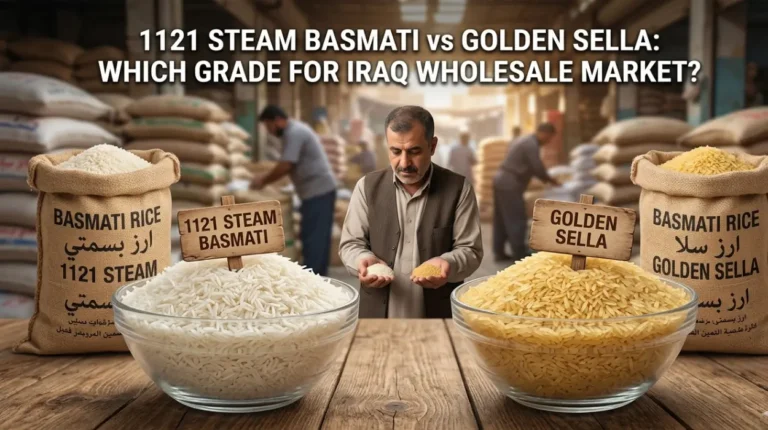
1121 Golden Sella delivers longer grains, higher elongation, stronger shelf life, and better catering performance. Indian Pusa provides competitive pricing and broad availability. Saudi traders usually select according to customer segment, storage conditions, and required cooking characteristics.
Saudi rice traders compare these products because both compete in the premium long-grain segment.
What is 1121 Golden Sella Basmati Rice?
1121 Golden Sella is a parboiled Basmati rice variety cultivated primarily in Punjab, Pakistan. Farmers cultivate the crop under irrigated conditions. Processors soak, steam, dry, mill, polish, grade, and sort the grain before export.
1121 Golden Sella is known for extra-long kernels and exceptional elongation after cooking. The grain maintains shape during extended holding periods, making it suitable for restaurants, catering companies, and mandi kitchens.
What is Indian Pusa Rice?
Indian Pusa rice refers to rice varieties developed through agricultural breeding programs in India. Several Pusa variants exist in export markets. Many Saudi buyers encounter Pusa rice as a long-grain alternative to traditional Basmati.
Pusa varieties generally offer good cooking performance and attractive pricing. However, grain elongation and aroma characteristics vary significantly between grades and origins.
Specification Comparison
| Attribute | Pakistani 1121 Golden Sella | Indian Pusa Rice |
|---|---|---|
| Grain Length | 8.30–8.50 mm | 7.00–8.00 mm |
| Grain Type | Extra-long Basmati | Long grain |
| Processing Method | Parboiled (Golden Sella) | Varies by grade |
| Cooked Elongation | Up to 2.5x | 1.8x–2.1x |
| Aroma Profile | Natural Basmati aroma | Mild to moderate aroma |
| Shelf Life | 18–24 months | 12–18 months |
| Saudi Market Preference | Mandi, catering, premium retail | Budget and mixed segments |
1121 Golden Sella gains preference because Saudi foodservice operators value grain presentation after cooking. Long grains create visual appeal in large mandi trays and banquet servings.
Indian Pusa remains relevant because some wholesalers prioritize cost efficiency over maximum elongation.
With the key differences established, the next question is which rice solutions are available for different Saudi market segments.
What rice solutions are available for Saudi traders?
Saudi traders can choose premium Basmati, value-focused long grain, catering grades, retail grades, and private-label specifications. The best solution depends on customer expectations, target pricing, storage duration, and distribution channel requirements.
Rice procurement decisions differ across Saudi Arabia because consumer preferences vary by region and distribution channel.
Premium Mandi and Kabsa Segment
1121 Golden Sella dominates the premium mandi segment because it delivers long cooked grains and excellent plate presentation.
Restaurants serving traditional Saudi dishes often prefer Golden Sella because grains remain separate after cooking. The product performs consistently in large-volume kitchens.
Golden Sella lasts longer than Steam rice. In a 40°C Gulf warehouse, Golden Sella can maintain quality for up to 24 months when stored correctly. Steam rice typically requires faster inventory turnover. For catering buyers managing large seasonal inventories, Golden Sella becomes the preferred specification.
Catering and Institutional Segment
Large catering companies prioritize consistency.
1121 Golden Sella provides stable moisture levels and predictable cooking results. Foodservice operators value predictable yield because it improves portion control.
A catering company preparing 10,000 meals daily can reduce cooking variability by selecting a uniform graded specification.
Retail Segment
Retail buyers often balance quality and pricing.
Indian Pusa can compete effectively in supermarkets because price-sensitive consumers may prioritize affordability. Premium retailers usually stock higher-end Basmati products alongside lower-priced alternatives.
Private Label Segment
Private-label importers frequently request customized specifications.
AHK Rice offers custom packaging, grading, sorting, labeling, and export documentation. Saudi distributors often use private labels to strengthen local market positioning.
With available solutions identified, the next question becomes how these approaches compare financially and operationally.
How do 1121 Golden Sella and Indian Pusa compare on value and cost?
1121 Golden Sella usually commands a higher price per metric ton, but stronger cooking yield and premium positioning often generate better overall value. Indian Pusa offers lower procurement costs and serves price-sensitive channels effectively.
Price remains one of the most important purchasing factors for importers.
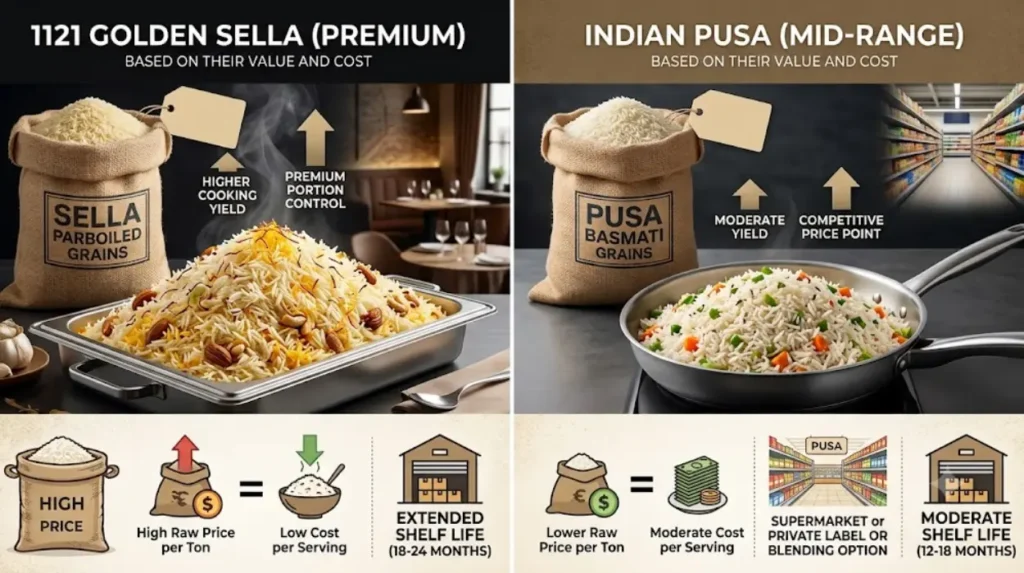
Price per Metric Ton Comparison
Export prices fluctuate according to harvest volumes, currency movements, freight costs, and market demand.
| Cost Factor | 1121 Golden Sella | Indian Pusa |
|---|---|---|
| Average Export Position | Premium | Mid-range |
| Relative Price Level | Higher | Lower |
| Cooking Yield | Higher | Moderate |
| Foodservice Demand | Very High | Moderate |
| Premium Retail Acceptance | High | Medium |
Higher pricing does not automatically mean higher cost per serving.
1121 Golden Sella often produces greater cooked volume. Restaurants can serve more portions from the same raw weight. This advantage becomes significant for catering operations.
Storage and Shelf-Life Comparison
Shelf stability directly affects inventory management.
Golden Sella undergoes parboiling. This process strengthens the grain structure and improves storage performance.
| Shelf-Life Factor | 1121 Golden Sella | Indian Pusa |
|---|---|---|
| Recommended Storage | 18–24 months | 12–18 months |
| Heat Resistance | High | Moderate |
| Breakage During Storage | Lower | Higher |
| Inventory Flexibility | Greater | Moderate |
Golden Sella maintains quality longer than many standard long-grain alternatives. Saudi importers carrying large inventories benefit from extended storage flexibility.
With cost and value understood, the next question becomes which product performs best in specific Saudi regions.
Which rice works best for different Saudi market regions?
Western Saudi Arabia generally favors premium Basmati grades for hospitality and pilgrimage demand, while central and value-driven markets often purchase mixed specifications according to budget and channel requirements.
Regional demand patterns influence purchasing decisions.
Western Region: Makkah and Madinah Markets
Pilgrimage-related demand creates substantial consumption volume.
Hotels, caterers, and restaurants frequently choose 1121 Golden Sella because grain presentation remains important for large communal meals.
Premium Basmati enjoys strong recognition among hospitality buyers in these cities.
Central Region: Riyadh Market
Riyadh supports both premium and value-oriented channels.
Large wholesalers often stock multiple specifications. Premium retailers emphasize Basmati performance, while budget channels may incorporate alternative long-grain products.
Eastern Region
Industrial catering and workforce accommodation programs create demand for reliable foodservice rice.
Golden Sella remains popular because cooked grains remain separate during mass catering operations.
Regional preferences explain market behavior. The next step is evaluating the practical advantages and disadvantages of each option.
What are the pros and cons of each option?
1121 Golden Sella offers superior grain performance and market acceptance, while Indian Pusa provides cost advantages and wider pricing flexibility. The correct choice depends on customer expectations and commercial objectives.
Pros of 1121 Golden Sella
- Longer grain appearance
- Higher cooked elongation
- Better shelf stability
- Strong mandi suitability
- Premium retail positioning
A Saudi catering operator serving wedding events benefits from longer grain presentation. Guests immediately notice rice quality during service.
Cons of 1121 Golden Sella
- Higher procurement cost
- Greater working capital requirement
- Premium positioning may not suit budget channels
Pros of Indian Pusa
- Competitive pricing
- Broad market accessibility
- Suitable for value-focused distribution
A wholesaler targeting low-cost retail segments may achieve faster turnover with lower-priced inventory.
Cons of Indian Pusa
- Lower elongation performance
- Less premium perception
- Variable specifications across suppliers
Understanding advantages and disadvantages leads naturally to the final decision framework.
How should Saudi traders choose between 1121 Golden Sella and Indian Pusa?
Choose 1121 Golden Sella for premium foodservice, hospitality, and long-term inventory strategies. Choose Indian Pusa for budget-focused distribution, cost-sensitive retail channels, and lower entry-price positioning.
Decision Framework
| Decision Factor | Choose 1121 Golden Sella | Choose Indian Pusa |
|---|---|---|
| Premium Restaurant Supply | ✅ | ❌ |
| Mandi and Kabsa Service | ✅ | ❌ |
| Long-Term Storage | ✅ | ❌ |
| Budget Retail Segment | ❌ | ✅ |
| Lowest Initial Purchase Cost | ❌ | ✅ |
Saudi traders should evaluate total business value rather than purchase price alone.
Cooking yield influences profitability. Shelf life influences inventory risk. Consumer perception influences repeat orders. Grain presentation influences restaurant acceptance.
Many importers discover that higher-performing rice creates stronger customer retention and fewer quality complaints.
Importers ready to evaluate specifications, packaging options, and export processes can review detailed information about sourcing premium Pakistani Golden Sella grades from a specialized export partner through our guide for Saudi buyers selecting export-ready Basmati suppliers.
Conclusion
1121 Golden Sella and Indian Pusa both serve important roles in the Saudi rice market. The strongest choice depends on commercial objectives rather than price alone.
1121 Golden Sella leads in grain length, elongation, storage stability, mandi suitability, and premium market acceptance. Indian Pusa remains valuable for traders serving budget-conscious channels.
Saudi traders focused on hospitality, catering, premium retail, and long-term inventory management typically achieve stronger market positioning with 1121 Golden Sella. Traders targeting entry-level retail pricing may benefit from Indian Pusa.
The most effective procurement strategy begins with matching rice specifications to customer expectations, storage conditions, and distribution channels.
Frequently Asked Questions
Is 1121 Golden Sella better than Indian Pusa rice for Saudi mandi restaurants?
1121 Golden Sella is generally preferred for Saudi mandi restaurants because it offers longer grains, better elongation after cooking, and stronger grain separation. These qualities improve presentation and dining experience, which are important in the hospitality and catering sectors.
Why do Saudi importers choose 1121 Golden Sella rice?
Saudi importers choose 1121 Golden Sella because it provides consistent cooking performance, extended shelf life, and premium appearance. The rice performs well in hot storage environments and is widely accepted by restaurants, wholesalers, and retail distributors.
What is the difference between 1121 Golden Sella and Indian Pusa rice?
1121 Golden Sella is an extra-long grain Basmati rice processed through a parboiling method that improves grain strength and elongation. Indian Pusa rice is a long-grain variety that is usually more affordable but offers lower elongation and a less premium market perception.
Which rice offers better value for Saudi foodservice buyers?
1121 Golden Sella often delivers better overall value for foodservice buyers because it produces a higher cooking yield and maintains grain quality during large-scale preparation. Although the purchase price is higher, the cost per served portion can be more competitive.
How long can 1121 Golden Sella rice be stored?
1121 Golden Sella rice can typically be stored for 18–24 months under proper warehouse conditions. Its parboiled structure helps maintain grain integrity and reduces quality loss during long-term storage and export distribution.