Pakistani Basmati export trends and the US market
Pakistani Basmati rice competes in the USA through premium grain quality, aromatic varieties, ethnic grocery demand and dependable wholesale supply. Importers evaluate more than the purchase price. Grain length, cooking performance, food safety documentation, packaging and shipment consistency determine supplier selection.
For buyers unfamiliar with origin, varieties and processing, our educational guide, What Is Pakistani Basmati Rice and How Is It Different from Indian Basmati?, provides useful background before comparing commercial supply options.
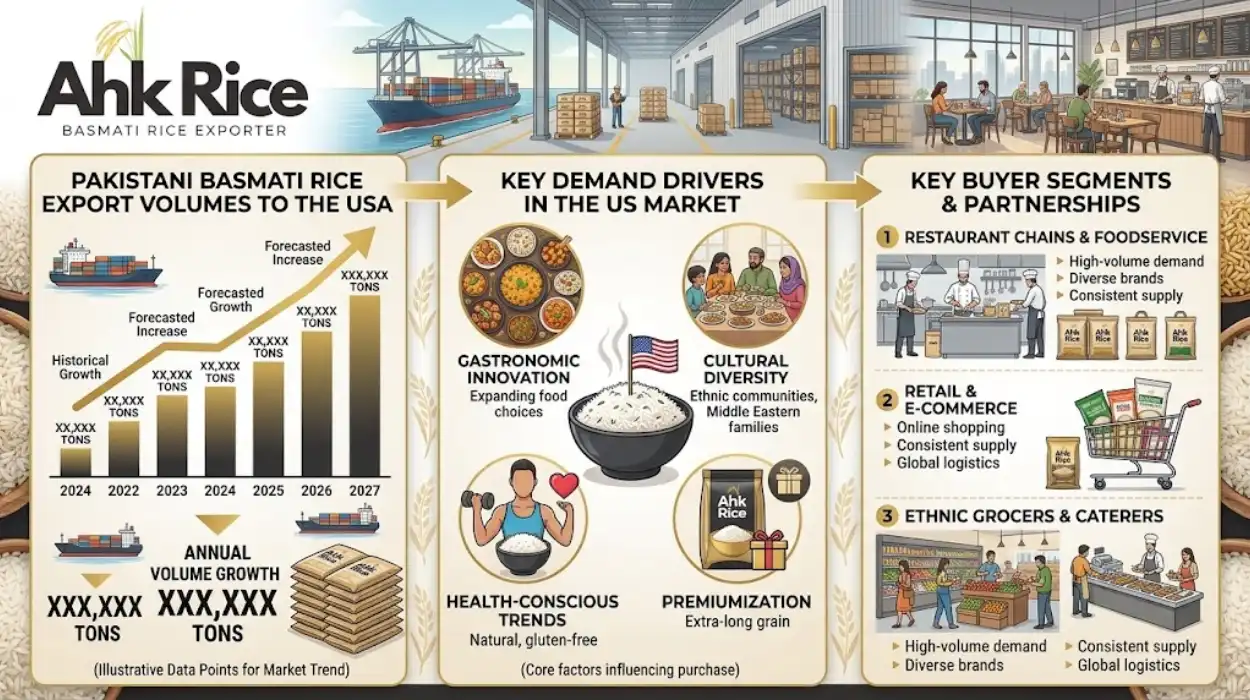
The US market offers opportunities for Pakistani exporters, but the trade figures require careful interpretation. World Bank WITS data records approximately 25,364 tonnes of US imports of semi-milled or wholly milled rice from Pakistan in 2024, valued at US$42.49 million. In 2025, the recorded quantity was approximately 22,875 tonnes, valued at US$33.07 million. These figures cover all rice classified under HS 100630, not Basmati alone. Data+1
Pakistan’s wider export position also matters. REAP records 808,643 MT of Basmati exports during FY2024–25, worth approximately US$830.57 million, with an average export value of US$1,027.11 per MT. This demonstrates the scale of Pakistan’s Basmati export industry, although it does not represent the US-specific market price. reap.com.pk
What drives demand for Pakistani Basmati rice in the USA?
Demand comes from ethnic grocery retail, restaurants, foodservice distributors and private-label brands. These buyers require different combinations of aroma, grain length, cooking performance, packaging, price and regulatory documentation. Their purchasing decisions depend on the intended customer and distribution channel.
Several commercial factors support Pakistani Basmati demand:
- South Asian communities: Pakistani, Indian and other South Asian consumers maintain demand for traditional Basmati rice used in biryani, pulao and everyday meals.
- Middle Eastern food consumption: Restaurants and grocery distributors serving Middle Eastern communities require aromatic rice for rice-based dishes and catering.
- Premium grocery retail: Long-grain appearance, aroma, origin information and cooking consistency support premium shelf positioning.
- Restaurant expansion: Biryani restaurants, caterers and commercial kitchens require repeatable cooking results and dependable bulk quantities.
- Private-label opportunities: Importers purchase bulk rice and sell it under their own retail brands using customised packaging.
These segments create different buying requirements. A premium grocery brand prioritises presentation and product differentiation. A restaurant distributor prioritises consistent cooking results, bulk availability and predictable landed costs.
How large are Pakistani rice exports to the USA?
US trade statistics show that Pakistan supplies a measurable share of American milled-rice imports, although the published HS 100630 category combines Basmati and non-Basmati rice. Importers must separate total rice trade from Basmati-specific demand when evaluating market opportunities.
The following comparison uses World Bank WITS figures for US imports from Pakistan.
| Trade indicator | 2024 | 2025 |
|---|---|---|
| Imported milled rice quantity | 25,364 MT | 22,875 MT |
| Import value | US$42.49m | US$33.07m |
| Average customs unit value | US$1,675/MT | US$1,446/MT |
| Quantity change | Baseline | -9.8% |
| Value change | Baseline | -22.2% |
| Product classification | HS 100630 | HS 100630 |
| Product coverage | Milled rice | Milled rice |
Average customs unit values are calculated from reported trade value divided by quantity. They are not Basmati-only selling prices or current supplier quotations. Figures are rounded. Data+1
The figures show a decline in both imported quantity and value between 2024 and 2025. They do not establish a decline in Basmati consumption because the classification includes other milled rice varieties. A Basmati-specific assessment requires more detailed product and shipment-level data.
Which US buyer segments purchase Pakistani Basmati rice?
The main buyer segments include ethnic grocery importers, mainstream supermarket suppliers, restaurant distributors, foodservice operators and private-label businesses. Each segment purchases according to different volume requirements, retail positioning, packaging formats and quality specifications.
| Buyer segment | Preferred rice characteristics | Typical purchasing priority |
|---|---|---|
| South Asian grocery importers | 1121, Super Kernel | Aroma, grain length and traditional cooking quality |
| Middle Eastern distributors | 1121 Sella, Golden Sella | Firm cooked grains and catering performance |
| Premium supermarkets | 1121 White, Super Kernel | Appearance, purity and premium positioning |
| Restaurants and caterers | 1121 Sella, 1509 Sella | Bulk availability and cooking consistency |
| Private-label brands | 1121, Super Kernel, 1509 | Custom packaging, specifications and repeat supply |
Ethnic grocery importers
Ethnic grocery importers serve established South Asian and Middle Eastern consumer groups. Their customers recognise Basmati varieties and compare aroma, grain length, cooking texture and origin.
These importers frequently purchase 5 kg, 10 kg and 20 lb retail formats. They also require wholesale bags for independent grocery stores. Pakistani 1121 and Super Kernel varieties support premium positioning because of their characteristic aroma and elongated cooked grains.
Mainstream supermarket distributors
Mainstream grocery distributors focus on product consistency, packaging presentation, regulatory compliance and retail margins. Their purchasing teams evaluate supplier documentation before approving a new imported food product.
They require accurate ingredient declarations, Nutrition Facts, country-of-origin information and appropriate packaging. Suppliers must also coordinate FDA-related requirements and importer responsibilities under the Foreign Supplier Verification Program (FSVP).
Restaurant and foodservice buyers
Restaurant groups and catering businesses purchase rice according to cooking performance and cost per prepared serving. Their requirements differ from retail buyers because they prepare larger quantities and need repeatable results.
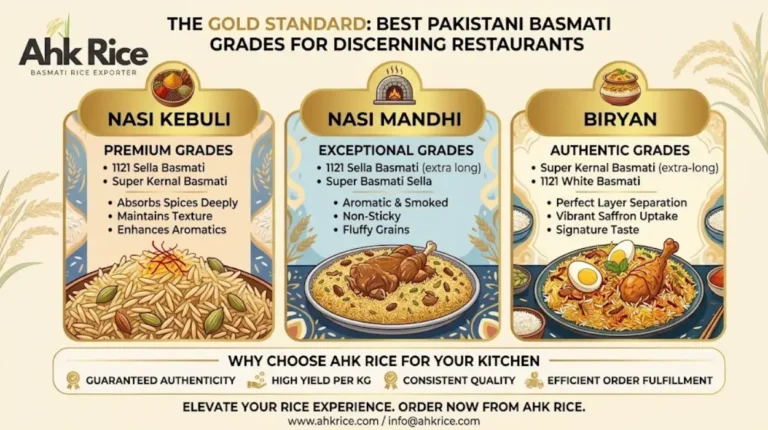
1121 Sella suits biryani and catering operations requiring separate, elongated grains. 1509 Sella offers an alternative for bulk buyers evaluating grain presentation, availability and purchase economics. Golden Sella also suits kitchens that prioritise firm texture and holding performance.
Private-label importers
Private-label importers purchase rice from exporters and distribute it under their own brands. They need control over specifications, packaging design, labelling, product consistency and reorder schedules.
Their supplier evaluation includes sample approval, production specifications, packaging confirmation and shipment inspection. This model gives established distributors greater control over brand positioning without operating their own rice processing facilities.
What Pakistani Basmati varieties suit different US market requirements?
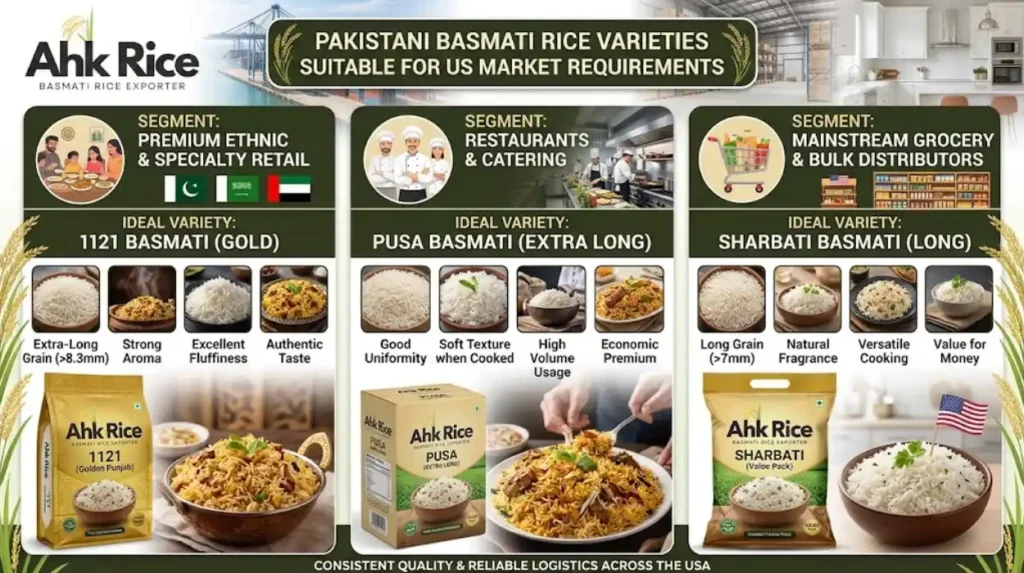
1121, Super Kernel, and 1509 serve different commercial purposes. 1121 targets premium elongated-grain applications, Super Kernel offers aromatic traditional Basmati positioning, and 1509 provides a high-yield alternative for price-conscious wholesale and foodservice buyers.
Importers can compare these Pakistani Basmati rice varieties and export supply options according to their customer base and product specifications.
| Specification | 1121 Basmati | Super Kernel Basmati | 1509 Basmati |
|---|---|---|---|
| Commercial positioning | Premium long grain | Aromatic premium Basmati | Value-oriented long grain |
| Raw grain length | Around 8.0–8.4 mm | Around 7.0–7.5 mm | Around 8.1–8.4 mm |
| Aroma | Characteristic Basmati aroma | Strong traditional aroma | Characteristic Basmati aroma |
| White processing | Available | Available | Available |
| Steam processing | Available | Available | Available |
| Sella processing | Available | Available | Available |
| Main buyer application | Premium retail and biryani | Ethnic retail and traditional dishes | Bulk retail and foodservice |
These are indicative commercial specifications, not guaranteed shipment specifications. Buyers should approve the final grade, moisture, broken percentage, crop year and processing type through a commercial sample and Certificate of Analysis (COA).
1121 Basmati: Premium retail and restaurant demand
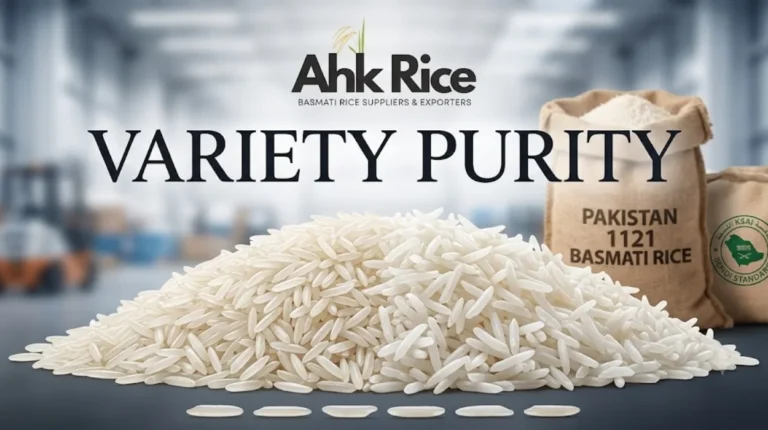
1121 is recognised for its long raw grain and substantial cooked-grain elongation. It suits premium grocery brands, biryani restaurants and distributors serving customers who value grain appearance.
1121 White supports premium retail presentation. 1121 Steam provides a processing option for buyers seeking a particular combination of grain appearance and cooking performance. 1121 Golden Sella suits foodservice operations requiring firm, separate cooked grains.
Super Kernel: Traditional aromatic positioning
Super Kernel is a Pakistani Basmati variety associated with traditional aroma and cooking characteristics. It appeals to South Asian grocery distributors and retailers targeting consumers familiar with Pakistani rice.
Its commercial value depends on purity, aroma, controlled moisture and low broken percentages. Importers should evaluate the actual crop and approved sample rather than selecting a grade solely by variety name.
1509 Basmati: Bulk purchasing efficiency
1509 offers a long-grain option for distributors balancing product presentation and procurement economics. Its shorter growing period and yield characteristics support its position in commercial rice sourcing.
Restaurants, caterers and wholesale distributors can evaluate 1509 Steam and Sella according to their menu requirements, storage arrangements and cooking procedures.
How do East Coast and West Coast US markets compare?
East Coast and West Coast buyers source similar Pakistani Basmati varieties, but their logistics costs, distribution networks and replenishment requirements differ. East Coast importers prioritise access to major metropolitan distribution markets, while West Coast buyers evaluate port access and regional warehouse coverage.
The two regions are useful commercial planning categories, not separate Basmati quality markets.
| Comparison factor | East Coast | West Coast |
|---|---|---|
| Major entry ports | New York/New Jersey | Los Angeles/Long Beach |
| Important buyer channels | Ethnic wholesalers, retail distributors, restaurants | Grocery importers, national distributors, foodservice |
| Grade preferences | 1121, Super Kernel, 1121 Sella | 1121, Super Kernel, 1509 |
| Indicative FOB benchmark | US$1,135–1,205/MT | US$1,135–1,205/MT |
| Landed-price consideration | Ocean freight, port and inland delivery | Ocean freight, port and inland delivery |
| Shelf-life planning | Generally 12–24 months for properly stored white rice | Generally 12–24 months for properly stored white rice |
Important pricing distinction: The FOB benchmark is a reference range for Pakistani Basmati export offers, not a verified regional quotation or landed US price. The same FOB product does not acquire a different export price merely because it is destined for New York or Los Angeles. Freight, insurance, port charges, customs-related costs and inland transportation create the regional difference. HAS Rice Pakistan+2
East Coast: New York and New Jersey distribution
The New York metropolitan market provides access to established grocery wholesalers, ethnic retail networks, restaurant distributors and foodservice customers.
Importers targeting these channels can prioritise 1121 White, Super Kernel and 1121 Golden Sella. Premium retail programmes benefit from attractive grain appearance, consistent packaging and reliable replenishment.
Buyers should calculate landed cost using the selected port, shipment quantity, freight quotation and final warehouse destination.
West Coast: California distribution
Los Angeles and Long Beach provide important entry points for importers distributing rice across California and other western states.
West Coast buyers can evaluate 1121 and Super Kernel for premium grocery channels and 1509 for wholesale and foodservice applications. California retailers also require careful attention to applicable food labelling and chemical safety requirements, including Proposition 65 where relevant.
Both regions benefit from the same essential supply controls: approved specifications, accurate documentation, suitable packaging and shipment-to-sample consistency.
How do Pakistani Basmati prices and shelf life compare across US markets?
Pakistani Basmati pricing depends on variety, grade, crop year, processing, packaging and shipment terms. Shelf life depends primarily on rice type, moisture, packaging and storage conditions, rather than whether the product enters through an East Coast or West Coast port.
An indicative Pakistani FOB Karachi reference of US$1,135–1,205 per MT provides a starting point for evaluating premium Basmati procurement. The actual quotation must be dated and confirmed against the selected variety and grade.
| Cost or storage factor | East Coast | West Coast |
|---|---|---|
| Export benchmark | Same FOB reference | Same FOB reference |
| Ocean freight | Route and vessel dependent | Route and vessel dependent |
| Port and handling | New York/New Jersey charges | Los Angeles/Long Beach charges |
| Inland distribution | Destination dependent | Destination dependent |
| White Basmati shelf life | Approximately 12–24 months | Approximately 12–24 months |
White Basmati generally carries a 12–24-month shelf-life planning range under suitable storage conditions. Actual declared shelf life must follow the product specification, packaging validation and applicable requirements.
Rice should remain in clean, dry, pest-controlled storage away from direct sunlight and moisture. Importers should also assess packaging integrity and warehouse conditions throughout distribution.
Golden Sella and other parboiled varieties require separate product-specific shelf-life validation. Buyers should not automatically apply a white-rice shelf-life declaration to every processed product.
What are the available Pakistani Basmati sourcing solutions?
US importers can source through spot purchases, direct exporter contracts or scheduled supply arrangements. Spot purchasing provides immediate price flexibility, while forward contracts and planned shipments improve procurement visibility for businesses requiring consistent inventory throughout the year.
1. Spot purchasing
Spot purchasing involves buying rice at an agreed current market price for a specific shipment.
It suits importers with flexible inventory requirements and buyers entering the Pakistani Basmati market for the first time.
Advantages:
- Flexibility to select available varieties.
- Opportunity to compare current supplier offers.
- Lower long-term purchasing commitments.
Disadvantages:
- Exposure to changing export prices.
- Uncertain availability of the preferred grade.
- Limited protection against future supply disruptions.
For example, a distributor purchasing one container for a seasonal promotion can use spot sourcing to evaluate customer demand before committing to additional inventory.
2. Direct exporter sourcing
Direct sourcing establishes a commercial relationship between the importer and the Pakistani exporter. The buyer agrees on specifications, quantity, packing and shipping arrangements.
This approach improves communication about processing, samples, documentation and shipment preparation.
Advantages:
- Better visibility into product specifications.
- Direct coordination of commercial samples.
- Greater control over customised packaging.
- Clearer communication about export documentation.
Disadvantages:
- Requires supplier verification.
- Importers must manage freight and import responsibilities.
- Production and shipment schedules require coordination.
3. Forward contracts
A forward contract establishes agreed commercial terms for a future supply period. These terms can include quantity, variety, price or pricing formula, delivery schedule and quality specifications.
This approach suits importers with predictable sales and recurring wholesale demand.
Advantages:
- Better procurement planning.
- Defined supply schedules.
- Improved inventory forecasting.
- Greater visibility into future purchasing commitments.
Disadvantages:
- Requires accurate demand forecasting.
- Contract terms must address crop and market changes.
- Buyers and exporters need clear procedures for quality disputes and delivery changes.
Forward contracts work best when both parties define tolerances, shipment windows, payment conditions and remedies before signing.
Which sourcing method works best for different US buyers?
The best sourcing method depends on purchasing frequency, inventory capacity, customer demand and tolerance for price changes. Spot buying suits occasional orders, direct sourcing supports specification control, and forward contracts suit established distributors requiring scheduled annual supply.
The following decision framework helps importers select an appropriate procurement method.
| Decision factor | Spot purchasing | Direct exporter sourcing | Forward contracts |
|---|---|---|---|
| Purchasing frequency | Occasional | Regular | Recurring |
| Price planning | Short-term | Shipment-based | Agreed future terms |
| Supply visibility | Limited | Moderate to high | High when properly contracted |
| Custom specifications | Subject to availability | Flexible | Agreed in advance |
| Best buyer | New or occasional importer | Established wholesaler | Large distributors and chains |
Pros and cons with practical examples
A new importer ordering one 20-foot container can begin with a spot purchase. This limits long-term commitments while providing an opportunity to test product quality and customer acceptance.
An established ethnic grocery distributor benefits from direct exporter sourcing. It can specify 1121 White, Super Kernel or Golden Sella, approve samples and establish repeat purchasing arrangements.
A national food distributor with predictable monthly sales can evaluate forward contracts. Scheduled shipments help coordinate warehouse inventory and customer replenishment. The agreement must define pricing adjustments, shipment windows and quality tolerances.
No single method suits every importer. The commercial objective is to balance price competitiveness with product consistency and reliable availability.
What should US importers check before selecting a Pakistani Basmati exporter?
Importers should evaluate product quality, supplier capability, regulatory documentation, commercial terms and shipment controls before confirming an order. These factors determine whether the supplier can deliver rice that matches the approved sample and meets the buyer’s distribution requirements.
Five essential checks support supplier selection:
- Product specifications: Confirm raw grain length, moisture, broken percentage, aroma, processing type and crop year.
- Sample approval: Test cooking performance, grain separation, appearance and aroma before approving bulk production.
- Food safety documentation: Review relevant HACCP or ISO 22000 systems, laboratory reports and applicable compliance documentation.
- Export capability: Confirm processing, grading, Sortex facilities, packaging, container loading and export paperwork.
- Commercial terms: Agree on Incoterms, payment method, shipment schedule, inspection procedures and quality dispute resolution.
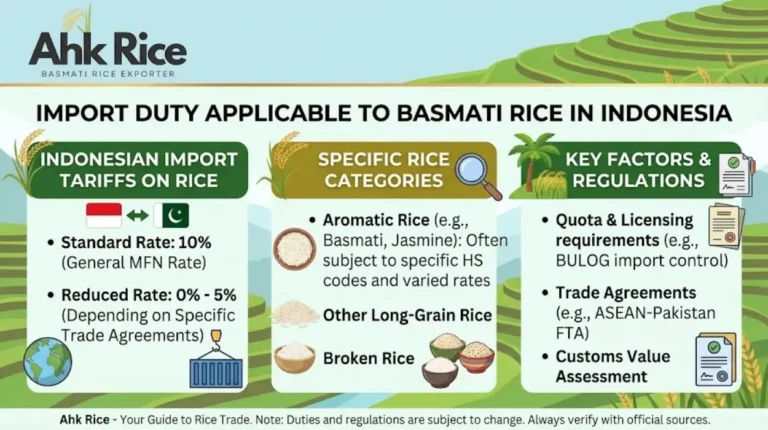
US importers must also understand their regulatory responsibilities. FDA Prior Notice and applicable facility registration requirements form part of the import process. FSVP requires the US importer to verify that foreign food suppliers meet applicable US food safety requirements. Product labelling and customs classification also require attention.
How does AHK Rice support Pakistani Basmati supply to US buyers?
AHK Rice supports international buyers through Punjab-origin Basmati sourcing, processing, grading, customised packaging and export coordination. Its 1121, Super Kernel and 1509 varieties provide options for retail distributors, wholesale importers and commercial foodservice buyers.
AHK Rice is a Pakistani Basmati rice exporter based in Punjab, supplying customers in more than 15 countries. Its export workflow covers sourcing, grading, processing, packaging and shipment preparation.
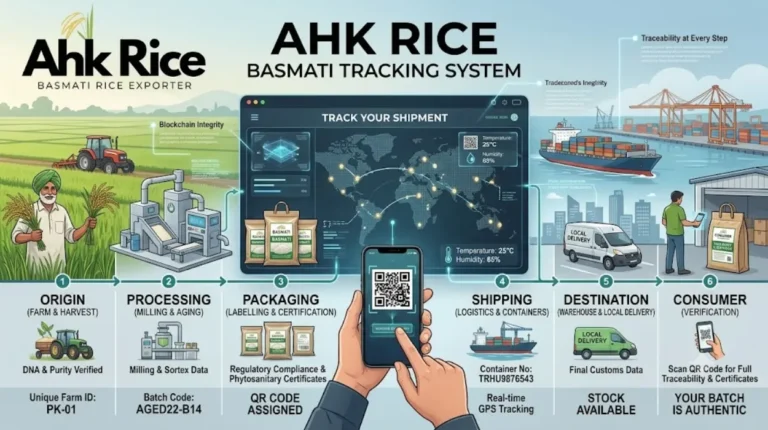
The commercial process follows several stages:
- Product selection: Buyers identify the required variety, processing type and grade.
- Sample evaluation: Commercial samples allow importers to assess aroma, appearance and cooking performance.
- Specification approval: Both parties agree on grain length, moisture, broken percentage, packing and COA requirements.
- Order confirmation: Quantity, price, payment terms and shipment schedule are established.
- Processing and inspection: Rice undergoes the agreed processing and quality checks.
- Export documentation: The shipment is prepared with applicable commercial and regulatory documents.
For recurring US orders, forward supply agreements can establish planned quantities and shipment windows. Buyers should negotiate clear provisions for crop availability, pricing reviews, specification tolerances and delivery changes.
This approach connects product approval with procurement planning. It also gives distributors a clearer framework for managing inventory across multiple retail and foodservice customers.
Frequently asked questions about Pakistani Basmati exports to the USA
How much Pakistani rice does the USA import?
The USA imported approximately 25,364 MT of Pakistani semi-milled or wholly milled rice in 2024 and 22,875 MT in 2025 under HS 100630. These figures include Basmati and non-Basmati rice, so they do not represent Basmati-specific imports. Data+1
Which Pakistani Basmati variety is popular in the USA?
1121 and Super Kernel suit premium retail and traditional South Asian food applications. 1121 Sella and Golden Sella serve biryani restaurants and catering businesses, while 1509 provides another option for bulk and wholesale buyers.
What is the price of Pakistani Basmati rice per MT?
Indicative Pakistani FOB Karachi references for premium Basmati range around US$1,135–1,205 per MT. Actual prices depend on variety, grade, crop year, processing, packing, order quantity and shipment terms. Freight and destination expenses determine the final landed cost.
How long does Pakistani Basmati rice last?
Properly stored white Basmati generally has a planning shelf life of approximately 12–24 months. The exact declaration depends on product specifications, packaging and storage validation.
Which US ports receive Pakistani Basmati rice?
New York/New Jersey and Los Angeles/Long Beach are important entry points for importers. Port selection depends on the buyer’s warehouse location, shipping quotation, vessel schedule and inland transportation costs.
What documents are required to import Pakistani Basmati rice into the USA?
Importers generally coordinate commercial invoices, packing lists, bills of lading, applicable certificates of origin and phytosanitary documentation. FDA Prior Notice and applicable FSVP requirements must also be addressed. Exact requirements depend on the product and shipment circumstances.
Are forward contracts suitable for Basmati rice importers?
Forward contracts suit established importers with recurring demand and reliable sales forecasts. They establish future supply terms, quantities and delivery schedules while defining how pricing, quality and crop availability changes are managed.