Rice Import Regulations and Customs Requirements in Iraq for 2026
Rice import regulations in Iraq for 2026 define the legal, quality, safety, and documentation requirements set by the government to control rice imports, ensure food safety, regulate tariffs, and maintain market stability through inspection, certification, and customs clearance procedures.
Rice import regulations in Iraq are a structured system governed by multiple authorities. These rules ensure that imported rice meets defined safety, quality, and labeling standards before entering the domestic market.
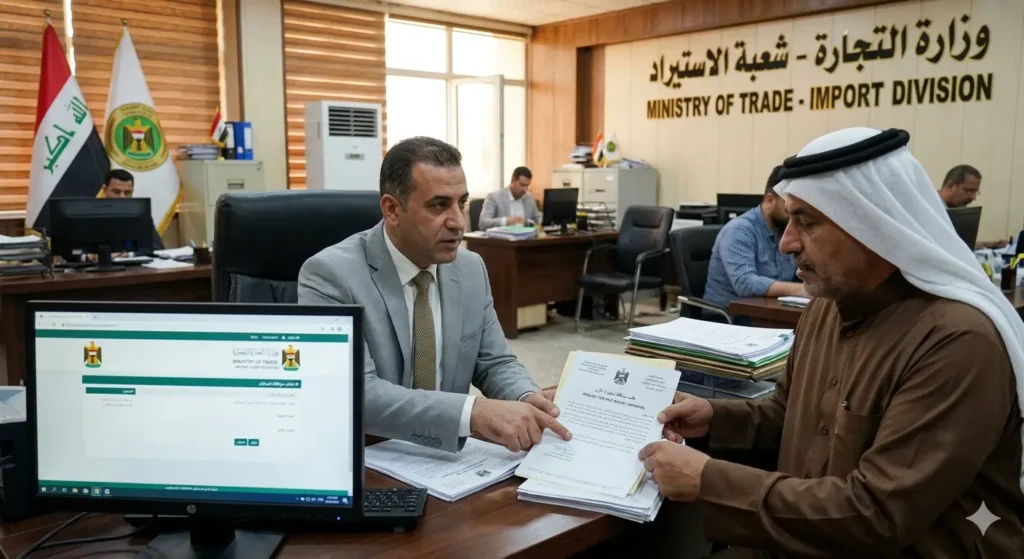
The primary regulatory authority is the Ministry of Trade Iraq. This institution controls import licensing, supplier approvals, and procurement processes for both private and public sector imports.
Rice is classified as a staple commodity. Because of this classification, stricter monitoring applies. Authorities focus on contamination risks, origin verification, and price stability. Every shipment must comply with pre-shipment and post-arrival inspections.
In 2026, regulations emphasize traceability. Importers must clearly identify the origin country, processing method, and packaging details. This requirement ensures transparency across the supply chain.
How do rice import regulations work in Iraq?
Rice import regulations in Iraq work through a step-by-step process involving import approval, supplier registration, shipment inspection, certification verification, customs clearance, and post-import quality checks conducted by government agencies before market distribution.
The process begins with import approval. Importers must obtain permission from the Ministry of Trade. This approval confirms that the importer is registered and authorized to bring rice into Iraq.
Import Approval Process
Importers submit detailed documentation. This includes supplier details, product specifications, and contract agreements. Authorities review these documents to ensure compliance with national food policies.
Supplier Registration
Foreign exporters must meet Iraqi standards. Approved suppliers are listed in official databases. This ensures that only verified producers can export rice to Iraq.
Pre-Shipment Inspection
Before shipment, rice undergoes inspection in the exporting country. Independent inspection agencies verify quality, weight, and packaging standards. Examples include SGS inspections and Bureau Veritas assessments.
Certification Verification
Shipments must include specific certificates. These documents prove compliance with Iraqi standards. Customs authorities check these certificates during clearance.
Customs Clearance
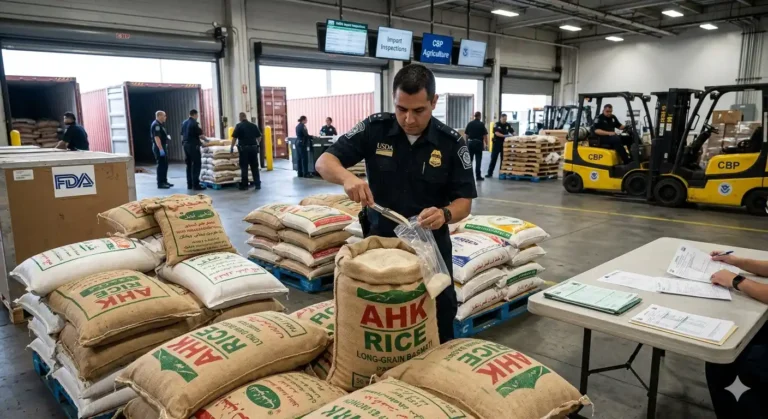
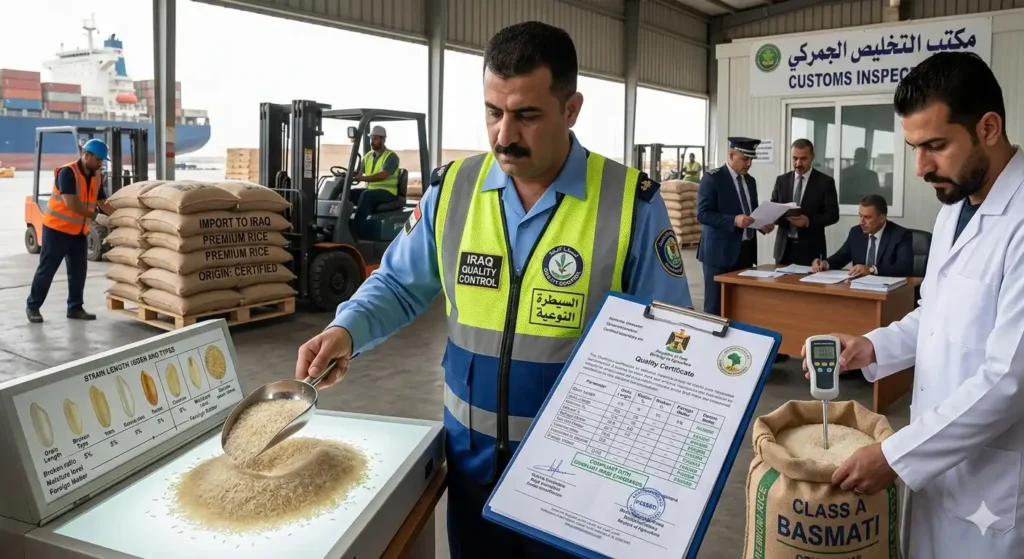
Upon arrival at Iraqi ports, customs authorities inspect shipments again. They verify documentation, assess duties, and confirm compliance with import regulations.
Post-Import Monitoring
After clearance, authorities conduct random quality checks in the market. This ensures continued compliance with food safety standards.
What are the key components of Iraq rice import regulations?
The key components of Iraq rice import regulations include import licensing, customs duties, quality certification, packaging requirements, labeling standards, inspection procedures, and compliance with food safety laws enforced by government authorities at different stages of importation.
Each component plays a defined role in controlling rice imports.
Import Licensing
Importers must hold a valid license issued by the Ministry of Trade. This license confirms eligibility to engage in food imports.
Customs Duties
Iraq rice customs duty varies depending on trade agreements and government policies. Standard duty rates apply to most imports, while exemptions may exist for government procurement programs.
Quality Certification
Rice shipments must include quality certificates issued by recognized authorities. These documents confirm grain length, moisture content, and absence of contaminants.
Examples of quality parameters include:
- Moisture content below 14%
- Broken grain percentage limits
- Absence of pests or mold
Packaging Requirements
Rice must be packed in durable, food-grade materials. Packaging must protect against contamination during transit.
Common packaging formats include:
- 5 kg retail bags
- 25 kg bulk sacks
- 50 kg export-grade bags
Labeling Standards
Labels must include essential information in Arabic. This includes:
- Product name
- Origin country
- Net weight
- Production and expiry dates
Inspection Procedures
Inspections occur at multiple stages. These include pre-shipment inspection and port inspection. Authorities verify compliance with all standards before allowing market entry.
What certifications are required for rice import into Iraq?
Rice imports into Iraq require certifications such as certificate of origin, phytosanitary certificate, quality certificate, fumigation certificate, and commercial invoice to verify product safety, authenticity, and compliance with Iraqi food import regulations.
Each certification serves a specific purpose.
Certificate of Origin
This document confirms where the rice was produced. It ensures traceability and compliance with trade agreements.
Phytosanitary Certificate
This certificate verifies that the rice is free from pests and diseases. It is issued by agricultural authorities in the exporting country.
Quality Certificate
Quality certificates confirm that rice meets defined standards. These include grain size, purity, and moisture levels.
Fumigation Certificate
Fumigation ensures that pests are eliminated before shipment. This certificate confirms treatment using approved methods.
Commercial Invoice and Packing List
These documents provide detailed shipment information. Customs authorities use them to verify declared values and quantities.
What are the benefits of rice import regulations in Iraq?
Rice import regulations in Iraq provide benefits such as ensuring food safety, maintaining product quality, protecting consumers, stabilizing market prices, preventing illegal trade, and supporting fair competition among importers through standardized compliance requirements.
Food safety is the primary benefit. Regulations prevent contaminated or low-quality rice from entering the market.
Market stability is another benefit. Controlled imports prevent sudden price fluctuations. This protects both consumers and traders.
Consumer protection improves through labeling requirements. Buyers can identify product origin and quality before purchase.
Regulations also reduce fraud. Strict documentation requirements prevent mislabeling and under-invoicing.
Fair competition is maintained. All importers must follow the same rules. This creates a level playing field.
What are the use cases of rice import regulations in Iraq?
Rice import regulations in Iraq are used by importers, exporters, customs authorities, food safety agencies, and retailers to manage trade operations, ensure compliance, verify product quality, and maintain regulatory standards across the rice supply chain.
Importers use regulations to guide procurement decisions. They select suppliers who meet Iraqi standards.
Exporters follow these regulations to access the Iraqi market. Compliance ensures smooth customs clearance.
Customs authorities use regulations to inspect shipments. They verify documents and assess duties.
Food safety agencies monitor rice quality in the market. They conduct random inspections to ensure compliance.
Retailers rely on labeling standards. This helps them provide accurate product information to consumers.
Examples of use cases include:
- Government tenders for rice procurement
- Private sector imports for retail distribution
- Bulk imports for food processing industries
What are common problems and misconceptions about Iraq rice import regulations?
Common problems in Iraq rice import regulations include documentation errors, misunderstanding of certification requirements, delays in customs clearance, and misconceptions about duty exemptions, which often result in shipment rejections, penalties, or increased import costs.
Documentation errors are the most frequent issue. Missing or incorrect certificates lead to delays.
Importers often misunderstand certification requirements. Each document must meet specific standards. Incorrect formats result in rejection.
Customs clearance delays occur due to incomplete paperwork. This increases storage costs at ports.
A common misconception involves duty exemptions. Not all imports qualify for reduced tariffs. Only specific programs provide exemptions.
Another misconception relates to inspection processes. Some importers assume pre-shipment inspection is sufficient. Iraqi authorities still conduct port inspections.
Quality compliance is also misunderstood. Meeting exporting country standards does not guarantee acceptance in Iraq. Local standards must be met.
How does rice quality certification impact import approval in Iraq?
Rice quality certification directly impacts import approval in Iraq by confirming compliance with national standards, ensuring food safety, validating product specifications, and enabling customs authorities to approve shipments without delays or additional inspections.
Quality certification acts as a verification tool. It confirms that rice meets Iraqi requirements before shipment.
Authorities rely on these certificates to assess compliance. Accurate documentation speeds up approval.
Without proper certification, shipments face rejection or re-inspection. This increases costs and delays.
Certification also builds trust between exporters and importers. Verified quality reduces disputes and ensures consistent supply.
Quality Parameters in Certification
Key parameters include:
- Grain length and type
- Moisture percentage
- Broken grain ratio
- Foreign matter content
Each parameter must meet defined thresholds. These thresholds ensure consistency in imported rice quality.
How do customs duties affect rice import costs in Iraq?
Customs duties affect rice import costs in Iraq by adding government-imposed tariffs on imported rice, influencing final market prices, impacting importer profit margins, and determining competitiveness of different rice origins in the Iraqi market.
Customs duties are calculated based on shipment value. Higher declared values result in higher duties.
Importers must include duties in cost calculations. This affects pricing strategies in the local market.
Duty rates vary depending on trade agreements. Some countries benefit from reduced tariffs.
Government procurement programs sometimes offer duty exemptions. These programs aim to stabilize food supply.
Duty structures also influence sourcing decisions. Importers select suppliers based on total landed cost, including duties and logistics.