Rice Packaging Sizes and EU Labelling Standards for Germany in 2026
Rice packaging sizes define the weight, material, and format of rice containers for retail and bulk trade, while EU labelling standards specify mandatory product information, language, traceability, and compliance requirements for rice sold in Germany in 2026.
Rice packaging sizes structure how rice moves from mill to shelf. Sizes range from 1 kg retail packs to 50 kg bulk sacks. Each size aligns with a specific distribution channel such as supermarkets, wholesalers, or food service.
EU labelling standards regulate how rice is presented to buyers in Germany. These rules ensure food safety, transparency, and traceability. Labels must include origin, net weight, batch number, expiry date, and nutritional data. German language labeling is mandatory for retail.
The combination of packaging size and labeling determines market access. Exporters must align physical packaging with legal documentation. This alignment ensures customs clearance and retail acceptance.
How does rice packaging for export to Germany work step by step?
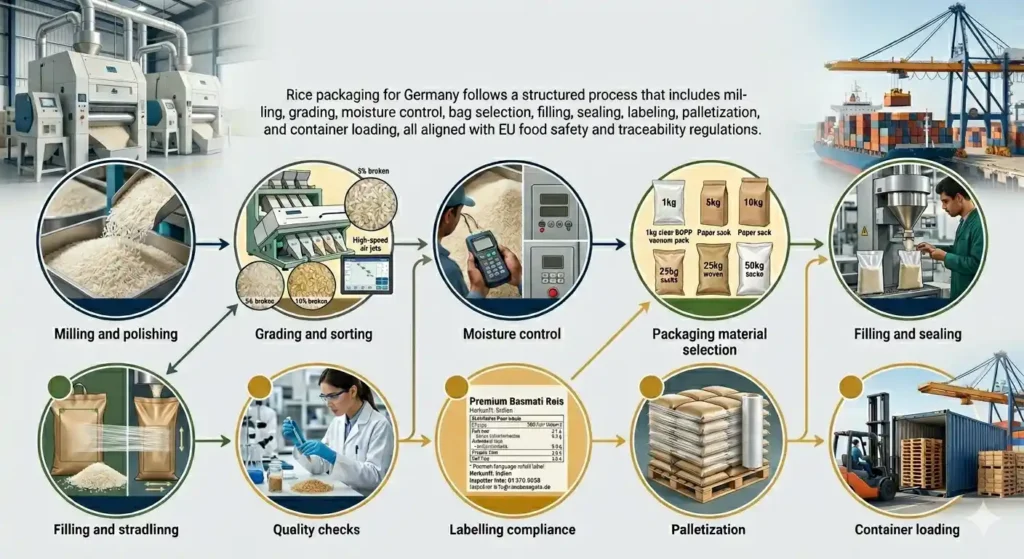
Rice packaging for Germany follows a structured process that includes milling, grading, moisture control, bag selection, filling, sealing, labeling, palletization, and container loading, all aligned with EU food safety and traceability regulations.
Step 1: Milling and polishing
Rice passes through husking, whitening, and polishing machines. The goal is uniform grain length and clean surface. For example, 1121 Basmati is polished to enhance elongation and visual appeal.
Step 2: Grading and sorting
Grading separates rice based on length, broken percentage, and color. Optical sorters remove discolored grains. Export grades include 5% broken, 10% broken, and 25% broken.
Step 3: Moisture control
Moisture is stabilized between 12% and 14%. This range prevents fungal growth and preserves shelf life. Moisture meters confirm accuracy before packaging.
Step 4: Packaging material selection
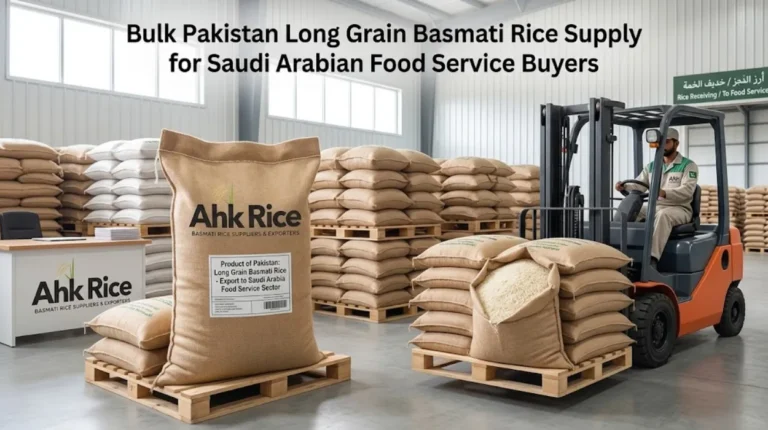
Packaging materials include PP woven bags, BOPP laminated bags, paper sacks, and vacuum packs. Retail packs use 1 kg, 5 kg, and 10 kg formats. Bulk shipments use 25 kg and 50 kg sacks.
Step 5: Filling and sealing
Automatic filling machines ensure weight accuracy. Bags are stitched or heat sealed. Retail packs use nitrogen flushing in some cases to extend freshness.
Step 6: Labelling compliance
Labels include product name, origin, crop year, nutritional values, importer details, and barcode. For Germany, all retail labels must appear in German language.
Step 7: Palletization and container loading
Bags are stacked on pallets. Standard pallet sizes include EUR-pallet (1200 × 800 mm). Containers are loaded with 20-foot or 40-foot configurations depending on shipment size.
What are the key components of rice packaging systems?
Rice packaging systems consist of packaging materials, weight formats, sealing mechanisms, labeling elements, and logistics configurations that ensure product safety, regulatory compliance, and efficient transportation to Germany.
Packaging materials
Materials determine durability and shelf life. PP woven bags handle bulk transport. BOPP laminated bags improve print quality for retail. Paper bags support eco-friendly positioning.
Weight formats
Standard sizes include 1 kg, 2 kg, 5 kg, 10 kg, 25 kg, and 50 kg. Retail markets prefer smaller packs. Food service buyers choose larger sacks.
Sealing mechanisms
Sealing methods include stitching, heat sealing, and vacuum sealing. Each method prevents contamination and moisture entry.
Labeling elements
Labels include mandatory and optional data. Mandatory data includes origin, net weight, and expiry date. Optional data includes cooking instructions and brand storytelling.
Logistics configuration
Logistics includes pallet stacking, shrink wrapping, and container optimization. A 20-foot container carries approximately 24 metric tons of rice in 50 kg bags.
What rice packaging sizes are used in the China market in 2026?
Rice packaging China market 2026 uses a mix of small retail packs between 1 kg and 5 kg and bulk packaging between 10 kg and 25 kg, driven by e-commerce demand, urban consumption, and institutional buyers.
China’s retail sector favors smaller packaging. Urban consumers prefer 2 kg and 5 kg packs for convenience. These packs fit modern kitchens and reduce storage issues.
E-commerce platforms demand durable and visually appealing packaging. Vacuum-sealed bags and BOPP laminated packs dominate online sales channels.
Bulk rice packaging China includes 10 kg and 25 kg bags. These formats serve restaurants, hotels, and catering businesses.
Chinese food labelling rice requires Mandarin language labeling. Labels must include production date, shelf life, storage instructions, and producer information. This requirement is strict for imported rice.
Mandarin label rice export involves translating all mandatory fields into simplified Chinese. Exporters must verify translations to avoid customs rejection.
How do EU labelling standards for Germany differ from Chinese labelling requirements?
EU labelling standards for Germany require German language, EU nutrition format, allergen declaration, and traceability codes, while Chinese labelling focuses on Mandarin language, production details, and domestic compliance standards.
EU standards emphasize consumer transparency. Nutrition tables follow a fixed format per 100 grams. Allergen information is highlighted clearly.
Germany enforces strict traceability. Each batch must link to production records. This requirement supports food safety audits.
Chinese labelling prioritizes production and shelf-life clarity. Labels must display manufacturing date and storage conditions in Mandarin.
EU labels require importer details within the European Union. Chinese labels focus on domestic distributor registration.
Both systems demand accuracy. Incorrect labeling leads to shipment rejection or fines.
What are the benefits of standardized rice packaging sizes?
Standardized rice packaging sizes improve supply chain efficiency, reduce transportation costs, enhance shelf visibility, and ensure compatibility with retail and wholesale distribution systems in Germany and China markets.
Standard sizes simplify logistics. Pallets stack uniformly. Containers load efficiently. This reduces shipping costs per metric ton.
Retail shelves benefit from consistent dimensions. Products align neatly. This improves visual appeal and consumer trust.
Standardization supports automation. Filling machines operate faster with fixed sizes. This increases production capacity.
Buyers prefer predictable formats. Supermarkets plan shelf space based on standard sizes such as 5 kg and 10 kg packs.
What are the main use cases for different rice packaging sizes?
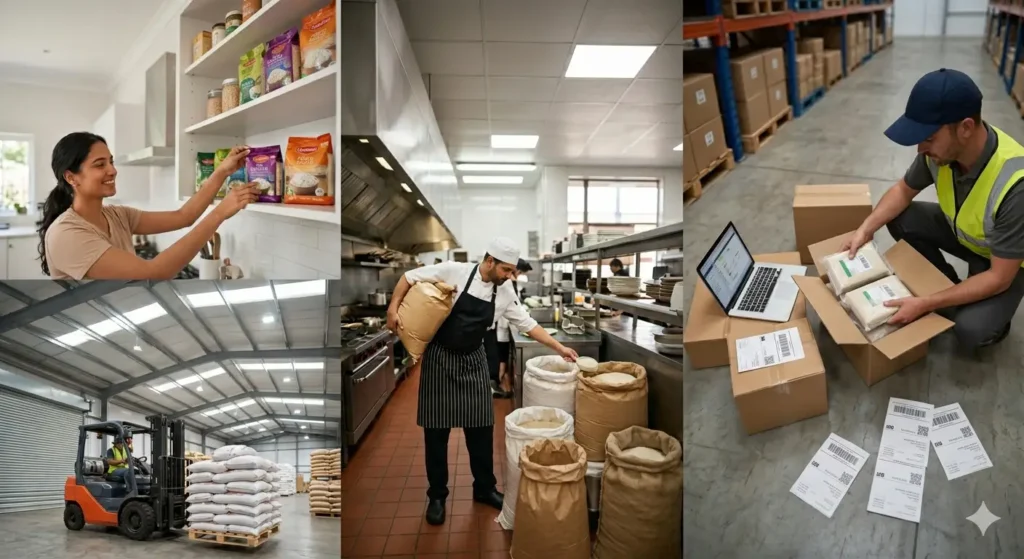
Rice packaging sizes serve distinct use cases including household consumption, food service operations, wholesale distribution, and e-commerce sales, each requiring specific weight formats and packaging materials.
Household consumption
Small packs between 1 kg and 5 kg dominate this segment. Examples include 1 kg premium basmati packs and 5 kg family packs.
Food service operations
Restaurants and hotels use 10 kg and 25 kg bags. These sizes balance storage efficiency and usage frequency.
Wholesale distribution
Wholesalers prefer 25 kg and 50 kg sacks. These formats reduce handling costs and support bulk resale.
E-commerce sales
Online platforms use 2 kg and 5 kg vacuum packs. These packs ensure product safety during delivery.
What common problems occur in rice packaging and labeling?
Common problems in rice packaging and labeling include incorrect weight declaration, poor sealing, non-compliant labeling language, missing traceability codes, and inadequate packaging material selection leading to product damage or rejection.
Incorrect weight declaration causes regulatory issues. EU authorities verify net weight accuracy during inspections.
Poor sealing leads to moisture ingress. This reduces shelf life and increases spoilage risk.
Non-compliant labeling language results in customs delays. Germany requires German language for retail products.
Missing traceability codes disrupt supply chain transparency. This issue affects importer confidence.
Inadequate packaging materials cause physical damage. Thin bags tear during handling. This leads to product loss.
What misconceptions exist about rice packaging for export markets?
A common misconception is that one packaging format fits all markets, while in reality each market such as Germany and China requires specific sizes, materials, and labeling formats aligned with local regulations and consumer behavior.
Some exporters assume 50 kg bags work globally. Retail markets reject bulk formats without consumer-ready packaging.
Another misconception is that English labels are sufficient. Germany requires German language. China requires Mandarin.
Many believe packaging only protects the product. Packaging also communicates brand, quality, and compliance.
There is also confusion about vacuum packaging. Vacuum packs are not mandatory for all markets. They are specific to premium retail and e-commerce segments.