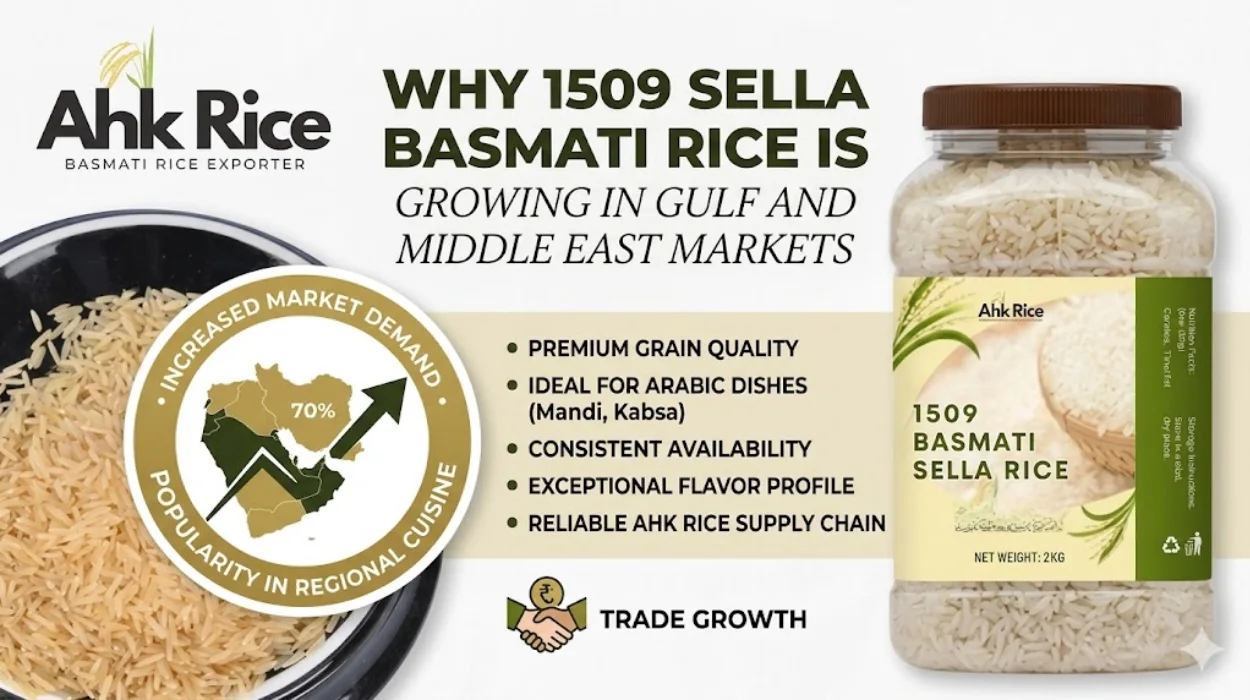
Why 1509 Sella Basmati Rice Is Growing in Gulf and Middle East Markets
What is driving the growth of 1509 sella basmati rice in Gulf and Middle East markets?
1509 Sella Basmati rice demand is increasing due to its shorter cooking time, higher yield after cooking, stable grain structure, and lower price per metric ton, which directly fits large-scale catering and bulk consumption markets.
1509 Sella Basmati rice has established a strong position in Gulf and Middle East markets because it solves operational constraints faced by importers and food service operators. Bulk buyers prioritize consistency, cost control, and cooking efficiency. 1509 Sella delivers all three with measurable performance metrics.
1509 Sella rice cooks 20–30% faster than traditional long-aged varieties. Kitchens handling 500–5,000 meals daily reduce gas consumption and turnaround time with this specification. This operational advantage directly translates into lower cost per plate.
1509 Sella rice expands significantly after cooking. A 1 kg batch yields up to 2.5–2.7 kg cooked rice. Catering companies in markets such as UAE, Saudi Arabia, and Oman rely on this expansion ratio to maintain margins in fixed-price contracts.
1509 Sella rice maintains grain integrity under pressure cooking and large-batch boiling. Industrial kitchens use steam kettles and high-volume boilers. 1509 grains remain separate and non-sticky under these conditions.
1509 Sella rice is priced lower than premium aged varieties like 1121. Importers sourcing 500–5,000 metric tons per shipment reduce procurement costs while maintaining acceptable quality standards.
With demand drivers defined, the next step is to understand what 1509 Sella Basmati rice actually is at a product level.
What is 1509 Sella Basmati rice?
1509 Sella Basmati rice is a parboiled long-grain rice variety with an average grain length of 7.8–8.3 mm, processed through controlled steaming and drying to increase strength, color uniformity, and cooking performance.
1509 refers to a specific Basmati seed variety cultivated in Punjab, Pakistan. Farmers grow this variety because it matures faster and produces higher yield per acre compared to older varieties.
Sella refers to the parboiling process. Parboiling involves soaking, steaming, and drying the paddy before milling. This process changes the grain’s internal structure. The starch gelatinizes and hardens. The grain becomes stronger and less prone to breakage.
1509 Sella rice appears golden or creamy white depending on the processing intensity. Golden Sella has a deeper yellow tone due to extended steaming. White Sella has a lighter color due to reduced steaming duration.
1509 Sella rice has lower aging requirements compared to traditional Basmati. It reaches export-ready condition faster, which stabilizes supply for high-demand markets.
1509 Sella rice serves bulk consumption segments such as labor camps, catering companies, airline kitchens, and institutional buyers. These buyers prioritize consistency over aroma intensity.
With the product defined, the next question is how the processing method creates these functional advantages.
How does the 1509 Sella processing method work?
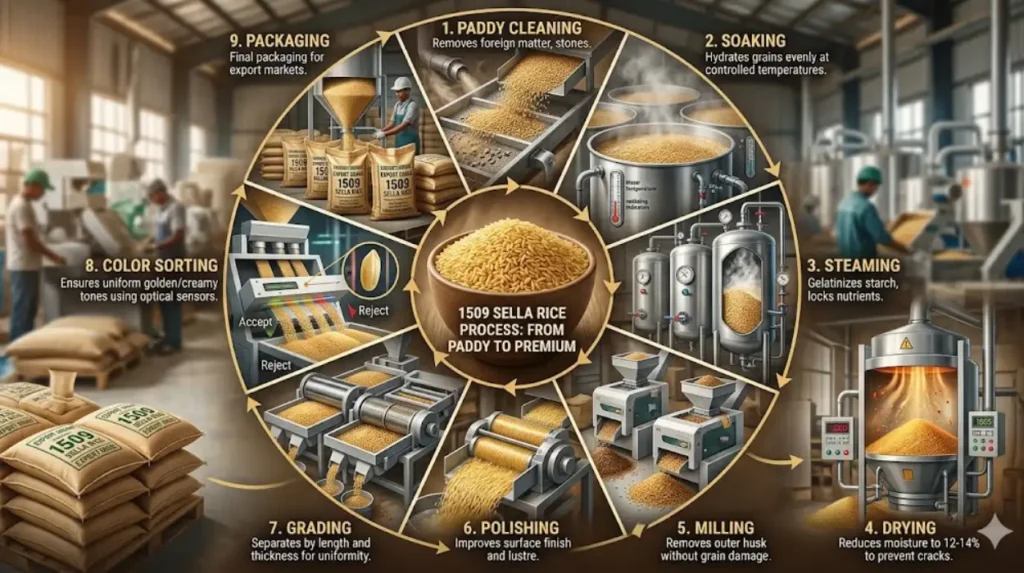
1509 Sella processing uses soaking, steaming, drying, milling, polishing, grading, and sorting to strengthen grains, reduce breakage, and improve cooking performance.
Step-by-step processing method
- Clean the paddy to remove dust, stones, and foreign matter
- Soak the paddy in water at controlled temperature
- Steam the soaked paddy to gelatinize starch
- Dry the paddy to reduce moisture to 12–14%
- De-husk the dried paddy to remove outer husk
- Polish the rice to improve surface finish
- Grade the rice by length and thickness
- Sort the grains using color sorters
- Pack the rice in export-grade packaging
Soaking hydrates the grain evenly. This ensures uniform steaming. Steaming locks nutrients into the grain and strengthens the internal structure.
Drying stabilizes the grain for milling. Controlled drying prevents cracks and fissures. Milling removes the husk without damaging the grain.
Grading and sorting define the commercial value. Export buyers specify exact percentages of broken grains, damaged grains, and chalky grains. Machines separate grains based on these parameters.
Color sorting ensures uniform appearance. Gulf markets prefer consistent golden or creamy tones for visual presentation in dishes like mandi and kabsa.
With the process explained, the next section examines the key components that define quality and export grades.
What are the key components and grades of 1509 Sella rice?
1509 Sella rice grades differ by grain length, broken percentage, color consistency, and moisture level, with standard export grades ranging from 5% broken to 25% broken.
Common export grades
1509 Golden Sella 5% Broken
- Grain length: 8.0–8.3 mm
- Broken: maximum 5%
- Moisture: 12–13%
- Use case: premium catering, branded retail
1509 Golden Sella 10% Broken
- Grain length: 7.9–8.2 mm
- Broken: maximum 10%
- Moisture: 12–14%
- Use case: mid-range catering
1509 Golden Sella 25% Broken
- Grain length: 7.7–8.0 mm
- Broken: maximum 25%
- Moisture: 13–14%
- Use case: labor camps, institutional buyers
1509 White Sella
- Color: off-white to cream
- Texture: firmer after cooking
- Use case: specific regional preferences in Iraq and Yemen
Grain length determines visual quality. Longer grains command higher prices. Broken percentage directly affects cooking uniformity and plate presentation.
Moisture content impacts shelf life. Export rice must maintain moisture between 12–14% to prevent fungal growth during shipping.
Color consistency matters in Gulf markets. Buyers prefer uniform golden shades for traditional dishes.
With grade specifications defined, the next section explains the functional benefits that drive adoption.
What benefits make 1509 Sella rice suitable for Gulf and Middle East markets?
1509 Sella rice offers high yield, fast cooking, low breakage, and cost efficiency, which directly supports large-scale food operations in high-temperature environments.
1509 Sella rice reduces cooking time significantly. Kitchens operating under time pressure complete batch cooking faster. This improves service speed during peak hours.
1509 Sella rice increases output per kilogram. Catering businesses calculate food cost per plate. Higher expansion ratio reduces raw material usage per meal.
1509 Sella rice withstands high heat and pressure. Gulf kitchens often operate in ambient temperatures above 35°C. The grain structure remains stable under these conditions.
1509 Sella rice has longer shelf stability in non-climate-controlled storage. In warehouses reaching 40°C, Sella rice maintains quality for 18–24 months. Raw white rice deteriorates faster under the same conditions.
1509 Sella rice provides consistent results across cooking methods. Whether boiled, steamed, or pressure cooked, the grains remain separate and elongated.
These benefits explain why bulk buyers prefer this variety. With advantages established, the next step is to examine where and how this rice is used.
Where is 1509 Sella rice used in Gulf and Middle East markets?
1509 Sella rice is used in catering operations, labor camps, restaurants, airline kitchens, and government food programs, where consistency and cost control are critical.
Catering operations
Large catering companies prepare 1,000–10,000 meals daily. 1509 Sella rice ensures uniform cooking across large batches. Dishes include mandi, kabsa, and biryani.
Labor camps
Labor camps require affordable and filling meals. 1509 Sella rice provides high volume at lower cost. The expansion ratio supports mass feeding programs.
Restaurants
Mid-range restaurants use 1509 Sella for rice-based dishes. It balances cost and presentation quality.
Airline kitchens
Airline catering units require consistent texture and reheating stability. 1509 Sella maintains structure after reheating.
Government contracts
Public distribution systems in some Middle Eastern regions procure bulk rice. 1509 Sella meets budget constraints while maintaining acceptable quality.
For buyers comparing options, understanding differences between varieties becomes important. A detailed comparison helps decision-making. A deeper evaluation of catering-focused varieties appears in this guide on choosing between different sella rice types for bulk kitchen operations.
With use cases covered, the next section addresses common misconceptions that affect buyer decisions.
What are common problems or misconceptions about 1509 Sella rice?
Buyers often assume lower price means lower quality, but 1509 Sella rice delivers functional efficiency rather than premium aroma, which aligns with bulk consumption needs.
One misconception is that 1509 lacks quality because it is cheaper. Price difference comes from yield and aging cycles, not processing defects. 1509 matures faster and produces higher yield per hectare.
Another misconception is that 1509 does not elongate after cooking. 1509 grains expand well, though less than 1121. The difference is measurable but not critical for bulk catering.
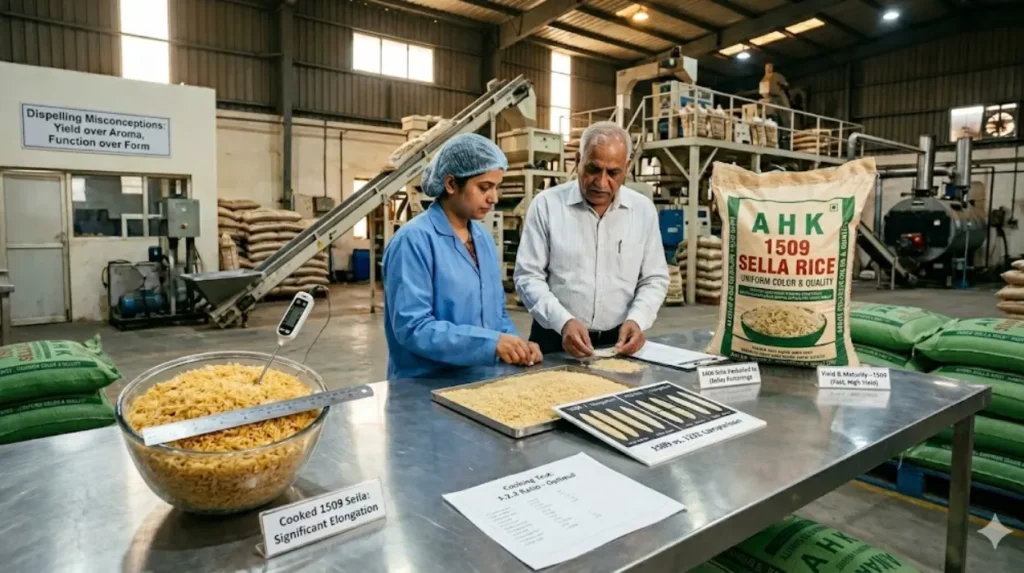
Some buyers assume Sella rice is harder to cook. Correct water ratio and soaking eliminate this issue. Standard practice uses 1:2.2 rice-to-water ratio for optimal results.
Another concern is color variation. Inconsistent color occurs when processing controls fail. Certified exporters maintain uniform steaming and drying conditions to ensure consistent appearance.
Some importers believe broken percentage does not matter. Higher broken content affects texture and presentation. Buyers must match grade with use case to avoid performance issues.
With misconceptions clarified, the final understanding connects all factors driving growth in these markets.
Why will 1509 Sella rice continue growing in Gulf and Middle East markets?
1509 Sella rice will continue growing because it delivers scalable performance, cost stability, and operational efficiency, which match the structural needs of high-volume food systems in these regions.
Population growth in Gulf countries increases demand for affordable staple foods. Rice remains a primary component of daily meals across multiple demographics.
Food service expansion drives bulk procurement. Catering companies, cloud kitchens, and institutional buyers continue scaling operations.
Climate conditions in the Middle East favor parboiled rice. High temperatures demand grains that resist spoilage and maintain quality during storage.
Supply chain efficiency supports consistent availability. 1509 cultivation cycles allow faster production turnover compared to aged varieties.
Cost pressure remains a constant factor. Buyers prioritize products that balance price and performance. 1509 Sella meets this requirement with measurable efficiency.
With growth drivers established, the logical next step for buyers is to compare this variety with alternatives used in similar applications.
Frequently Asked Questions
What makes 1509 Sella Basmati rice suitable for Gulf markets?
1509 Sella Basmati rice suits Gulf markets because it cooks faster, expands more after cooking, and maintains grain structure in high-temperature kitchens. Catering operations benefit from lower fuel usage and higher output per kilogram, which improves cost efficiency.
How is 1509 Sella different from other Basmati varieties?
1509 Sella differs from other Basmati varieties in maturity cycle, grain strength, and price. It matures faster, requires less aging, and costs less per metric ton. It delivers functional performance rather than strong aroma, which fits bulk consumption needs.
What is the ideal cooking method for 1509 Sella rice?
The ideal cooking method uses a 1:2.2 rice-to-water ratio with 20–30 minutes soaking before cooking. Boiling or steam cooking produces the best results. This method ensures uniform grain expansion and prevents hardness in large batches.
Which countries import 1509 Sella Basmati rice the most?
Countries in the Gulf and Middle East import the most 1509 Sella rice. Major importers include Saudi Arabia, United Arab Emirates, Oman, Qatar, Iraq, and Yemen. These markets demand bulk rice for catering and institutional use.
What certifications are required for exporting 1509 Sella rice?
Exporting 1509 Sella rice requires phytosanitary certificates, fumigation certificates, certificate of origin, and quality inspection reports. Many buyers also require ISO certification, HACCP compliance, and SGS or Bureau Veritas inspection reports.