Why Super Kernel Basmati Has a Naturally Strong Aroma
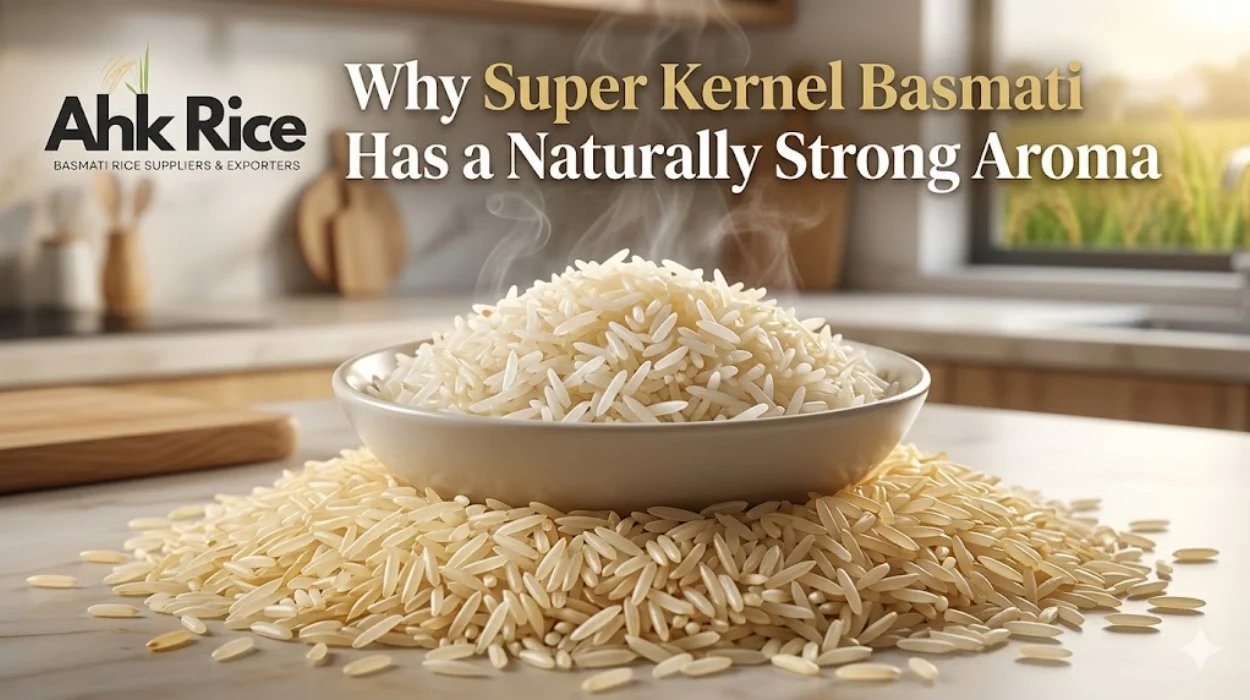
Super Kernel Basmati rice is a long grain aromatic rice cultivar grown in Punjab, Pakistan, known for a naturally high 2-acetyl-1-pyrroline concentration, which produces a strong popcorn-like fragrance during cooking, making it distinct from non-aromatic long grain rice varieties globally.
Super Kernel Basmati is a cultivated rice variety grown in irrigated plains of Punjab. Farmers cultivate it under controlled water channels and seasonal temperature shifts. The grain develops long shape during maturation. Harvesting occurs after full physiological ripening to preserve aroma precursors inside the kernel.
Super Kernel rice differs from ordinary long grain rice due to genetic aroma expression. The grain naturally produces aromatic compounds during growth, not after processing. Milling removes husk while preserving internal starch structure. Polishing stabilizes grain appearance without removing aroma compounds embedded in endosperm layers.
Super Kernel rice enters global trade after grading based on grain length and purity. Exporters load and dispatch rice in controlled moisture conditions. This prevents aroma loss during transport. The fragrance remains stable when storage humidity stays within regulated export thresholds used in international shipping standards.
Super Kernel aroma begins in the field and continues after harvest. With its definition established, the next section explains how cultivation and processing amplify this natural fragrance.
How does Super Kernel Basmati develop its natural aroma?
Super Kernel Basmati develops aroma through genetic biosynthesis of aromatic aldehydes during plant growth, followed by controlled harvesting, drying, milling, and polishing processes that preserve volatile compounds inside the grain while preventing degradation caused by heat, moisture, and improper storage conditions.
Cultivation begins with paddy transplanting in irrigated fields. Farmers cultivate seedlings in nutrient-balanced soil with controlled nitrogen input. Lower nitrogen levels increase aromatic compound concentration. Irrigation cycles maintain soil oxygen balance. This supports biochemical formation of aroma precursors in developing grains.
Harvesting occurs when grains reach full maturity. Farmers cut paddy at optimal moisture levels. Delayed harvesting reduces aroma intensity due to enzymatic breakdown. Early harvesting lowers starch conversion efficiency. Timing directly affects volatile compound retention inside the kernel structure.
Drying reduces moisture content to safe storage levels. Mills dry paddy using controlled airflow systems. Excess heat reduces aroma compounds. Slow drying preserves fragrance integrity. Uniform drying prevents microbial activity that damages grain quality during long-term storage and export handling.
Milling separates husk and bran layers. De-husking removes outer protection. Polishing refines grain surface. Sorting removes broken grains. Each stage maintains aroma integrity when temperature remains controlled. Excessive friction during milling reduces volatile compound retention in endosperm layers.
Processing connects field biology with export stability. With aroma development explained, the next section identifies the internal components responsible for fragrance intensity.
What are key components responsible for aroma intensity?
Aroma intensity in Super Kernel Basmati depends on 2-acetyl-1-pyrroline concentration, grain starch composition, lipid content, moisture retention, and enzyme activity within the endosperm that collectively determine fragrance release during cooking and storage stability over time.
2-acetyl-1-pyrroline acts as the primary aroma compound. It forms during plant metabolism in controlled field conditions. Higher concentration results in stronger fragrance. This compound remains stable when grain moisture stays within 12–14 percent during post-harvest storage.
Starch structure influences aroma release. Amylose and amylopectin ratios determine how steam interacts with grain during cooking. Higher amylose stabilizes aroma release. Controlled gelatinization enhances fragrance diffusion. This creates consistent aroma across cooking environments in domestic and industrial kitchens.
Lipid content in bran layers contributes secondary aroma retention. Even after polishing, trace lipids remain inside the kernel. These lipids bind aromatic compounds. During cooking, heat releases trapped molecules. This creates layered fragrance perception in cooked rice dishes.
Moisture balance ensures compound stability. High moisture increases microbial risk. Low moisture reduces aroma expression. Export standards maintain equilibrium. Certified mills inspect moisture using calibrated instruments. This ensures consistent aroma delivery in international supply chains.
Component interaction defines aroma strength. With core components established, the next section explains real-world benefits of strong aromatic Super Kernel Basmati.
What are benefits of strong aromatic Super Kernel Basmati?
Strong aromatic Super Kernel Basmati delivers higher culinary value, improved sensory perception, extended cooking fragrance retention, better export acceptance in premium markets, and consistent performance in catering systems requiring large-scale rice preparation with stable aroma output.
Culinary value increases due to sensory impact. Strong aroma enhances dish perception. Restaurants use aromatic rice for biryani and pilaf. Fragrance improves customer satisfaction. This increases repeat demand in food service operations across Middle Eastern and European hospitality sectors.
Fragrance retention improves after cooking. Cooked grains release aroma gradually. Heat keeps volatile compounds active longer. This maintains sensory appeal during serving. Large buffet systems benefit from stable aroma release during extended holding periods.

Export acceptance improves in premium markets. Gulf countries prefer high-aroma basmati for catering. European ethnic food markets require consistent fragrance. Demand remains stable due to cultural cooking preferences. This supports long-term trade consistency across import channels.
Cooking efficiency improves in commercial kitchens. Rice absorbs flavor more effectively. Aroma blends with spices during steaming. This creates uniform dish profiles. Large-scale catering operations maintain consistency across batches without quality variation.
Super Kernel aroma also influences market positioning. Connects this aromatic profile with processing differences between white and steam basmati varieties used in export decisions.
With benefits established, the next section explains global usage patterns and market applications.
Where is Super Kernel Basmati used globally?
Super Kernel Basmati is used in Gulf catering services, South Asian restaurants, European ethnic food retail, institutional kitchens, and packaged rice industries where consistent aroma, long grain elongation, and stable cooking performance define purchasing specifications.
Gulf catering systems consume large volumes of aromatic rice. Hotels and airlines use Super Kernel for bulk cooking. High heat kitchens require stable fragrance. Rice maintains aroma under extended holding conditions. This supports buffet-style service environments across UAE and Saudi Arabia.
South Asian restaurants rely on aromatic rice for traditional dishes. Biryani preparation requires strong fragrance release. Pilaf dishes depend on aroma blending with spices. Super Kernel provides consistent cooking expansion. This ensures standardized dish quality across multiple outlets.
European ethnic markets import Super Kernel for retail packaging. Consumers prefer aromatic long grain rice. Packaging sizes range from 1 kilogram to 5 kilograms. Retail demand increases during cultural food seasons. Stability during storage supports long shelf distribution networks.
Institutional kitchens use Super Kernel in hospitals and universities. Large batch cooking requires uniform aroma distribution. Controlled cooking systems maintain consistency. Rice performance remains stable under automated cooking environments used in industrial food preparation.
Global usage expands with logistics optimization. With market applications defined, the next section addresses common problems and misconceptions affecting aroma perception.
What problems reduce aroma or cause misconceptions?
Aroma reduction occurs due to high-temperature storage, improper milling friction, excessive polishing, delayed harvesting, and misunderstanding that aroma depends on cooking additives rather than natural grain biochemistry and controlled post-harvest handling conditions.
High-temperature storage degrades volatile compounds. Warehouses above 35°C reduce aroma stability. Gulf transport conditions require insulated containers. Without temperature control, fragrance weakens during transit. This directly affects final cooking performance in destination markets.
Improper milling reduces aroma retention. Excess friction during polishing generates heat. Heat destroys aromatic aldehydes. Controlled milling prevents compound loss. Certified mills use calibrated equipment to maintain low-temperature processing environments during grain refinement stages.
Excessive polishing removes outer layers. Bran contains secondary aroma-binding lipids. Over-polishing reduces fragrance intensity. Standard grading limits polishing cycles. Export specifications define acceptable polishing levels to preserve aroma quality across shipment batches.
Delayed harvesting reduces aromatic compound formation. Overripe grains lose volatile stability. Early harvest reduces starch development. Optimal harvest timing ensures balance. Farmers follow seasonal maturity indicators to maintain fragrance consistency across yield cycles.
Misconceptions arise from artificial aroma assumptions. Aroma does not come from additives. It originates from plant metabolism. Cooking only releases existing compounds. This clarifies confusion in markets where synthetic fragrance rice is incorrectly compared with basmati varieties.
With misconceptions clarified, the complete aroma mechanism is understood from field to export logistics.
Frequently Asked Questions
What makes Super Kernel Basmati rice aromatic?
Super Kernel Basmati rice is aromatic because it naturally produces a compound called 2-acetyl-1-pyrroline (2-AP). This compound forms during plant growth and gives the rice its strong popcorn-like smell when cooked.
Does cooking or additives create the aroma in Basmati rice?
No, the aroma is not added during cooking. It is already present inside the rice grain. Cooking only releases the natural aromatic compounds stored in the endosperm of the rice.
Why does aroma sometimes become weak in Basmati rice?
Aroma can weaken due to high-temperature storage, over-polishing, improper milling, or harvesting at the wrong time. These factors can reduce or damage the natural volatile compounds in the grain.
Is Super Kernel Basmati different from regular long grain rice?
Yes, it is genetically different. Super Kernel Basmati naturally produces aroma compounds and has a longer grain structure. Regular long grain rice usually does not contain these aromatic properties.
How can aroma be preserved after harvesting?
Aroma is preserved by proper drying, controlled storage temperature, careful milling, and maintaining correct moisture levels. These steps help protect the natural volatile compounds inside the grain.