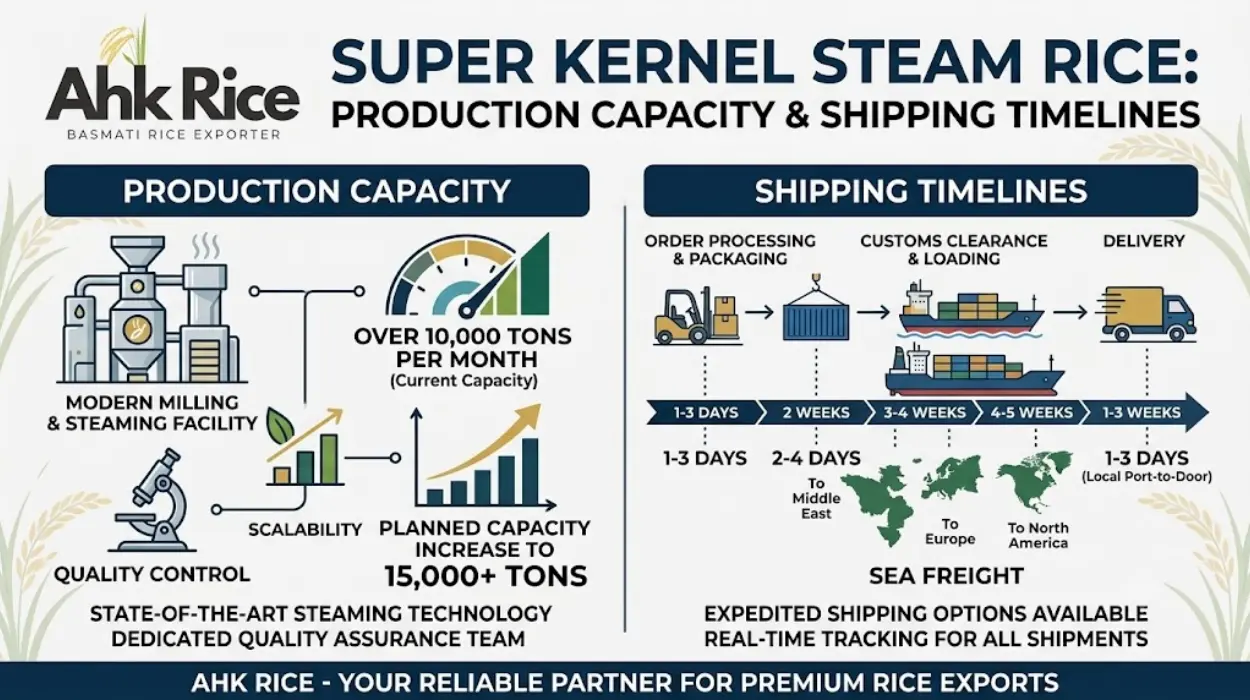
Super Kernel Steam Rice Production Capacity and Shipping Timelines
Super Kernel Steam Rice offers the most balanced combination of production scalability, export consistency, and predictable shipping schedules. Here is why: Pakistani processors can mill large volumes throughout the year, steam processing preserves grain quality, and established export routes allow reliable delivery to major importing regions.
Super Kernel Steam Rice remains one of Pakistan’s most exported long-grain aromatic rice categories. The variety grows mainly in Punjab, where farmers cultivate and harvest the crop before processors mill, steam, grade, sort, inspect, and package it for export. Buyers choose this rice because it provides good cooking performance, attractive grain appearance, and competitive pricing compared with premium Basmati grades.
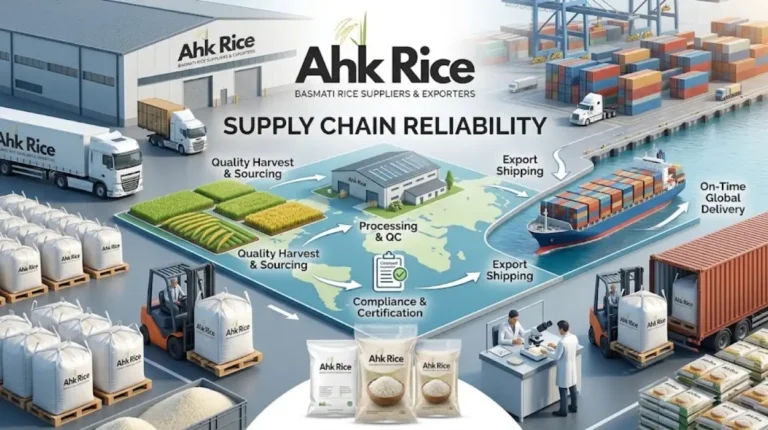
Importers researching production capacity often first learn how rice processing and export systems operate before comparing suppliers. A detailed explanation of cultivation, milling, grading, and export workflows can be found in our guide on understanding the complete Pakistani rice export process.
What production capacity is available for Super Kernel Steam Rice?
Production capacity commonly ranges from 5,000 to 50,000+ metric tons annually depending on processor size, storage infrastructure, and export commitments. Large-scale facilities maintain year-round dispatch schedules through inventory planning and contracted cultivation programs.
Super Kernel Steam Rice production begins with paddy cultivation in Punjab’s rice-growing belt. Farmers cultivate and harvest paddy during the production season. Processors then receive, inspect, and store the harvested crop for milling and export preparation.
Steam processing increases production efficiency because the process requires fewer stabilization stages than parboiled rice. Mills can process larger daily volumes while maintaining consistent grain quality.
How does the production process support export volume?
AHK Rice follows a structured processing sequence.
- Clean the paddy.
- De-husk the grain.
- Steam the rice.
- Dry the grain.
- Polish the kernels.
- Grade by size.
- Sort by colour.
- Inspect quality parameters.
- Package for export.
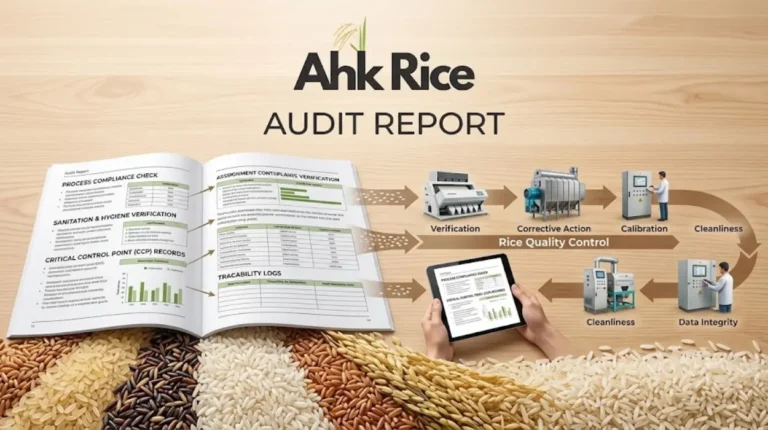
Each stage supports volume consistency and export compliance. Quality control teams inspect moisture, broken percentage, grain length, and purity before dispatch.
Super Kernel Steam Rice Specification Overview
| Attribute | Typical Range |
|---|---|
| Grain Length | 6.8–7.2 mm |
| Moisture | 12–14% |
| Broken Rice | 5–15% |
| Purity | 95–100% |
| Milling Type | Steam Processed |
| Shelf Life | 12–18 Months |
| Packaging | 1 kg to 50 kg |
Production capacity explains supply reliability. The next question is how different production and shipping approaches compare.
How do different production and shipping approaches compare?
Steam rice offers the strongest balance between processing speed, export volume, and delivery predictability. Parboiled rice provides longer storage life, while white rice offers lower processing costs.
Importers often compare Steam Rice, White Rice, and Golden Sella Rice before procurement decisions. Each option serves different commercial objectives.
Specification Comparison Table
| Attribute | Super Kernel Steam | Super Kernel White | Super Kernel Golden Sella |
|---|---|---|---|
| Processing Method | Steam Treated | Direct Milled | Parboiled |
| Grain Appearance | Creamy White | Bright White | Golden Yellow |
| Production Speed | High | Very High | Moderate |
| Export Demand | High | Medium | High |
| Shelf Life | 12–18 Months | 10–12 Months | 18–24 Months |
| Price per MT | Moderate | Lower | Higher |
| Moisture Stability | Strong | Moderate | Very Strong |
Steam Rice retains a competitive advantage for buyers requiring balanced cost and quality. Gulf wholesalers frequently select Steam Rice because it performs well in retail packaging and food service channels.
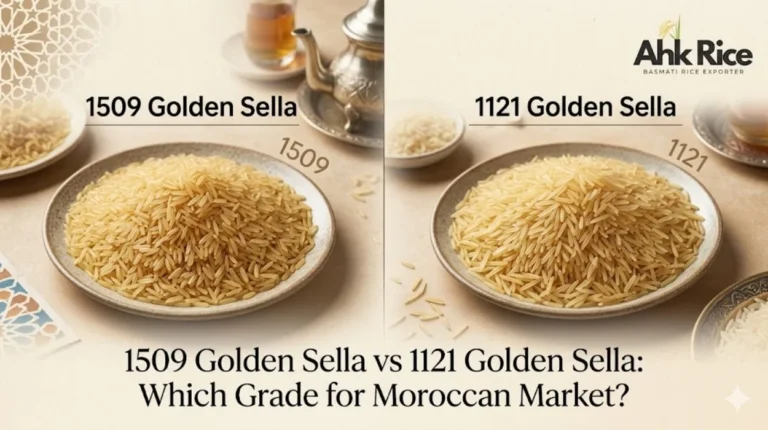
Golden Sella Rice remains preferable for long-term storage. In high-temperature Gulf warehouses, Golden Sella often maintains quality longer than Steam Rice. In Iraqi wholesale markets with seasonal inventory turnover, Golden Sella provides additional storage security.
White Rice remains suitable for budget-focused procurement programs. African distributors often prioritize lower procurement costs over extended storage characteristics.
The comparison establishes performance differences. The next question examines regional shipping timelines and buyer preferences.
What are the shipping timelines for major export markets?
Most shipments arrive within 15–45 days depending on destination, vessel schedules, port congestion, and customs clearance requirements. Established trade routes reduce transit variability and improve delivery predictability.
Shipping timelines directly influence procurement planning. Buyers must align inventory levels with consumption forecasts and seasonal demand.
Gulf Region Preferences
The Gulf region includes Saudi Arabia, UAE, Oman, Qatar, Bahrain, and Kuwait.
Importers in this region prefer:
- Premium Steam Grades
- Low Broken Grades
- Retail Packaging
- Private Label Packaging
- Consistent Colour Sorting
Average shipping timelines:
| Market | Transit Time |
|---|---|
| UAE | 15–20 Days |
| Oman | 18–22 Days |
| Saudi Arabia | 20–28 Days |
| Qatar | 18–25 Days |
The Gulf remains one of Pakistan’s largest rice export destinations (source: REAP export data, December 2025).
European Region Preferences
European importers focus heavily on compliance and quality documentation.
Preferred specifications include:
- High Purity Grades
- Low Moisture Levels
- Traceability Documentation
- Food Safety Certifications
- Retail Packaging Formats
Average shipping timelines:
| Market | Transit Time |
|---|---|
| United Kingdom | 28–35 Days |
| Germany | 30–40 Days |
| Netherlands | 28–38 Days |
| Belgium | 30–42 Days |
European buyers typically prioritize consistency over maximum volume.
Shipping performance depends on processing readiness. The next section evaluates which approach works best for different buyer requirements.
Which production and shipping method works best for different cases?
The best solution depends on inventory turnover, storage conditions, target market requirements, and purchasing budgets. Different buyer profiles require different processing specifications.
Retail Importers
Retail importers prioritize visual appearance and cooking consistency.
Recommended specification:
- Steam Rice
- Low Broken Grades
- Printed Packaging
- Consumer Pack Sizes
Steam Rice supports attractive shelf presentation and reliable consumer acceptance.
Food Service Distributors
Food service distributors prioritize volume availability and predictable cooking performance.
Recommended specification:
- Steam Rice
- Medium Broken Grades
- Bulk Packaging
- Continuous Supply Contracts
Steam Rice balances quality and procurement costs effectively.
Long-Term Stock Holders
Long-term stock holders prioritize storage stability.
Recommended specification:
- Golden Sella Rice
- Moisture-Controlled Packaging
- Extended Shelf-Life Programs
Golden Sella maintains quality longer in warm storage environments.
Price-Sensitive Markets
Price-sensitive markets prioritize procurement efficiency.
Recommended specification:
- White Rice
- Bulk Packaging
- Standard Quality Grades
White Rice reduces acquisition costs while maintaining acceptable quality.
Different use cases require different specifications. The next section evaluates advantages and limitations in practical situations.
What are the pros and cons of Super Kernel Steam Rice?
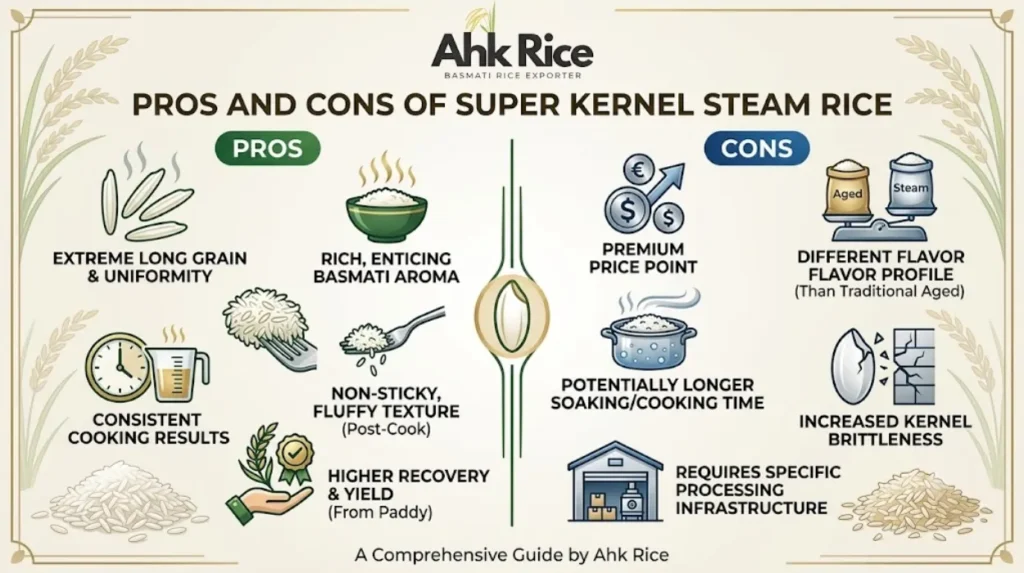
Super Kernel Steam Rice delivers strong export flexibility, reliable production capacity, and broad market acceptance. Storage duration remains shorter than Golden Sella alternatives.
Advantages
| Advantage | Commercial Benefit |
|---|---|
| High Production Volume | Supports large contracts |
| Consistent Grain Appearance | Improves retail appeal |
| Competitive Pricing | Increases procurement efficiency |
| Strong Market Acceptance | Simplifies distribution |
| Flexible Packaging | Supports multiple channels |
Example: UAE retailers often choose Steam Rice because shelf appearance directly affects purchasing decisions.
Limitations
| Limitation | Commercial Impact |
|---|---|
| Shorter Shelf Life Than Sella | Requires faster inventory rotation |
| Higher Cost Than White Rice | Increases acquisition costs |
| Storage Sensitivity | Requires moisture control |
Example: Long-term storage programs in Iraq frequently favor Golden Sella because inventory may remain in warehouses for extended periods.
The advantages and limitations clarify product suitability. The next section focuses on procurement decision factors.
What decision factors should buyers evaluate before placing orders?
Five core factors determine procurement success: volume requirements, destination market, storage duration, quality specification, and delivery schedule.
Decision Framework
| Decision Factor | Steam Rice | White Rice | Golden Sella |
|---|---|---|---|
| High Volume Contracts | Excellent | Excellent | Good |
| Retail Presentation | Excellent | Good | Good |
| Long Storage | Good | Moderate | Excellent |
| Cost Efficiency | Good | Excellent | Moderate |
| Export Flexibility | Excellent | Good | Excellent |
Volume planning should align with annual demand forecasts. Large contracts benefit from processors maintaining dedicated inventory programs.
Destination market requirements should determine grade selection. Gulf importers often prioritize appearance, while European buyers emphasize documentation and consistency.
Storage duration affects processing choice. Golden Sella remains preferable for extended warehousing. Steam Rice performs best within standard inventory cycles.
Quality specifications should define moisture limits, broken percentage, grain length, and purity requirements before production begins.
Delivery schedules should match seasonal sales patterns. Early procurement often reduces shipping disruptions during peak export periods.
These decision factors create a structured procurement framework. The final step is identifying suppliers capable of meeting delivery commitments consistently.
FAQs
What is the average production capacity of Super Kernel Steam Rice?
Large Pakistani exporters commonly manage 5,000–50,000+ MT annually through contracted cultivation, storage facilities, and continuous milling operations.
How long does Super Kernel Steam Rice remain fresh?
Super Kernel Steam Rice generally maintains quality for 12–18 months under proper storage conditions with controlled moisture levels.
Which market imports the most Super Kernel Steam Rice?
Gulf countries remain among the largest buyers due to strong demand from retail, hospitality, and food service sectors.
Is Steam Rice better than Golden Sella Rice?
Steam Rice offers better appearance and balanced pricing. Golden Sella provides longer storage stability and stronger moisture resistance.
How quickly can export shipments be dispatched?
Export orders can often be dispatched within 7–21 days after production scheduling, quality inspection, packaging completion, and documentation approval.
What packaging options are available?
Exporters commonly supply 1 kg, 5 kg, 10 kg, 25 kg, and 50 kg packaging formats with private labeling options.