Pakistan 1121 vs Indian Pusa Rice: Grain Length Comparison for Saudi Arabian Rice Traders
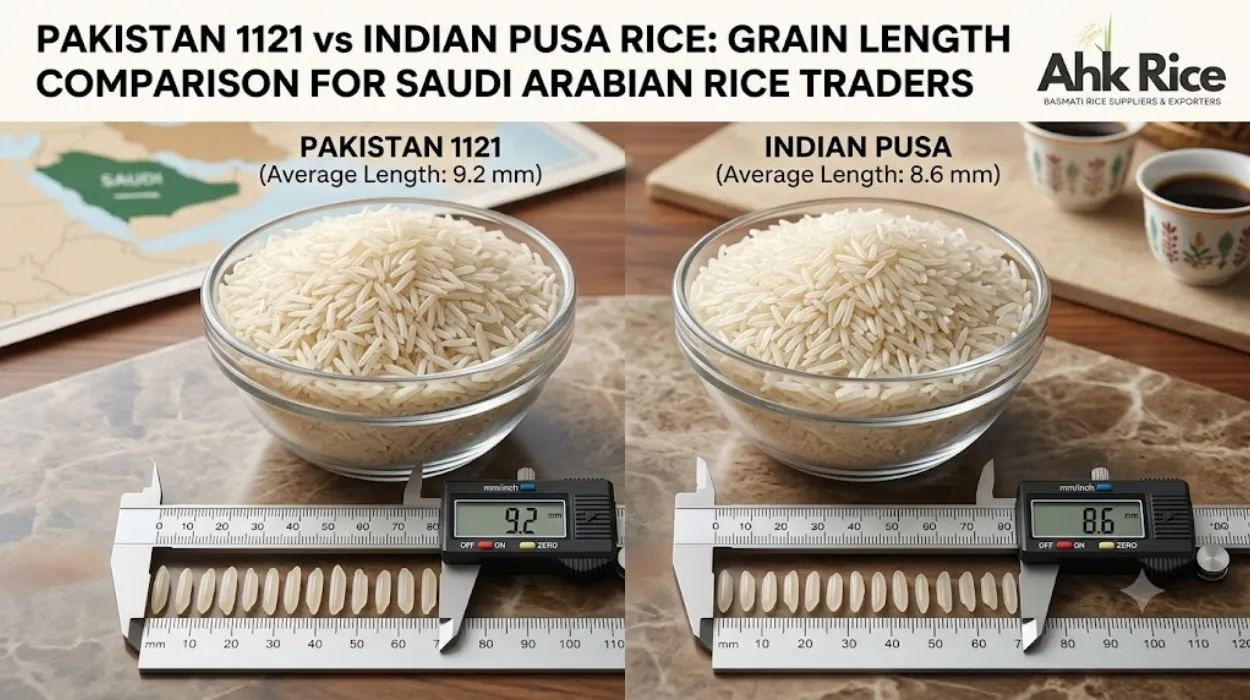
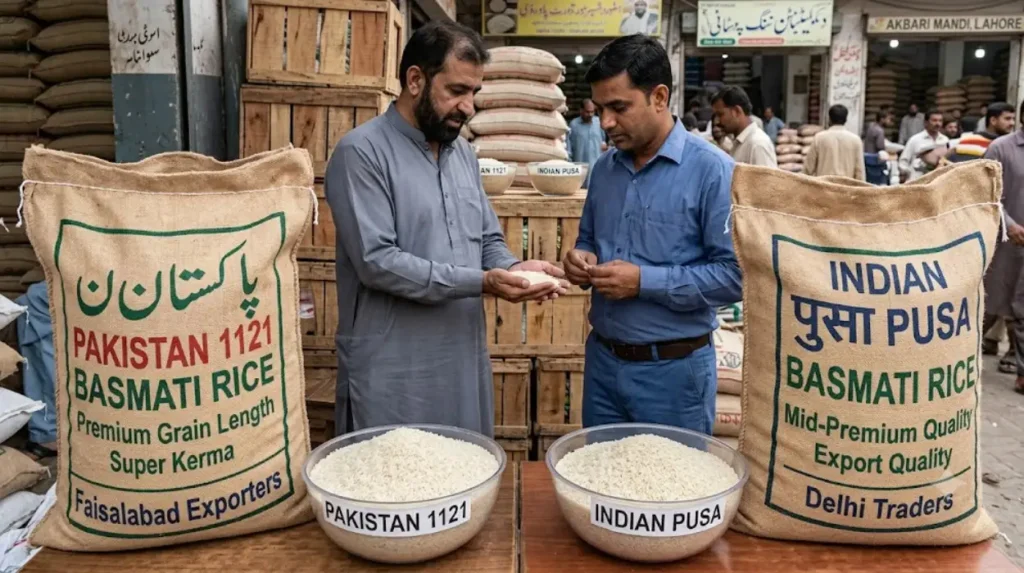
Pakistan 1121 Basmati rice offers a longer grain, higher cooked elongation ratio, and stronger preference in premium Saudi retail and hospitality segments than Indian Pusa varieties. Here is why: Pakistan 1121 regularly achieves raw grain lengths above 8.3 mm with superior post-cooking elongation, while Indian Pusa rice focuses on balanced yield, availability, and price competitiveness in selected import channels.
Saudi Arabian rice traders evaluate grain length because it directly influences retail positioning, restaurant acceptance, consumer perception, and profit margins. Buyers comparing Pakistan 1121 and Indian Pusa rice often begin with grain appearance, but successful procurement decisions also require analysis of cooking performance, shelf life, pricing, processing grades, and market-specific demand.
Traders researching Saudi Arabia’s preference for extra-long grain imports often first review educational resources explaining the characteristics of premium Basmati varieties, such as our guide discussing why Saudi importers increasingly select Pakistan 1121 as an extra-long grain option for retail and catering markets.
AHK Rice supplies multiple export-grade Basmati varieties from Punjab, Pakistan, including 1121, Super Kernel, and 1509. Through integrated milling, grading, packaging, inspection, and export operations, AHK Rice supports importers seeking consistent specifications and customized shipment programs for Gulf markets.
What Is the Difference Between Pakistan 1121 and Indian Pusa Rice for Saudi Importers?
Pakistan 1121 delivers grain lengths above 8.30 mm, cooked elongation up to 2.5 times, and premium positioning, while Indian Pusa varieties provide competitive pricing, stable availability, and strong performance in value-focused distribution channels.
Saudi Arabian traders compare these rice varieties because both belong to the premium long-grain segment but serve different commercial objectives.
Pakistan 1121 Basmati rice is a premium extra-long grain aromatic rice cultivated primarily in Punjab, Pakistan. The variety gained international recognition because of its exceptional grain length and visual appeal after cooking.
Indian Pusa rice refers to several rice varieties developed through breeding programs in India. The most commonly exported options include Pusa Basmati 1121 and related improved varieties. Saudi importers often classify them broadly as Pusa rice when comparing origins.
Grain Length Comparison
Specification Table
| Attribute | Pakistan 1121 Basmati | Indian Pusa Rice |
|---|---|---|
| Average Raw Grain Length | 8.30–8.60 mm | 8.00–8.40 mm |
| Cooked Grain Length | 18–22 mm | 16–20 mm |
| Elongation Ratio | 2.2–2.5x | 2.0–2.3x |
| Aroma Intensity | High | Moderate to High |
| Visual Appearance | Extra Long | Long to Extra Long |
| Premium Retail Acceptance | Very High | High |
| Saudi Catering Demand | Strong | Moderate |
Pakistan 1121 creates a stronger visual impact on retail shelves. Saudi consumers often associate longer grains with higher quality and premium dining experiences.
Indian Pusa rice remains competitive because it combines acceptable grain length with broader supply availability. Large-volume distributors frequently evaluate Pusa varieties when targeting mid-market segments.
Pakistan 1121 gains additional value from its cooked appearance. Long, separate grains improve presentation in kabsa, mandi, and premium restaurant applications.
Grain length establishes the foundation of comparison, but Saudi traders must also evaluate available procurement options and sourcing strategies.
What Are the Available Rice Sourcing Solutions for Saudi Arabian Traders?
Three primary solutions exist: premium Pakistan 1121 procurement, Indian Pusa sourcing, and mixed portfolio purchasing. Each option serves different pricing, branding, and distribution objectives.
Saudi importers rarely purchase rice solely based on grain length. Procurement strategy determines profitability across retail, wholesale, and foodservice channels.
Premium Pakistan 1121 Strategy
Pakistan 1121 serves importers targeting premium supermarkets, hospitality chains, and branded retail programs.
This strategy emphasizes extra-long grain appearance, stronger consumer recognition, and higher perceived value. Premium positioning often supports stronger retail margins.
Pakistan 1121 performs particularly well in Saudi cities where consumers actively seek imported Basmati products.
Indian Pusa Strategy
Indian Pusa varieties support distributors focusing on volume-driven sales.
This approach prioritizes supply flexibility and competitive pricing. Mid-tier wholesalers frequently select this model to serve broad distribution networks.
Indian Pusa rice satisfies buyers who prioritize cost management while maintaining acceptable quality standards.
Mixed Portfolio Strategy
Mixed sourcing combines Pakistan 1121 and Indian Pusa rice within the same distribution portfolio.
Premium retail channels receive Pakistan 1121. Value-focused channels receive Indian Pusa products.
Large trading companies often use this approach because it balances risk, pricing flexibility, and inventory management.
With sourcing options established, the next question concerns how these approaches compare in practical commercial situations.
How Do Pakistan 1121 and Indian Pusa Rice Compare on Price, Shelf Life, and Market Demand?
Pakistan 1121 commands higher premiums, delivers stronger visual differentiation, and dominates premium Saudi segments, while Indian Pusa offers lower acquisition costs and broader value-market penetration.
Rice traders evaluate profitability using multiple variables beyond purchase cost.
Price Per Metric Ton Comparison
Export pricing changes throughout the year according to harvest cycles, freight costs, and currency movements.
| Factor | Pakistan 1121 | Indian Pusa |
|---|---|---|
| Typical Export Position | Premium | Mid-Premium |
| Average Market Price | Higher | Lower |
| Retail Margin Potential | Higher | Moderate |
| Branding Opportunity | Strong | Moderate |
| Hospitality Acceptance | Strong | Good |
Pakistan 1121 frequently achieves premium pricing because buyers pay for grain length, elongation, and appearance.
Indian Pusa attracts distributors seeking competitive market entry pricing.
Price alone does not determine value. A rice variety generating higher retail margins can produce better overall profitability.
Shelf Life Comparison
Shelf life influences warehouse planning and inventory turnover.
| Characteristic | Pakistan 1121 | Indian Pusa |
|---|---|---|
| Recommended Shelf Life | 18–24 Months | 12–24 Months |
| Aroma Retention | Strong | Moderate |
| Storage Performance | Excellent | Good |
| Premium Packaging Compatibility | Excellent | Good |
Pakistan 1121 aged rice often develops stronger aroma characteristics. Saudi premium retailers frequently prefer aged stock because aroma supports product differentiation.
Indian Pusa performs effectively under standard commercial storage conditions.
Pakistan 1121 maintains quality for extended periods. In Gulf warehouse environments reaching 40°C, properly packed aged 1121 often retains premium characteristics longer. Value-oriented Pusa inventories generally require faster stock rotation for optimal market performance.
Saudi Market Preferences
Saudi Arabia remains one of the world’s largest Basmati importing markets (source: Saudi General Authority for Statistics, 2025).
Premium retail channels increasingly favor extra-long grain specifications because consumers associate grain length with authenticity and quality.
Foodservice operators prioritize consistency, cooking yield, and plate presentation.
Pakistan 1121 benefits from all three purchasing criteria.
Market demand explains performance differences, but traders still need a framework for selecting the correct option.
Which Rice Variety Works Best for Different Saudi Business Models?
Pakistan 1121 suits premium retail and hospitality segments, while Indian Pusa suits cost-sensitive distribution channels. Mixed sourcing works best for diversified import portfolios.
Rice selection depends on customer expectations.
For Premium Retail Brands
Pakistan 1121 offers the strongest differentiation.
Premium supermarkets require visual appeal. Extra-long grains attract consumer attention and support premium packaging claims.
High-end brands benefit from Pakistan 1121 because the product aligns with luxury positioning.
For Hospitality and Catering
Pakistan 1121 performs exceptionally well in restaurants serving kabsa, mandi, and banquet meals.
Long cooked grains improve presentation quality.
High elongation ratios increase perceived value for diners.
For Value Distribution
Indian Pusa supports distributors serving budget-conscious markets.
Lower acquisition costs allow aggressive pricing strategies.
Broad availability simplifies procurement planning.
For Multi-Channel Importers
Mixed sourcing creates flexibility.
Premium clients receive Pakistan 1121.
Value clients receive Indian Pusa.
This model reduces commercial risk while expanding customer reach.
Selecting the correct variety requires understanding advantages and limitations, which leads directly to a pros-and-cons analysis.
What Are the Pros and Cons of Pakistan 1121 and Indian Pusa Rice?
Pakistan 1121 excels in grain length, elongation, and premium positioning, while Indian Pusa excels in affordability, supply flexibility, and broad market accessibility.
Pakistan 1121 Advantages
- Superior grain length
- Strong cooked elongation
- Premium consumer perception
- Excellent aroma profile
- Strong Saudi market recognition
Pakistan 1121 allows retailers to create premium product categories. Long grains enhance shelf appearance and strengthen brand differentiation.
Pakistan 1121 Limitations
- Higher procurement cost
- Premium market dependency
- Greater emphasis on quality consistency
Importers targeting low-price competition may find premium specifications unnecessary.
Indian Pusa Advantages
- Competitive pricing
- Strong availability
- Flexible procurement options
- Suitable for broad distribution
Indian Pusa helps wholesalers maintain attractive pricing across large customer bases.
Indian Pusa Limitations
- Less visual differentiation
- Lower premium perception
- Reduced elongation compared with top-grade 1121
Retailers competing in premium segments often require stronger product distinction.
Understanding strengths and limitations leads naturally to the final purchasing decision framework.
What Decision Factors Should Saudi Rice Traders Use Before Purchasing?
Five factors determine the correct choice: target customer, retail positioning, margin goals, inventory strategy, and brand objectives.
Decision Framework Table
| Decision Factor | Choose Pakistan 1121 | Choose Indian Pusa |
|---|---|---|
| Target Customer | Premium buyers | Value buyers |
| Retail Positioning | Premium shelves | Mass market |
| Profit Strategy | Higher margins | Higher volume |
| Brand Development | Strong branding | Competitive pricing |
| Foodservice Focus | Premium dining | Budget catering |
Saudi traders should begin with customer analysis.
Premium supermarkets demand differentiation. Pakistan 1121 satisfies that requirement through extra-long grain characteristics.
Volume wholesalers prioritize affordability. Indian Pusa supports that objective through competitive procurement costs.
Brand owners should evaluate consumer expectations before selecting a specification. Product-market alignment consistently produces stronger long-term results than price-driven decisions.
Importers seeking complete procurement support, specification customization, and export documentation often evaluate supplier capabilities before finalizing contracts. Detailed sourcing guidance is available in our resource covering how Saudi distributors procure export-grade Pakistan 1121 rice directly from Pakistan.
Conclusion
Pakistan 1121 remains the preferred choice for Saudi traders seeking maximum grain length, stronger cooked appearance, premium positioning, and higher retail value. Indian Pusa remains a practical option for cost-sensitive channels requiring competitive pricing and broad distribution.
Saudi Arabian rice buyers should match grain specifications to customer expectations rather than selecting solely on acquisition cost. Premium retail and hospitality programs benefit from Pakistan 1121. Value-focused distribution networks benefit from Indian Pusa. Diversified importers often achieve the strongest commercial results through a mixed sourcing strategy.
Frequently Asked Questions
Is Pakistan 1121 rice longer than Indian Pusa rice?
Yes. Pakistan 1121 Basmati rice generally has a raw grain length of 8.30–8.60 mm, while most Indian Pusa rice varieties range from 8.00–8.40 mm. The difference becomes more noticeable after cooking because Pakistan 1121 achieves a higher elongation ratio.
Which rice variety is more popular in Saudi Arabia?
Pakistan 1121 is highly popular in Saudi Arabia, especially in premium retail stores, restaurants, and catering businesses. Saudi consumers often prefer extra-long grains because they enhance the appearance of traditional dishes such as Kabsa and Mandi.
What is the price difference between Pakistan 1121 and Indian Pusa rice?
Pakistan 1121 usually commands a higher price per metric ton because of its longer grain length, stronger aroma, and premium market demand. Indian Pusa rice is generally more affordable and is commonly selected for cost-sensitive distribution channels.
Which rice variety offers better cooking performance?
Pakistan 1121 offers superior cooking performance for premium applications. The grains elongate significantly, remain separate after cooking, and provide an attractive presentation. Indian Pusa rice also cooks well but typically produces slightly shorter cooked grains.
Which rice should Saudi traders choose?
The choice depends on the target market. Pakistan 1121 is the preferred option for premium retail brands, hospitality businesses, and high-end foodservice operations. Indian Pusa rice is suitable for wholesalers and distributors focused on competitive pricing and large-volume sales.