What Does Rice Purity Mean for Saudi Arabian Buyers Importing Pakistan Basmati Rice?
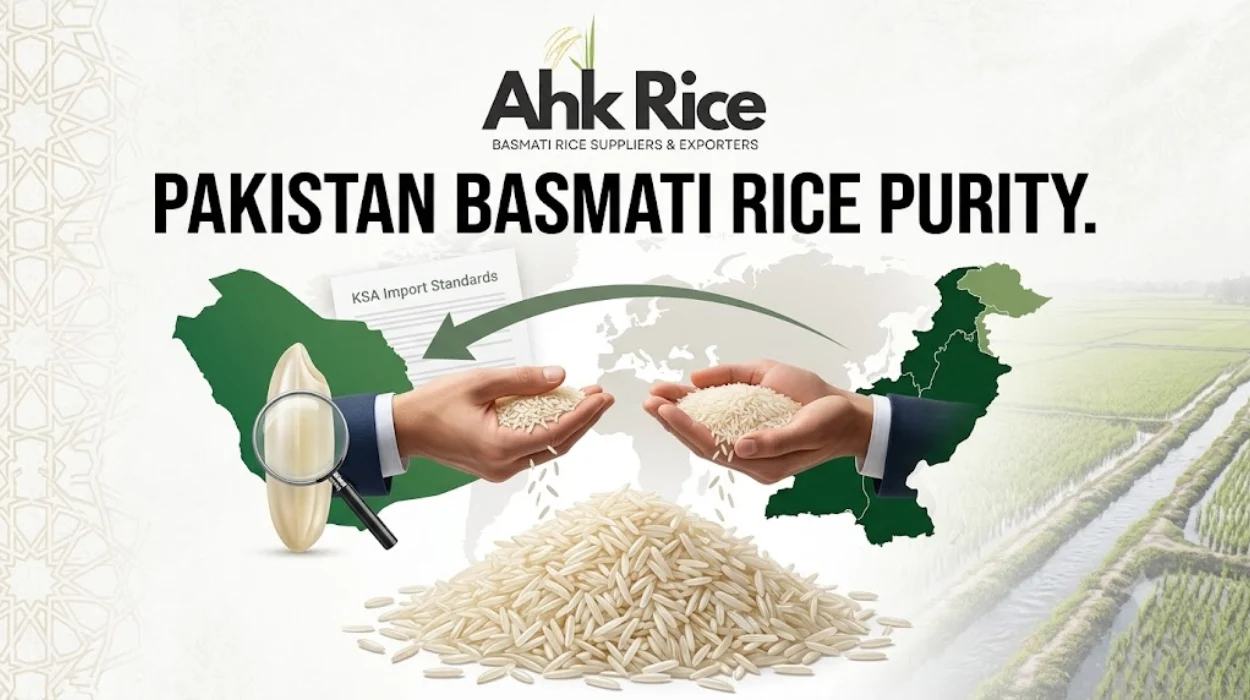
Rice purity is one of the first quality indicators Saudi Arabian importers evaluate before purchasing Pakistan Basmati rice. Purity determines whether a shipment contains only the declared rice variety, free from foreign grains, broken kernels beyond specification, stones, dust, husk particles, weed seeds, and other contaminants. Higher purity produces consistent cooking performance, accurate grading, easier processing, and compliance with Saudi food import standards.
Pakistan grows Basmati rice in the fertile plains of Punjab, where climatic conditions, irrigation systems, and traditional cultivation practices support premium aromatic long-grain rice. After harvesting, rice passes through cleaning, milling, grading, sorting, polishing, inspection, packaging, and export documentation before reaching international buyers.
Saudi Arabia remains one of the largest import markets for Pakistani Basmati rice because of high household consumption, food service demand, catering businesses, and retail distribution. Importers therefore pay close attention to purity specifications before approving shipments. Buyers interested in laboratory testing methods and inspection procedures can continue with the companion guide explaining:
How laboratory verification supports rice quality assessment.
What Does Rice Purity Mean?
Rice purity means a shipment contains the declared rice variety with specified quality parameters and without unwanted materials such as foreign grains, stones, dust, immature kernels, weed seeds, metal particles, excessive broken rice, or other contaminants. Purity is measured using internationally recognized inspection standards before export.
Rice purity is a measurable quality parameter rather than a marketing term. Every export contract specifies acceptable purity levels according to buyer requirements and importing country regulations.
A pure shipment contains only the agreed rice variety. Examples include 1121 Steam Basmati, 1121 White Basmati, Super Kernel Basmati, and 1509 Basmati. Mixing varieties changes cooking behavior, grain appearance, and market value.
Purity also includes freedom from physical contamination. Export-quality rice undergoes several cleaning stages that remove:
- Stones
- Sand particles
- Straw
- Husk
- Dust
- Weed seeds
- Metal fragments
- Insect-damaged kernels
International buyers normally express purity through technical specifications instead of descriptive words. A laboratory inspection compares the shipment against those specifications before container loading.
Which Factors Determine Rice Purity?
Several measurable characteristics determine purity.
These include varietal identity, percentage of foreign matter, broken rice percentage, damaged grains, immature kernels, chalky grains, discolored grains, moisture content, and physical cleanliness.
Each factor influences the final export grade.
How Does Rice Purity Work Throughout the Processing Chain?
Rice purity develops through controlled processing instead of appearing naturally after harvesting. Each production stage removes unwanted materials, separates grain sizes, identifies defective kernels, and confirms varietal consistency until the finished export lot satisfies contractual quality specifications for international buyers.
Harvesting represents only the starting point.
Freshly harvested paddy contains rice mixed with straw, dust, soil particles, immature grains, and field debris. Processing removes these unwanted materials through multiple controlled stages.
The standard export sequence includes:
- Paddy reception
- Drying
- Storage
- Pre-cleaning
- Destoning
- Husking
- Paddy separation
- Whitening
- Polishing
- Length grading
- Color sorting
- Metal detection
- Quality inspection
- Packaging
- Container loading
Each stage improves purity.
Color sorters identify discolored kernels using optical cameras. Length graders separate broken kernels from whole grains. Destoners remove heavier materials such as stones. Magnetic separators eliminate metal contamination before packaging.
The combined process creates a uniform shipment that matches buyer specifications.
Why Is Color Sorting Important?
Color sorting removes grains that differ in appearance from the accepted quality standard.
Examples include yellow grains, black grains, insect-damaged kernels, mold-affected grains, and stained rice.
Removing these grains improves visual consistency and reduces quality variation throughout the shipment.
What Are the Key Components of Rice Purity?
Rice purity consists of several measurable quality indicators working together instead of one single characteristic. Variety identity, grain uniformity, cleanliness, foreign matter percentage, broken grain level, moisture control, and laboratory inspection collectively determine export purity standards for Pakistan Basmati rice.
Importers evaluate several specifications simultaneously.
Variety Identity
The shipment should contain only the declared variety.
For example, 1121 Steam Basmati should not contain Super Kernel or 1509 grains.
Grain Uniformity
Uniform grains cook evenly.
Long grains of similar size produce consistent expansion after cooking.
Foreign Matter
Foreign matter includes materials that are not edible rice.
Examples include stones, sand, straw, dust, weed seeds, husk fragments, and soil particles.
Broken Rice
Every export grade specifies an allowable broken percentage.
Premium grades contain fewer broken kernels than commercial grades.
Moisture
Export moisture generally remains within contractual specifications that support storage stability and transportation safety.
Proper moisture management helps preserve grain quality during sea transit.
Inspection Reports
Independent inspections confirm that rice meets contractual purity specifications before shipment.
Inspection reports document measured values instead of subjective opinions.
What Benefits Does High Rice Purity Provide Saudi Arabian Buyers?
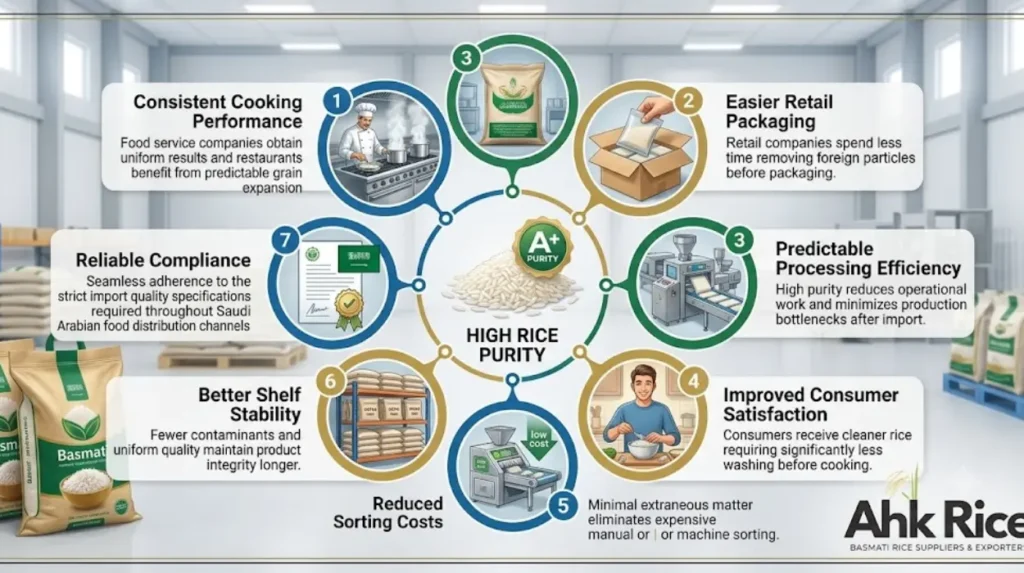
High rice purity delivers consistent cooking performance, easier retail packaging, predictable processing efficiency, improved consumer satisfaction, reduced sorting costs, better shelf stability, and reliable compliance with import quality specifications required throughout Saudi Arabian food distribution channels.
High purity reduces operational work after import.
Retail companies spend less time removing foreign particles before packaging.
Food service companies obtain more consistent cooking results.
Restaurants benefit from uniform grain expansion.
Hotels achieve stable presentation across repeated recipes.
Wholesalers experience fewer customer complaints regarding contamination or mixed varieties.
Consumers receive cleaner rice requiring less washing before cooking.
Purity also supports inventory consistency because each shipment follows the same technical specifications.
Which Industries Benefit Most?
Several industries prioritize high purity.
Examples include:
- Supermarkets
- Hypermarkets
- Restaurants
- Hotels
- Catering companies
- Food manufacturers
- Rice distributors
- Wholesale import businesses
Each industry values consistency because it simplifies purchasing decisions and quality control.
Where Is Pakistan Basmati Rice Grown Before Export?
Pakistan Basmati rice grows primarily within Punjab’s traditional rice-producing belt, where fertile alluvial soils, seasonal monsoon rainfall, canal irrigation, and warm climatic conditions support aromatic long-grain varieties recognized throughout international export markets.
Punjab produces the majority of Pakistan’s export-quality Basmati rice.
Major producing districts include:
- Gujranwala
- Hafizabad
- Sheikhupura
- Narowal
- Sialkot
- Nankana Sahib
- Okara
Farmers plant rice during the Kharif season.
Harvest normally begins during autumn after grain maturity.
After harvesting, paddy moves to processing facilities where cleaning and grading begin.
Growing conditions influence aroma, grain length, and cooking characteristics before processing determines export purity.
Which Pakistani Basmati Varieties Enter Saudi Arabia?
Saudi Arabia imports several Pakistani varieties.
Common examples include:
- 1121 Steam Basmati
- 1121 White Basmati
- 1121 Sella Basmati
- Super Kernel White Basmati
- Super Kernel Steam Basmati
- Super Kernel Sella Basmati
- 1509 Steam Basmati
- 1509 White Basmati
- 1509 Sella Basmati
Each variety follows its own grading specifications before export.
Which Grades of Pakistan Basmati Rice Are Available?
Pakistan Basmati rice is available in multiple commercial grades that differ according to grain length, broken percentage, milling quality, polishing level, processing method, and buyer specifications rather than aroma or origin alone.
Export grades generally include:
- Extra Long Grain
- Premium Grade
- Standard Grade
- Sortex Clean Grade
- Double Sortex Grade
- Triple Sortex Grade
Processing methods include:
- White Rice
- Steam Rice
- Sella Rice
- Golden Sella Rice
- Creamy Sella Rice
Every buyer selects specifications based on target consumers and intended market segment.
The export contract defines acceptable tolerances for each grade before production begins.
Why Do Grades Matter?
Different grades satisfy different commercial requirements.
Premium retail brands usually select higher uniformity.
Large institutional buyers often prioritize contractual specifications that balance quality and commercial objectives.
Which Markets Import Pakistan Basmati Rice Besides Saudi Arabia?
Pakistan Basmati rice reaches numerous international markets through structured export programs serving retail, wholesale, hospitality, catering, and food manufacturing sectors across Asia, the Middle East, Europe, North America, Africa, and Oceania.
Saudi Arabia represents one of the largest destinations.
Other importing markets include:
- United Arab Emirates
- Kuwait
- Qatar
- Oman
- Bahrain
- Iraq
- United Kingdom
- Germany
- Canada
- United States
- Australia
- South Africa
Each importing country establishes its own documentation and inspection requirements.
Exporters prepare shipments according to destination-specific regulations before loading containers.
Which Certifications Support Rice Purity During Export?
Export certification verifies that Pakistan Basmati rice satisfies recognized food safety, quality management, inspection, and phytosanitary requirements established by importing authorities, accredited laboratories, and international compliance systems before overseas shipment begins.
Several certifications commonly support export documentation.
Examples include:
- ISO 22000 Food Safety Management
- HACCP
- Phytosanitary Certificate
- Certificate of Origin
- Fumigation Certificate when required by destination regulations
- Quality Inspection Certificate
- Health Certificate where applicable
These documents accompany export shipments according to importing country requirements.
Certification confirms compliance with documented standards rather than replacing laboratory inspection.
Why Do Inspection Certificates Matter?
Inspection certificates provide measurable evidence.
They record laboratory observations including purity specifications, moisture values, broken percentage, and physical cleanliness according to agreed standards.
Importers compare these documented results with contractual requirements before shipment acceptance.
What Misconceptions Exist About Rice Purity?
Rice purity refers to measurable quality specifications rather than visual appearance, expensive packaging, or premium branding. Laboratory inspection, standardized grading, and controlled processing determine purity using objective measurements instead of marketing descriptions.
Several misconceptions appear frequently.
Some buyers assume bright white rice automatically indicates higher purity.
Color alone does not measure purity.
Others believe longer grains always indicate better purity.
Grain length represents one grading characteristic rather than complete purity.
Another misconception states that polishing improves purity.
Polishing enhances appearance, while cleaning, sorting, grading, and inspection establish purity.
Some buyers also confuse aroma with purity.
Aromatic quality and purity measure different characteristics.
Understanding these distinctions allows buyers to interpret export specifications accurately.
Rice purity combines measurable technical indicators instead of relying on appearance or advertising claims. Saudi Arabian buyers evaluate varietal consistency, foreign matter limits, grading standards, inspection reports, processing quality, and certification documents together before approving Pakistan Basmati rice shipments. This systematic assessment supports consistent product quality across retail, food service, wholesale, and distribution channels.
Frequently Asked Questions
What is rice purity in Pakistan Basmati rice exports?
Rice purity refers to the percentage of clean, uniform rice grains that are free from foreign matter, mixed varieties, stones, dust, weed seeds, metal particles, and excessive broken kernels according to export specifications.
Why is rice purity important for Saudi Arabian importers?
Rice purity ensures consistent cooking performance, product appearance, food safety, easier processing, and compliance with Saudi Arabian import quality requirements, reducing complaints and improving consumer satisfaction.
How is rice purity measured before export?
Rice purity is measured through laboratory inspection, physical sampling, grading, color sorting verification, foreign matter analysis, broken rice assessment, and moisture testing based on contractual specifications.
Which impurities are removed during rice processing?
Processing removes stones, sand, straw, husk, dust, weed seeds, immature grains, damaged kernels, metal particles, and other unwanted materials before packaging.
Where is Pakistan Basmati rice mainly grown?
Pakistan Basmati rice is primarily grown in Punjab, especially in Gujranwala, Hafizabad, Sheikhupura, Narowal, Sialkot, Nankana Sahib, and Okara districts.
Which Pakistani Basmati rice varieties are commonly exported to Saudi Arabia?
The main varieties include 1121 Steam Basmati, 1121 White Basmati, 1121 Sella Basmati, Super Kernel Basmati, and 1509 Basmati in different processing types.
What processing steps improve rice purity?
Rice purity improves through pre-cleaning, destoning, husking, paddy separation, whitening, polishing, length grading, color sorting, metal detection, quality inspection, and packaging.
What certifications support rice purity during export?
Common export certifications include ISO 22000, HACCP, Phytosanitary Certificate, Certificate of Origin, Quality Inspection Certificate, and other destination-specific compliance documents.
Does polished rice always have higher purity?
No. Polishing improves appearance, while rice purity depends on cleaning, grading, sorting, inspection, and the removal of contaminants.
Which industries benefit most from high-purity Basmati rice?
High-purity rice is preferred by supermarkets, wholesalers, restaurants, hotels, catering companies, food manufacturers, and retail distributors because it provides consistent quality and reliable cooking performance.