What Drives Consumer Demand for 1509 White Basmati Rice?
Consumer demand for 1509 White Basmati Rice continues to increase because buyers expect long grain appearance, clean white color, fast cooking, pleasant natural aroma, and competitive pricing in one variety. By 2026, the variety has secured a strong position across retail, food service, wholesale distribution, and private-label markets because it balances quality with commercial value.
Unlike traditional Basmati varieties that require longer cultivation periods, 1509 White Basmati Rice reaches maturity earlier while maintaining the characteristics that many international buyers associate with premium Pakistani rice. This combination supports stable exports to markets across the Middle East, Africa, Europe, North America, and Asia.
Understanding the factors behind this demand helps importers, distributors, retailers, and food businesses evaluate why the variety performs consistently across different commercial applications. Readers interested in how aroma stability and grain characteristics remain consistent after processing should also explore the detailed discussion on:
Evaluating aroma preservation throughout processing and storage
What Is 1509 White Basmati Rice?
1509 White Basmati Rice is an extra-long grain Basmati variety developed through conventional breeding. It produces slender white grains, natural fragrance, excellent grain elongation after cooking, and faster crop maturity while maintaining the cooking qualities expected from premium Pakistani Basmati rice.
1509 White Basmati belongs to the Basmati family, which is recognized for its naturally aromatic long grains. It differs from traditional varieties because breeders focused on achieving earlier harvests without sacrificing cooking performance.
The variety is cultivated primarily in Punjab, Pakistan, where fertile alluvial soil, seasonal temperatures, and irrigation from the Indus River system support healthy grain development.
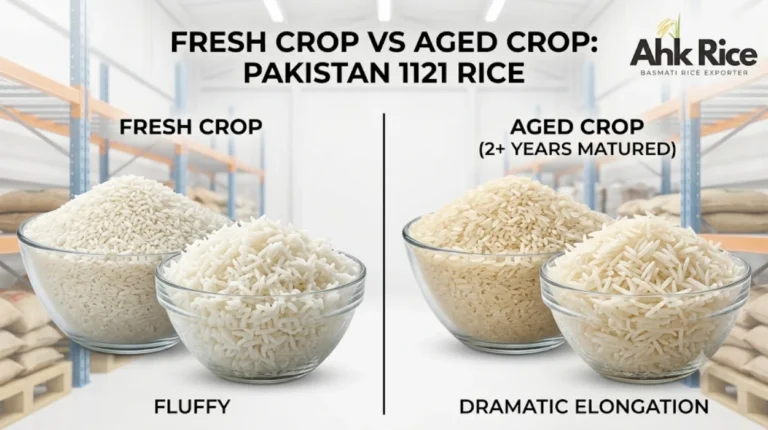
The grains remain naturally long before cooking. After cooking, they elongate significantly while maintaining separation between individual grains. This characteristic makes the rice attractive for dishes that require visual presentation.
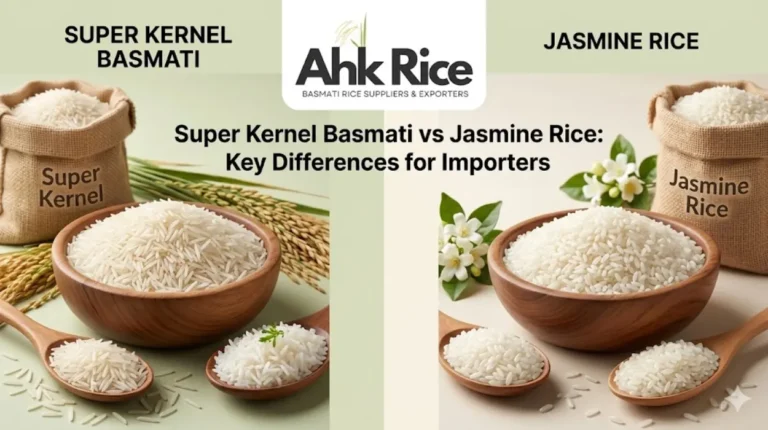
Consumers often compare 1509 White Basmati with varieties such as 1121 Basmati and Super Kernel Basmati. Each variety serves different commercial preferences based on grain length, aroma intensity, cooking behavior, and market pricing.
Where Is It Grown?
Pakistan grows most export-quality 1509 White Basmati in Punjab.
Major production districts include examples such as Gujranwala, Hafizabad, Sheikhupura, Narowal, Sialkot, and Okara. These regions provide fertile land, controlled irrigation, and suitable climatic conditions that support consistent grain quality.
How Does 1509 White Basmati Rice Reach Consumers?
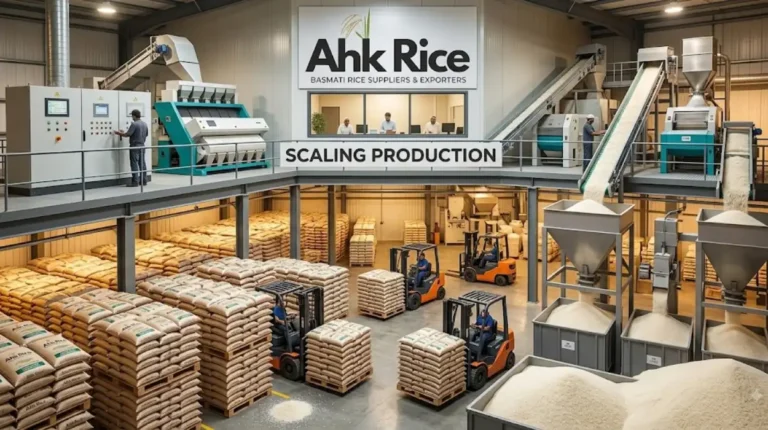
Consumer demand develops through a complete agricultural and processing chain that begins with certified seed selection, continues through controlled cultivation and milling, and ends with quality inspection, grading, packaging, storage, and international distribution under export standards.
Every production stage influences the final product that reaches supermarkets, restaurants, wholesalers, and food manufacturers.
Seed Selection
Farmers begin with certified seed to maintain varietal purity.
Uniform seed supports consistent plant growth and reduces mixing with other rice varieties.
Field Cultivation
The crop grows during Pakistan’s Kharif season.
Fields receive controlled irrigation throughout the growing cycle.
Nutrient management supports healthy grain formation while integrated pest management protects crop quality.
Harvesting
Harvest begins after grains reach the correct maturity level.
Harvesting at the proper moisture content reduces grain breakage during milling.
Drying
Freshly harvested paddy undergoes controlled drying.
Drying reduces moisture to safe storage levels while protecting grain integrity.
Milling
Modern rice mills remove the husk and bran layers.
The polishing stage creates the clean white appearance associated with White Basmati Rice.
Grading
Machines separate grains according to length and broken percentage.
Foreign matter, immature kernels, and damaged grains are removed before export packing.
Packaging
Rice enters moisture-controlled packaging.
Common commercial formats include examples such as 1 kg, 2 kg, 5 kg, 10 kg, 20 kg, 25 kg, and 50 kg bags.
Export Distribution
Export shipments move through containers under documented quality procedures.
Importers distribute the rice to supermarkets, food distributors, restaurants, catering companies, and retail chains.
What Components Drive Consumer Demand?
Consumer demand depends on several measurable characteristics including grain length, natural aroma, cooking expansion, appearance, texture, affordability, processing consistency, shelf stability, and compatibility with different cuisines across international food markets.
Each characteristic contributes to purchasing decisions.
Extra-Long Grain Appearance
Visual quality strongly influences consumer preference.
Long, slender grains create an attractive presentation before and after cooking.
Retail shoppers often associate longer grains with premium quality.
Natural Aroma
1509 White Basmati contains naturally occurring aromatic compounds.
The fragrance remains noticeable during cooking without artificial enhancement.
Consumers value rice that delivers pleasant aroma alongside visual appeal.
Cooking Performance
The grains expand significantly in length.
Properly cooked rice remains separate instead of forming sticky clusters.
Restaurants appreciate consistent cooking behavior because it improves serving quality.
White Grain Color
Uniform white appearance attracts retail consumers.
Clean polishing creates bright grains that fit premium product positioning.
Competitive Pricing
Earlier crop maturity improves agricultural efficiency.
Higher production availability supports competitive international pricing while maintaining premium cooking characteristics.
Why Do Consumers Prefer 1509 White Basmati Rice?
Consumers select 1509 White Basmati Rice because it combines premium cooking quality, attractive grain appearance, reliable aroma, versatile culinary performance, competitive pricing, and broad availability across retail and food service markets throughout the global rice trade.
Consumer demand reflects practical buying behavior rather than a single feature.
Value for Money
Many households compare quality with price.
1509 White Basmati delivers premium presentation without reaching the highest price category among Basmati varieties.
Reliable Cooking Results
Consistency encourages repeat purchases.
Consumers expect similar cooking performance every time they prepare the rice.
Wide Recipe Compatibility
The variety works well with numerous dishes.
Examples include biryani, pulao, steamed rice, grilled meat meals, curry dishes, vegetable rice, seafood platters, and festive banquet meals.
Attractive Shelf Presentation
Retail packaging benefits from the long, uniform grains.
Consumers often make purchasing decisions based on visible grain quality before reading detailed product specifications.
International Availability
Regular exports support continuous product availability.
Consistent supply strengthens consumer confidence in the variety.
Which Markets Import 1509 White Basmati Rice?
International demand comes from diverse markets that value premium grain quality, reliable cooking characteristics, stable supply chains, and competitive pricing across retail, wholesale, hospitality, catering, and food manufacturing sectors.
Global demand has expanded steadily because different regions value different commercial strengths.
Middle East
Countries such as Saudi Arabia, the United Arab Emirates, Qatar, Kuwait, Bahrain, and Oman import large quantities for retail and hospitality industries.
Long grains and excellent cooking performance remain key purchasing factors.
Europe
Markets including the United Kingdom, Germany, France, Italy, Spain, and the Netherlands purchase Basmati rice for multicultural retail sectors.
Consumers prioritize authenticity and quality compliance.
North America
The United States and Canada import Pakistani Basmati for supermarkets, ethnic grocery stores, restaurants, and food distributors.
Demand comes from both South Asian communities and broader consumer markets.
Africa
Countries including South Africa, Kenya, Tanzania, and Nigeria continue expanding premium rice imports as consumer purchasing power grows.
Asia-Pacific
Malaysia, Singapore, Australia, and New Zealand import premium Basmati products for retail and food service applications.
What Certifications Support International Trade?
Export-quality 1509 White Basmati Rice follows documented quality management, food safety, phytosanitary inspection, and regulatory compliance systems that enable international trade while protecting product consistency and consumer confidence throughout global supply chains.
Certification requirements differ between importing countries.
Several internationally recognized standards support export compliance.
Food Safety Management
Food safety systems verify documented production and processing controls.
These systems reduce contamination risks throughout the supply chain.
HACCP
Hazard Analysis and Critical Control Points identifies critical food safety stages.
Export processors implement monitoring procedures throughout production.
ISO Quality Management
ISO quality systems document operational consistency.
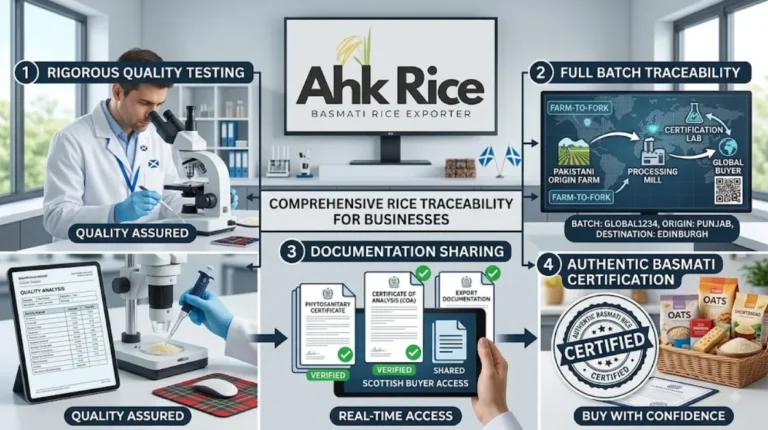
Documented procedures improve traceability across processing activities.
Phytosanitary Certification
Government authorities inspect export consignments before shipment.
Certificates confirm compliance with importing country plant health requirements.
Country-Specific Requirements
Different importing countries request different compliance documents.
Examples include laboratory reports, pesticide residue analysis, microbiological testing, and packaging compliance documentation.
What Misconceptions Affect Consumer Understanding?
Several misconceptions confuse buyers about 1509 White Basmati Rice. Understanding factual differences between aroma, grain length, cultivation methods, quality grades, and processing standards improves purchasing decisions and product evaluation.
Longer Grain Always Means Better Quality
Grain length represents only one quality indicator.
Quality also depends on purity, milling performance, moisture control, aroma retention, cooking behavior, and grading consistency.
White Rice Is Artificially Colored
White Basmati obtains its appearance through milling.
The polishing process removes outer bran layers naturally without adding white coloring agents.
All Basmati Rice Is Identical
Different Basmati varieties produce different cooking results.
Examples include 1121 Basmati, Super Kernel Basmati, Traditional Basmati, and 1509 White Basmati.
Each variety serves different commercial requirements.
Higher Price Always Indicates Better Rice
Price reflects multiple commercial factors.
Production volume, export demand, logistics costs, grading specifications, and packaging influence final market pricing.
Why Does Consumer Demand Continue Growing?
Demand continues increasing because 1509 White Basmati Rice satisfies modern consumer expectations for appearance, aroma, cooking quality, affordability, and international availability while supporting consistent quality standards across global food supply chains in 2026.

Consumers increasingly compare products using measurable characteristics instead of brand recognition alone.
Retail buyers examine grain length, cleanliness, broken percentage, moisture level, cooking expansion, and packaging quality before making purchasing decisions.
Restaurants evaluate cooking consistency because uniform rice improves operational efficiency.
Importers prioritize stable quality across repeated shipments.
Food distributors seek products that satisfy multiple customer segments without creating inventory complexity.
These combined commercial factors explain why 1509 White Basmati Rice continues expanding its presence across international markets. Its balance of visual appeal, reliable cooking performance, natural fragrance, and competitive market positioning supports sustained consumer demand across both developed and emerging food markets.
Frequently Asked Questions
What makes 1509 White Basmati Rice popular among consumers?
1509 White Basmati Rice is popular because it offers extra-long grains, a natural aroma, excellent cooking performance, a bright white appearance, and competitive pricing. These qualities make it suitable for both household and commercial use.
How is 1509 White Basmati Rice different from 1121 Basmati Rice?
1509 White Basmati Rice matures earlier in the field and is generally more cost-effective, while 1121 Basmati Rice is known for its exceptionally long grain length after cooking. Both varieties have distinct commercial applications.
Where is 1509 White Basmati Rice grown in Pakistan?
The variety is primarily cultivated in Punjab, Pakistan, especially in districts such as Gujranwala, Hafizabad, Sheikhupura, Narowal, Sialkot, and Okara, where fertile soil and favorable climate support premium grain quality.
Which countries import 1509 White Basmati Rice?
Major importing markets include Saudi Arabia, the UAE, Qatar, Kuwait, the United Kingdom, Germany, the United States, Canada, Australia, Malaysia, South Africa, and several other countries.
What dishes can be prepared with 1509 White Basmati Rice?
1509 White Basmati Rice is commonly used for biryani, pulao, steamed rice, fried rice, curry dishes, grilled meat platters, seafood meals, and festive banquet recipes because of its long, separate grains.
What certifications are commonly required for exporting 1509 White Basmati Rice?
Export shipments commonly require certifications such as HACCP, ISO quality management documentation, phytosanitary certificates, food safety compliance records, and country-specific laboratory reports depending on the destination market.
Does 1509 White Basmati Rice have a natural aroma?
Yes. 1509 White Basmati Rice contains a naturally occurring Basmati fragrance that develops during cooking without the addition of artificial flavoring or fragrance.
How is 1509 White Basmati Rice processed before export?
The rice undergoes seed selection, cultivation, harvesting, drying, milling, polishing, grading, quality inspection, packaging, and final export documentation before being shipped to international markets.
Why do restaurants and food service businesses prefer 1509 White Basmati Rice?
Restaurants value its consistent cooking performance, excellent grain elongation, non-sticky texture, attractive presentation, and reliable quality across large-volume meal preparation.
Does grain length alone determine the quality of 1509 White Basmati Rice?
No. Grain length is only one quality factor. Overall quality also depends on varietal purity, moisture content, aroma retention, broken percentage, milling quality, and cooking performance.