What Makes Pakistan 1121 Parboiled Basmati Rice Suitable for Indonesia’s Wholesale Trade?
Pakistan 1121 Parboiled Basmati Rice is suitable for Indonesian wholesale trade because its extra-long grain, aromatic profile, parboiled structure, low breakage potential, and batch-based grading support consistent cooking and distribution. Its commercial suitability depends on specifications, processing controls, food safety documentation, packaging, and Indonesian import compliance.
Pakistan 1121 is an aromatic Basmati rice variety recognized in Pakistan’s official Basmati specification framework. The Trade Development Authority of Pakistan lists PK 1121 aromatic among recognized varieties and identifies it separately from other Basmati varieties. Pakistan’s rice-growing base is concentrated strongly in Punjab, where districts such as Gujranwala, Sheikhupura, Sialkot, and Hafizabad support Basmati production.
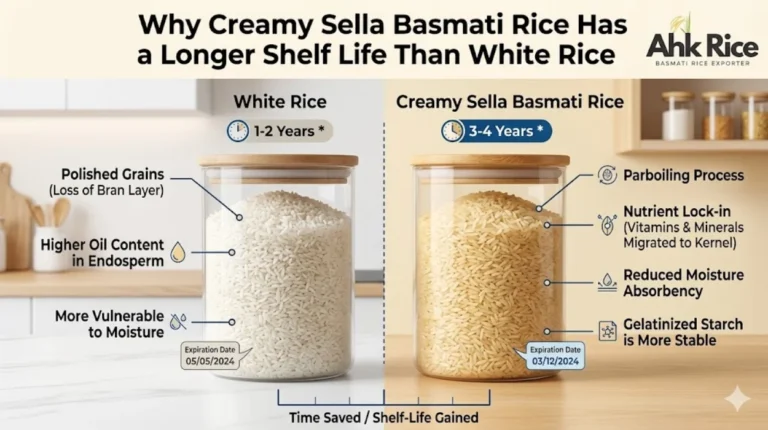
Parboiled rice is rice that undergoes hydrothermal treatment before milling. The process normally involves soaking, heating or steaming, drying, and then milling. In Pakistani export terminology, Sella commonly refers to parboiled rice. Steam rice uses steaming during processing but follows a different process configuration from conventional Sella production. These distinctions matter when Indonesian wholesalers compare product specifications.
Pakistan remains a major rice-exporting country. USDA’s April 2026 Pakistan Grain and Feed Annual forecasts 2026/27 rice production at 9.8 million metric tons and exports at 5.0 million metric tons, compared with projected exports of 4.7 million metric tons in 2025/26.
What is Pakistan 1121 Parboiled Basmati Rice?
Pakistan 1121 Parboiled Basmati Rice combines the PK 1121 aromatic variety with parboiling, producing an extra-long, aromatic grain with a firmer cooked structure and improved resistance to handling. It is supplied in commercial grades according to grain, milling, moisture, purity, and defect specifications.
The first entity is PK 1121, an aromatic rice variety developed and recognized within Pakistan’s rice research system. The second entity is Basmati, a distinctive aromatic rice category associated with specific geographical and quality characteristics. The third is parboiling, a processing method applied before final milling.
1121 is commercially recognized for its long grain. Pakistan’s official Basmati specification documentation lists PK 1121 aromatic among recognized Basmati varieties.
The term parboiled does not mean partially cooked rice. It describes a controlled processing treatment applied to paddy before milling. The treatment changes the physical structure of the grain and affects milling performance, cooking behavior, and finished-grain appearance.
The principal commercial forms include:
- 1121 White Basmati: milled without parboiling.
- 1121 Steam Basmati: steam-treated and milled.
- 1121 Sella or Parboiled Basmati: parboiled before milling.
- 1121 Golden Sella: a parboiled form with a deeper golden appearance created through the processing and drying conditions.
A wholesale specification should identify the exact product rather than using only the word “1121.” Grain length, processing method, broken percentage, moisture, foreign matter, damaged grains, and packaging format all affect the actual product.
Where is Pakistan 1121 Basmati Rice grown?
Pakistan 1121 Basmati is primarily associated with Punjab’s rice-growing belt, where climate, soil, irrigation, and established Basmati cultivation support aromatic rice production. Major Basmati-producing districts include Gujranwala, Sheikhupura, Sialkot, and Hafizabad.
Punjab provides the main production environment for Pakistan’s traditional Basmati sector. Pakistan Agricultural Research Council research identifies Gujranwala, Sheikhupura, Sialkot, and Hafizabad among major Basmati-producing districts studied in Punjab.
Growing location matters because rice quality begins before milling. Variety identity, seed quality, crop management, harvesting maturity, drying conditions, and storage all influence the final grain.
The supply chain therefore starts with paddy procurement rather than the rice mill. A controlled program separates suitable paddy lots before processing. This allows the mill to maintain varietal identity and establish a traceable production batch.
Pakistan’s wider rice sector also has substantial export capacity. REAP describes Pakistan as a major producer and exporter of aromatic Basmati rice, while USDA’s 2026 forecast places national rice exports at approximately 5.0 million metric tons for 2026/27.
How is 1121 Parboiled Basmati Rice processed?
1121 Parboiled Basmati Rice is produced through controlled paddy selection, cleaning, soaking, hydrothermal treatment, drying, dehusking, whitening, polishing when specified, sorting, grading, inspection, and packing. Each stage controls a different physical or food-safety characteristic.
1. Paddy procurement
The process begins with harvested 1121 paddy. The mill evaluates the incoming material for variety, moisture, impurities, immature grains, and visible defects.
2. Cleaning
Cleaning removes materials such as stones, straw, dust, metal fragments, and other foreign matter. Destoning and aspiration equipment provide additional separation.
3. Soaking
Clean paddy is soaked under controlled conditions. Water penetrates the grain and prepares the starch structure for hydrothermal treatment.
4. Steaming or heating
The soaked paddy receives controlled heat. The treatment changes the internal grain structure and helps transfer nutrients from the outer layers into the endosperm.
5. Drying
The treated paddy is dried to a controlled moisture level suitable for milling and storage. Drying must be managed carefully because excessive thermal stress can increase cracking.
6. Dehusking
A husker removes the outer rice husk. The resulting brown rice then enters the whitening and finishing stages.
7. Milling and polishing
Milling removes bran layers. The exact finishing level depends on the contracted specification. Polishing affects appearance and surface characteristics.
8. Color sorting
Optical sorters identify grains that differ in color or appearance from the target specification. Examples include discolored grains, chalky defects, and foreign particles.
9. Length grading
Length graders separate whole kernels and broken kernels. This stage is especially important for 1121 because the extra-long appearance is a core commercial characteristic.
10. Final inspection and packing
The finished rice is checked against the agreed specification before packaging. Export packing can use bulk bags, woven polypropylene bags, laminated bags, or retail formats depending on the market and buyer requirement.
What are the key components of 1121 Parboiled Basmati Rice quality?
The main quality components are variety identity, grain length, whole-kernel percentage, broken percentage, moisture, purity, foreign matter, damaged grains, milling quality, aroma, color, cooking behavior, packaging, and documented lot traceability. These characteristics should be defined numerically before wholesale purchase.
A commercial specification normally separates physical quality from food-safety requirements.
| Quality component | What it controls |
|---|---|
| Variety | Confirms PK 1121 identity |
| Grain length | Controls extra-long grain appearance |
| Broken grains | Determines whole-kernel yield |
| Moisture | Influences storage stability |
| Foreign matter | Measures non-rice contamination |
| Damaged/discolored grains | Controls visual quality |
| Milling quality | Defines finish and appearance |
| Aroma | Establishes Basmati sensory identity |
| Cooking behavior | Determines food-service performance |
| Packaging | Protects product during transport |
The exact numerical tolerance for each characteristic belongs in the purchase specification. A wholesaler should not treat a generic “1121 Basmati” description as sufficient because two shipments carrying the same commercial name can have different processing and defect tolerances.
Why does parboiling matter in Indonesian wholesale distribution?
Parboiling matters because hydrothermal treatment changes grain structure, reduces milling vulnerability, supports higher whole-kernel recovery, and produces firmer cooked rice. These properties make parboiled 1121 relevant to wholesalers supplying restaurants, caterers, specialty retailers, and institutional kitchens.
Wholesale rice passes through several handling stages. Bags are loaded, transported, unloaded, stored, opened, repacked, and distributed to customers.
A stronger grain structure helps reduce losses during these stages. Cooking performance also matters because wholesalers serve downstream businesses that require predictable portions.
For example, a restaurant purchasing 25 kg bags needs more than attractive raw grains. Its kitchen requires predictable cooking expansion, texture, aroma, and holding behavior.
Parboiled rice also has a different visual and cooking profile from white-milled rice. Indonesian buyers therefore need to compare 1121 Parboiled/Sella against 1121 Steam and 1121 White as separate products.
This distinction is important for the next stage of the buyer journey, where specification differences become purchasing criteria. The detailed comparison belongs in the article on:
How Indonesian wholesalers compare Pakistan 1121 Parboiled and Sella rice.
Which grades of Pakistan 1121 Basmati are available?
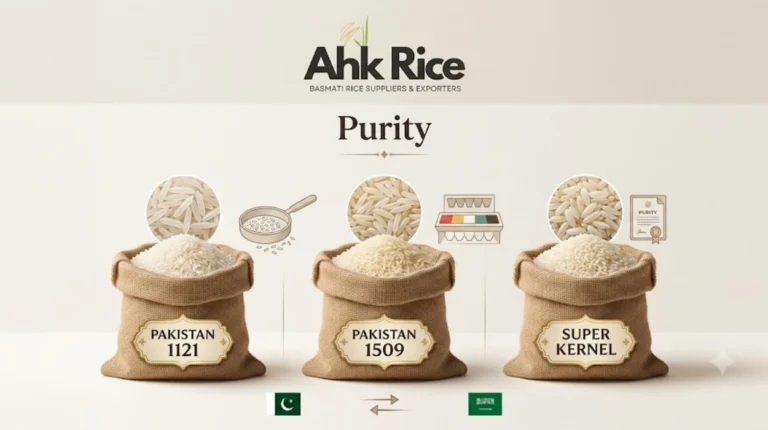
Pakistan 1121 Basmati is commercially supplied in white, steam, Sella or parboiled, and golden Sella forms, with further commercial grading based on whole kernels, broken grains, purity, moisture, and milling characteristics. Grade terminology must be confirmed against the supplier’s specification sheet.
1121 White Basmati is milled rice without the conventional parboiling treatment. It provides the characteristic long-grain Basmati format with a lighter appearance.
1121 Steam Basmati receives steam treatment during processing. Its appearance and cooking behavior differ from both raw white rice and conventional Sella.
1121 Sella Basmati is parboiled rice. The grain is hydrothermally treated before milling, creating a firmer structure.
1121 Golden Sella Basmati is a parboiled product distinguished by its golden appearance. Processing parameters, soaking, steaming, drying, and milling conditions influence the final color.
Within each form, buyers also specify percentages such as 100% sortex, whole grain, broken grain, and defect tolerances. “Sortex” refers to optical sorting used to remove grains that fall outside the target visual specification.
Which markets import Pakistan Basmati rice?
Pakistan Basmati rice serves international markets across the Middle East, Europe, North America, Africa, and Asia, while Indonesia has a distinct specialty-rice segment linked to restaurants, food processing, and premium retail demand. Import volume and product type depend on Indonesian policy.
Indonesia’s rice market is strongly regulated because rice is a strategic staple. USDA’s latest Indonesia update reported that private-sector imports during January-August 2025 reached 512,723 metric tons, with imports serving further processing, specialty retail, and restaurant demand. The report forecast 2025/26 rice imports at 750,000 metric tons.
The same USDA assessment states that Indonesia’s Basmati and Japonica imports are expected to increase as more Middle Eastern and Japanese restaurants operate in the country.
This creates an important distinction. Imported Basmati does not compete directly with all Indonesian rice. It occupies a specialty segment based on aroma, grain form, cuisine, restaurant positioning, and processing requirements.
Indonesia’s import framework therefore needs to be evaluated alongside product specifications. A wholesale buyer must confirm the current import authorization, permitted quantity, product classification, documentation, and applicable food requirements before shipment.
Which certifications and documents apply to Indonesian imports?
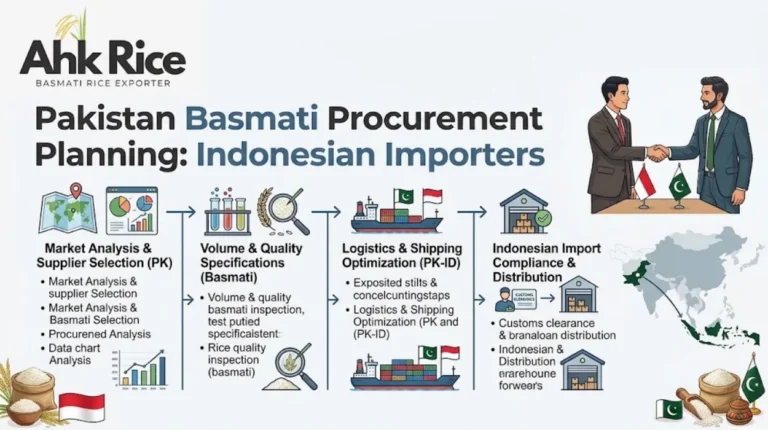
Indonesian rice trade requires regulatory and commercial documentation, while certifications depend on the product, importer, facility, buyer specification, and current Indonesian rules. Origin, food safety, laboratory, halal, packaging, and shipment documents should be aligned before commercial dispatch.
A typical export file can include:
- Commercial invoice
- Packing list
- Bill of lading
- Certificate of origin
- Phytosanitary documentation where applicable
- Certificate of analysis
- Fumigation or treatment documentation where required
- Food-safety documentation
- Product specification sheet
- Halal documentation where applicable
- Health or sanitary documentation where required by the Indonesian authority
- Laboratory reports for agreed contaminants and residues
Pakistan’s Trade Development Authority provides electronic Certificates of Origin, with E-CO issuance operating since September 2024.
Food safety and packaging requirements in Indonesia are also changing in 2026. BPOM issued Regulation No. 3/2026 concerning maximum microbial contamination limits in processed food, Regulation No. 10/2026 concerning nutrition information on processed-food labels, and Regulation No. 11/2026 concerning food packaging.
Halal compliance requires particular attention in 2026. BPJPH states that the October 2026 implementation expands mandatory halal certification to imported products within the regulated categories. Its guidance also identifies rice as a natural product excluded from product-level halal certification, while packaging, storage, transportation, and contamination controls remain relevant to halal assurance.
BPJPH also issued Regulation No. 4/2026 on ensuring the conformity of foreign halal products entering Indonesia, dated August 7, 2026 and promulgated August 10, 2026.
What are the main use cases for 1121 Parboiled Basmati Rice?
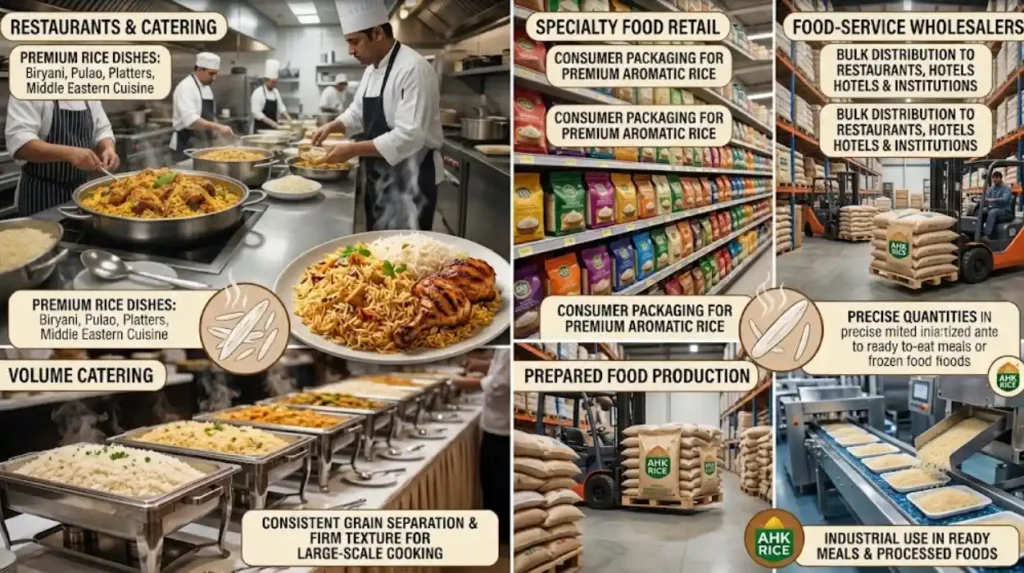
1121 Parboiled Basmati Rice is used in restaurant kitchens, catering operations, specialty food distribution, ethnic and international food retail, food-service wholesalers, and prepared-food production where long grain, aroma, firmness, and repeatable cooking performance matter.
Restaurants use it for rice dishes where long, separated grains support presentation. Examples include biryani, pulao, rice platters, grilled-meat meals, and Middle Eastern rice dishes.
Caterers value consistent grain behavior because large-volume cooking exposes differences in absorption, texture, and breakage.
Specialty retailers use packaged Basmati to serve consumers seeking aromatic long-grain rice. Food-service wholesalers distribute larger bags to restaurants, caterers, hotels, and institutional kitchens.
Food processors can also select parboiled rice where firmer grain structure and handling characteristics fit the production process.
What are the common problems and misconceptions?
The most common problems are confusing 1121 with a processing type, treating Sella and Steam as identical, buying without numerical tolerances, ignoring moisture and broken percentage, assuming every certification is universal, and overlooking Indonesian import and labeling requirements.
The first misconception is that 1121 means parboiled. It does not. 1121 identifies the variety, while parboiled describes the processing method.
The second misconception is that Sella and Steam are identical. They are different commercial processing categories and should be specified separately.
The third problem is purchasing by grain length alone. Long grain does not guarantee low broken percentage, high purity, controlled moisture, or consistent cooking.
The fourth problem is treating certification as a single universal requirement. Indonesian compliance depends on the product category and current regulation. Buyer specifications can also require additional certifications such as HACCP, ISO 22000, BRCGS, or laboratory verification even when those certifications are not themselves the sole legal import requirement.
The fifth problem is ignoring packaging compliance. Indonesia’s BPOM issued new food-packaging rules in 2026, replacing its previous packaging regulation.
The correct approach is to connect variety → processing → grade → laboratory specification → packaging → documentation → import compliance → end use. That sequence gives wholesalers a consistent basis for evaluating Pakistan 1121 Parboiled Basmati Rice.
Frequently Asked Questions
What is Pakistan 1121 Parboiled Basmati Rice?
Pakistan 1121 Parboiled Basmati Rice is an aromatic rice made from the PK 1121 variety and processed through controlled soaking, heating, drying, and milling. It is also commonly called 1121 Sella Basmati.
Where is 1121 Basmati Rice grown in Pakistan?
1121 Basmati is primarily associated with Punjab’s Basmati-growing belt. Important production districts include Gujranwala, Sheikhupura, Sialkot, and Hafizabad.
What makes 1121 Parboiled Basmati suitable for wholesale trade?
Its extra-long grain, aromatic character, firm cooked texture, and parboiled structure support consistent handling, cooking, portioning, and distribution. These characteristics suit restaurants, caterers, specialty retailers, and food-service wholesalers.
Is 1121 the same as Sella rice?
No. 1121 identifies the rice variety, while Sella identifies a parboiling process. Therefore, 1121 Sella means the PK 1121 variety processed as parboiled rice.
What is the difference between 1121 Sella and 1121 Steam rice?
Both undergo hydrothermal processing, but their processing configurations and finished characteristics differ. 1121 Sella is conventionally classified as parboiled rice, while 1121 Steam follows a steam-processing method.
Which grades of 1121 Basmati Rice are available?
Common commercial forms include 1121 White, 1121 Steam, 1121 Sella or Parboiled, and 1121 Golden Sella. Buyers can also specify whole-kernel percentage, broken percentage, moisture, purity, and defect tolerances.
What documents are required for exporting 1121 Basmati to Indonesia?
The shipment can require documents such as a commercial invoice, packing list, bill of lading, certificate of origin, certificate of analysis, phytosanitary documentation where applicable, and other documents required by Indonesian authorities and the buyer.
Is halal certification required for 1121 Basmati Rice in Indonesia?
Requirements depend on the applicable Indonesian halal regulations and product classification. BPJPH’s 2026 guidance identifies rice as a natural product excluded from product-level halal certification, while halal assurance requirements can still apply to relevant packaging, handling, storage, transportation, and contamination controls.