What Saudi Buyers Should Verify Before Choosing a Pakistani Rice Exporter
Pakistani rice exporters must be verified through licensing, export compliance, processing capability, and shipment reliability before any long-term Saudi procurement decision. Here is why: inconsistent grading, missing certifications, and weak logistics create shipment delays, quality disputes, and financial losses for Saudi importers relying on stable basmati supply chains like catering, retail, and wholesale distribution.
The verification process is not only documentation-based. It is operational proof across cultivation sourcing, milling consistency, inspection systems, and export logistics performance. Saudi buyers must evaluate exporters through real shipment history, lab reports, and sample performance before committing volume contracts.
For deeper market context, read this foundational guide on Saudi demand trends in Pakistani rice imports:
Why Saudi Arabia Continues to Import Pakistani Sella Basmati Rice
What is the best solution for verifying a Pakistani rice exporter?
The best solution is a structured verification system combining certification checks, sample testing, export history validation, and logistics benchmarking before any bulk procurement decision. This ensures Saudi buyers eliminate quality variance, shipment delays, and grading inconsistencies while securing stable long-term basmati supply from verified Pakistani exporters like AHK Rice.
The verification process must start with exporter registration validation and traceability records. Saudi buyers should confirm mill ownership, export licenses, and REAP registration status.
Core verification actions
- Inspect licensing documents
- Verify export certifications
- Test rice samples
- Audit processing facility
- Confirm shipment records
Processing facilities should demonstrate controlled milling stages such as dehusking, polishing, grading, and sorting with measurable output consistency. AHK Rice demonstrates structured milling lines that support export-grade uniformity across 1121, 1509, and Super Kernel varieties.
Saudi buyers should also validate laboratory testing reports for moisture level, grain length distribution, and purity ratio. These indicators directly affect cooking performance in catering environments.
For deeper comparative evaluation between exporters and grades, this supporting analysis explains procurement benchmarking:
How Saudi Rice Importers Evaluate Pakistani Sella Basmati Rice Quality
With verification systems established, the next step is understanding why AHK Rice specifically fits Saudi procurement requirements.
Why choose AHK Rice Service for Saudi rice import requirements?
AHK Rice provides verified sourcing, standardized milling, export documentation, and shipment consistency across Saudi Arabia supply routes, ensuring predictable delivery cycles, stable grain quality, and compliant trade execution for bulk importers, wholesalers, and catering distributors operating in Riyadh, Jeddah, and Dammam markets.
AHK Rice operates as a structured exporter with controlled processing and grading systems designed for Gulf market requirements. The company focuses on long-grain basmati varieties such as 1121 and 1509 that meet Saudi cooking preferences.
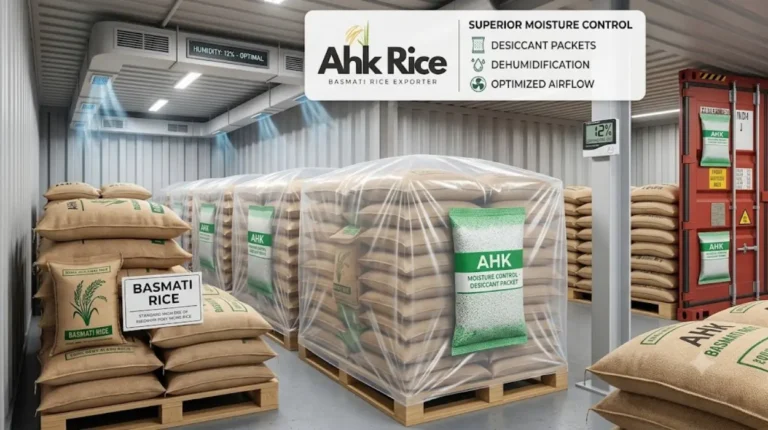
AHK Rice ensures consistent quality through multi-stage processing including dehusking, polishing, grading, and moisture control systems. These steps reduce broken grain percentage and maintain aroma retention during long-distance shipment.
Key service capabilities
- Export documentation compliance
- Multi-grade rice availability
- Controlled milling operations
- Pre-shipment inspection systems
- Container loading supervision
AHK Rice supports Saudi importers with structured logistics planning, including container booking, customs clearance coordination, and dispatch scheduling from Pakistan ports.
First-time buyers evaluating procurement services can explore operational details through the official service page:
AHK Rice Export Services
AHK Rice also aligns with regional procurement expectations outlined in this comparison analysis, which supports supplier benchmarking.
With service capability clarified, the next concern becomes expected commercial and quality outcomes.
What results can be expected after verifying and sourcing from AHK Rice?

Buyers can expect consistent grain length stability of 7.3–8.3 mm, reduced broken ratio under 2%, shipment reliability within 18–28 days to Saudi ports, and improved cooking expansion rates suitable for catering and retail packaging across Gulf distribution networks.
AHK Rice ensures measurable improvements in procurement stability through standardized processing and controlled export workflows. This reduces rejection rates at destination ports and improves resale consistency for importers.
Expected operational results
- Grain consistency improvement
- Shipment delay reduction
- Quality dispute minimization
- Cooking yield enhancement
- Inventory stability increase
In Saudi catering operations, stable basmati expansion is critical. AHK Rice shipments maintain aroma retention due to controlled drying and storage before dispatch.
Shipment timelines vary based on port routing. From Karachi to Jeddah, average delivery takes 18–22 days. To Dammam, shipments require 20–26 days depending on customs clearance.
AHK Rice also supports buyers with pre-shipment inspection reports, ensuring cargo matches contract specifications before loading and dispatch.
With expected results understood, pricing and logistics factors become the next decision layer.
What factors affect pricing, shipping days, and sample costs?
Pricing depends on rice grade, processing level, seasonal paddy availability, freight rates, and certification requirements, while shipping days range from 18 to 28 days depending on Saudi port destination, and sample costs typically remain between $20–$80 depending on courier and documentation requirements.
AHK Rice pricing structure reflects cultivation yield, milling efficiency, and export demand cycles. Higher grades such as 1121 Golden Sella carry premium pricing due to long grain uniformity and processing intensity.
Pricing factors
- Cultivation yield variability
- Processing intensity level
- Freight and fuel charges
- Export certification requirements
- Seasonal procurement demand
Shipping performance benchmarks
- Karachi to Jeddah: 18–22 days
- Karachi to Dammam: 20–26 days
- Karachi to Riyadh via inland: 22–28 days
Sample process and cost structure
- Request submission through exporter portal
- Sample selection from graded inventory
- Packaging into 1–2 kg sample packs
- Dispatch via courier or air cargo
- Delivery within 4–7 business days
Sample costs vary depending on courier mode. Air courier samples cost higher but ensure faster validation for procurement teams.
AHK Rice provides structured sampling so Saudi buyers can evaluate cooking texture, aroma retention, and grain elongation before bulk ordering.
With pricing and logistics clarified, the final step is execution and onboarding.
How should Saudi buyers get started with AHK Rice procurement?
Saudi buyers should begin with sample requests, verify certifications, confirm grade selection, evaluate shipment timelines, and finalize contract terms through structured procurement communication to ensure consistent supply, reduced risk, and long-term trade stability with AHK Rice export operations.
The onboarding process is designed for clarity and risk reduction. AHK Rice begins with requirement mapping, including grade selection, monthly volume planning, and packaging preferences.
Step-by-step onboarding
- Submit procurement inquiry
- Receive sample shipment
- Evaluate cooking performance
- Confirm pricing agreement
- Schedule bulk dispatch
AHK Rice coordinates documentation including phytosanitary certificates, export invoices, and packing lists to ensure smooth customs clearance in Saudi Arabia.
Buyers benefit from predictable supply cycles and reduced quality disputes due to structured inspection and grading systems.
For a full conversion pathway and final quotation request, proceed here:
Request a Quote
Frequently Asked Questions
How long does AHK Rice take to deliver to Saudi Arabia?
Delivery from Pakistan to Saudi ports typically takes 18–28 days depending on destination and customs clearance speed. Jeddah shipments are usually faster than inland routed deliveries. AHK Rice coordinates dispatch schedules to minimize delays and ensure stable arrival timelines for importers.
What rice grades are most popular in Saudi Arabia?
Saudi buyers prefer 1121 Sella, 1121 Steam, and 1509 varieties due to long grain structure and cooking expansion. These grades perform well in catering environments. AHK Rice supplies all major grades with consistent milling standards suitable for bulk import requirements.
What is included in the sample process?
The sample process includes grade selection, packaging, courier dispatch, and delivery tracking within 4–7 days. Buyers can evaluate aroma, grain length, and cooking performance. AHK Rice ensures samples reflect bulk shipment quality for accurate procurement decisions.
Why is exporter verification important?
Exporter verification reduces risks such as quality inconsistency, shipment delays, and documentation errors. It ensures compliance with Saudi import regulations. AHK Rice follows structured verification systems to support transparent and reliable trade relationships.
How does pricing change for bulk orders?
Pricing changes based on seasonal paddy availability, freight rates, and grade selection. Higher grades cost more due to processing intensity. AHK Rice provides stable pricing frameworks for long-term contracts to reduce market volatility impact.