Why Do UK Buyers Request Purity Specifications from Rice Suppliers?
UK buyers request purity specifications from rice suppliers because purity directly affects food safety, product consistency, import compliance, cooking performance, and retail acceptance. Here is why: UK importers must verify grain composition, foreign matter levels, broken percentages, and varietal authenticity before purchasing rice for supermarkets, wholesalers, and foodservice distribution.
Basmati rice remains one of the most imported premium rice categories in the United Kingdom. UK importers purchase rice from Pakistan and India while following strict quality requirements. Purity specifications help buyers verify that the rice shipment matches the agreed grade, variety, and quality standard. Without documented purity levels, importers face risks related to customer complaints, regulatory issues, and inconsistent product performance.
What Do Purity Specifications Mean in Rice Trading?
Purity specifications define the exact percentage of authentic rice grains, foreign matter limits, varietal consistency, and physical quality parameters within a shipment.
Rice purity refers to the proportion of the declared rice variety present in a lot. A shipment labelled as 1121 Basmati should primarily contain 1121 grains. Purity testing identifies admixture levels, broken grains, damaged kernels, foreign materials, and non-basmati content.
In international trade, purity specifications function as measurable quality standards. Buyers use these standards to compare suppliers and evaluate shipments before procurement.
What Components Are Included in Purity Specifications?
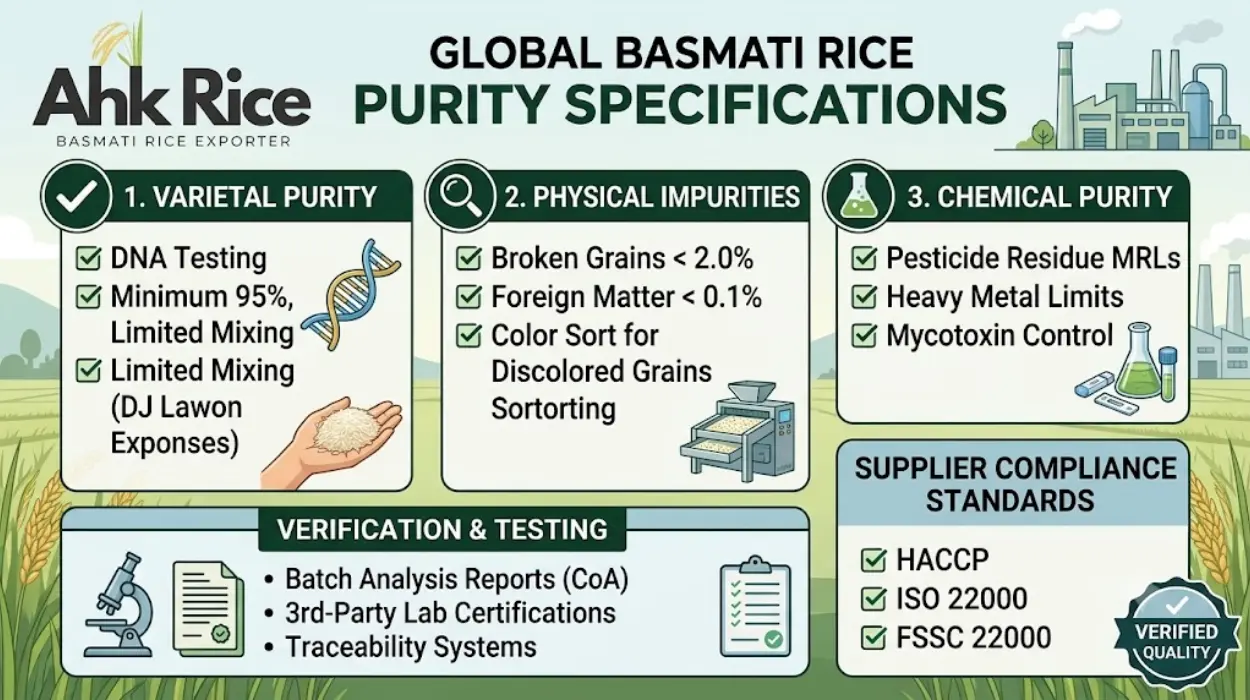
Common purity parameters include:
- Grain purity percentage
- Foreign matter percentage
- Broken grain percentage
- Damaged grain percentage
- Chalky grain percentage
- Moisture content
- Paddy grain percentage
- Red streak percentage
- Colour consistency
A UK importer reviewing supplier offers compares these values before placing an order. Lower contamination and higher varietal purity generally indicate premium quality rice.
With purity specifications defined, the next question is how suppliers verify these measurements.
How Do Rice Suppliers Verify Purity Levels?
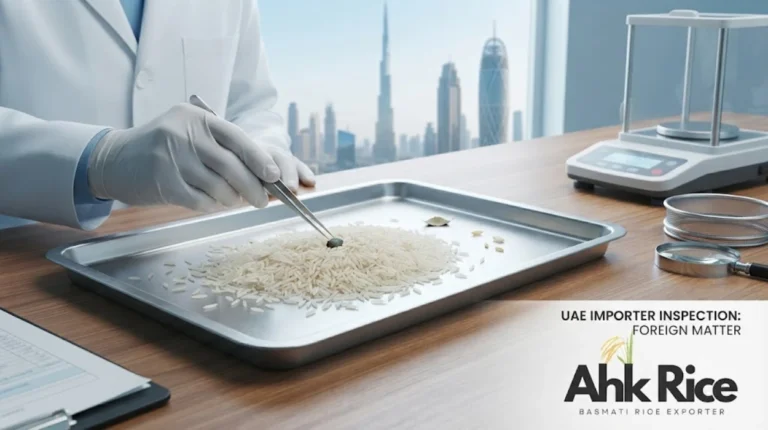
Laboratory testing, physical inspection, grading systems, and certification procedures verify rice purity before export.
Rice exporters inspect grain quality throughout processing. Each stage removes unwanted materials and improves consistency. Verification combines visual inspection and laboratory analysis.
What Processing Steps Improve Purity?
Rice mills follow a structured sequence:
- Clean the harvested paddy
- Remove stones and impurities
- De-husk the grain
- Separate immature kernels
- Polish the rice
- Sort by length
- Sort by colour
- Grade by specification
- Inspect the final lot
Each step increases uniformity and reduces contamination.
How Does Colour Sorting Improve Purity?
Colour sorting machines detect defective grains using optical sensors. These systems remove discoloured kernels, damaged grains, and foreign materials.
Modern export mills use automated sorting technology to achieve higher consistency levels. UK buyers often request colour sorting reports because visual appearance influences retail acceptance.
With purity verification established, the next question is why UK buyers place such importance on these figures.
Why Are Purity Specifications Important for UK Buyers?
Higher purity levels reduce commercial risk, improve customer satisfaction, support regulatory compliance, and protect brand reputation.
UK importers operate in a highly regulated food environment. Supermarkets, wholesalers, and foodservice distributors require consistent products.
A shipment with unexpected admixture creates problems throughout the supply chain. Retail customers expect identical grain appearance and cooking performance from every purchase.
How Does Purity Affect Retail Sales?
Retail packaging depends on product consistency.
Consumers notice:
- Mixed grain sizes
- Uneven cooking
- Excessive breakage
- Discoloured grains
- Foreign particles
A product containing inconsistent grains often generates negative customer feedback.
Retailers therefore request purity specifications before approving suppliers.
How Does Purity Affect Foodservice Buyers?
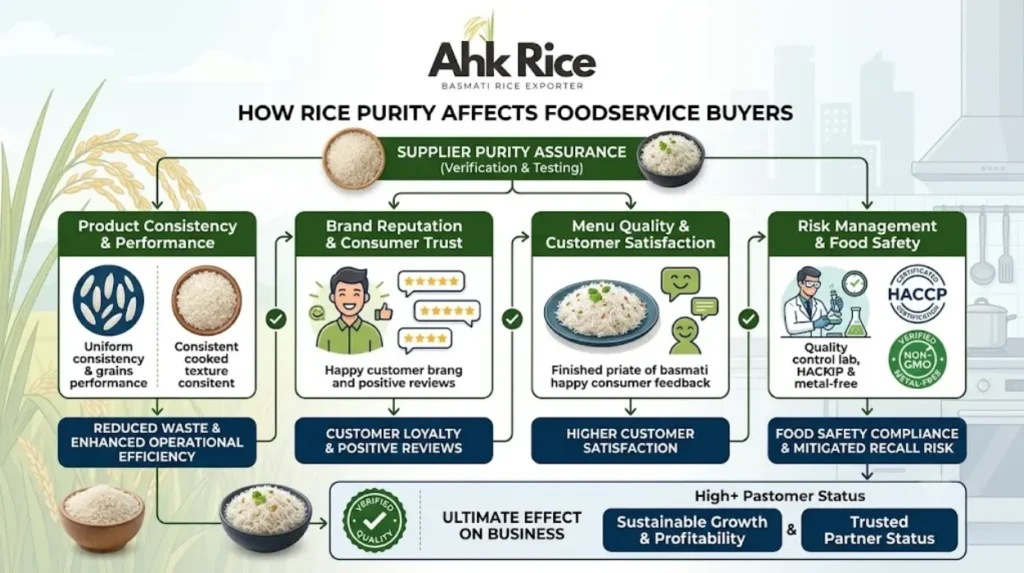
Restaurants require predictable cooking performance.
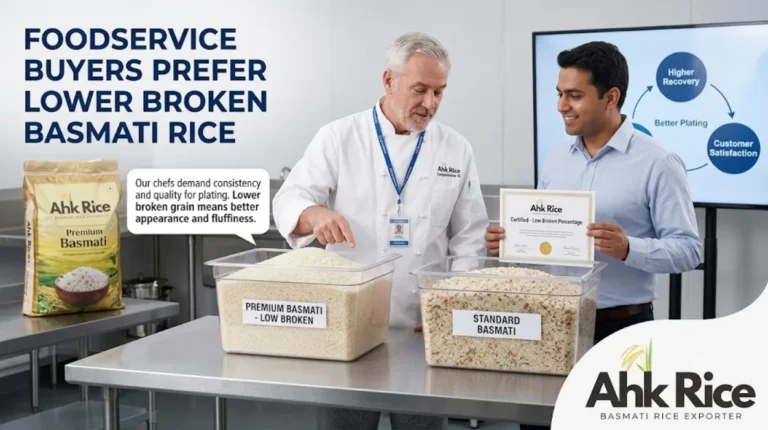
Basmati rice with high varietal purity cooks uniformly. Grain length, aroma, and texture remain consistent across large batches.
Foodservice operators purchasing hundreds of kilograms weekly prioritize consistency over short-term price differences.
With buyer priorities explained, the next question concerns the relationship between purity and Basmati authenticity.
How Does Purity Help Verify Authentic Basmati Rice?
Purity specifications confirm varietal authenticity and reduce the risk of non-basmati admixture within premium rice categories.
Basmati rice commands higher prices than many conventional rice varieties. This price difference creates a strong incentive for authenticity verification.
Authentic Basmati possesses distinctive characteristics:
- Long grain structure
- Natural aroma
- Elongation during cooking
- Soft texture
- Premium appearance
Purity testing helps verify these attributes.
Which Basmati Varieties Are Commonly Tested?
Major export varieties include:
- 1121 Basmati
- Super Kernel Basmati
- 1509 Basmati
- PK 385 Basmati
- Traditional Basmati
Each variety possesses different grain dimensions and cooking characteristics.
Importers often request detailed purity reports before finalizing procurement decisions.
Readers interested in how purity percentages influence commercial positioning can explore how suppliers differentiate grades through detailed quality segmentation in How purity standards shape premium and value Basmati categories.
With authenticity covered, the next question involves market-specific purity requirements.
What Purity Levels Do Different Markets Prefer?
Premium retail markets generally request higher purity percentages, while value-focused markets often accept broader specifications.
Different countries purchase rice according to consumer expectations and pricing structures.
What Does the UK Market Typically Require?
UK buyers commonly prioritize:
- High varietal purity
- Low foreign matter
- Uniform grain size
- Consistent colour
- Reliable cooking performance
Premium retail brands often seek stricter specifications than bulk catering buyers.
How Do Gulf Markets Compare?
Gulf countries frequently purchase premium long-grain Basmati for hospitality and retail sectors.
Buyers often focus on:
- Grain length
- Aroma retention
- Visual appearance
- Purity percentage
How Do African Markets Compare?
Several African markets prioritize affordability alongside quality.
Buyers frequently evaluate:
- Value per tonne
- Broken percentage
- Cooking yield
- Packaging suitability
Each market balances quality requirements against pricing objectives.
With market requirements explained, the next question concerns certifications connected to purity verification.
Which Certifications Support Rice Purity Claims?
International certifications provide documented evidence that rice has been processed, inspected, and managed according to recognized quality standards.
Certification strengthens buyer confidence during procurement.
What Certifications Are Common in Rice Exports?
Common certifications include:
- ISO 22000
- HACCP
- BRCGS
- SGS Inspection Reports
- Phytosanitary Certification
- Fumigation Certification
- Health Certification
These documents support product traceability and quality verification.
Why Do UK Buyers Request Certification?
Certification provides independent confirmation of quality systems.
Third-party verification reduces uncertainty and simplifies supplier evaluation.
Many distributors include certification requirements within procurement policies.
With certifications established, the next question addresses common misconceptions surrounding purity specifications.
What Misconceptions Exist About Rice Purity Specifications?
Higher purity does not automatically mean higher nutritional value, lower price, or identical cooking performance across varieties.
Purity measures composition accuracy rather than nutritional superiority.
Several misunderstandings appear frequently in rice procurement discussions.
Does Higher Purity Mean Better Nutrition?
Purity indicates varietal consistency and physical cleanliness.
Nutrition depends on rice type, processing method, and grain composition.
Does Higher Purity Always Cost More?
Higher purity often requires additional sorting and inspection.
Production costs therefore increase.
However, pricing also depends on harvest size, freight rates, market demand, and supply conditions.
Does Purity Guarantee Superior Taste?
Taste depends on variety selection.
1121 Basmati, Super Kernel Basmati, and 1509 Basmati each deliver different eating experiences despite high purity levels.
Purity ensures consistency rather than flavour preference.
With misconceptions addressed, the final question is how purity specifications influence purchasing decisions.
How Do Purity Specifications Influence Rice Procurement Decisions?
Purity specifications create measurable standards that help buyers compare suppliers, manage risk, and maintain consistent product quality.
Rice procurement depends on objective data. Buyers use purity reports to evaluate offers before committing capital.
Clear specifications simplify supplier comparison.
Verified purity reduces disputes after shipment arrival.
Consistent quality strengthens long-term supplier relationships.
UK buyers request purity specifications because rice quality cannot rely on visual inspection alone. Documented purity levels provide evidence of authenticity, consistency, and compliance. In modern international rice trade, purity specifications function as one of the most important quality indicators supporting informed purchasing decisions.
Frequently Asked Questions
What is rice purity in international trade?
Rice purity is the percentage of the declared rice variety present in a shipment after measuring admixture, foreign matter, broken grains, and defects.
Why do UK importers check rice purity reports?
UK importers check purity reports to verify authenticity, maintain product consistency, meet compliance requirements, and reduce purchasing risks.
How is Basmati rice purity tested?
Basmati rice purity is tested through laboratory analysis, physical inspection, grading procedures, and optical sorting technology.
What purity level is considered high quality?
Premium Basmati categories generally require very high varietal consistency, minimal foreign matter, and low broken grain percentages.
Do purity specifications affect rice prices?
Yes. Higher purity often requires additional sorting, grading, inspection, and testing processes, which increase production costs.
Are purity specifications required for all rice imports?
Requirements vary by buyer and market. Most professional importers request documented purity specifications before purchasing rice internationally.