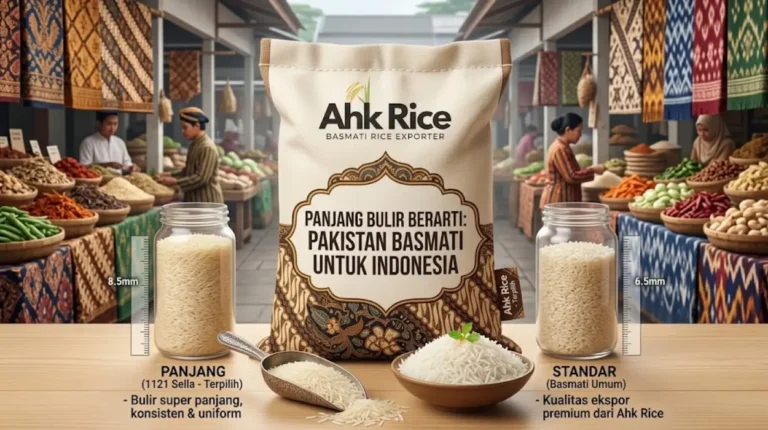
Why Do USA Rice Buyers Prioritize Extra Long Grain Basmati Rice?
American rice buyers prioritize extra long grain Basmati rice because measurable grain length directly influences cooking performance, plate presentation, consumer satisfaction, food cost control, and brand consistency. In 2026, importers, restaurant distributors, supermarket chains, and food manufacturers increasingly evaluate physical grain specifications before purchasing premium aromatic rice from international suppliers.
The United States imports premium Basmati rice to serve diverse markets including Indian restaurants, Pakistani restaurants, Middle Eastern cuisine, catering businesses, gourmet retail stores, warehouse clubs, private-label brands, and ethnic grocery chains. Every buyer compares objective quality indicators instead of relying on marketing descriptions. Grain length remains one of the first specifications examined because it affects appearance before cooking and elongation after cooking.
Grain length alone does not define rice quality. Buyers also evaluate aroma, grain maturity, broken percentage, moisture level, purity, milling quality, aging period, and cooking consistency. Understanding how these characteristics work together explains why extra long grain Basmati continues expanding its market share throughout the United States.
Readers who want to understand how exporters determine grain dimensions through standardized inspection methods can continue with our companion guide explaining:
How export-grade 1121 Basmati grain dimensions are accurately measured during quality evaluation.
What Is Extra Long Grain Basmati Rice?
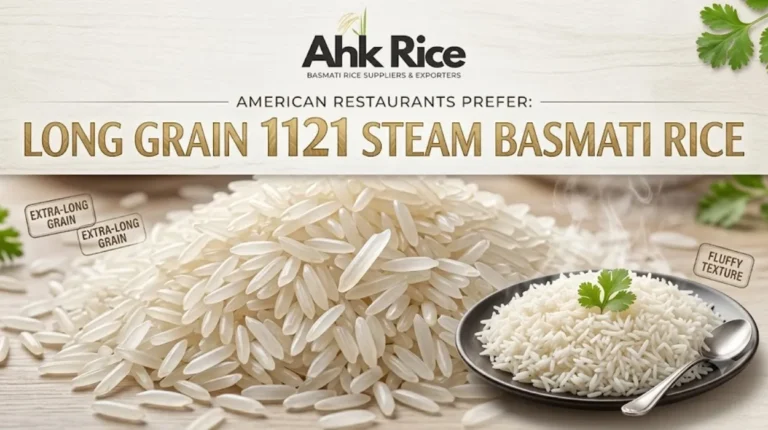
Extra long grain Basmati rice refers to aromatic long-grain rice whose raw grain length generally exceeds 8.0 millimeters before cooking. The grain elongates significantly during cooking while remaining separate, slender, and fluffy, making it highly valued throughout the United States food industry.
Basmati belongs to a distinct group of aromatic rice originating from the Himalayan foothill region. Pakistan and India remain the world’s primary producers. Pakistan grows export-quality Basmati mainly across Punjab, where fertile alluvial soils, canal irrigation systems, seasonal rainfall, and warm growing conditions produce premium grain development.
Extra long grain describes a measurable physical characteristic rather than a marketing term. Laboratory inspection determines average grain length using calibrated measuring equipment before grading begins.
Examples of extra long grain Pakistani varieties include:
- Pakistan 1121 Steam Basmati
- Pakistan 1121 White Basmati
- Pakistan 1121 Golden Sella
- Pakistan 1121 Creamy Sella
Other Pakistani Basmati varieties, including Super Kernel and 1509, also serve international markets but differ in grain dimensions, cooking characteristics, and preferred commercial applications.
How Does Extra Long Grain Basmati Rice Reach American Buyers?
Extra long grain Basmati reaches American buyers through a controlled export chain including cultivation, harvesting, drying, milling, grading, quality inspection, packaging, certification, container loading, ocean transportation, customs clearance, and domestic distribution across multiple commercial sectors.
Every processing stage influences the final quality received by wholesalers and retailers.
Cultivation
Farmers sow certified seed varieties during the planting season. Rice develops over approximately 120 to 150 days depending on the variety and seasonal conditions. Controlled irrigation supports uniform crop development.
Harvesting
Harvesting begins after grain maturity reaches export standards. Proper harvesting timing reduces immature kernels and broken grains.
Drying
Freshly harvested paddy contains elevated moisture. Controlled drying reduces moisture to appropriate storage levels before milling begins.
Milling
The protective husk is removed first. Milling then separates bran layers while preserving grain integrity. Different finished products include White Rice, Steam Rice, Golden Sella, and Creamy Sella according to processing methods.
Sorting and Grading
Modern optical sorting equipment removes defective kernels, foreign material, stones, chalky grains, and discoloration.
Quality Inspection
Laboratories evaluate measurable specifications including:
- Grain length
- Broken percentage
- Moisture content
- Purity
- Foreign matter
- Damaged grains
- Aroma
- Whiteness
- Cooking performance
Packaging and Export
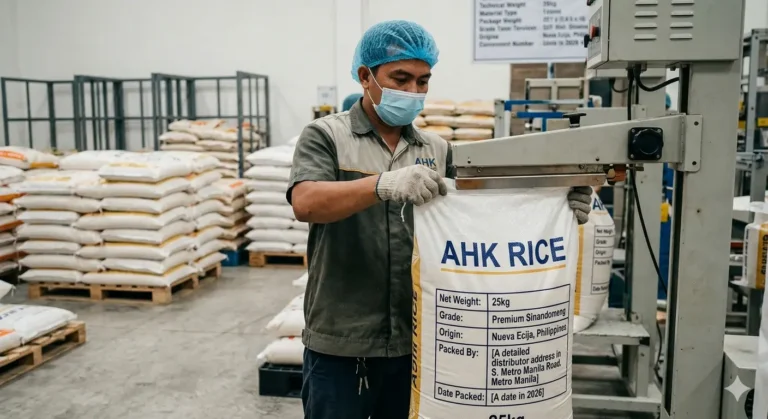
Rice enters food-grade packaging ranging from 1 kg retail bags to 50 kg commercial sacks before container loading for export to American ports.
What Components Define Premium Extra Long Grain Basmati?
Premium extra long grain Basmati consists of multiple measurable quality components including grain length, elongation ratio, aroma, purity, moisture content, milling quality, aging period, broken percentage, uniformity, and appearance instead of relying on only one characteristic.
Professional buyers examine complete specification sheets before approving shipments.
Grain Length
Raw grain length often measures between approximately 8.30 and 8.50 millimeters in premium Pakistan 1121 varieties.
Elongation
During cooking, premium grains expand primarily in length instead of width. Long slender appearance remains attractive after cooking.
Aroma
Natural aromatic compounds create the distinctive fragrance associated with authentic Basmati.
Purity
Varietal purity confirms the shipment contains the declared rice variety without mixing multiple commercial varieties.
Broken Percentage
Lower broken percentages improve presentation, cooking uniformity, and retail acceptance.
Moisture
Export moisture normally follows internationally accepted commercial specifications that preserve storage stability during international transportation.
Uniform Appearance
Consistent grain size improves packaging appearance and cooking consistency across restaurants and retail consumers.
Why Does Grain Length Matter So Much to American Rice Buyers?
Grain length directly influences cooking appearance, customer perception, serving yield, menu quality, retail presentation, and product consistency. American buyers therefore treat grain length as both a quality indicator and an important commercial specification during purchasing decisions.
Restaurants compete on presentation.
Long individual grains create visually appealing biryani, pulao, buffet service, banquet meals, and premium plated dishes. Separate grains improve customer satisfaction because the rice retains its structure after cooking.
Retail buyers also recognize consumer preferences.
Customers often compare transparent rice packaging before purchasing. Longer grains create a premium appearance that influences buying decisions.
Food manufacturers benefit from predictable cooking behavior.
Uniform grain dimensions support consistent production during frozen meals, ready-to-eat products, meal kits, and packaged food applications.
Distributors benefit because standardized specifications reduce quality disputes throughout the supply chain.
Which American Industries Import Extra Long Grain Basmati Rice?
Multiple American industries import extra long grain Basmati including foodservice distributors, ethnic grocery chains, supermarket retailers, hospitality businesses, institutional catering companies, private-label brands, online retailers, and specialty food manufacturers requiring premium aromatic rice.
Each market values different quality characteristics.
Restaurants emphasize cooked grain appearance, elongation, aroma, and serving consistency.
Retail stores prioritize attractive packaging appearance, shelf stability, consumer recognition, and consistent grain quality.
Hospitality businesses require dependable cooking performance across hundreds of daily meals.
Food manufacturers evaluate processing consistency, uniform grain size, storage stability, and predictable production efficiency.
Institutional catering operations value repeatable cooking results for schools, universities, healthcare facilities, and corporate dining services.
What Benefits Does Extra Long Grain Basmati Offer?
Extra long grain Basmati provides superior plate presentation, attractive elongation, consistent cooking performance, premium aroma, reduced stickiness, strong consumer recognition, broad menu versatility, and reliable commercial value throughout American food markets.

Presentation remains one of its strongest advantages.
Long cooked grains create visually appealing rice dishes across numerous cuisines.
Cooking consistency supports operational efficiency.
Professional kitchens require predictable results every day. Uniform grain dimensions improve batch consistency during large-scale meal preparation.
Premium aroma enhances dining experiences.
Authentic Basmati fragrance complements spices without overwhelming the main dish.
Lower stickiness improves serving.
Individual grains remain separate after cooking, producing attractive texture suitable for restaurants and catering operations.
Versatility expands commercial demand.
Examples include biryani, pulao, grilled meat platters, curry meals, rice bowls, wedding banquets, airline catering, frozen meals, gourmet ready meals, and premium retail products.
What Problems and Misconceptions Exist About Extra Long Grain Basmati?
Several misconceptions confuse buyers because grain length alone never determines complete quality. Premium Basmati combines physical dimensions with aroma, purity, milling quality, moisture control, proper aging, and careful processing throughout the export supply chain.
One misconception states that every long grain rice qualifies as Basmati.
This is incorrect.
Many rice varieties produce long grains without possessing authentic Basmati aroma, cooking characteristics, or varietal identity.
Another misconception assumes the longest grain automatically represents the best quality.
Quality inspection evaluates numerous measurable specifications simultaneously.
Examples include purity, broken percentage, cooking performance, moisture, milling quality, and aroma.
Some buyers believe polished appearance always indicates superior rice.
Excessive polishing removes natural surface characteristics without improving grain genetics or cooking performance.
Another misunderstanding involves aging.
Proper aging improves cooking behavior and aroma development. Newly milled rice behaves differently during cooking despite identical grain dimensions.
Finally, some buyers focus exclusively on price.
Professional importers compare complete specification sheets because consistent quality reduces customer complaints, product returns, and purchasing risk.
How Does Extra Long Grain Basmati Fit Into the 2026 American Rice Market?
The 2026 American rice market continues expanding demand for premium extra long grain Basmati because consumers increasingly prioritize authentic international cuisine, premium dining experiences, consistent cooking performance, and recognizable quality specifications across retail and foodservice channels.
Ethnic cuisine continues growing throughout the United States.
Indian, Pakistani, Middle Eastern, Mediterranean, and fusion restaurants require authentic aromatic rice matching traditional recipes.
Private-label retail programs continue expanding.
Supermarket brands increasingly seek standardized premium rice specifications to strengthen customer loyalty.
Online grocery platforms also influence purchasing behavior.
Consumers compare product descriptions, grain dimensions, cooking characteristics, and package transparency before ordering premium rice.
Commercial buyers increasingly request detailed quality documentation.
Laboratory reports, inspection certificates, export specifications, and standardized grading improve purchasing confidence throughout international supply chains.
Frequently Asked Questions
How long is extra long grain Basmati rice before cooking?
Premium extra long grain Basmati, particularly Pakistan 1121, generally measures between 8.30 mm and 8.50 mm before cooking. Export laboratories verify grain length using standardized grading methods before shipment.
Which Pakistani Basmati varieties are most popular in the USA?
The most widely imported Pakistani varieties include 1121 Basmati, Super Kernel Basmati, and 1509 Basmati. Each variety serves different retail, restaurant, and foodservice applications based on grain length, aroma, and cooking performance.
Why do American restaurants prefer extra long grain Basmati rice?
American restaurants value extra long grain Basmati because it produces long, separate, fluffy grains after cooking. This improves presentation for dishes such as biryani, pulao, grilled platters, and buffet meals.
Does longer grain always mean better quality?
No. Grain length is only one quality parameter. Professional buyers also evaluate aroma, varietal purity, broken percentage, moisture content, milling quality, aging period, and cooking consistency before making purchasing decisions.
Which industries in the United States import extra long grain Basmati rice?
Major importers include foodservice distributors, supermarket chains, ethnic grocery stores, hospitality companies, institutional caterers, private-label brands, and food manufacturers producing premium rice-based products.
How is extra long grain Basmati rice processed before export?
The export process includes cultivation, harvesting, drying, milling, grading, optical sorting, laboratory quality inspection, food-grade packaging, container loading, and international shipping according to export standards.
Why is grain uniformity important for commercial buyers?
Uniform grain size improves cooking consistency, package appearance, serving quality, and customer satisfaction. It also helps restaurants and food manufacturers maintain consistent product performance across large production batches.
What quality specifications do USA rice importers usually check?
Importers commonly review grain length, broken percentage, moisture content, purity, foreign matter, damaged grains, aroma, milling quality, and cooking performance before approving export shipments.