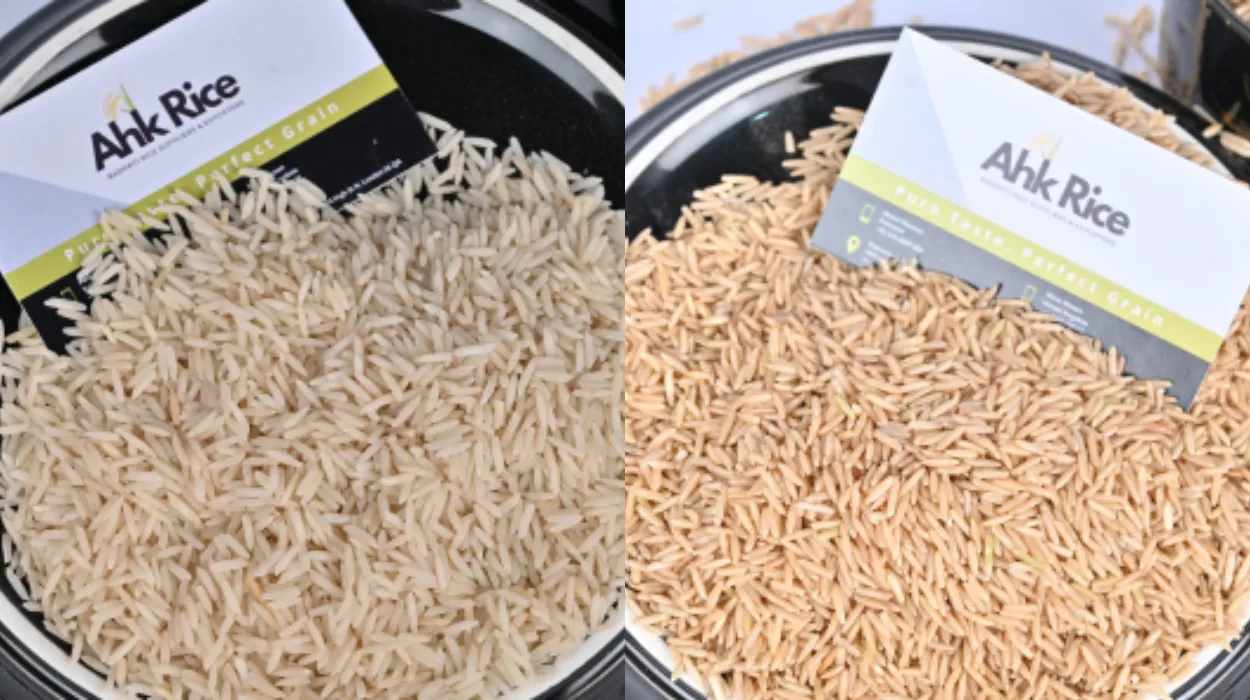
1121 White vs 1121 Golden Sella: Which Grade Has Better Margins in Europe?
1121 Golden Sella delivers higher and more stable margins in Europe because it reduces breakage loss, extends shelf life to 18–24 months, and performs better in bulk distribution. 1121 White achieves faster turnover and premium pricing in retail but carries higher risk of shrinkage and quality degradation. Here is why: margin depends on yield retention, storage tolerance, and buyer segment demand.
European importers compare 1121 White basmati based on profitability, not appearance. Buyers evaluating EU-compliant sourcing specifications can review AHK Rice 1121 white basmati EU compliant wholesale to understand quality standards, certifications, and shipment structure.
Understand the production differences first through this detailed process guide: 1121 steam basmati rice process. The processing method defines margin behavior.
1121 White basmati and 1121 Golden Sella basmati follow different processing flows. White rice is milled and polished directly. Golden Sella is parboiled, dried, and milled. This processing difference controls durability, yield, and export suitability.
What are the available solutions for European importers?
European buyers choose between 1121 White for premium retail margins or 1121 Golden Sella for bulk distribution margins, with Golden Sella delivering 5–12% lower loss rates and longer storage stability up to 24 months.
1121 White Basmati as a Margin Strategy
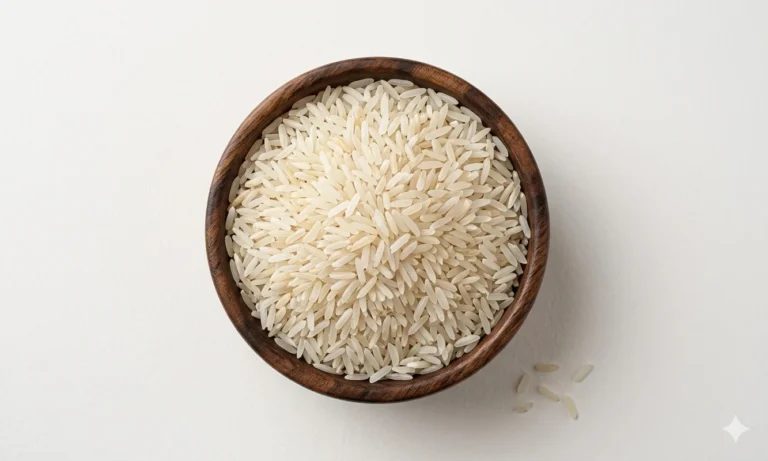
1121 White basmati targets high-end retail shelves. The grain appears bright, slender, and polished. European supermarkets prefer this grade for branding.
Key Specifications
| Attribute | Value |
|---|---|
| Grain Length | 8.20–8.40 mm |
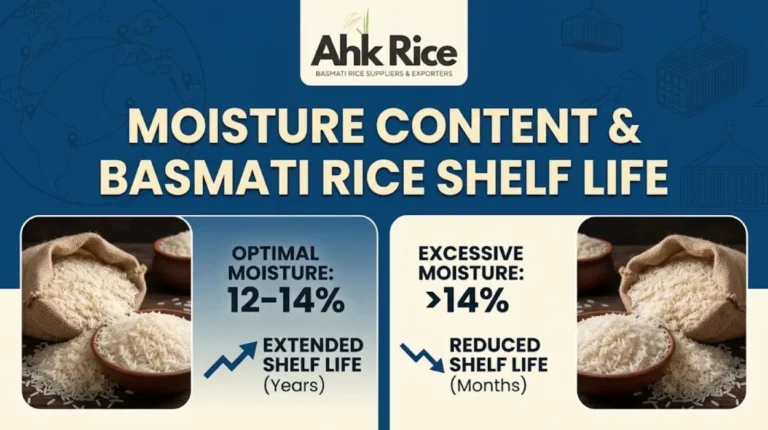
| Moisture | 12–13% |
| Broken | 1–2% max |
| Color | Pearl white |
| Shelf Life | 12 months |
| Cooking Expansion | 2.5x length |
| Market Use | Retail packs (1–5 kg) |
1121 White basmati generates higher per-unit selling price. Retail margins increase because consumers associate white rice with purity and quality.
1121 White basmati loses margin during storage because moisture fluctuation causes breakage. European warehouses without humidity control increase loss rates.
1121 Golden Sella as a Margin Strategy
1121 Golden Sella basmati targets wholesale and foodservice buyers. The grain undergoes parboiling before milling.
Key Specifications
| Attribute | Value |
|---|---|
| Grain Length | 8.10–8.30 mm |
| Moisture | 10–12% |
| Broken | 2–4% max |
| Color | Golden yellow |
| Shelf Life | 18–24 months |
| Cooking Expansion | 2.3x length |
| Market Use | Bulk catering (10–50 kg) |
1121 Golden Sella maintains structural strength because parboiling hardens the grain. This reduces breakage during transport and storage.
1121 Golden Sella improves importer margins because less product is lost during handling. Bulk buyers prefer this grade for consistency.
With the available solutions defined, the next step is comparing how these grades perform across critical margin variables.
How do different approaches compare in margin performance?
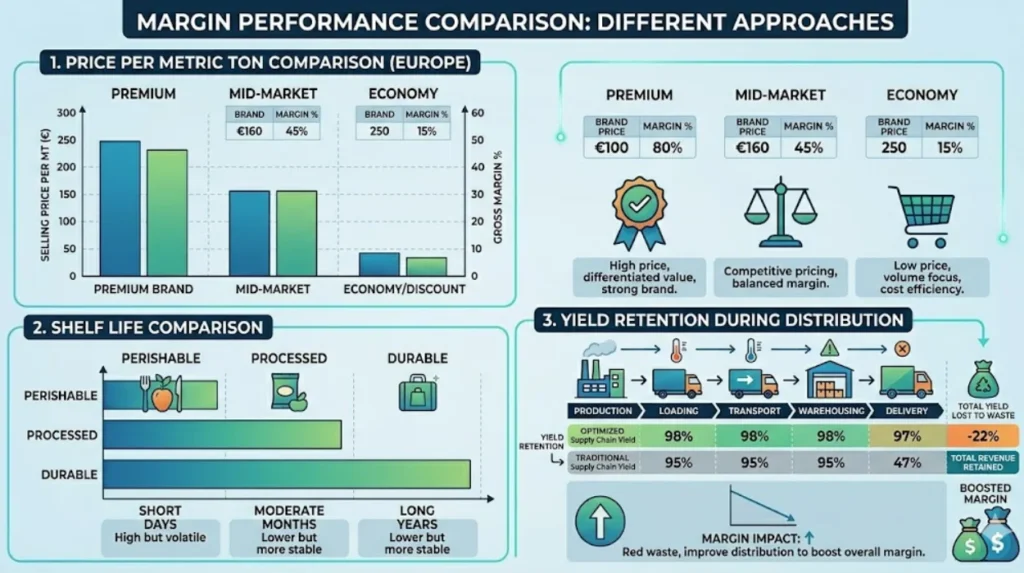
1121 Golden Sella outperforms White in logistics efficiency and storage cost, while 1121 White outperforms in retail pricing by 8–15% higher per ton but with higher risk exposure.
Price per Metric Ton Comparison (Europe)
| Grade | Average Import Price/MT | Retail Price/MT Equivalent |
|---|---|---|
| 1121 White | $1,150–$1,300 | $1,400–$1,600 |
| 1121 Golden Sella | $1,050–$1,180 | $1,200–$1,350 |
(source: REAP export data, December 2025)
1121 White generates higher gross margin per ton. Retailers sell it at premium pricing. Profit depends on quick turnover.
1121 Golden Sella generates stable net margin. Importers avoid losses from spoilage and breakage. Profit comes from efficiency, not price.
Shelf Life Comparison
| Grade | Shelf Life | Storage Sensitivity |
|---|---|---|
| 1121 White | 10–12 months | High humidity sensitive |
| 1121 Golden Sella | 18–24 months | Low sensitivity |
1121 White degrades faster when stored beyond 12 months. Color dulls and aroma weakens.
1121 Golden Sella maintains quality longer because starch gelatinization protects the grain. This matters in European distribution chains with long storage cycles.
Yield Retention During Distribution
| Factor | White | Golden Sella |
|---|---|---|
| Breakage Loss | 3–6% | 1–2% |
| Handling Damage | Moderate | Low |
| Moisture Impact | High | Low |
Golden Sella retains more sellable volume. Importers recover higher net revenue per shipment.
With performance differences clear, the next question is which grade works best for specific European market segments.
Which method works best for different European markets?
1121 White performs best in Western European retail chains, while Golden Sella dominates Eastern Europe and foodservice sectors due to durability and cost efficiency.
Western Europe (UK, Germany, France)
Western Europe prioritizes branding and packaging. Consumers prefer visually appealing rice.
- Retail buyers select White for premium shelves
- Packaging sizes range from 1 kg to 5 kg
- Price sensitivity remains moderate
- Turnover cycles stay short
1121 White fits this market because presentation drives purchase decisions.
Eastern Europe (Poland, Romania, Hungary)
Eastern Europe prioritizes affordability and bulk usage.
- Buyers select Golden Sella for cost control
- Packaging sizes range from 10 kg to 25 kg
- Foodservice demand dominates
- Storage conditions vary
1121 Golden Sella fits this market because durability reduces loss in non-controlled environments.
Foodservice vs Retail Channels
| Channel | Preferred Grade | Reason |
|---|---|---|
| Retail | White | Appearance and branding |
| Catering | Golden Sella | Cost and durability |
| Wholesale | Golden Sella | Storage efficiency |
Golden Sella dominates foodservice because chefs value consistency over visual polish.
With market alignment established, the next step is evaluating advantages and disadvantages directly.
What are the pros and cons of each grade?
1121 White offers higher pricing power but higher operational risk, while Golden Sella offers lower pricing but stronger operational control and margin stability.
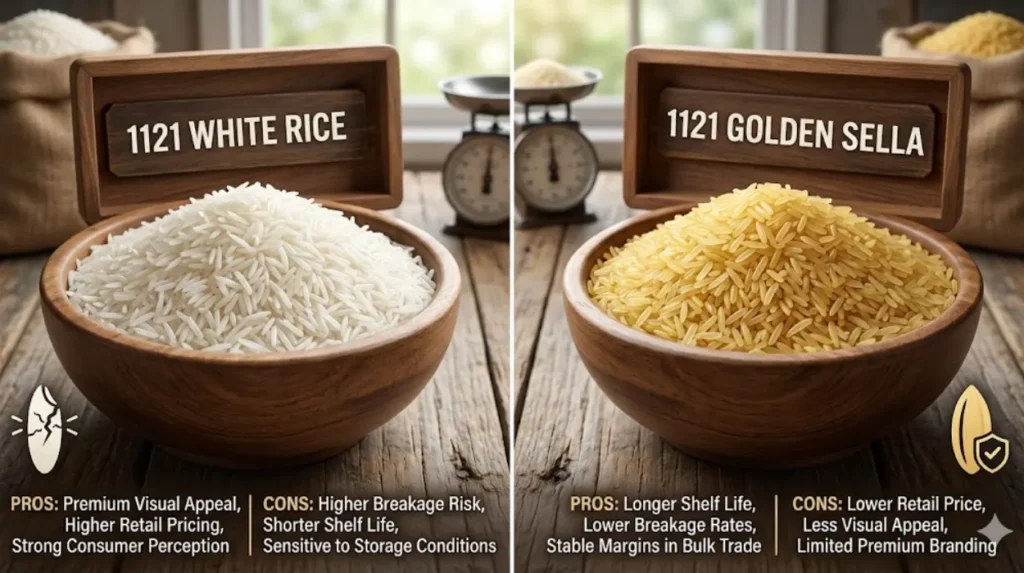
1121 White Pros and Cons
Pros
- Premium visual appeal
- Higher retail pricing
- Strong consumer perception
Cons
- Higher breakage risk
- Shorter shelf life
- Sensitive to storage conditions
1121 Golden Sella Pros and Cons
Pros
- Longer shelf life
- Lower breakage rates
- Stable margins in bulk trade
Cons
- Lower retail price
- Less visual appeal
- Limited premium branding
1121 White suits fast-moving retail businesses. Golden Sella suits long-cycle distribution models.
With advantages and limitations clear, the final step is defining decision criteria for buyers.
What decision factors determine profitability?
Importers should prioritize storage duration, distribution model, and target customer segment because these three factors directly control margin outcomes more than purchase price alone.
Decision Framework
| Factor | Choose White | Choose Golden Sella |
|---|---|---|
| Storage Duration | < 6 months | > 6 months |
| Sales Channel | Retail | Wholesale/Catering |
| Warehouse Type | Climate-controlled | Standard storage |
| Risk Tolerance | High | Low |
| Margin Strategy | High margin / fast turnover | Stable margin / low loss |
1121 White maximizes profit in controlled environments. Golden Sella protects profit in uncertain conditions.
1121 Golden Sella becomes the correct specification when distribution cycles exceed six months. 1121 White becomes the correct specification when fast retail turnover is guaranteed.
Conclusion: Which grade has better margins in Europe?
1121 Golden Sella delivers better net margins for most importers because it minimizes loss and extends shelf life, while 1121 White delivers higher gross margins only in controlled, fast-moving retail environments.
Margin depends on efficiency, not just selling price. European importers achieve consistent profitability by aligning grade selection with logistics and storage conditions.
Frequently Asked Questions
What is the main difference between 1121 White and 1121 Golden Sella basmati?
1121 White is directly milled and polished, while Golden Sella is parboiled before milling, resulting in stronger grains and longer shelf life. White rice focuses on appearance and retail value. Golden Sella focuses on durability and bulk distribution efficiency.
Which basmati grade has higher profit margins in Europe?
1121 Golden Sella delivers more consistent net margins, while 1121 White offers higher gross margins in premium retail segments. Golden Sella reduces losses during storage and transport. White rice requires fast turnover to maintain profitability.
Why does Golden Sella have a longer shelf life than White basmati?
Golden Sella lasts 18–24 months because parboiling hardens the grain and reduces moisture sensitivity. White basmati typically lasts 10–12 months because it lacks this protective processing step and reacts more to humidity changes.
Which grade is better for supermarkets in Europe?
1121 White basmati performs better in supermarkets because consumers prefer its bright color and premium appearance. Retail packaging and branding rely on visual quality, which supports higher pricing.
Which basmati rice is best for bulk importers and foodservice buyers?
1121 Golden Sella is the preferred choice for bulk importers because it offers lower breakage, longer storage stability, and consistent cooking results. Catering businesses benefit from predictable yield and reduced waste.