Rice Import Regulations and WAEMU Tariffs for Ivory Coast in 2026
Rice import regulations in Ivory Coast in 2026 define legal, sanitary, and fiscal requirements for importing rice, including import permits, phytosanitary certification, customs declarations, and tariff payments under the West African Economic and Monetary Union common external tariff system.
Rice import regulations are the official framework that governs how rice enters Ivory Coast’s domestic market. These rules ensure food safety, revenue collection, and trade balance control. The country depends heavily on imported rice, with imports covering more than 50% of domestic consumption.
The regulatory system includes three layers. The first layer is administrative approval, which requires importers to register with government authorities. The second layer is sanitary compliance, which ensures that rice meets health standards. The third layer is fiscal obligations, including tariffs and taxes applied at customs.
Ivory Coast aligns its tariff structure with WAEMU. This regional body standardizes customs duties across eight member countries. This alignment ensures consistency in rice import costs across the region and simplifies cross-border trade procedures.
How do rice import regulations work in Ivory Coast?
Rice import regulations work through a sequential process involving importer registration, documentation submission, shipment inspection, customs valuation, and tariff payment at ports such as Port of Abidjan before goods are released into the domestic market.
The process begins with importer registration. A company must obtain a trade license and register with the Ministry of Commerce. This step establishes legal eligibility to import food products.
The second step is documentation preparation. Importers submit a commercial invoice, bill of lading, packing list, and certificate of origin. Each document confirms product details, quantity, and source country.
The third step involves sanitary compliance. Authorities require a phytosanitary certificate issued by the exporting country. This document confirms that the rice is free from pests and diseases.
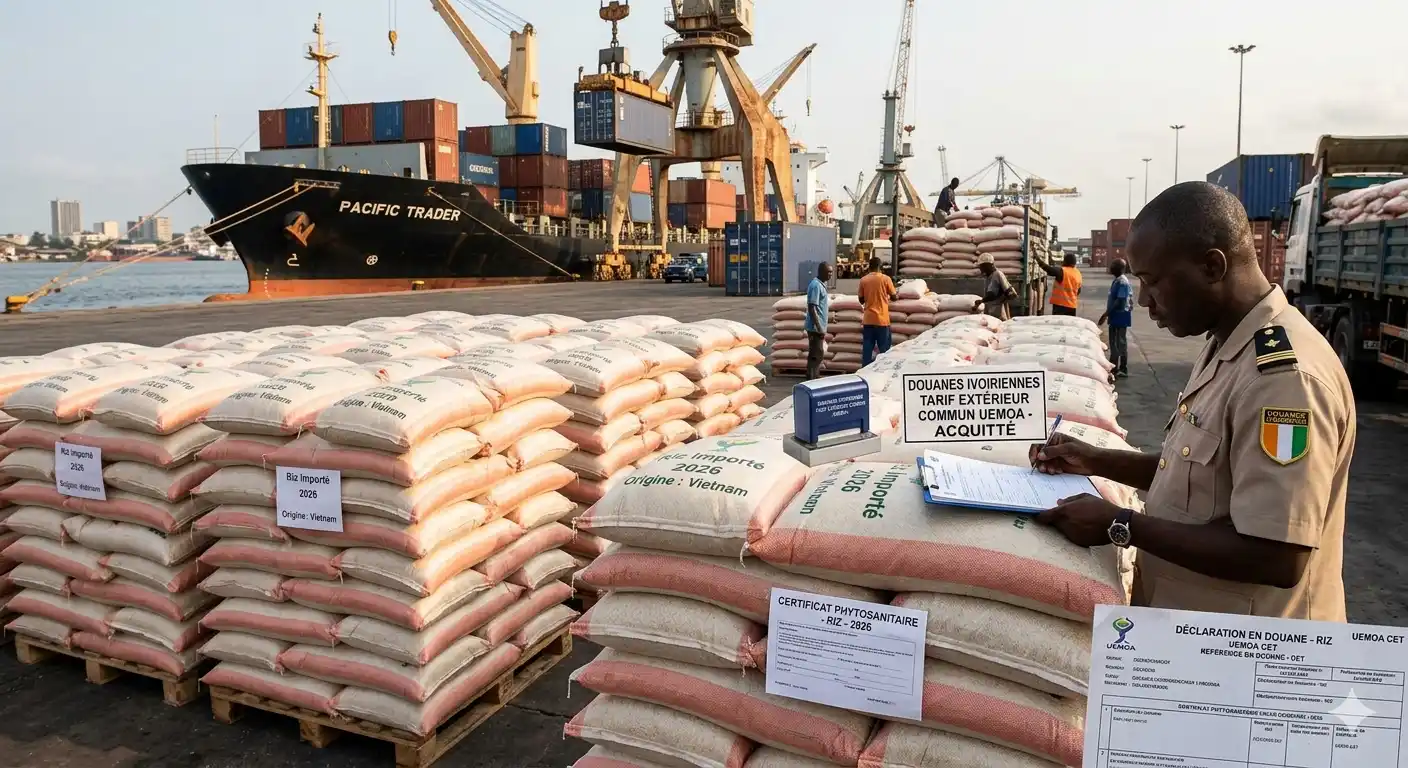
The fourth step is customs clearance. Customs officials assess the shipment value using the CIF method, which includes cost, insurance, and freight. Duties are calculated based on this value.
The final step is tariff payment and release. Importers pay applicable tariffs and taxes before the shipment is cleared. Once payment is confirmed, the rice enters the local distribution chain.
What are the key components of rice import regulations in Ivory Coast?
The key components include import licensing, phytosanitary certification, customs documentation, WAEMU tariff classification, and port clearance procedures, each ensuring legal compliance, product safety, and accurate tax collection for rice imports entering Ivory Coast.
Import Licensing
Import licensing confirms that a business has legal authorization to import rice. The license is issued by national trade authorities. Without this license, shipments are denied entry.
Phytosanitary Certification
Phytosanitary certification ensures food safety. Exporters must provide a certificate issued by their national plant protection organization. This document confirms that the rice is pest-free and safe for consumption.
Examples include certificates from Pakistan, India, and Thailand, which are major rice-exporting countries.
Customs Documentation
Customs documentation includes the bill of lading, invoice, and packing list. These documents provide shipment details such as weight, quantity, and value.
Accurate documentation reduces delays and prevents penalties during customs inspection.
WAEMU Tariff Classification
WAEMU applies a Common External Tariff (CET). Rice typically falls under a specific tariff band, often between 10% and 20%, depending on processing level such as milled or broken rice.
This classification standardizes import costs across member countries.
Port Clearance Procedures
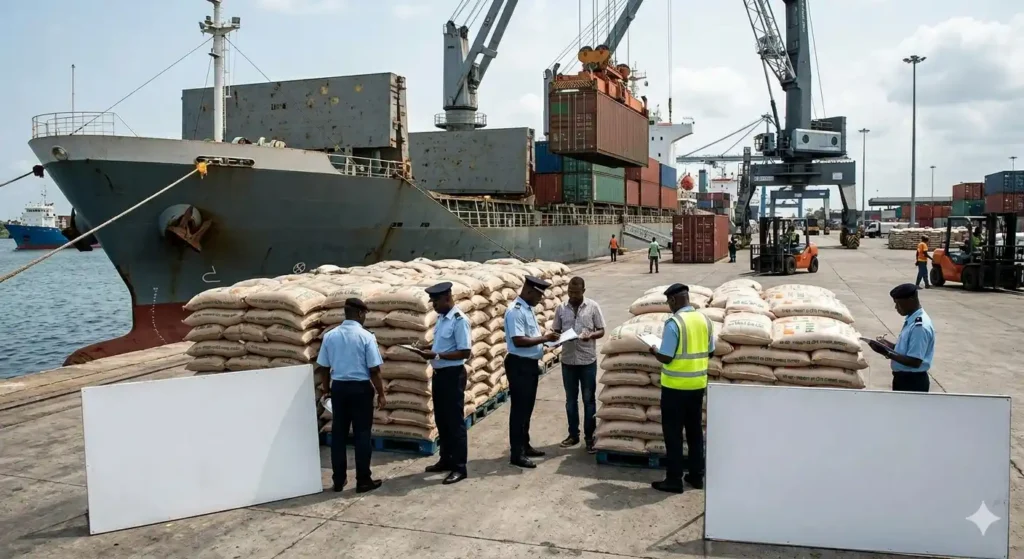
Port clearance takes place at major entry points like Abidjan. Customs officers inspect shipments, verify documents, and calculate duties.
Efficient clearance depends on complete documentation and compliance with all regulatory requirements.
What are WAEMU rice tariffs and how do they affect imports?
WAEMU rice tariffs are standardized import duties applied to rice entering member countries, typically ranging from 10% to 20%, directly influencing import costs, retail pricing, and supply chain competitiveness in Ivory Coast.
WAEMU tariffs are part of a regional trade policy. The Common External Tariff divides goods into categories. Rice falls into essential food categories but still carries moderate duties.
The tariff structure includes four bands. These are 0%, 5%, 10%, and 20%. Rice generally falls into the 10% or 20% category depending on its processing level.
For example, semi-milled rice may attract a 10% tariff, while fully milled rice can fall under 20%. Broken rice often has a lower tariff due to its role in food security.
Tariffs directly affect import costs. Higher tariffs increase the landed cost of rice. This increase influences wholesale and retail prices.
Importers calculate total costs by combining tariff rates with VAT and other port charges. This calculation determines final market pricing.
What are the benefits of rice import regulations in Ivory Coast?
Rice import regulations provide food safety assurance, revenue generation, market stability, and trade transparency, ensuring that imported rice meets quality standards while supporting government income and protecting local supply chains.
Regulations ensure that imported rice is safe for consumption. Phytosanitary controls prevent contaminated or pest-infested shipments from entering the market.
The system generates government revenue. Tariffs and taxes contribute significantly to national income. This revenue supports infrastructure and public services.
Regulations stabilize the market. By controlling imports, authorities prevent oversupply or price dumping. This control maintains fair competition between local and imported rice.
Transparency improves trade efficiency. Clear procedures reduce corruption and delays. Importers understand requirements and plan shipments accordingly.
What are the main use cases of rice import regulations?
Rice import regulations are used to manage commercial imports, control food safety risks, regulate pricing structures, and facilitate international trade compliance for businesses importing rice into Ivory Coast.
The first use case is commercial importation. Large distributors import bulk rice to supply urban markets. These imports meet high demand in cities like Abidjan.
The second use case is food security management. Governments adjust import policies to stabilize supply during shortages.
The third use case is trade compliance. Importers follow regulations to avoid penalties and ensure smooth customs clearance.
The fourth use case is price regulation. Tariffs and taxes influence retail prices, helping authorities control inflation in staple foods.
Examples include imports of long-grain rice, parboiled rice, and broken rice, each serving different consumer segments.
What are common problems and misconceptions about rice import regulations?
Common problems include incomplete documentation, misunderstanding of tariff classifications, and delays in customs clearance, while misconceptions often involve assuming uniform tariffs for all rice types or ignoring phytosanitary requirements.
One common problem is missing documents. Importers often fail to provide complete paperwork. This failure causes shipment delays and additional storage costs at ports.
Another issue is incorrect tariff classification. Different rice types fall under different tariff bands. Misclassification leads to fines or reassessment of duties.
Delays at ports are frequent. These delays occur due to inspection backlogs or documentation errors. Efficient planning reduces such delays.
A major misconception is that all rice imports face the same tariff. In reality, tariffs vary based on processing level and product category.
Another misconception is that phytosanitary certificates are optional. In fact, they are mandatory for all agricultural imports.
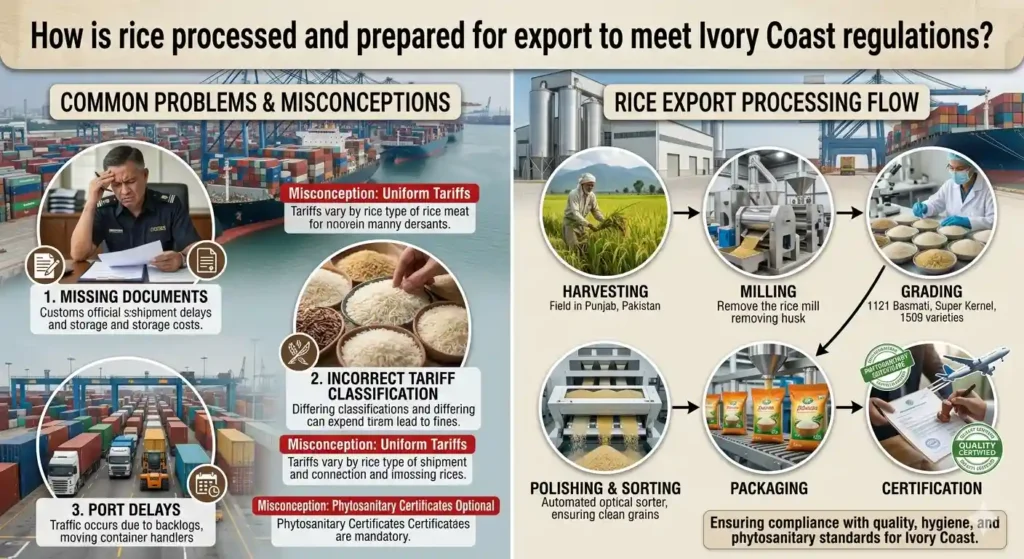
How is rice processed and prepared for export to meet Ivory Coast regulations?
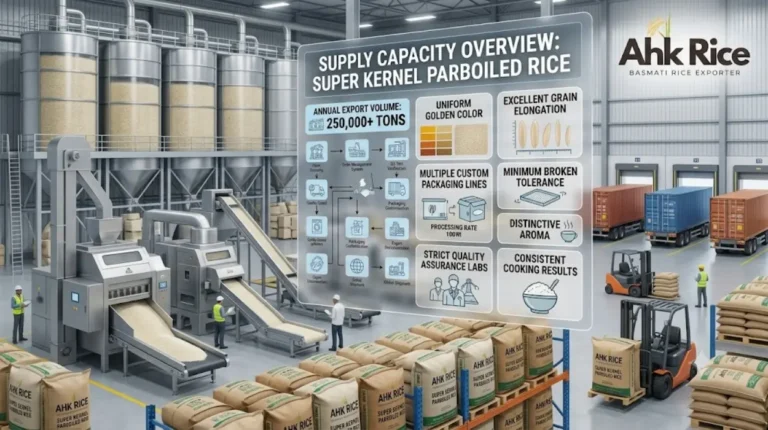
Rice exported to Ivory Coast undergoes harvesting, milling, grading, polishing, sorting, and packaging, ensuring compliance with quality, hygiene, and phytosanitary standards required by Ivorian import authorities.
The process begins with harvesting. Farmers collect paddy rice from fields in major producing regions such as Punjab in Pakistan.
The second step is milling. Milling removes the husk and bran layers to produce white rice.
The third step is grading. Rice is classified into categories based on grain length, purity, and broken percentage.
Examples include 1121 basmati, super kernel basmati, and 1509 rice varieties.
The fourth step is polishing and sorting. Machines improve appearance and remove impurities such as stones and damaged grains.
The fifth step is packaging. Rice is packed in moisture-resistant bags. Packaging sizes include 5 kg, 10 kg, 25 kg, and 50 kg.
The final step is certification. Exporters obtain phytosanitary certificates and quality certifications before shipment.
What certifications apply to rice imports into Ivory Coast?
Rice imports into Ivory Coast require phytosanitary certificates, certificates of origin, commercial invoices, and compliance with international food safety standards such as ISO and HACCP to ensure product quality and traceability.
Phytosanitary certificates confirm that the rice is free from pests. These certificates are issued by the exporting country’s agricultural authority.
Certificates of origin verify the country where the rice was produced. This document is essential for tariff classification under WAEMU rules.
Commercial invoices provide transaction details. These include price, quantity, and buyer information.
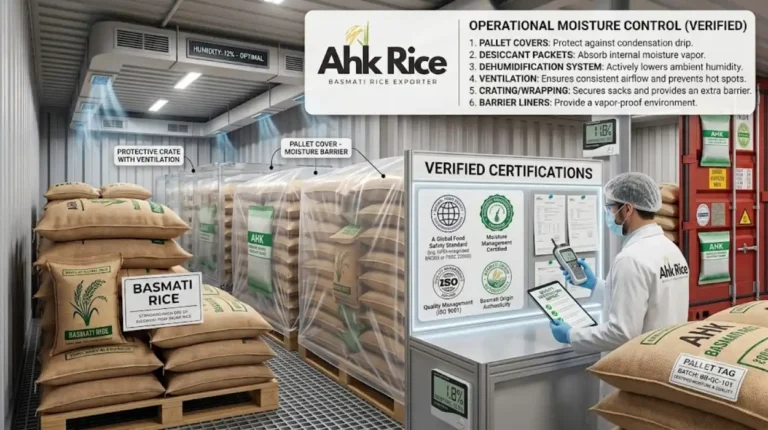
Food safety certifications such as ISO 22000 and HACCP demonstrate compliance with international standards. These certifications improve trust and reduce inspection delays.
Traceability is a key requirement. Authorities must track rice from farm to port. This tracking ensures accountability and quality control.