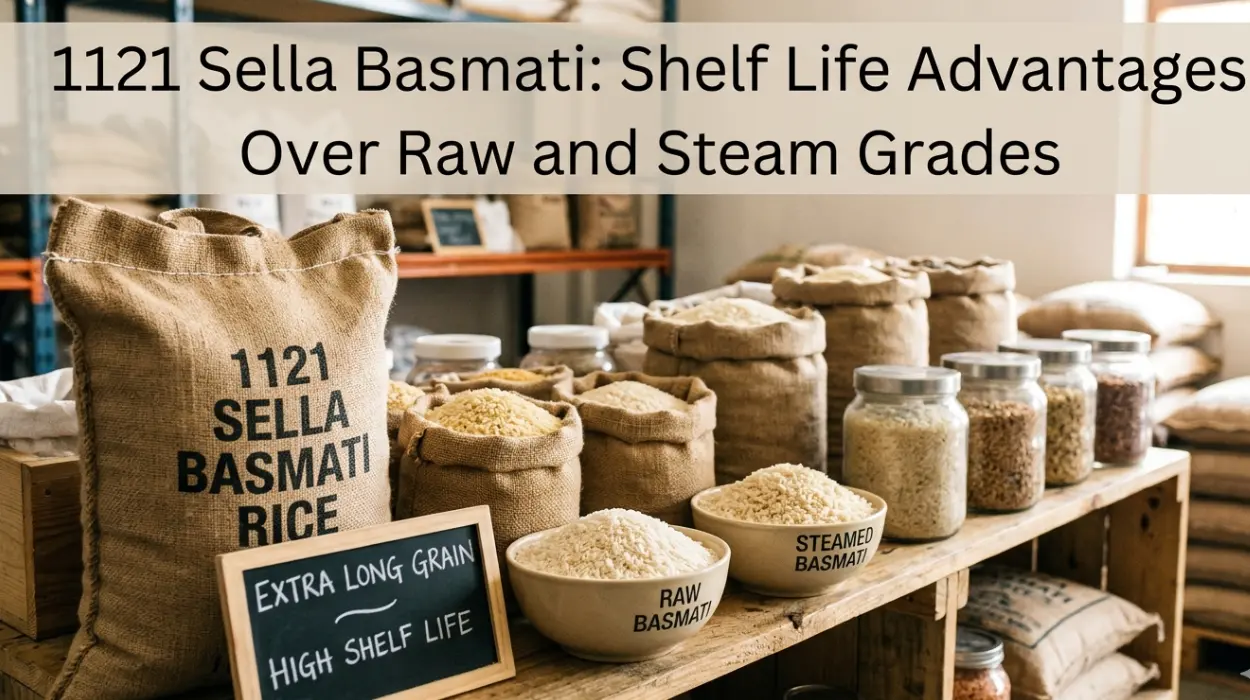
1121 Sella Basmati: Shelf Life Advantages Over Raw and Steam Grades
1121 Sella Basmati has a stronger shelf-life profile than raw and many steam grades because parboiling hardens the grain structure before milling, which slows moisture uptake and reduces breakage during storage. In storage comparison terms, it sits in the most stable segment of the basmati range when moisture control, packaging, and warehouse conditions remain consistent.
What is 1121 Sella Basmati?
1121 Sella Basmati is parboiled long-grain basmati that is soaked, steamed, dried, and milled to create a harder kernel with better storage stability than raw grades. It is a processing category applied to the 1121 basmati variety, not a separate plant species. The process changes how the grain behaves in storage, transport, and cooking.
The 1121 variety is grown in Pakistan’s Punjab rice belt, where irrigation, soil conditions, and seasonal temperatures support long-grain aromatic basmati production. The paddy is harvested, cleaned, and prepared for parboiling. That step gives the grain its defining shelf-life advantage because heat and moisture move through the husk before milling.
In trade terms, 1121 sella basmati usually sits alongside raw white 1121 and steam-grade 1121. Raw 1121 is directly milled after drying. Steam-grade 1121 receives heat treatment with less colour development than sella. Sella rice meaning, in export language, refers to the golden, parboiled finish created by the soak-steam-dry sequence.
How does the shelf-life advantage work?
The shelf-life advantage comes from parboiling, which tightens the grain structure, lowers post-milling fragility, and improves resistance to handling and storage stress. The grain becomes less porous than raw rice. That slows moisture exchange and keeps kernel integrity higher in containers, warehouses, and retail packs.
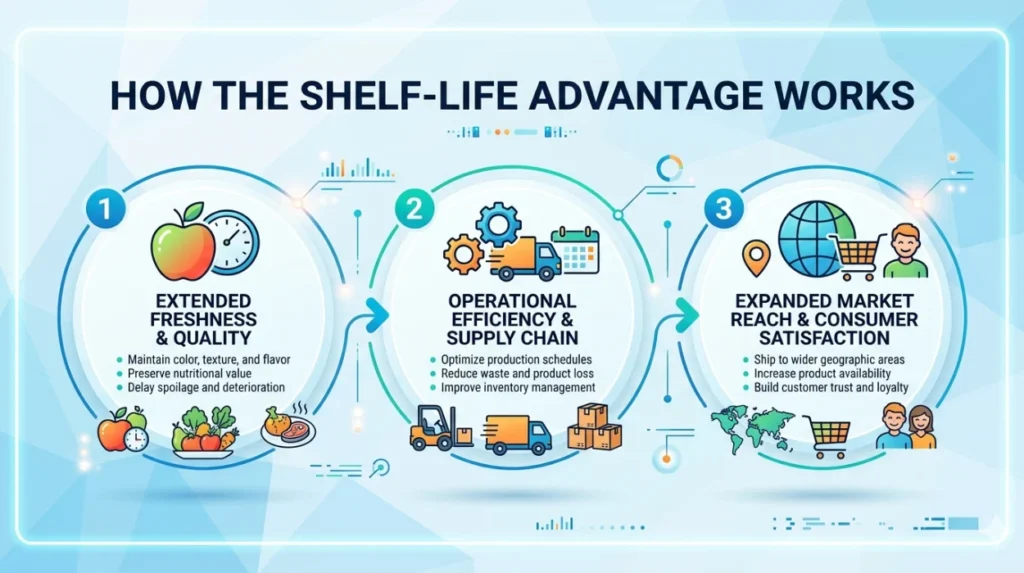
Parboiling starts with soaking the paddy in water. The grain absorbs moisture before steaming. Steam then partially gelatinises the starch while the husk still protects the kernel. The grain is dried and later milled. This sequence locks in a firmer structure than raw basmati, so the grain resists cracking, insect pressure, and packaging stress better.
That structure matters in long storage cycles. Raw rice absorbs or loses moisture more easily, which can increase brittleness in dry climates or caking in humid ones. Sella rice keeps a more stable profile because the treated endosperm is harder and less fragile. The result is a clearer parboiled shelf life advantage, especially in export shipments and bulk warehouses.
What are the key components that create shelf stability?
The key components are moisture control, hardened endosperm, low breakage rate, and packaging quality, all of which shape how long 1121 Sella stays stable. These are the main technical factors behind basmati storage comparison results. Each component affects product quality at different stages, from milling to retail display.
Moisture control is the first component. If the grain enters storage above the safe range, fungal risk rises and aroma weakens. If it enters too dry, brittle kernels break more easily during handling. For export-grade 1121 Sella, mills usually target a moisture range below 13 percent at packing stage to preserve shelf quality.
The hardened endosperm is the second component. Parboiling changes the internal grain structure, so the kernel resists fracture. This is why sella grades usually show fewer broken grains after shipment compared with raw grades. Lower breakage means higher commercial value because the shipment retains more full-length rice.
Packaging quality is the third component. Strong laminated bags, food-grade liners, and proper sealing reduce external moisture exchange. For large export lots, these protections help preserve grain colour, aroma, and texture during sea freight. Good packaging extends the effective shelf life of the product because it reduces exposure to temperature swings and humidity spikes.
How does 1121 Sella compare with raw and steam grades?
1121 Sella usually stores better than raw 1121 and holds a stronger shelf profile than many steam grades because it combines structure, moisture resistance, and lower handling loss. Raw grades remain more vulnerable to breakage and moisture shift. Steam grades sit between raw and sella, but they usually do not match the same storage firmness.
Raw 1121 has a clean white appearance and a familiar cooking profile. It is popular in markets that value soft, fluffy basmati. The storage drawback is that raw rice is more exposed to kernel fracture during transport. It also reacts more quickly to moisture drift, which affects texture and cooking consistency over time.
Steam-grade 1121 uses heat treatment, but the process intensity and colour development are usually lighter than sella. That means steam rice often sits between raw and sella in stability. It performs well in storage, but the grain structure generally remains slightly less hardened than parboiled sella. The gap is visible in long shipping cycles and repeated handling.
Specification comparison table
| Attribute | 1121 Sella | Raw 1121 | Steam 1121 |
|---|---|---|---|
| Processing type | Soak, steam, dry, mill | Dry, mill | Steam-treated, milled |
| Grain hardness | High | Medium | Medium-high |
| Breakage resistance | High | Lower | Moderate |
| Moisture stability | Strong | Medium | Stronger than raw |
| Shelf-life profile | Long | Medium | Medium-long |
| Handling loss risk | Low | Higher | Moderate |
| Export storage fit | Excellent | Good | Good |
This table shows why the sella shelf life advantage is important for trade. The product is not only a cooking ingredient. It is a storage-sensitive commodity. Buyers who move rice across long routes often value the lower handling loss and stronger kernel integrity more than a purely white finish.
What are the benefits of 1121 Sella shelf life?
1121 Sella benefits buyers by reducing storage loss, preserving grain quality, and lowering the risk of breakage during transport and warehousing. These advantages support bulk importers, wholesalers, retailers, and foodservice buyers. The effect is strongest in humid ports, long container routes, and high-turnover warehouse systems.
The first benefit is lower breakage. Full grains retain more commercial value than broken kernels. A shipment that loses less weight to breakage protects margin. This matters in export trade where rice is priced by grade and head-rice percentage. Sella rice typically protects more of that value than raw rice.
The second benefit is better storage consistency. Grain structure stays stable longer, so the product holds its appearance and cooking behaviour more reliably across time. That gives buyers a simpler inventory cycle because the risk of quality drift drops. For importers, this creates less complaint risk from downstream buyers.
The third benefit is better resistance to climate variation. In hot or humid markets, raw rice can show more storage stress if the warehouse or packaging is weak. Sella rice handles those conditions more effectively because the parboiled grain has already undergone moisture and heat restructuring. That is why parboiled shelf life often leads the comparison in export planning.
Where is 1121 Sella used?
1121 Sella is used in bulk export, wholesale distribution, retail packing, and foodservice channels that need stable long-grain rice with a longer shelf life. The product suits markets where storage, transport, and display conditions all affect product performance. It is common in both domestic and international trade.
Export buyers use 1121 Sella because it reduces quality loss in containers and warehouses. Wholesalers use it because it moves well through distribution networks without excessive breakage. Retail packers use it because the grain presentation stays strong on shelf. Foodservice operators use it because the grain remains separate and predictable after cooking.
The product also fits markets that need stronger supply-chain resilience. Regions with longer transit routes, warmer climate conditions, or large warehousing systems gain more from the shelf stability. That includes many import markets in the Gulf, Africa, Europe, and parts of Southeast Asia, where storage reliability matters as much as aroma or grain length.
Which markets import 1121 Sella most often?
The most active import markets for 1121 Sella are the Gulf, parts of Africa, and selected European and Asian wholesale channels that value stable parboiled basmati. These regions buy for different reasons, but the shelf-life advantage remains central in each case. The product’s structure helps it travel well and store consistently.
The Gulf market often prefers stronger storage performance because imports travel long distances and move through hot distribution environments. In this region, 1121 Sella suits wholesale buyers who need steady head-rice recovery and less handling loss. Gulf buyers often compare it with other sella grades before purchase.
Africa imports parboiled basmati for similar reasons. Distribution networks can be extended, and warehousing conditions vary. 1121 Sella gives traders a better buffer against quality loss during inland movement. That makes the product useful for importers who sell into several secondary markets after landing.
Europe and parts of Asia import 1121 Sella through retail and foodservice channels. In these markets, product appearance and cooking consistency matter, but storage stability still influences commercial decisions. The better the shelf life, the more predictable the downstream resale cycle becomes.
What certifications apply to 1121 Sella exports?
1121 Sella exports commonly require food-safety, origin, and Halal-related documentation, depending on the destination market and buyer specification. Certifications do not change the grain itself, but they control access to import channels. For many buyers, certification is part of the shelf-life and trade-readiness package because it supports customs clearance and market acceptance.
Food-safety documentation usually includes phytosanitary certificates, quality inspection reports, and moisture or packing records. These documents help buyers verify that the rice meets the destination market’s import rules. They also reduce the risk of delays at port, which protects the product’s effective shelf stability.
Halal certification matters in many Muslim-majority markets. The rice itself is plant-based, but some buyers still require verified compliance across milling, handling, and packing lines. That certification gives the product better fit in markets where certification-linked procurement is standard.
Some buyers also request organic or residue-related certification where applicable, though this depends on production system and buyer need. These documents do not automatically improve shelf life, but they reinforce trust and commercial acceptance. In export planning, certification and storage are linked because both affect how the product reaches the market.
What are the common misconceptions about shelf life?
The main misconception is that all rice stores the same way, when processing method, packaging, and climate change the outcome significantly. Another misconception is that white rice always lasts longer because it looks cleaner. In practice, parboiled rice often performs better over time because the grain structure is stronger.
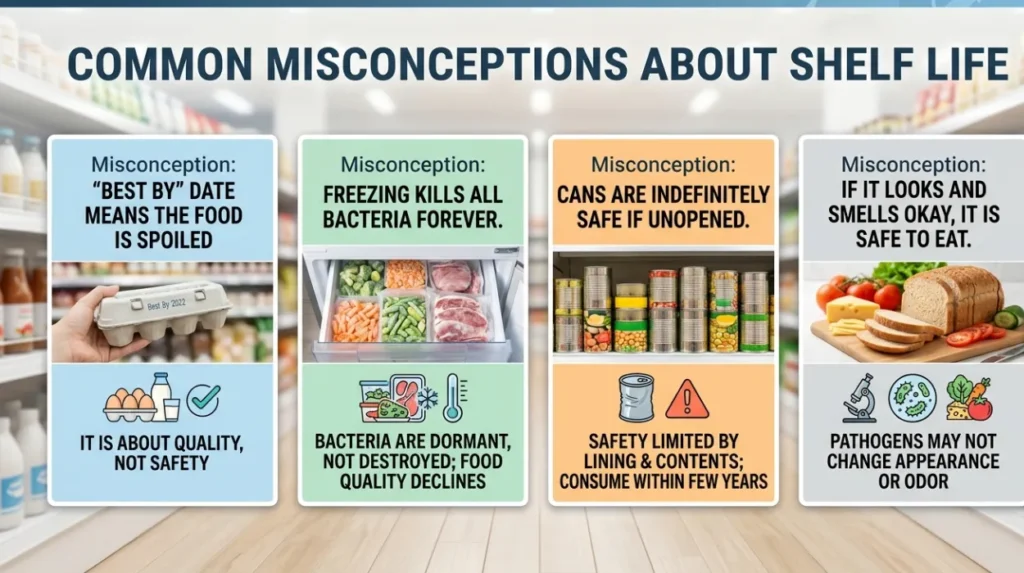
Some buyers assume raw basmati is better because it has a lighter colour and softer cooking profile. That is true for certain culinary uses, but it does not create better storage stability. Raw rice can be more fragile during shipping and warehouse handling. A comparison based only on appearance misses the basmati storage comparison logic that trade buyers use.
Another misconception is that steam grade and sella grade are interchangeable. They are not identical. Steam grades usually occupy a middle position between raw and sella in structure and storage performance. Buyers who need maximum long-route stability often prefer sella because the parboiling step creates a stronger shelf-life advantage.
How should buyers choose between sella, raw, and steam?
Buyers should choose based on storage conditions, shipping distance, market preference, and breakage tolerance rather than colour alone. The best grade depends on where the rice goes, how long it stays in storage, and how much handling it receives before sale.
Choose 1121 Sella when the priority is storage stability, lower breakage, and longer shelf performance. Choose raw 1121 when the market values whiter grains and softer texture more than storage resilience. Choose steam 1121 when the buyer wants a middle path between visual finish and handling strength.
For Gulf wholesale buyers, the storage and transit profile usually favours sella grades. Buyers in that segment often care more about shelf stability, container performance, and resale quality than about raw-grain brightness alone.