Rice Packaging Sizes and Arabic French Labelling Rules for Morocco 2026 in Morocco
Rice packaging sizes in Morocco define standard weight categories for retail and wholesale distribution, while bilingual labeling rules require all packaged rice to display product information in both Arabic and French to meet regulatory, consumer clarity, and traceability requirements for 2026 imports.
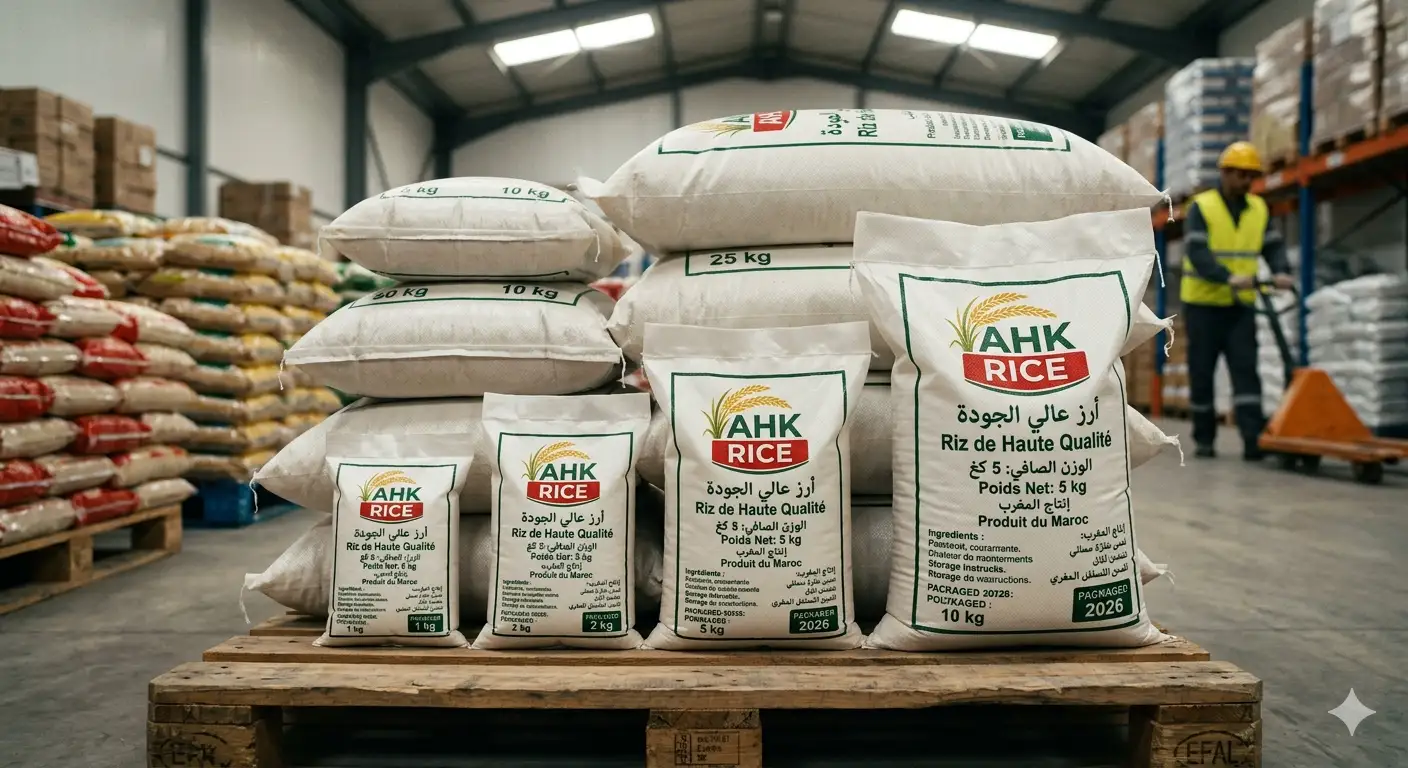
Rice packaging sizes refer to the standardized weight formats used for selling rice in a market. These sizes vary based on consumer behavior, retail structure, and logistics systems. In Morocco, rice is sold in clearly defined categories such as 1 kg, 2 kg, 5 kg, 10 kg, 25 kg, and 50 kg bags.
Bilingual labeling rules define how product information must appear on packaging. Morocco enforces dual-language labeling using Arabic and French because both languages are widely used in commerce, administration, and consumer communication.
The primary keyword “rice packaging Morocco bilingual label 2026” reflects a combined regulatory and market requirement. Packaging is not only a physical container. It is a legal and informational unit that ensures product identification, safety, and compliance.
How do rice packaging sizes and bilingual labels work in Morocco?
Rice packaging works by aligning product weight categories with distribution channels, while bilingual labeling ensures all mandatory information is presented in Arabic and French, including product name, origin, net weight, expiry date, and importer details for regulatory approval.
Packaging sizes follow a structured hierarchy. Small packs target households. Medium packs serve frequent buyers. Large sacks support wholesale and food service sectors.
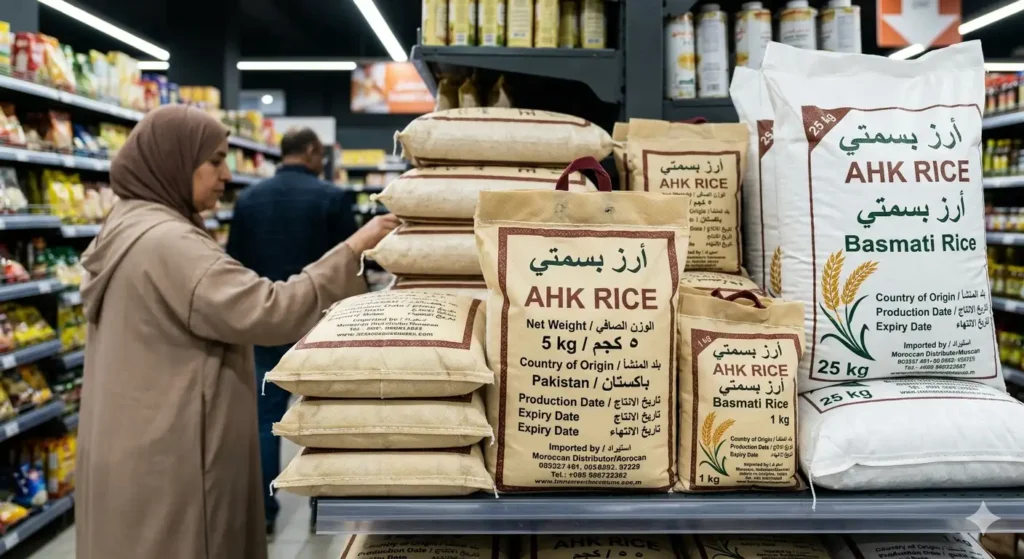
Labeling operates as a compliance layer. Every package must include identical information in both languages. This includes:
- Product name (e.g., Basmati rice)
- Net weight (e.g., 5 kg)
- Country of origin (e.g., Pakistan)
- Production and expiry dates
- Importer or distributor details
The labeling system ensures transparency. Consumers understand what they are buying without ambiguity. Regulatory authorities verify compliance during import clearance and retail inspections.
What are the standard rice bag sizes used in the Moroccan market?
Standard rice bag sizes in Morocco include 1 kg, 2 kg, 5 kg, 10 kg for retail consumers and 25 kg and 50 kg for wholesale distribution, with each size serving a specific purchasing behavior and storage requirement in urban and rural areas.
Retail Sizes
Retail sizes dominate supermarkets and small grocery stores. These include:
- 1 kg packs for single or small households
- 2 kg packs for short-term consumption
- 5 kg packs for monthly family use
- 10 kg packs for larger households
These sizes focus on convenience and affordability. Smaller packs reduce upfront cost. Medium packs balance price and volume.
Wholesale Sizes
Wholesale sizes support bulk buyers. These include:
- 25 kg bags for restaurants and small traders
- 50 kg sacks for distributors and institutional buyers
Wholesale packaging prioritizes cost efficiency. Larger volumes reduce per-unit cost and simplify logistics.
Example
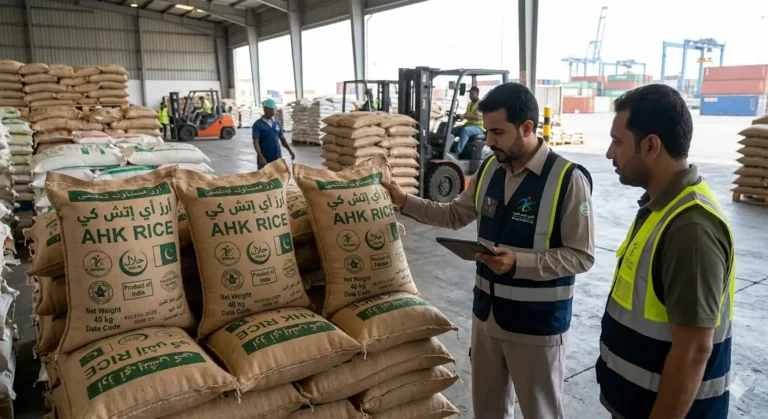
In urban areas like Casablanca, supermarkets prefer 1 kg and 5 kg packs. In rural regions, 25 kg and 50 kg sacks dominate due to bulk purchasing habits.
What key components must appear on Arabic-French rice labels?
Arabic-French rice labels must include product name, rice variety, net weight, country of origin, production and expiry dates, batch number, storage instructions, and importer details, all written clearly in both Arabic and French without contradiction or omission.
Label components are fixed by regulatory standards. Each element serves a specific function.
Product Identification
The label must state the rice type. Examples include:
- Basmati rice
- Long grain rice
- Parboiled rice
The name must match the actual product. Mislabeling leads to rejection.
Net Quantity
Weight must be expressed in kilograms. Example: “5 kg” must appear in both languages.
Origin Declaration
The country of origin must be clearly stated. Example: “Product of Pakistan.”
Traceability Information
Batch number and production date allow tracking. This supports recalls and quality checks.
Importer Details
The Moroccan importer’s name and address must be present. This ensures accountability within Morocco.
Why are bilingual Arabic-French labels mandatory in Morocco?
Bilingual Arabic-French labels are mandatory in Morocco to ensure accessibility for all consumers, comply with national language policies, enable regulatory inspection, and provide clear product information across diverse linguistic groups in retail and wholesale environments.
Morocco uses Arabic as the official language. French functions as a commercial and administrative language. This dual-language system reflects historical and economic structures.
Consumers rely on clear information. Arabic supports general understanding. French supports formal and commercial clarity.
Regulatory authorities require bilingual labeling to standardize product information. A single-language label fails compliance checks and blocks import clearance.
This requirement applies to all packaged food products, including rice. Imported rice must meet the same standard as locally distributed goods.
How does packaging size affect rice distribution in Morocco?
Packaging size directly affects rice distribution by determining storage efficiency, transportation cost, retail placement, and consumer accessibility, with smaller packs optimized for supermarkets and larger sacks designed for wholesale markets and institutional buyers.
Distribution systems depend on packaging format.
Small packs move through retail chains. These include supermarkets, convenience stores, and urban grocery outlets.
Large sacks move through wholesale networks. These include:
- Food service suppliers
- Traditional markets
- Bulk traders
Transportation efficiency improves with larger sacks. Fewer units reduce handling time. However, retail requires smaller packs for shelf display and consumer convenience.
Storage also varies. Retail stores need organized shelving. Wholesale warehouses stack large sacks for volume handling.
What are the benefits of standardized rice packaging sizes and labeling?
Standardized packaging sizes and bilingual labeling improve market efficiency, ensure regulatory compliance, enhance consumer trust, simplify logistics, and support consistent product presentation across all retail and wholesale channels in Morocco.
Standardization creates predictability. Buyers know what to expect. Sellers manage inventory more effectively.
Labeling builds trust. Consumers verify product details easily. Clear information reduces confusion and disputes.
Logistics become more efficient. Defined sizes simplify shipping calculations and container loading.
Regulatory compliance becomes straightforward. Inspectors check uniform formats rather than varied or inconsistent packaging.
What are the common use cases for different rice packaging sizes?
Different rice packaging sizes serve distinct use cases such as daily household consumption, monthly family storage, restaurant supply, and large-scale distribution, with each size aligning with purchasing frequency, storage capacity, and consumption volume.
Household Use
Small packs support daily cooking. Examples include 1 kg and 2 kg packs.
Family Storage
Medium packs support monthly use. Examples include 5 kg and 10 kg packs.
Food Service
Restaurants use 25 kg bags. These support high-volume cooking.
Distribution
Bulk traders use 50 kg sacks. These support resale and large-scale supply chains.
Each use case reflects a specific consumption pattern. Packaging aligns with demand behavior rather than arbitrary sizing.
What problems occur with incorrect packaging or labeling in Morocco?
Incorrect packaging or labeling leads to import rejection, regulatory penalties, product recalls, consumer confusion, and brand damage, especially when Arabic-French translations mismatch or mandatory information is missing from rice packaging.
Label Inconsistency
Mismatch between Arabic and French text creates confusion. Authorities reject such products.
Missing Information
Absence of batch number or expiry date violates regulations.
Incorrect Weight Declaration
Misstated net weight leads to compliance failure and consumer complaints.
Poor Packaging Quality
Weak bags result in spillage during transport. This increases loss and reduces product quality.
Example
If a 5 kg bag displays “5 kg” in French but omits Arabic translation, the product fails inspection at Moroccan ports.
How are rice packaging and labeling processes implemented step by step?
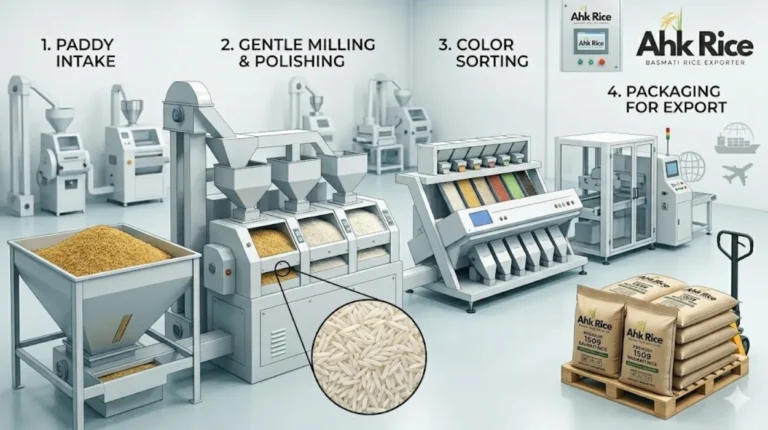
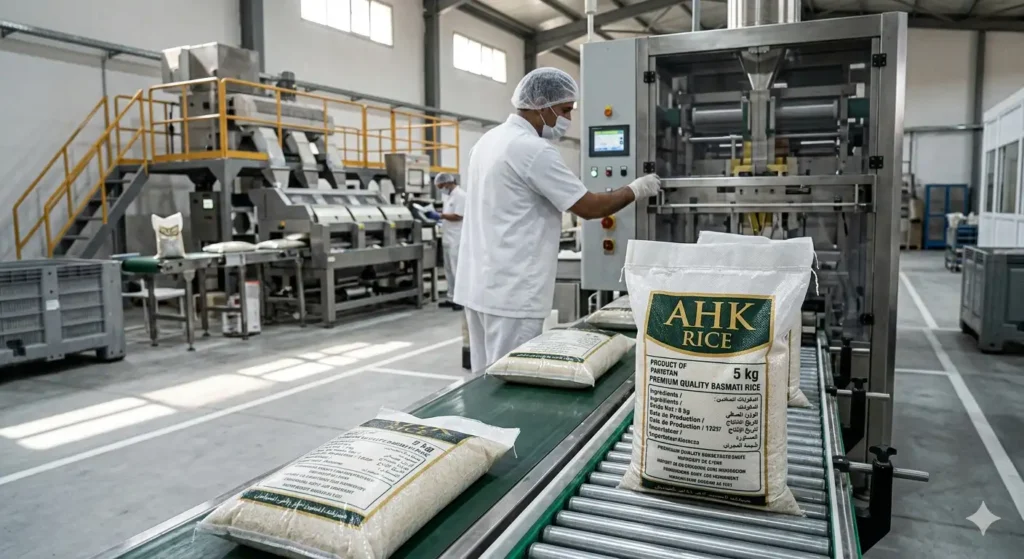
Rice packaging and labeling follow a structured process including cleaning, grading, weighing, bagging, sealing, label printing, bilingual verification, and final inspection to ensure compliance with Moroccan import standards before shipment.
Step 1: Cleaning and Sorting
Rice is cleaned to remove impurities such as stones and husk particles.
Step 2: Grading
Rice is classified by size and quality. Examples include 1121, Super Kernel, and 1509 varieties.
Step 3: Weighing
Rice is measured according to target packaging size. Precision ensures compliance.
Step 4: Bagging
Rice is filled into bags made of materials such as woven polypropylene or laminated plastic.
Step 5: Sealing
Bags are sealed to prevent contamination and moisture entry.
Step 6: Label Printing
Labels are printed in Arabic and French with all required details.
Step 7: Verification
Labels are checked for accuracy and consistency between languages.
Step 8: Final Inspection
Products undergo quality control before export shipment.
How do certifications influence rice packaging and labeling for Morocco?
Certifications influence rice packaging and labeling by requiring documented traceability, quality assurance marks, hygiene compliance, and standardized labeling formats that align with international food safety systems recognized by Moroccan authorities.
Certifications validate product quality and safety.
Common certifications include:
- ISO standards for quality management
- HACCP for food safety
- Phytosanitary certificates for agricultural compliance
These certifications require proper documentation. Labels must reflect accurate product information that matches certification records.
Traceability becomes critical. Batch numbers and origin details must align with certification documents.
Certification compliance strengthens acceptance during import inspection.