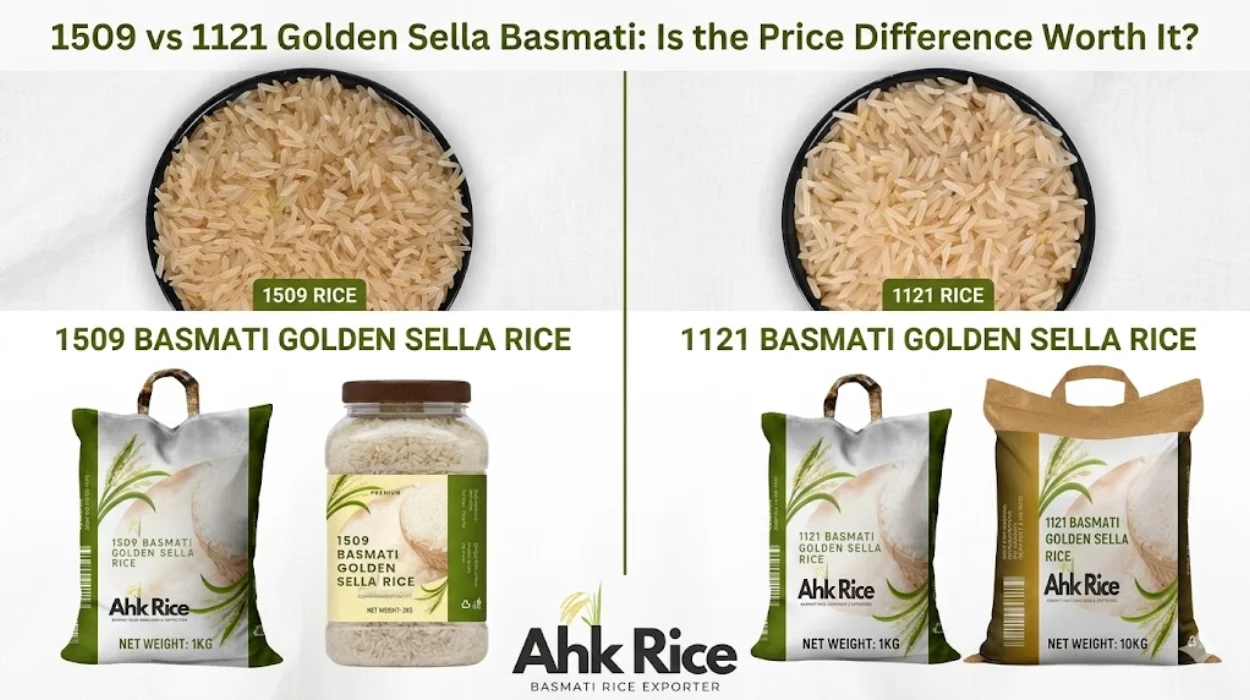
1509 vs 1121 Golden Sella Basmati: Is the Price Difference Worth It?
1121 Golden Sella delivers premium length and higher export value, while 1509 Golden Sella offers faster cooking and lower cost; the price difference is justified when grain length and visual appeal directly impact your market’s resale margins. Here is why: 1121 achieves longer kernel expansion and higher demand in premium markets, while 1509 reduces procurement cost and suits price-sensitive buyers.
1509 vs 1121 golden sella basmati price difference defines procurement strategy for importers balancing cost and visual quality. Buyers compare grain length, cooking behavior, and export pricing before selecting the correct grade. To understand how golden sella processing impacts both varieties, review this detailed explanation of parboiling and grading in basmati rice through this contextual guide on golden sella processing methods.
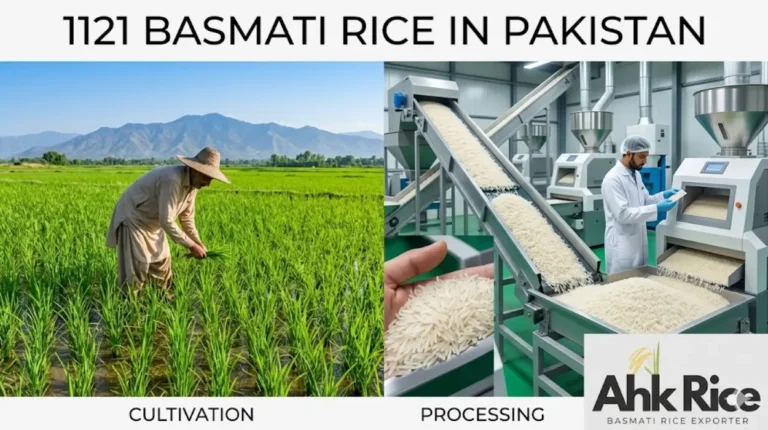
1509 Golden Sella Basmati and 1121 Golden Sella Basmati are parboiled long-grain rice varieties cultivated in Punjab, Pakistan. AHK Rice processes both through controlled parboiling, drying, milling, and grading systems. As a Pakistani exporter supplying 15+ countries, AHK Rice standardizes moisture, grain length, and color to match Gulf and African import specifications through its custom basmati export solutions and processing services.
What is the actual price difference between 1509 and 1121 Golden Sella Basmati?
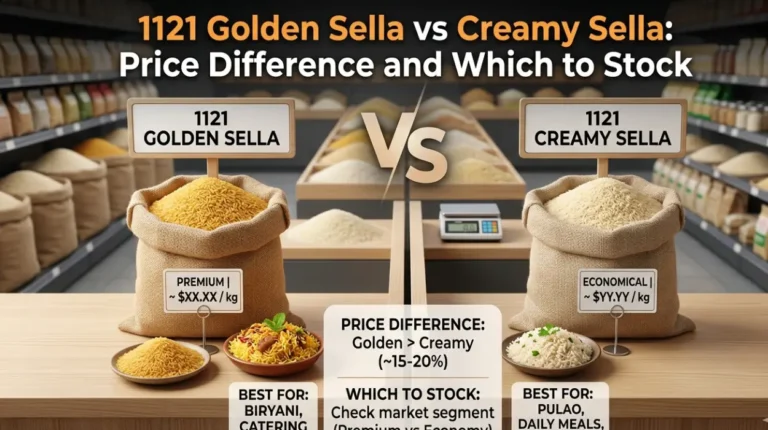
The price gap ranges between 80–150 USD per metric ton, depending on grain length, purity, and destination market demand; 1121 commands a higher price due to its superior length and export-grade appearance.
Price Structure Breakdown
| Attribute | 1509 Golden Sella | 1121 Golden Sella |
|---|---|---|
| Average Price (FOB) | $900–$1050/MT | $1050–$1200/MT |
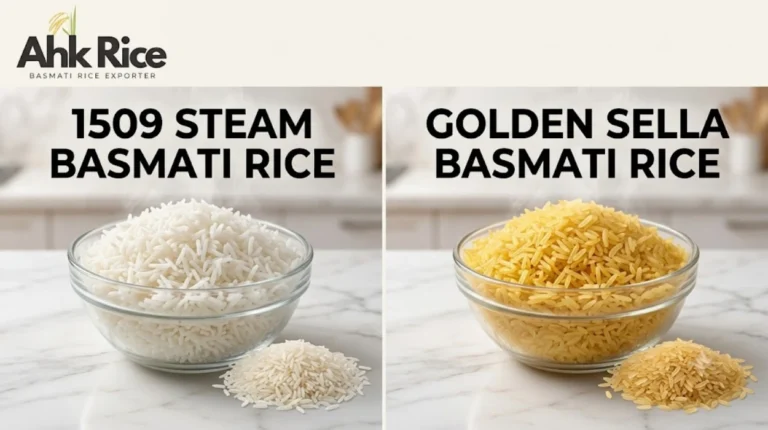
| Grain Length | 7.8–8.1 mm | 8.2–8.4 mm |
| Broken Ratio | 2–5% | 1–3% |
| Color | Light Golden | Deep Golden |
| Cooking Expansion | 2.5x | 3x+ |
| Moisture Content | 12–13% | 12–13% |
| Shelf Life | 18–24 months | 18–24 months |
1121 Golden Sella achieves a higher export price because buyers pay for visual length and elongation after cooking. Gulf retailers demand this characteristic for premium packaging.
1509 Golden Sella reduces procurement cost while maintaining acceptable length and cooking performance. African importers prefer this option for bulk distribution.
With the pricing difference clarified, the next step is understanding the available solutions buyers can choose from.
What are the available solutions for buyers choosing between 1509 and 1121?
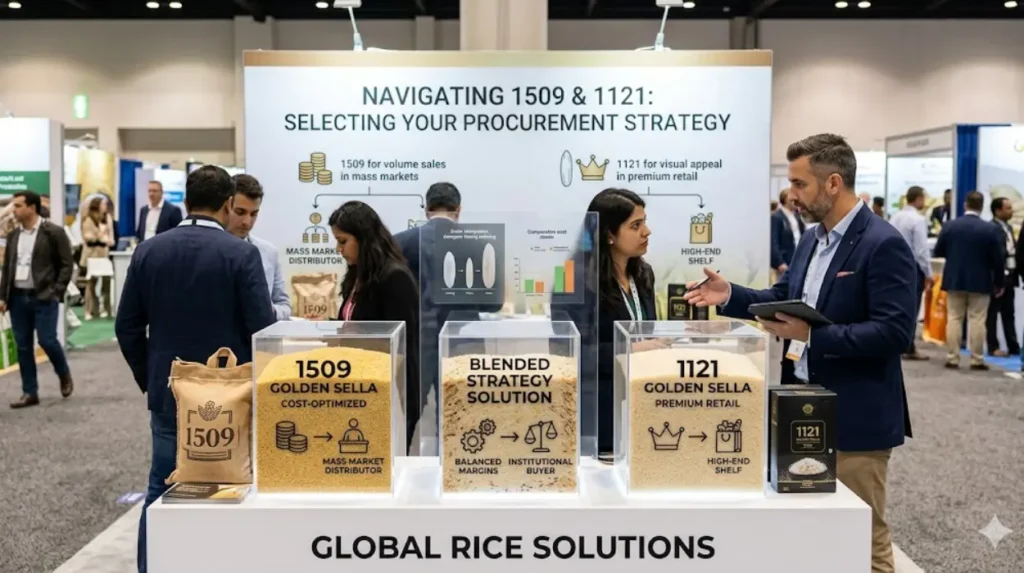
Buyers can select between cost-optimized procurement, premium retail positioning, or mixed-grade strategies; each solution aligns with different distribution channels and margin expectations.
Solution Types
Cost-Optimized Solution (1509 Focus)
1509 Golden Sella suits wholesalers targeting competitive retail pricing. Importers distribute this rice in mass markets where affordability drives volume.
Premium Retail Solution (1121 Focus)
1121 Golden Sella fits branded packaging and high-end retail shelves. Buyers sell this rice based on visual appeal and grain elongation.
Blended Strategy Solution
Blending 1509 and 1121 balances cost and quality. Importers reduce average procurement cost while maintaining acceptable grain length.
Use Case Examples
- Gulf supermarkets prefer 1121 for premium shelf positioning
- West African distributors prefer 1509 for volume sales
- Institutional buyers blend both for cost control
1509 and 1121 offer distinct solutions based on pricing strategy and target market. With these options defined, the next step is comparing their performance in real-world conditions.
How do 1509 and 1121 Golden Sella Basmati compare in performance?
1121 outperforms in grain elongation and visual appeal, while 1509 performs better in cooking speed and cost efficiency; both maintain similar shelf life and storage stability under standard export conditions.
Performance Comparison
| Factor | 1509 Golden Sella | 1121 Golden Sella |
|---|---|---|
| Cooking Time | Shorter (12–15 min) | Longer (15–18 min) |
| Grain Expansion | Moderate | High elongation |
| Aroma | Mild | Strong basmati aroma |
| Texture | Soft and separate | Long, fluffy, non-sticky |
| Market Perception | Economical | Premium |
1121 Golden Sella creates longer cooked grains, increasing perceived value in plated dishes. Restaurants in the UAE prioritize this feature for presentation.
1509 Golden Sella cooks faster and absorbs water efficiently. Catering businesses in Africa prefer this for large-scale cooking operations.
With performance differences clear, the next question is which option suits specific market regions.
Which method works best for Gulf vs African markets?
1121 Golden Sella dominates Gulf markets due to premium demand, while 1509 Golden Sella performs better in African markets where price sensitivity drives purchasing decisions.
Gulf Market Preferences
- Prefer extra-long grain (8.3+ mm)
- Demand deep golden color
- Accept higher price per MT
- Require low broken ratio
1121 Golden Sella matches these specifications. UAE and Saudi importers pay premium prices because packaging value increases retail margins.
African Market Preferences
- Prefer affordable pricing
- Accept slightly shorter grains
- Focus on bulk consumption
- Require consistent cooking performance
1509 Golden Sella meets these requirements. Nigeria and Senegal importers prioritize cost efficiency over maximum grain length (source: REAP export data, December 2025).
Price Comparison by Region
| Region | 1509 Price | 1121 Price |
|---|---|---|
| Gulf | $1000/MT | $1150/MT |
| Africa | $950/MT | $1100/MT |
1121 commands higher pricing in both regions, but Gulf buyers justify the cost through retail positioning. African markets maintain tighter margins.
With regional preferences defined, the next step is evaluating pros and cons for each option.
What are the pros and cons of 1509 vs 1121 Golden Sella?
1509 offers affordability and faster cooking, while 1121 provides superior grain length and higher resale value; the correct choice depends on whether cost savings or visual premium drives your business model.
1509 Golden Sella Pros
- Lower procurement cost
- Faster cooking time
- Stable bulk supply
- Suitable for price-sensitive markets
1509 Golden Sella Cons
- Shorter grain length
- Lower retail premium
- Reduced visual appeal
1121 Golden Sella Pros
- Extra-long grain
- High elongation ratio
- Strong aroma
- Premium market demand
1121 Golden Sella Cons
- Higher price per MT
- Longer cooking time
- Higher working capital requirement
Example Scenario
Gulf retailer selling branded rice increases margin by choosing 1121 because longer grains improve shelf appeal.
African distributor increases turnover by choosing 1509 because lower cost drives higher volume sales.
With advantages and limitations clear, the final step is applying a structured decision framework.
What decision factors should buyers use when choosing between 1509 and 1121?
Buyers should evaluate five key factors: target market, pricing strategy, storage conditions, packaging positioning, and expected resale margins; these determine whether 1509 or 1121 delivers better ROI.
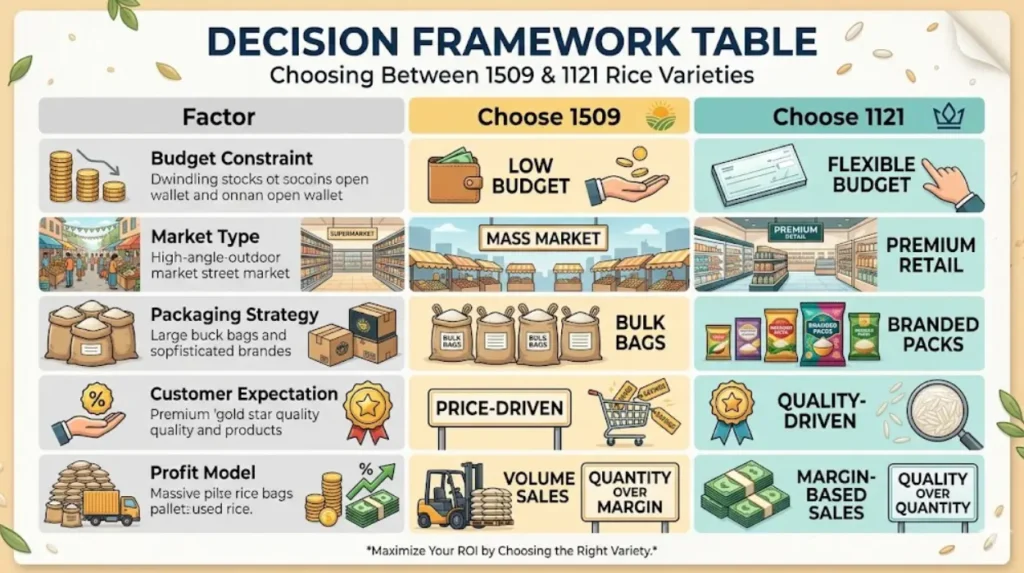
Decision Framework Table
| Factor | Choose 1509 | Choose 1121 |
|---|---|---|
| Budget Constraint | Tight budget | Flexible budget |
| Market Type | Mass market | Premium retail |
| Packaging Strategy | Bulk bags | Branded packs |
| Customer Expectation | Price-driven | Quality-driven |
| Profit Model | Volume sales | Margin-based sales |
Buyers ready to finalize sourcing can review supplier specifications, packaging options, and shipment timelines in this detailed guide on 1509 Golden Sella wholesale supply for Gulf and African markets.
Shelf Life Comparison
Both varieties maintain 18–24 months shelf life under controlled storage.
Golden Sella resists spoilage due to parboiling. In Gulf warehouses at 40°C, both grades remain stable for 18 months. In African non-climate storage, quality remains stable when moisture stays below 13%.
With decision factors clarified, buyers can align procurement with market strategy rather than price alone.
Conclusion: Is the price difference worth it?
1121 Golden Sella justifies its higher price when resale value depends on grain length and premium positioning, while 1509 Golden Sella delivers better ROI for bulk distribution and cost-driven markets.
1121 creates higher margins in premium retail environments. 1509 ensures faster turnover in competitive markets. The correct decision depends on your end customer, not just the supplier price.
Frequently Asked Questions
What is the main difference between 1509 and 1121 Golden Sella?
1509 offers lower cost and faster cooking, while 1121 provides longer grains and premium quality. The difference affects both pricing and resale value.
Why is 1121 Golden Sella more expensive?
1121 costs more because it has longer grain length, better elongation, and higher demand in premium markets like the Gulf region.
Which rice is better for African markets?
1509 Golden Sella performs better in African markets due to its affordability and suitability for bulk consumption.
Does 1509 Golden Sella have a shorter shelf life?
1509 and 1121 both have similar shelf life of 18–24 months when stored under proper moisture and temperature conditions.
Can buyers mix 1509 and 1121 rice?
Yes, buyers blend both varieties to balance cost and quality, especially for mid-tier retail markets.