1509 Steam vs Golden Sella Rice: Choosing the Right Grade
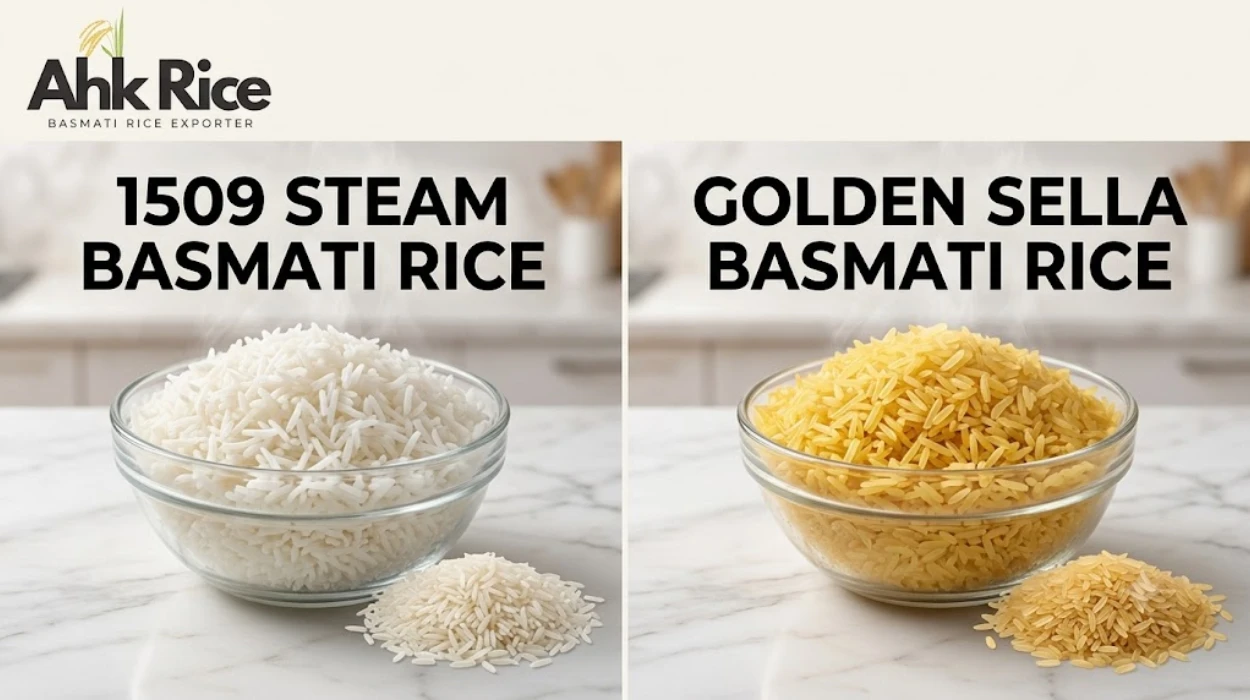
1509 Golden Sella Rice is the better choice for long storage, bulk catering, and heat-sensitive markets, while 1509 Steam Rice delivers a whiter appearance, softer texture, and stronger retail appeal. Here is why: Golden Sella undergoes parboiling before milling, creating stronger grains and longer shelf life, while Steam processing preserves a natural appearance preferred by premium retail buyers.
Rice buyers often compare these two grades because both originate from the same 1509 Basmati variety but serve different commercial purposes. The processing method changes grain color, cooking behavior, storage performance, and market demand.
Understanding these differences helps importers reduce procurement mistakes and align specifications with customer expectations. Buyers seeking a deeper understanding of how the variety itself is cultivated and processed can explore our guide on how 1509 Basmati rice moves from paddy cultivation to export-ready grading.
AHK Rice is a trusted Pakistani Basmati rice exporter based in Punjab, supplying 1121, Super Kernel, and 1509 varieties to more than 15 countries. AHK Rice manages cultivation sourcing, milling, grading, packaging, quality inspection, and export documentation under one process.
What are the available solutions for buyers choosing between 1509 Steam and Golden Sella Rice?
The market offers two primary solutions: 1509 Steam Rice for premium appearance and 1509 Golden Sella Rice for durability, storage stability, and catering applications. Both grades originate from the same paddy but undergo different processing methods.
Rice grades refer to the processing route applied after harvesting. Processing affects color, texture, cooking performance, and storage characteristics.
1509 Steam Rice
1509 Steam Rice undergoes controlled steaming before drying and milling. Steam treatment stabilizes the grain without significantly changing its natural white appearance.
Steam Rice provides:
- White grain appearance
- Soft cooked texture
- Faster cooking
- Premium retail presentation
- Strong demand in supermarkets
Retail buyers across Europe and North America often prefer Steam Rice because consumers associate white grains with premium quality.
1509 Golden Sella Rice
1509 Golden Sella Rice undergoes parboiling before milling. Parboiling transfers nutrients from the bran layer into the grain and strengthens the rice structure.
Golden Sella Rice provides:
- Golden-yellow grain color
- Higher grain strength
- Lower breakage rates
- Longer storage life
- Better performance in bulk cooking
Food service distributors frequently choose Golden Sella because large-scale kitchens require consistency during extended cooking cycles.
Processing Comparison
Specification Comparison Table
| Attribute | 1509 Steam Rice | 1509 Golden Sella Rice |
|---|---|---|
| Processing Method | Steam treatment | Parboiling + drying |
| Grain Color | White | Golden yellow |
| Grain Strength | High | Very high |
| Breakage Resistance | Good | Excellent |
| Cooking Time | Shorter | Slightly longer |
| Shelf Life | 12–18 months | 18–24 months |
| Catering Suitability | Moderate | Excellent |
Steam Rice focuses on appearance and softness. Golden Sella focuses on durability and storage stability.
With the available processing options established, the next question is how these two approaches perform when compared directly.
How do different processing approaches compare?
Golden Sella provides stronger grains, longer storage life, and better catering performance, while Steam Rice offers superior visual appeal, lighter color, and softer texture for retail markets.
The difference begins during processing.
How Steam Processing Works
Steam processing follows these steps:
- Clean the paddy.
- Steam the grain.
- Dry the grain.
- Dehusk the grain.
- Polish the rice.
- Grade by size.
- Sort by color.
Steam treatment improves stability while maintaining a natural white appearance.
How Golden Sella Processing Works
Golden Sella processing follows these steps:
- Clean the paddy.
- Soak the grain.
- Parboil the grain.
- Dry the grain.
- Dehusk the grain.
- Polish the rice.
- Grade and sort the rice.
Parboiling strengthens the internal grain structure.
Price Per Metric Ton Comparison
Export prices vary by season and crop conditions.
| Grade | Typical Export Range (USD/MT) |
|---|---|
| 1509 Steam Rice | $850–$1,050 |
| 1509 Golden Sella Rice | $900–$1,150 |
Golden Sella generally commands a premium because the processing cycle requires additional equipment, energy, and production time.
Shelf Life Comparison
Storage performance significantly influences procurement decisions.
| Grade | Shelf Life |
|---|---|
| Steam Rice | 12–18 Months |
| Golden Sella Rice | 18–24 Months |
Golden Sella lasts longer than Steam Rice. In UAE warehouses operating above 40°C, Golden Sella maintains grain integrity for extended periods. Steam Rice performs best when inventory turnover remains faster.
Grain Expansion Comparison
| Characteristic | Steam Rice | Golden Sella Rice |
|---|---|---|
| Length Expansion | High | Very High |
| Grain Separation | Good | Excellent |
| Stickiness | Low | Very Low |
| Bulk Cooking Stability | Moderate | Excellent |
Large catering kitchens benefit from the stronger grain structure of Golden Sella.
With processing differences clarified, buyers can evaluate which grade fits specific market requirements.
Which method works best for different markets and use cases?

Middle Eastern catering markets generally prefer Golden Sella, while European and North American retail markets commonly choose Steam Rice because appearance expectations differ between foodservice and consumer packaging sectors.
Market preference directly influences purchasing decisions.
Gulf Cooperation Council (GCC) Markets
Countries such as the United Arab Emirates, Saudi Arabia, and Qatar import substantial volumes of Golden Sella Rice.
Preferred specifications include:
- 5% broken
- Double polished
- Sortex cleaned
- 25 kg and 40 kg bags
Catering companies value grain stability during buffet service and large-volume cooking.
European Markets
Countries such as the United Kingdom, Germany, and Netherlands commonly import Steam Rice.
Preferred specifications include:
- Premium whitening
- Retail packaging
- Vacuum packing options
- Consumer-focused branding
Retail consumers typically prioritize appearance before cooking performance.
Market Preference Summary
| Region | Preferred Grade | Primary Reason |
|---|---|---|
| GCC | Golden Sella | Catering performance |
| Iraq | Golden Sella | Storage stability |
| Europe | Steam Rice | Retail appearance |
| North America | Steam Rice | Consumer preference |
Regional demand patterns help buyers align procurement specifications with customer expectations.
With market preferences defined, evaluating advantages and disadvantages becomes easier.
What are the pros and cons of each grade?
Steam Rice excels in appearance and softness, while Golden Sella excels in strength, storage, and foodservice performance. The correct choice depends on end-user requirements rather than processing superiority.
Pros of 1509 Steam Rice
Advantages include:
- Brighter white color
- Softer mouthfeel
- Faster cooking
- Strong retail acceptance
- Attractive shelf presentation
A supermarket brand selling premium packaged rice benefits from Steam Rice because visual appearance drives consumer purchases.
Cons of 1509 Steam Rice
Limitations include:
- Shorter storage duration
- Higher breakage risk
- Less suitable for prolonged holding
Large catering operations may experience more grain breakage during bulk cooking.
Pros of 1509 Golden Sella Rice
Advantages include:
- Strong grain structure
- Longer shelf life
- Better nutrient retention
- Superior catering performance
- Lower breakage rates
Hotels serving thousands of meals daily benefit from consistent grain separation.
Cons of 1509 Golden Sella Rice
Limitations include:
- Golden color may reduce retail appeal
- Longer cooking time
- Slightly higher procurement cost
Some retail consumers prefer white rice because they associate color with refinement.
Having evaluated strengths and weaknesses, buyers can now use objective criteria to make procurement decisions.
What decision factors should importers use when selecting a grade?
Storage duration, target market, packaging strategy, cooking environment, and budget determine the correct specification more effectively than appearance or price alone.
Importers should evaluate procurement using a structured framework.
Decision Framework Table
| Decision Factor | Choose Steam Rice | Choose Golden Sella |
|---|---|---|
| Retail Sales | ✓ | |
| Catering Supply | ✓ | |
| Long Storage | ✓ | |
| White Appearance Priority | ✓ | |
| High Heat Distribution | ✓ |
Packaging Considerations
Steam Rice frequently ships in:
- 1 kg retail packs
- 5 kg retail packs
- 10 kg consumer packs
Golden Sella frequently ships in:
- 25 kg bags
- 40 kg bags
- 50 kg bags
Quality Verification Checklist
Importers should:
- Verify grain length
- Inspect broken percentage
- Test moisture level
- Review laboratory reports
- Confirm packaging specifications
Export Documentation Checklist
Importers should request:
- Phytosanitary Certificate
- Certificate of Origin
- Commercial Invoice
- Packing List
- Fumigation Certificate
Why Buyers Work With Experienced Exporters
Reliable exporters simplify sourcing by managing:
- Paddy procurement
- Milling operations
- Sortex grading
- Quality inspection
- Packaging customization
- Export documentation
AHK Rice provides end-to-end processing and export support for Steam, Golden Sella, White Rice, and specialty Basmati grades.
The final decision depends on matching product specifications with customer requirements rather than selecting the cheapest option.
1509 Golden Sella Rice is the preferred specification for catering, foodservice distribution, and long-term storage. 1509 Steam Rice remains the preferred choice for retail shelves, premium packaging, and markets where grain appearance influences consumer purchasing decisions.
Importers should evaluate customer expectations, storage conditions, distribution channels, and cooking requirements before selecting a grade.
Frequently Asked Questions
Is 1509 Golden Sella Rice stronger than 1509 Steam Rice?
Yes. Golden Sella undergoes parboiling, which strengthens grain structure and reduces breakage during transportation and cooking.
Which grade has a longer shelf life?
Golden Sella typically maintains quality for 18–24 months, while Steam Rice generally performs best within 12–18 months.
Which grade is better for catering businesses?
Golden Sella performs better in catering because grains remain separate and stable during large-volume cooking.
Which grade is preferred in Europe?
European retail markets commonly prefer Steam Rice because consumers favor a bright white grain appearance.
Why is Golden Sella usually more expensive?
Golden Sella requires soaking, parboiling, drying, milling, grading, and sorting, which increases processing costs.